


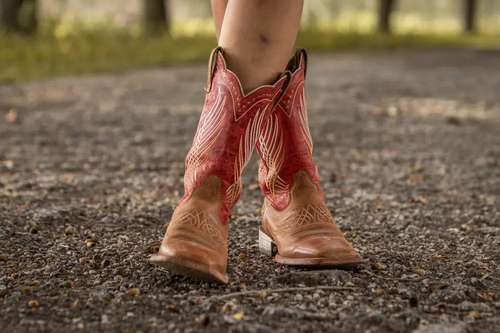
Cowboy boots are one of the most recognizable symbols of Texas, but the state's reputation wasn't built by the boots alone. It was built by generations of skilled bootmakers who transformed practical ranch footwear into an industry known around the world for craftsmanship, durability, and Western heritage.
Today, Texas is home to some of the best-known names in cowboy boots, from century-old manufacturers to small custom shops producing handcrafted pairs one customer at a time. These companies helped define what a cowboy boot should look and feel like, while also adapting to changing styles, new materials, and modern manufacturing without losing sight of their roots.
The story of Texas bootmaking is closely connected to the history of ranching itself. As cattle drives expanded after the Civil War and ranching became one of the state's defining industries, demand grew for boots that could handle long hours in the saddle, rough terrain, changing weather, and everyday ranch work. Local craftsmen answered that demand, creating businesses that would eventually become some of the most respected names in Western footwear.
Why Texas Became the Center of Cowboy Bootmaking
Texas was the ideal place for a boot industry to grow because it already had everything the trade required. Ranches covered millions of acres, horses remained essential for cattle work, and leather was readily available through the state's livestock industry.
During the late nineteenth century, towns across Texas supported saddle makers, harness shops, blacksmiths, and leatherworkers who served ranchers and cowboys. Many of those craftsmen eventually expanded into bootmaking as demand increased. Unlike factory-made shoes sold in eastern cities, early cowboy boots often needed to be custom fitted because riders depended on them every day.
As railroads expanded across Texas, bootmakers could ship their products much farther than their local communities. What began as regional workshops gradually developed into businesses that supplied customers throughout the American West and eventually around the world.
H.J. Justin and the Beginning of Justin Boots
No discussion of Texas bootmaking is complete without Justin Boots, one of the oldest and most influential names in Western footwear.
The company traces its beginnings to Herman Joseph "H.J." Justin, a bootmaker who started crafting handmade boots in Spanish Fort, Texas, in 1879. According to company history, Justin originally traveled from ranch to ranch making custom boots for cowboys who needed reliable footwear built specifically for riding and ranch work.
That personalized approach helped establish the company's reputation. Cowboys valued boots that fit properly because uncomfortable footwear could become a serious problem during long days on horseback. Rather than producing generic sizes, Justin worked directly with customers and refined his designs based on real ranch experience.
As demand increased, the company eventually relocated to Nocona, Texas, before later moving its headquarters and manufacturing operations to Fort Worth, where Justin Boots remains closely associated today.
How Justin Boots Changed the Industry
Justin Boots did more than manufacture quality footwear. The company helped move cowboy boots from small custom workshops into a larger commercial industry without abandoning the features that made them practical.
Instead of producing only one style, Justin expanded its product line to include ranch boots, work boots, dress boots, rodeo boots, and eventually occupational footwear designed for modern workplaces. That flexibility allowed the company to grow alongside Texas itself as ranching evolved and urban populations increased.
Justin also played an important role in making cowboy boots accessible beyond working ranchers. By the twentieth century, people were buying Western boots for recreation, country music, rodeos, and everyday wear rather than purely for cattle work.
Even today, Justin remains one of the largest and most recognizable Western footwear companies in the United States, and its history mirrors the growth of Texas' own ranching culture.
Lucchese Brought Italian Craftsmanship to Texas
If Justin helped build the commercial side of the industry, Lucchese became synonymous with luxury craftsmanship.
The company was founded in San Antonio in 1883 by Salvatore Lucchese, an Italian immigrant whose family brought traditional shoemaking skills to Texas. Rather than producing large quantities of inexpensive footwear, Lucchese focused on exceptionally well-made boots that combined precise construction with premium materials.
Over time, the company earned a reputation for creating boots that balanced comfort, durability, and elegance. Many customers viewed Lucchese boots as investments rather than simple purchases, expecting them to last for many years with proper care.
Today, Lucchese remains one of the most respected names in premium Western footwear and continues to manufacture handcrafted boots using many traditional techniques alongside modern production methods.
Why Lucchese Became a Luxury Name
Several factors helped Lucchese stand apart from other manufacturers.
The company became known for carefully selected leathers, detailed stitching, refined lasts, and a fit that many boot enthusiasts considered exceptional. Rather than focusing solely on rugged work boots, Lucchese also embraced dress boots suitable for business, formal occasions, and public appearances.
Its customer list eventually included presidents, entertainers, ranchers, athletes, and political leaders. Despite that high-profile reputation, Lucchese never abandoned its Texas identity, continuing to emphasize craftsmanship rooted in Western traditions.
For many collectors, owning a pair of Lucchese boots represents not just purchasing footwear but buying into more than a century of Texas bootmaking history.
Nocona Helped a Small Texas Town Become Famous
While some companies became known nationally, Nocona Boots helped place an entire Texas town on the map.
Founded in 1925 in Nocona, Texas, the company quickly earned a reputation for durable handmade boots that appealed to ranchers, rodeo competitors, and working cowboys. Unlike larger urban manufacturers, Nocona maintained strong ties to the rural communities that formed its customer base.
The company's growth also strengthened the local economy. For many years, bootmaking became one of Nocona's defining industries, providing jobs and helping establish the town's identity within the Western footwear business.
Although ownership has changed over the decades, the Nocona name still carries significant recognition among cowboy boot enthusiasts who appreciate traditional Western craftsmanship.
Tony Lama Expanded Texas Boots Beyond Texas
Another major name that helped shape the industry is Tony Lama.
Born in Italy, Tony Lama learned shoemaking from his father before eventually settling in El Paso, Texas, where he founded his company in 1911. El Paso would become one of the country's most important bootmaking centers, with Tony Lama playing a major role in that development.
Tony Lama's reputation grew because of his commitment to handcrafted construction and careful attention to fit. His boots became especially popular among ranchers and rodeo participants who needed footwear capable of standing up to demanding work while remaining comfortable for long periods in the saddle.
As the twentieth century progressed, Tony Lama expanded far beyond Texas. The company helped introduce Western boots to customers across the United States and internationally, proving there was a market for authentic Texas craftsmanship well outside cattle country.
El Paso Became a Bootmaking Hub
The success of Tony Lama also highlighted another important chapter in Texas bootmaking history: the rise of El Paso as a manufacturing center.
Because of its location near the U.S.-Mexico border, El Paso had access to skilled leatherworkers, experienced craftsmen, transportation networks, and a strong ranching economy. Over time, multiple Western boot companies established operations there, creating a concentration of knowledge and expertise that benefited the entire industry.
Even today, El Paso remains closely associated with handcrafted Western boots. Many respected manufacturers continue to operate there, and the city's influence can still be seen in both traditional and contemporary boot designs.
Anderson Bean Brought Innovation to Ranch Boots
Although Justin, Lucchese, Nocona, and Tony Lama are among the oldest names in Texas bootmaking, newer companies also helped move the industry forward.
Anderson Bean Boot Company, founded in Mercedes, Texas, in 1989, earned a strong reputation by focusing on handcrafted boots designed for modern ranchers and working cowboys. The company became especially well known for combining traditional construction techniques with innovations that improved comfort for people who spent long hours on their feet.
Unlike companies that emphasized fashion, Anderson Bean continued to prioritize practical performance. Features such as cushioned insoles, durable leather, and careful handcrafting appealed to customers who still depended on boots for daily work rather than occasional wear.
Today, Anderson Bean remains one of the most respected modern Texas bootmakers, proving that the state's bootmaking tradition continues to evolve while staying connected to its ranching roots.
The Rise of Family-Owned Custom Boot Shops
Alongside nationally recognized manufacturers, Texas has always been home to smaller custom bootmakers whose reputations spread through word of mouth rather than mass advertising.
Many of these family-owned businesses create boots one pair at a time, taking detailed measurements, discussing leather options, and allowing customers to choose everything from stitching patterns to toe shapes and heel styles.
These custom shops preserve techniques that date back more than a century. In many cases, individual bootmakers spend dozens of hours constructing a single pair, demonstrating that handcrafted Western boots remain an important part of Texas culture even in an era of large-scale manufacturing.
Heritage Boot Revived Traditional Texas Bootmaking
While several major manufacturers focused on large-scale production, Heritage Boot took a different approach by embracing handcrafted quality and classic Texas styling.
Founded in Austin in 2005, Heritage Boot built its reputation by studying vintage cowboy boots from the early and mid-twentieth century. Rather than-- following fast-changing fashion trends, the company recreated many of the details that made older Texas boots distinctive, including elegant stitching patterns, traditional toe shapes, and hand-selected leathers.
The result has been a brand that appeals to collectors, musicians, ranchers, and anyone who appreciates the craftsmanship of classic Western boots. Heritage Boot demonstrates that Texas bootmaking is not simply about preserving history—it is also about continuing traditions in ways that remain relevant today.
Rocketbuster Keeps the Art of Custom Bootmaking Alive
Few Texas bootmakers are as recognizable in the custom boot world as Rocketbuster Handmade Custom Boots in El Paso.
Rather than producing standard product lines, Rocketbuster specializes in individually designed boots that often feature elaborate artwork, colorful inlays, detailed embroidery, and highly personalized themes. Every pair is handmade, allowing customers to choose nearly every aspect of the design.
Despite their artistic appearance, Rocketbuster boots are still built using many of the same traditional construction methods that have defined quality cowboy boots for generations. The company has earned an international following, proving that Texas bootmaking can combine practical craftsmanship with creative expression.
Rios of Mercedes Continues a Long Texas Tradition
Another respected name is Rios of Mercedes, which traces its history back to 1853 through the family business that eventually evolved into today's company in Mercedes, Texas.
Rios of Mercedes has long focused on premium handcrafted boots using traditional techniques rather than mass production. Skilled craftsmen continue to build boots with carefully selected leathers, hand-lasted construction, and detailed stitching that reflects decades of experience.
Among boot enthusiasts, Rios of Mercedes is often praised for consistency and comfort. The company remains committed to producing boots in Texas, reinforcing the state's reputation for high-quality Western footwear.
Fenoglio Boot Company Represents a New Generation
Texas bootmaking continues to evolve, and Fenoglio Boot Company is a good example of how newer manufacturers are building on established traditions.
Based in Nocona, Texas, Fenoglio combines classic cowboy boot construction with modern comfort features. The company emphasizes handcrafted production, quality leather, and practical designs that appeal to ranchers as well as everyday wearers.
Its location is significant because Nocona has been associated with bootmaking for generations. By continuing to manufacture boots there, Fenoglio helps preserve one of Texas' historic bootmaking communities.
M.L. Leddy Became Synonymous with Custom Western Boots
When discussing Texas bootmakers, M.L. Leddy's deserves special recognition.
Founded in San Angelo in 1922 by M.L. Leddy, the company built its reputation through custom-made cowboy boots, saddles, and Western gear. Customers often visited in person to have their feet measured before selecting leather, stitching, toe shape, heel height, and other details.
Over the years, M.L. Leddy's became well known among ranchers, rodeo competitors, public officials, entertainers, and collectors. The company expanded to Fort Worth while maintaining its commitment to handmade quality, becoming one of the most respected custom bootmakers in Texas.
Hyer Helped Shape the Early Western Boot Industry
Although Hyer Boots was originally founded in Kansas, the company deserves mention because of its long connection to Texas ranching and the broader Western boot industry.
C.H. Hyer began making boots for cowboys in the 1870s, producing footwear specifically designed for life in the saddle. As cattle ranching expanded across Texas, Hyer boots became popular among working cowboys throughout the region.
The company's influence extended beyond its own products. Many design elements that became standard across the Western boot industry—including riding-specific construction and durable work-oriented features—were shared and refined by bootmakers throughout Texas and the surrounding states.
Handcrafting Remains at the Heart of Quality Boots
Although manufacturing methods have changed, many respected Texas bootmakers still rely on traditional construction techniques.
High-quality cowboy boots often begin with carefully selected leather that is cut by hand before being shaped around a wooden or plastic last. The upper is stitched, the vamp is fitted, and the boot is assembled using welt construction that allows it to be repaired and resoled many times.
Decorative stitching is more than simple ornamentation. It helps reinforce the leather while giving each bootmaker a distinctive visual signature. Experienced customers can often recognize a manufacturer simply by looking at its stitching patterns.
The finishing process also requires considerable skill. Soles are trimmed, heels are shaped, leather is polished, and each pair is carefully inspected before leaving the workshop. Even with modern equipment, many premium boots still require numerous hours of skilled labor.
Texas Bootmakers Helped Define Western Fashion
Originally, cowboy boots were simply work equipment. During the twentieth century, however, Texas manufacturers helped transform them into an internationally recognized style.
As rodeo became more popular and country music gained a national audience, boots began appearing on concert stages, magazine covers, television programs, and movie screens. Western wear retailers expanded, and customers who had never worked on a ranch began purchasing boots because they admired the craftsmanship and heritage they represented.
Texas companies adapted to this growing demand without abandoning their traditional designs. They introduced dress boots, women's styles, children's boots, and fashion-forward collections while preserving the basic features that made cowboy boots functional.
Innovation Helped the Industry Stay Competitive
One reason Texas bootmakers have remained successful is their willingness to innovate.
Manufacturers introduced improved insoles, lighter construction methods, waterproof treatments, work-oriented safety features, and more comfortable lasts without changing the recognizable appearance of the cowboy boot.
Exotic leathers also became more widely available. Ostrich, caiman, alligator, lizard, and other legally sourced materials gave customers more choices while allowing bootmakers to showcase their craftsmanship.
These innovations helped expand the market beyond ranching communities. Today, customers purchase Texas-made boots for work, weddings, business attire, concerts, and everyday wear.
Texas Bootmakers Helped Build Local Economies
The impact of Texas bootmakers extends far beyond footwear.
Communities such as Fort Worth, El Paso, Nocona, Mercedes, San Antonio, Austin, and San Angelo all benefited from companies that created skilled manufacturing jobs while supporting suppliers, leather distributors, retailers, and transportation businesses.
Western stores, saddle shops, repair shops, and custom leatherworkers also grew alongside the boot industry. In many communities, bootmaking became part of the local identity, attracting visitors interested in authentic Texas craftsmanship.
Even today, factory outlets, custom shops, and Western retailers continue drawing customers from around the world who specifically seek boots made in Texas.
The Global Reputation of Texas Boots
Texas-made cowboy boots now reach customers far beyond the American West.
International visitors frequently purchase boots while visiting Texas because they view them as authentic souvenirs rather than ordinary footwear. Custom bootmakers regularly receive orders from Europe, Australia, Japan, and other countries where appreciation for Western craftsmanship continues to grow.
That global reputation wasn't built through marketing alone. It developed because Texas companies consistently produced boots known for durability, fit, and careful construction.
Many collectors own boots from multiple manufacturers, comparing details such as stitching, leather quality, heel shape, and comfort. For enthusiasts, Texas remains one of the world's premier destinations for Western footwear.
Why These Bootmakers Still Matter
Modern manufacturing has made inexpensive Western-style boots widely available, but Texas bootmakers continue to stand apart because of their emphasis on craftsmanship and heritage.
Companies like Justin Boots, Lucchese, Tony Lama, Nocona Boots, Rios of Mercedes, Anderson Bean, Fenoglio, Heritage Boot, Rocketbuster, and M.L. Leddy's each represent a different chapter in the state's bootmaking story. Some built large manufacturing operations, while others focused on custom craftsmanship, but all helped shape the reputation of Texas boots.
Their influence can still be seen every time someone pulls on a pair of cowboy boots before heading to a rodeo, county fair, dance hall, ranch, or downtown office. The designs may vary, but the connection to Texas craftsmanship remains unmistakable.
Comments (0)
No comments yet. Be the first to share your thoughts.
Leave a comment