


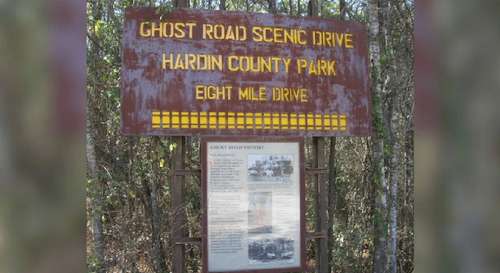
Junglecat, Entrance of Ghost Road of Hardin County TX, frame by Texas Happens, CC BY-SA 4.0
Texas has always had a taste for big stories. Some are rooted in history. Others grow from campfire whispers, old newspaper clippings, family warnings, and late-night drives down lonely roads. Across the state, certain places have gained reputations that go beyond ordinary ghost stories. People describe them as cursed, unlucky, spiritually heavy, or marked by tragedy.
Of course, “cursed” is a matter of belief. Many of these locations have natural explanations, historical reasons for their eerie reputations, or legends that changed over time. Still, these stories matter because they reveal how Texans remember violent events, mysterious landscapes, abandoned buildings, and places where the past feels unusually close.
Bragg Road And The Saratoga Light
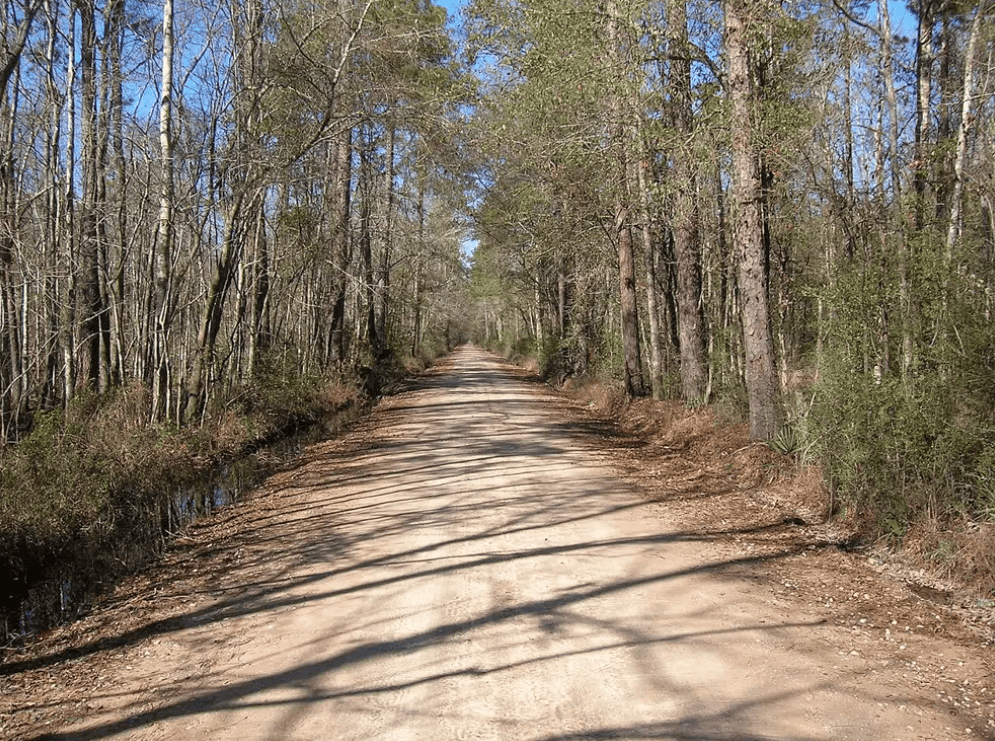
Junglecat, Bragg Road Hardin County TX Looking North, CC BY-SA 4.0
In the Big Thicket of Southeast Texas, Bragg Road is one of the state’s most famous “cursed” roads. Also called Ghost Road, this long dirt road near Saratoga has drawn curious visitors for generations. The main attraction is the Saratoga Light, a strange glow that people say appears in the distance, moves across the road, then vanishes without warning.
The best-known legend claims the light belongs to a railroad worker who died in a terrible accident. According to the story, his ghost still carries a lantern while searching for his missing head. Other versions involve a lost bridegroom, a wandering spirit, or the energy of the old railroad line itself.
Historically, the area did have railroad ties. A rail line once helped open the Big Thicket to logging and travel in the early 1900s, and the former railroad bed later became the road people visit today. Some skeptics believe the lights may come from distant car headlights, reflections, swamp gas, or atmospheric conditions. Still, the legend has survived because the setting works so well. Bragg Road is straight, dark, wooded, and quiet in a way that makes even ordinary lights feel strange.
What makes Bragg Road feel “cursed” to believers is the repetition. People keep returning with the same expectation: stop the car, turn off the lights, wait, and watch. Even when nothing appears, the silence can feel like part of the story.
The Devil’s Backbone
The Devil’s Backbone is a scenic ridge near Wimberley in the Texas Hill Country. By day, it offers beautiful views of limestone hills, winding roads, and wide Texas sky. By night, it has a much darker reputation.
Local legends describe phantom riders, strange fog, ghostly soldiers, and spirits connected to frontier violence. Some stories link the area to Native American conflict, settlers, Spanish explorers, or Civil War-era figures. The details vary depending on who tells the tale, but the mood stays the same. The road is often described as a place where history never fully settled.
Part of the fear comes from the landscape itself. The Hill Country can feel open and exposed, then suddenly closed in by trees, cliffs, and sharp curves. At night, headlights catch the edges of rocks and cedar branches. Fog can gather low on the road. A driver already familiar with the legends may see movement where there is only shadow.
The Devil’s Backbone shows how a place can become “cursed” through atmosphere. There is no single origin story that explains every tale. Instead, many smaller stories gathered around one striking road until the whole ridge became known as haunted ground.
White Rock Lake In Dallas
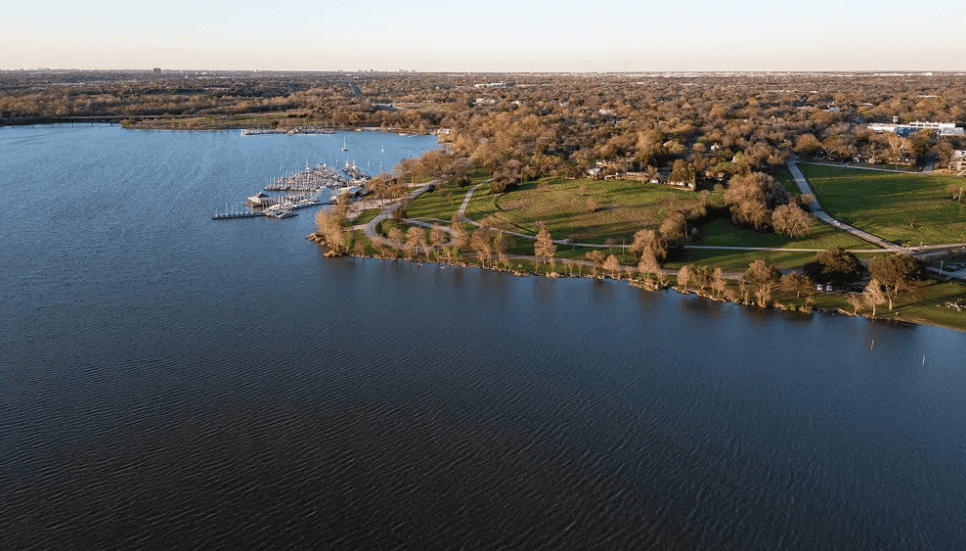
White Rock Lake is one of Dallas’s most beloved outdoor spaces, but it is also home to one of the city’s best-known ghost stories. The legend of the Lady of the Lake usually describes a young woman in wet clothing who appears near the road. She asks for a ride home, gives an address, then disappears before reaching the destination. When the driver arrives, someone at the house explains that the young woman died years earlier.
The story has been told in different forms across the country, but the Dallas version became strongly connected to White Rock Lake. One written version appeared in 1943 in a Texas Folklore Society publication, helping give the legend a lasting place in local culture.
Researchers have questioned whether the exact tragedy in the legend ever happened as told. One Dallas historian noted that while there were real deaths connected to cars entering the lake, she could not find proof for the specific prom-night drowning often repeated in the ghost story.
That uncertainty may be why the story remains powerful. It sits between folklore and local memory. White Rock Lake is peaceful during the day, filled with walkers, runners, cyclists, and families. At night, the water, trees, and quiet roads make the story feel possible. The “curse” here is not violent in the usual sense. It is a feeling of sadness, repetition, and unfinished travel.
Yorktown Memorial Hospital
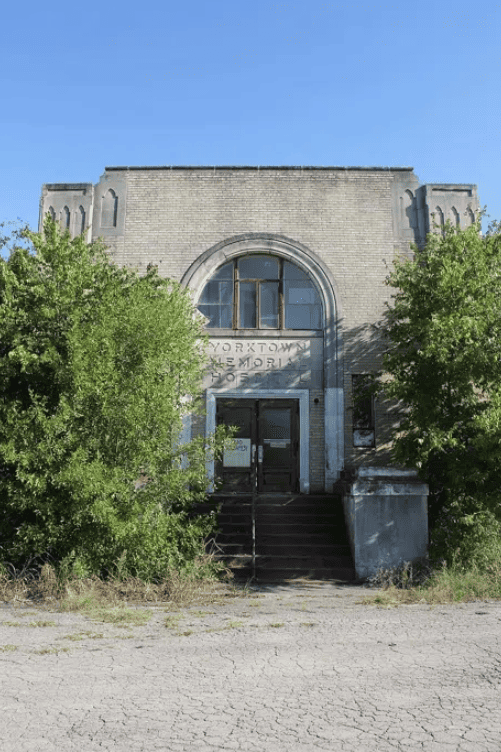
Nicolas Henderson, Yorktown Memorial Hospital (2015), CC BY 2.0
Few Texas buildings have a reputation as intense as Yorktown Memorial Hospital. Located southeast of San Antonio, the former hospital opened in 1951 and served the Yorktown area for decades. It later closed, operated for a time as a rehabilitation center, and eventually became a favorite site for paranormal tours and investigations.
People who believe the building is cursed often point to its long medical history. Hospitals are places of birth, illness, recovery, fear, and death. When one is abandoned, the emotional weight can feel even heavier. Reports connected to Yorktown Memorial Hospital include shadowy figures, unexplained voices, strange noises, and uneasy feelings in certain rooms.
The building’s modern story is still changing. In July 2025, Curious Twins Tours & Events purchased the property with plans connected to preservation and paranormal tourism. Soon after, public access became restricted when the city deemed the building unsafe for occupancy, according to local reporting.
That current status adds another layer to its reputation. Yorktown Memorial Hospital is not simply an old ghost-tour stop. It is a real historic structure with preservation challenges, safety concerns, and a public image shaped by both local history and paranormal interest. For believers, its closed doors make it feel even more mysterious.
Old Alton Bridge, Also Known As Goatman’s Bridge
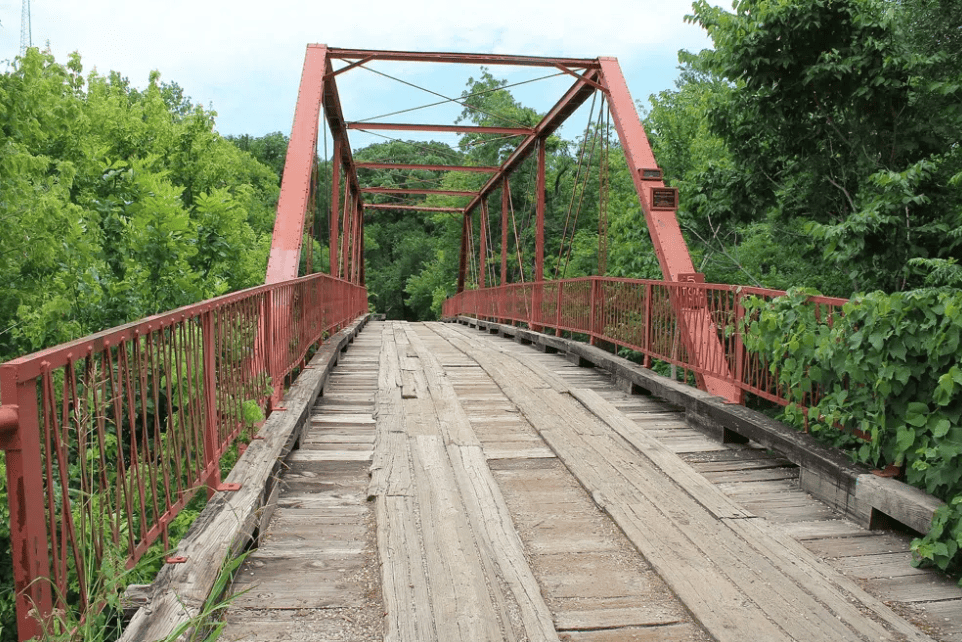
Renelibrary, Altonbridge3, CC BY-SA 3.0
Old Alton Bridge near Denton is one of North Texas’s most famous haunted landmarks. Built in 1884, the iron truss bridge once carried travelers over Hickory Creek. It later became known as Goatman’s Bridge because of a disturbing local legend involving a figure called the Goatman.
The most common version centers on Oscar Washburn, described in legend as a successful Black goat farmer who lived near the bridge in the late 1930s. According to the story, racist attackers murdered him, and his spirit returned as a vengeful presence. Some versions say visitors can summon the Goatman by knocking on the bridge or crossing it at night. Others warn of strange lights, figures in the woods, and unseen hands touching people near the creek.
It is important to treat this story carefully. The legend draws on real fears from Texas history, including racial violence and intimidation. At the same time, parts of the story are difficult to verify. Texas Standard has discussed how the Goatman legend is rooted in local storytelling, historical tension, and the way communities process violent pasts through folklore.
Today, the bridge is also a historic landmark and a popular spot for hikers and photographers. That contrast makes it especially interesting. In daylight, it can look like a preserved piece of Texas engineering. After dark, the legend takes over.
Presidio La Bahía In Goliad
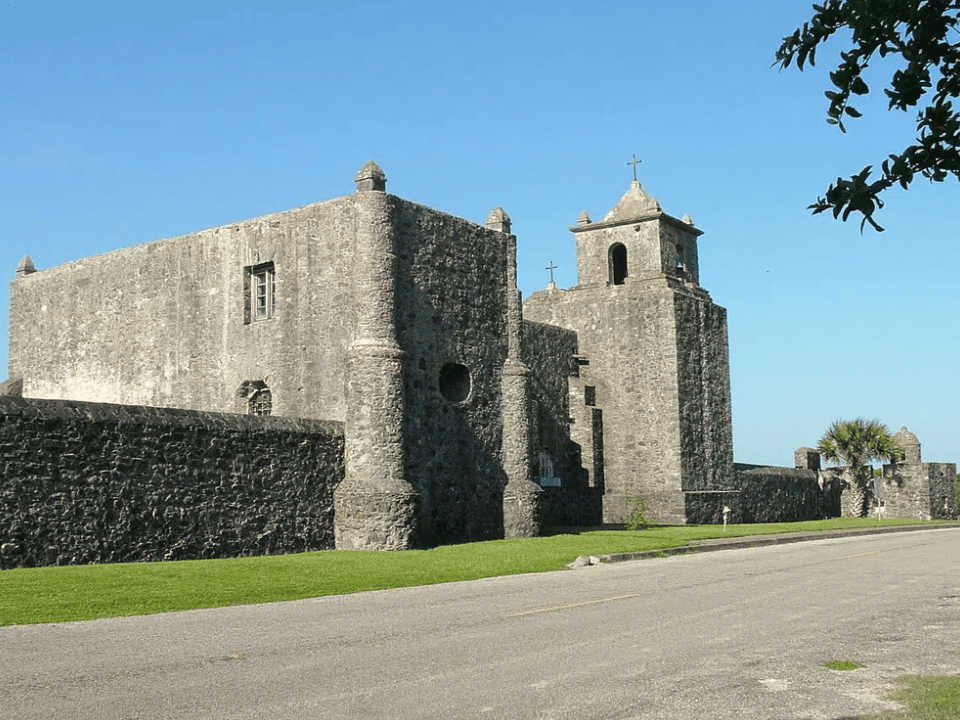
Presidio La Bahía in Goliad carries one of the heaviest histories in Texas. The Spanish colonial fort dates back to the 18th century and later became deeply connected to the Texas Revolution. Its most tragic association is the Goliad Massacre of 1836, when Texian prisoners were executed by Mexican forces under orders from General Antonio López de Santa Anna.
Because of that history, many people believe the site is haunted by soldiers or marked by grief. The idea of a “curse” here comes less from a single ghost story and more from the scale of suffering tied to the place. Visitors often describe the fort as quiet, solemn, and emotionally intense.
Presidio La Bahía is also a major historic site, not simply a haunted attraction. The Texas Historical Commission identifies it as one of the few surviving Spanish Colonial presidios in North America, and the site continues to host educational programs connected to Texas history.
The lesson here is clear: some places feel haunted because people know what happened there. The stones, chapel, walls, and grounds all point back to a violent chapter. Even without believing in ghosts, many visitors understand why the site inspires stories about restless spirits.
The Baker Hotel In Mineral Wells
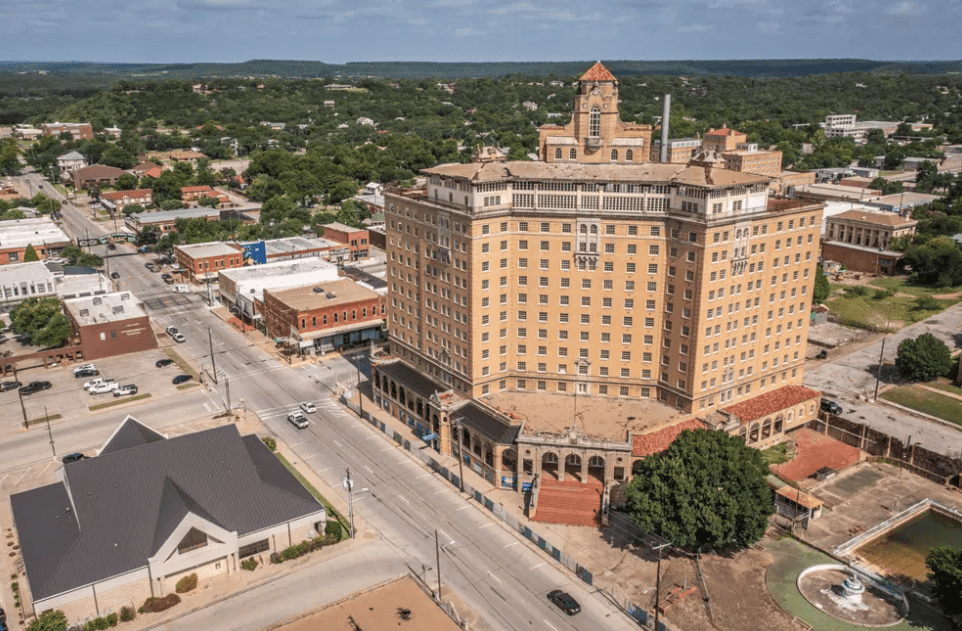
The Baker Hotel in Mineral Wells has long looked like the perfect setting for a Texas curse story. Built in 1929, the hotel rose high above a town once famous for mineral water tourism. It welcomed travelers, celebrities, and health seekers during its prime. After closing in the 1970s, the building stood empty for decades, becoming a towering symbol of lost glamour.
Abandoned hotels often attract ghost stories because they feel frozen in time. Empty rooms, old ballrooms, dark windows, and faded luxury create an atmosphere that invites imagination. The Baker Hotel gained a reputation for hauntings, including stories of ghostly figures, unexplained sounds, and lingering guests who never checked out.
The building’s story has shifted in recent years because of major restoration efforts. Reports have described plans to return the historic hotel to use as a luxury hotel and spa, although timelines have changed as financing and construction details developed.
That makes the Baker Hotel different from many cursed-place stories. Its legend is tied to abandonment, but its future may be tied to revival. If the building fully reopens, the ghost stories may not disappear. They may simply become part of its identity.
The Marfa Lights
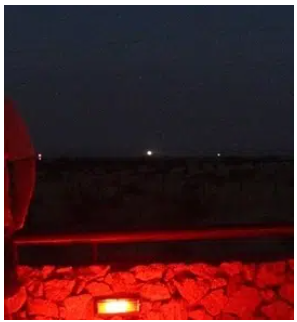
Jon Hanson from Vienna, VA, USA, Marfa Mystery Light (cropped twice), CC BY 2.0
The Marfa Lights are among the most famous mysteries in Texas. Near Marfa in West Texas, people have reported glowing orbs or distant lights that appear on the horizon, move strangely, split apart, or fade away. The lights have been described for generations, and the area now has an official viewing location for visitors.
Unlike some haunted places, Marfa’s mystery does not depend on a tragic backstory. The “curse” is in the uncertainty. People watch the desert at night and see something they cannot easily explain. Some believe the lights are spirits. Others connect them to UFOs, energy fields, or older desert legends.
Scientific explanations often focus on car headlights, mirages, temperature differences, and light distortion across the desert. Researchers who observed the lights in the early 2000s concluded that many sightings could be explained by vehicle headlights distorted by atmospheric conditions.
Even so, the Marfa Lights remain compelling because the desert encourages mystery. West Texas has enormous skies, long distances, and few visual reference points at night. A light that might seem ordinary elsewhere can feel otherworldly there.
Why These Stories Last
Texas “cursed” places usually share a few traits. They have strong settings, memorable histories, and enough uncertainty to keep people talking. A lonely road, an abandoned hospital, a battlefield, or a strange light in the desert gives the imagination room to work.
These stories also serve a cultural purpose. They help communities talk about fear, loss, violence, change, and memory. A ghost story can preserve a place in public attention long after official history fades from everyday conversation. It can also encourage people to ask what really happened there.
The key is to enjoy the legends without losing sight of the facts. Some stories are folklore. Some are tied to documented tragedy. Some have likely scientific explanations. Others remain open to interpretation because the experience of being there feels stronger than any explanation on paper.
Final Thoughts
Texas has no shortage of places people call cursed, haunted, or unlucky. Bragg Road has its wandering light. The Devil’s Backbone has its phantom riders. White Rock Lake has its vanishing woman. Yorktown Memorial Hospital has its dark hallways. Old Alton Bridge has its Goatman legend. Presidio La Bahía carries the weight of real violence. The Baker Hotel rises from decades of abandonment. Marfa keeps people staring into the night sky.
Whether these places are truly cursed depends on belief. What is certain is that each one has become part of Texas folklore. They remind us that history does not always stay in books. Sometimes it lingers on roads, bridges, lakeshores, forts, hotels, hospitals, and desert horizons, waiting for the next person to wonder what they just saw.
Comments (0)
No comments yet. Be the first to share your thoughts.
Leave a comment