


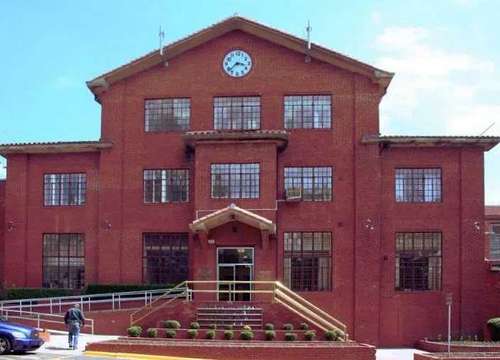
Image: Nick DiFonzo from Houston, Texas, HuntsvilleUnitHuntsvilleTX, CC BY 2.0
Near downtown Huntsville stands a red-brick prison that has operated for more than 175 years. Officially known as the Huntsville Unit, it is better known across Texas as the “Walls Unit,” a nickname connected to the high brick walls surrounding the property.
Opened in 1849, the Walls Unit was Texas’s first state prison. It has played a central role in the development of the state’s correctional system and remains an active prison today. Its history includes prison labor, industrial production, administrative operations, executions, reform efforts, and several major events that attracted national attention.
Why Texas Built a State Prison
During the Republic of Texas era, people convicted of crimes were often held in local jails, punished physically, fined, or executed. Although the Republic’s Congress approved the creation of a prison system in 1842, a permanent state penitentiary was not established until after Texas joined the United States.
In 1848, the Texas Legislature authorized the construction of a state prison. Huntsville was selected partly because of its central location within the settled portion of Texas at the time. The community also had access to transportation routes, timber, and other resources needed to construct and operate a large institution.
The prison opened in 1849 with only three incarcerated men. From that small beginning, the Huntsville penitentiary became the foundation of what would eventually grow into one of the largest state prison systems in the country.
How the Walls Unit Got Its Name
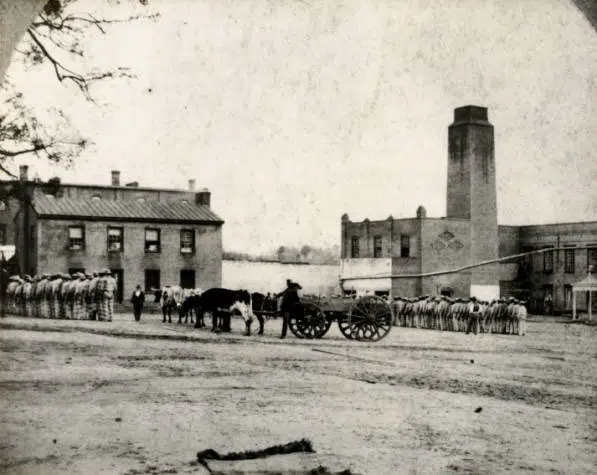
The official name of the facility is the Huntsville Unit, but the nickname “Walls Unit” has been used for generations. It comes from the tall brick wall surrounding the prison yard and separating the institution from the streets of Huntsville.
The wall is about 15 feet high in some sections and gives the prison its immediately recognizable appearance. Unlike many modern prisons built in isolated rural areas, the Walls Unit is located close to neighborhoods, businesses, churches, and government offices.
Its downtown location has made the prison a familiar part of everyday life in Huntsville. For much of the city’s history, prison employees, administrators, suppliers, and families of incarcerated people have contributed to the local economy and culture.
Prison Labor and Early Industry
From its earliest years, the prison was expected to generate income and reduce the cost of incarceration. Incarcerated people worked in shops producing items such as clothing, furniture, wagons, bricks, and agricultural equipment.
A textile operation became one of the prison’s most important industries. During the Civil War, incarcerated workers produced uniforms, tents, and other supplies for the Confederacy. After the war, Texas increasingly relied on convict leasing, a system in which incarcerated people were hired out to private businesses and plantations.
Convict leasing generated revenue for the state, but it became notorious for dangerous working conditions, physical abuse, poor medical care, and limited government supervision. Texas gradually moved away from leasing and returned incarcerated workers to state-controlled farms, factories, and prison units.
Industrial work continues at the Huntsville Unit. Current operations include a textile mill, garment production, welding, machine work, and mechanical repair.
The Headquarters of the Texas Prison System
For many decades, the Walls Unit was more than a place of confinement. It also served as the administrative center of the Texas prison system.
Senior officials worked from offices at the prison, and important records were stored there. Decisions involving prison farms, employee assignments, discipline, construction, transportation, and industrial production were often directed from Huntsville.
As Texas built additional facilities, administrative operations gradually expanded beyond the original prison. Huntsville nevertheless remained closely associated with the state correctional system, and the city continues to serve as the headquarters of the Texas Department of Criminal Justice.
Daily Life Behind the Walls
Conditions at the prison have changed greatly since the 1800s, but the institution has always operated under strict schedules and security procedures.
Daily life generally includes assigned work, meals, head counts, medical appointments, educational programs, religious services, recreation, and movement between housing and work areas. Access to programs depends on factors such as custody level, behavior, health, staffing, and available space.
The modern Huntsville Unit houses male prisoners in several custody classifications. It also functions as a regional release site for people leaving prison through discharge, parole, or mandatory supervision. The facility has medical, dental, mental health, educational, maintenance, and industrial operations.
The Prison and Capital Punishment
The Walls Unit has a prominent and controversial place in the history of capital punishment in Texas.
Men sentenced to death were housed in the prison’s East Building from 1928 until 1952. Death row was later moved to another part of the state prison system, eventually reaching its current location at the Allan B. Polunsky Unit near Livingston.
Although death-row prisoners are no longer housed at the Walls Unit, Texas executions are carried out in the Huntsville Unit’s execution chamber. Condemned prisoners are transported to Huntsville shortly before their scheduled executions.
This role has made the prison a gathering place for officials, journalists, demonstrators, victims’ relatives, and relatives of condemned prisoners. It has also placed the Walls Unit at the center of continuing debates about justice, punishment, wrongful convictions, deterrence, and the death penalty.
The 1974 Huntsville Prison Siege
One of the most serious incidents in the prison’s history began on July 24, 1974.
Three armed prisoners led by Fred Gómez Carrasco took employees and other prisoners hostage inside the education and library area. The standoff continued for 11 days, making it one of the longest prison hostage sieges in American history.
On August 3, the hostage-takers attempted to escape using rolling shields made from chalkboards, books, and other materials. The attempt ended in gunfire. Two female hostages, librarian Julia Standley and teacher Elizabeth Beseda, were killed, along with two of the hostage-takers.
The siege led correctional officials across the country to examine prison security, emergency planning, hostage negotiation, weapons control, and employee training.
Reform and Changing Prison Standards
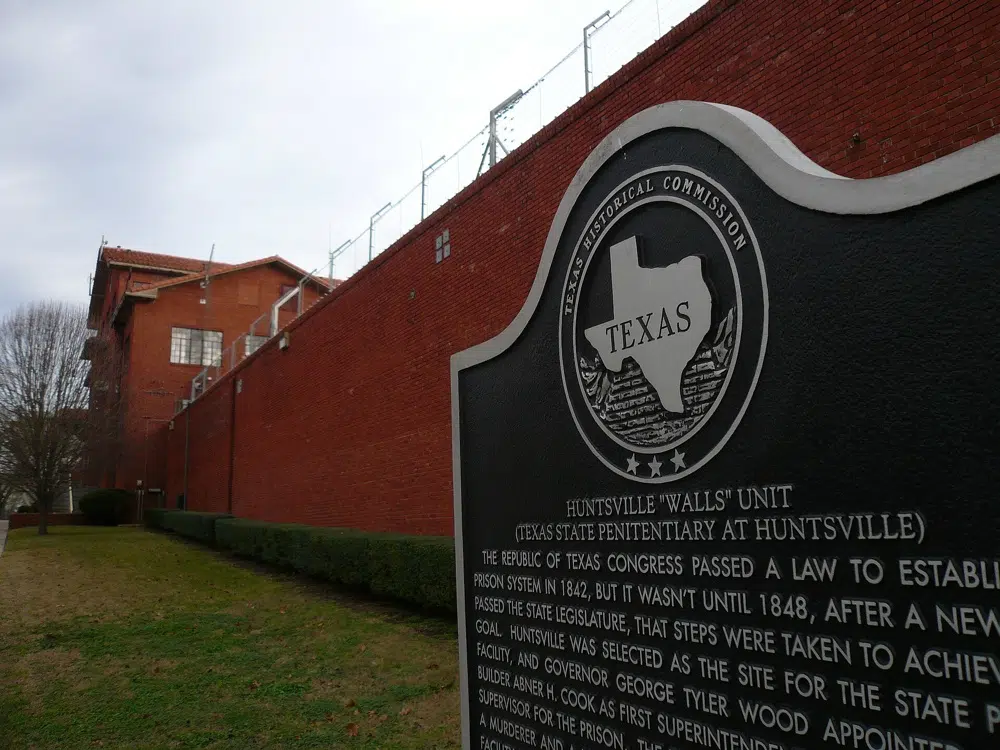
Mark Britain from Houston, USA, HuntsvilleUnitBrickWalls, CC BY-SA 2.0
The Walls Unit has also been affected by major legal challenges to conditions within the Texas prison system.
During the late 20th century, lawsuits raised concerns about overcrowding, medical treatment, staff practices, discipline, safety, and access to basic services. One of the most influential cases was Ruiz v. Estelle, which led federal courts to require extensive reforms throughout Texas prisons.
The changes included closer supervision of prison conditions, expanded medical services, revised disciplinary procedures, improved recordkeeping, and limits on overcrowding. Texas also began a massive prison-building program that reduced the Walls Unit’s earlier importance as the center of incarceration in the state.
A Prison Surrounded by a City
The relationship between Huntsville and the prison is unusual because the Walls Unit is so close to the center of town.
Visitors can see the outer walls from public streets, but the prison is an operating correctional institution and is not open for casual public tours. People interested in learning more can visit the Texas Prison Museum, located elsewhere in Huntsville.
The museum contains exhibits about prison labor, uniforms, contraband, famous prisoners, correctional officers, the 1974 hostage siege, and the history of capital punishment. Its displays help explain how the Texas prison system developed and how prison policies have affected employees, incarcerated people, families, and communities.
Why the Walls Unit Matters
The Walls Unit provides a physical link between modern Texas and the state’s earliest attempts to create an organized correctional system.
Its walls have witnessed changing ideas about punishment, labor, racial segregation, rehabilitation, prison management, security, and capital punishment. The facility has been expanded and modernized many times, yet its location and architecture continue to reflect its 19th-century origins.
More than simply an old building, the Huntsville Unit represents a complicated part of Texas history. Understanding it requires looking at the experiences of correctional employees, incarcerated people, crime victims, families, reformers, lawmakers, and the Huntsville community.
The prison remains active, but its historical importance reaches far beyond its walls. It offers a clear example of how Texas’s approach to crime and punishment has changed—and how parts of that past continue to influence the state today.

Comments (0)
No comments yet. Be the first to share your thoughts.
Leave a comment