


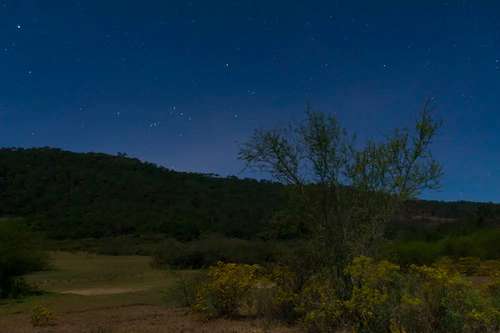
Texas has several well-known places to experience truly dark skies, but South Llano River State Park often flies under the radar. Tucked away just outside Junction on the western edge of the Hill Country, it doesn't have the towering granite dome of Enchanted Rock or the vast desert landscapes of Big Bend. Instead, it offers something many visitors are looking for: a peaceful setting where the stars become the main attraction.
During the day, the park is known for its spring-fed river, excellent birdwatching, scenic hiking trails, and peaceful campgrounds. After sunset, however, the landscape changes. The sounds of the river replace daytime activity, artificial light nearly disappears, and a sky filled with stars stretches across the Hill Country.
That combination of natural darkness, quiet surroundings, and easy accessibility has helped make South Llano River State Park one of the best—and often overlooked—places in Texas for stargazing.
The Park Sits on the Edge of Some of Texas's Darkest Skies
South Llano River State Park is located about five miles southwest of Junction in Kimble County. Although Interstate 10 passes nearby, the park quickly feels much more remote once visitors enter its 2,600-acre landscape of oak woodlands, open grasslands, limestone hills, and the South Llano River itself.
One of its biggest advantages is location. The park sits on the western edge of the Texas Hill Country, where development becomes noticeably less dense than around Austin or San Antonio. Beyond Junction, large stretches of ranchland extend toward West Texas, creating a broad area with relatively little artificial lighting.
That lack of surrounding development allows visitors to experience a much darker sky than they would find in most of Central Texas. On clear nights, the Milky Way becomes easily visible, constellations stand out sharply, and many faint stars normally hidden by urban light pollution appear without the need for a telescope.
It Is an International Dark Sky Park
South Llano River State Park's reputation is backed by official recognition.
In February 2017, DarkSky International (then the International Dark-Sky Association) designated the park as an International Dark Sky Park. The certification recognizes parks that not only have outstanding night skies but also actively protect them through responsible lighting, visitor education, and long-term conservation efforts.
The park earned the designation after years of improving outdoor lighting, monitoring sky quality, and expanding astronomy programming. At the time, it became only the third Texas state park to receive the honor, joining Copper Breaks State Park and Enchanted Rock State Natural Area.
Unlike certifications that recognize scenery alone, International Dark Sky Park status requires continued commitment. Park staff monitor lighting, educate visitors about light pollution, and work with nearby communities to preserve the darkness that makes the area special.
The Sky Is Dark Enough to Reveal the Milky Way
One of the easiest ways to understand the quality of a night sky is the Bortle Dark-Sky Scale, which measures how much light pollution affects astronomical viewing.
South Llano River State Park has a Bortle Class 3 rating, meaning it offers very dark skies where the Milky Way is clearly visible on moonless nights. Many deep-sky objects can also be seen with binoculars or small telescopes, while thousands of stars become visible to the naked eye.
Texas Parks and Wildlife has gone a step further by installing a permanent Sky Quality Meter that continuously measures the park's nighttime darkness. Visitors can even check real-time readings online before planning a trip, along with weather forecasts, moon phases, and sky charts specifically designed for astronomers.
These tools make South Llano one of the more visitor-friendly dark-sky destinations in Texas, especially for people planning their first serious stargazing trip.
Quiet Is Part of the Experience
What separates South Llano River from several other dark-sky parks isn't simply the darkness. It is the atmosphere.
The park generally receives fewer visitors than destinations such as Enchanted Rock or Big Bend National Park. Even during busy camping seasons, there are often places where visitors can sit quietly beside the river or in an open meadow without large crowds nearby.
Instead of hearing traffic or city noise, nighttime visitors are more likely to hear flowing water, insects, owls, frogs, or the rustle of wind through live oaks. That peaceful environment encourages visitors to slow down and spend time simply watching the sky instead of treating stargazing as a quick stop between other activities.
Many campers describe this sense of quiet as one of the park's greatest strengths.
Astronomy Has Become Part of the Park's Identity
South Llano River State Park actively encourages visitors to explore the night sky.
Texas Parks and Wildlife regularly schedules star parties, telescope programs, and ranger-led astronomy events, often in partnership with the Mason Star Gazers astronomy club and Texas Tech University's Junction Center. These programs introduce visitors to constellations, planets, galaxies, seasonal celestial events, and the importance of reducing light pollution.
Many events are designed for beginners. Rangers and volunteer astronomers explain how to locate major constellations, identify visible planets, and understand why the Milky Way appears brighter during certain seasons.
The educational focus has become an important part of the park's identity. Rather than simply providing dark skies, South Llano helps visitors understand what they are seeing above them.
Camping Makes Stargazing Even Better
One advantage of South Llano River State Park is that visitors do not have to rush home after sunset.
The park offers campsites with water and electricity, walk-in campsites, group camping areas, screened shelters, and backcountry camping options. Spending the night allows visitors to experience the sky after full darkness arrives rather than leaving shortly after sunset.
Campers also avoid one of the biggest mistakes first-time stargazers make: leaving too early.
True astronomical darkness occurs well after twilight ends, and the best viewing often comes several hours after sunset. Staying overnight allows visitors to watch the Milky Way gradually emerge, observe changing constellations throughout the evening, or simply enjoy the silence that settles across the park.
Texas Parks and Wildlife also allows day visitors to extend their stay beyond the normal closing time by purchasing a night activity permit, making evening astronomy programs more accessible for those who are not camping.
There Is Plenty to Do Before the Stars Come Out
Although the night sky is a major attraction, South Llano River State Park easily fills an entire day.
The South Llano River provides opportunities for kayaking, canoeing, tubing, fishing, and swimming when water levels allow. The clear, spring-fed river also supports healthy populations of fish, turtles, and aquatic wildlife.
The park is equally well known among birdwatchers. More than 250 bird species have been recorded here, making it one of the better birding destinations in the Hill Country. Wild turkeys are especially common, and the park has long served as an important site for Eastern wild turkey restoration efforts.
Hiking trails pass through oak-juniper woodlands, native grasslands, limestone bluffs, and scenic overlooks above the river. During spring, visitors often find blooming wildflowers adding color across the landscape.
Because daytime recreation is relatively relaxed, many visitors naturally transition into an evening of stargazing without needing to leave the park.
Timing Your Visit Makes a Difference
Even in a certified dark-sky park, conditions matter.
The best nights for stargazing usually occur near the new moon, when moonlight does not overpower faint stars. During those periods, the Milky Way appears much brighter, and meteor showers become easier to observe.
Weather is equally important. Clear skies, low humidity, and stable atmospheric conditions produce the sharpest views. Texas Parks and Wildlife provides links to astronomy forecasts, cloud-cover predictions, and sky conditions to help visitors plan successful trips.
Visitors should also allow about 20 to 30 minutes for their eyes to adjust fully to darkness. Using a red-light flashlight instead of a white flashlight preserves night vision and makes faint celestial objects much easier to see.
Protecting Darkness Is an Ongoing Effort
Dark skies do not remain dark automatically.
As communities grow and outdoor lighting expands, sky glow gradually spreads into rural areas. Even small increases in poorly directed lighting can reduce visibility of faint stars over surprisingly large distances.
South Llano River State Park continues working to reduce unnecessary lighting within the park while encouraging surrounding communities to consider dark-sky-friendly practices. Educational programs explain that preserving darkness benefits more than astronomy—it also supports migratory birds, nocturnal wildlife, insects, and the natural rhythms of the ecosystem.
Those conservation efforts have become one of the reasons the park remains a respected destination among amateur astronomers across Texas.
Why South Llano River State Park Deserves More Attention
Texas has several outstanding places to observe the night sky, but South Llano River State Park occupies a unique place among them.
It combines excellent dark skies, a peaceful river setting, quality camping, accessible astronomy programs, and relatively light visitation into an experience that feels both relaxing and educational. Visitors do not need technical astronomy knowledge or expensive equipment to appreciate what makes the park special.
Instead, they find a landscape where the pace naturally slows. Days are spent hiking trails, watching birds, paddling the river, or relaxing beneath live oaks. Evenings are reserved for looking upward, where thousands of stars remind visitors why protecting natural darkness has become such an important part of Texas conservation.
For anyone searching for a quieter alternative to the state's better-known stargazing destinations, South Llano River State Park remains one of the best-kept secrets in the Texas Hill Country.
Comments (0)
No comments yet. Be the first to share your thoughts.
Leave a comment