


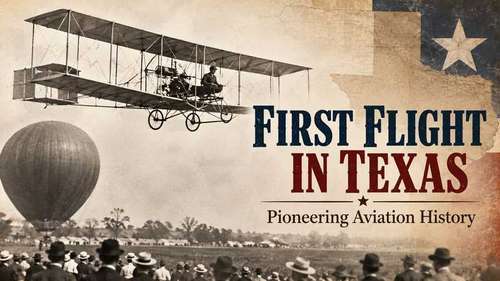
Imagine standing in an open field in Texas in 1910, watching a strange machine made of wood, fabric, and wires lift off the ground. No airport terminal, no modern runway, and certainly no guarantee that the pilot would land safely.
For the people watching, it must have been an extraordinary sight.
Today, airplanes are part of everyday life. But Texas aviation began with experimental flying machines, daring pilots, and a few attempts that didn't always end well.
And one of the state's most fascinating aviation stories may have happened decades before the Wright brothers made their famous flight.
Did a Texan Fly Before the Wright Brothers?
Long before powered airplanes became a reality, Texans were already taking to the skies in balloons during the 1860s.
But one inventor dreamed of something more ambitious.
Jacob Friedrich Brodbeck, a German-born inventor who settled in the Texas Hill Country, spent years developing a machine he believed could carry a person through the air.
His proposed aircraft had wings, a rudder, and a propeller powered by coiled springs.
According to one account, Brodbeck tested his flying machine on September 20, 1865, near Luckenbach, Texas.
The story claims that his invention rose about 12 feet off the ground and traveled roughly 100 feet before the springs unwound and the machine crashed.
Brodbeck reportedly escaped serious injury, but his aircraft was destroyed.
If the story is true, his experiment would have taken place nearly four decades before the Wright brothers achieved controlled, sustained powered flight in 1903.
There's just one problem: historians haven't been able to verify it.
Accounts disagree about the date and location, with some placing the attempt in San Antonio's San Pedro Park. No surviving blueprints establish exactly how the aircraft worked.
So while Brodbeck remains an intriguing Texas aviation pioneer, his supposed flight is best treated as a legend rather than a confirmed achievement.
February 18, 1910: The First Documented Airplane Flight in Texas
Texas had to wait until February 18, 1910, for its first recorded airplane flight.
The pilot was Louis Paulhan, a French aviator already known for his flying demonstrations.
Paulhan arrived in the Houston area as part of an American exhibition tour. His appearance in South Houston was more than a flying demonstration—it was also a promotional event organized to attract attention to a developing community.
Special trains brought spectators from downtown Houston to see the remarkable new invention.
More than 2,500 people gathered on the first day.
Paulhan took to the air in a Farman biplane, giving many spectators their first glimpse of a powered airplane in flight.
High winds prevented some of his planned aerial maneuvers, but the demonstration was still a success.
The following day, an even larger crowd of nearly 6,000 came to watch.
What makes the event remarkable is how quickly aviation was changing. Only seven years had passed since the Wright brothers' historic flights at Kitty Hawk, yet people in Texas could already buy a ticket to watch an airplane fly.
Paulhan's demonstration marked the beginning of documented powered aviation in the Lone Star State.
Just Weeks Later, San Antonio Made Military Aviation History
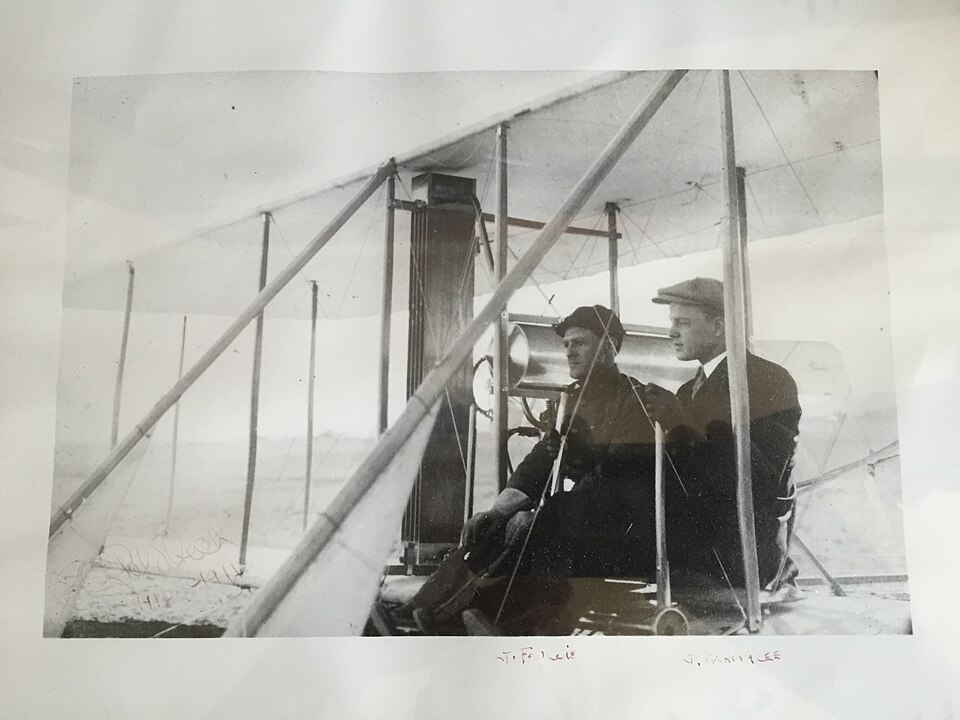
Less than two weeks after Paulhan's Houston demonstration, another historic flight took place in San Antonio.
On March 2, 1910, Lieutenant Benjamin D. Foulois flew the U.S. Army's first military airplane at Fort Sam Houston.
The aircraft was a Wright Military Flyer, officially known as Signal Corps Airplane No. 1.
Here's the surprising part: Foulois had never flown an airplane solo before arriving in Texas.
He had ridden in aircraft but had to learn how to operate the Army's plane largely through experimentation. The Wright brothers even sent him flying advice through the mail.
His first flight at Fort Sam Houston lasted about seven and a half minutes.
He made three more flights that day, although the fourth ended in a crash that damaged the aircraft.
Despite the rough start, Foulois continued experimenting and learning.
His work helped establish San Antonio as an important center for early American military aviation, a connection the city maintains today.
The Stinson Sisters Helped Put San Antonio on the Aviation Map
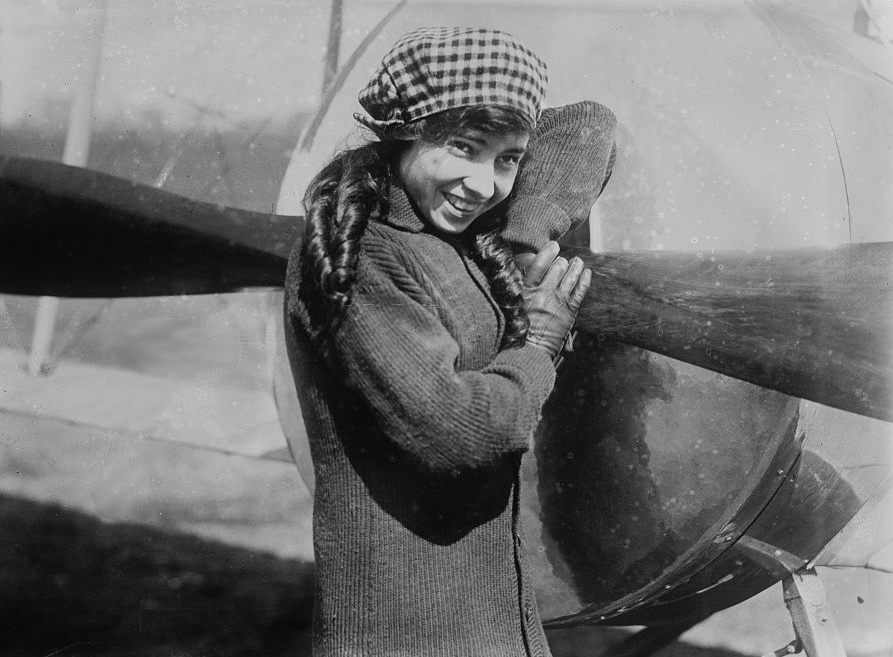
Texas aviation wasn't shaped by men alone.
Two sisters, Katherine and Marjorie Stinson, became some of the most remarkable figures in the state's early flying history.
Katherine earned her pilot's license in 1912, becoming the fourth woman in the United States to do so.
Known as the "Flying Schoolgirl," she became famous for her aerial performances, endurance flights, and record-setting achievements.
In 1915, she became the first woman to perform a loop-the-loop maneuver in an airplane.
Her younger sister Marjorie was also an accomplished pilot and instructor. She earned her license in 1914 and became known as the "Flying Schoolmarm" for her teaching abilities.
Together with their family, the sisters established the Stinson School of Flying in San Antonio in 1915.
Their school trained civilian pilots and later helped prepare aviators for military service during World War I.
The original flying field eventually developed into Stinson Municipal Airport.
Remarkably, Stinson remains in operation today and is recognized as one of the oldest continuously operating airports in the United States.
What began as a family flying school became a lasting piece of Texas aviation history.
How World War I Turned Texas Into a Pilot-Training Center
When the United States entered World War I in 1917, the military urgently needed more pilots, mechanics, and aviation personnel.
Texas was well suited to the task.
Its generally mild winters, broad stretches of relatively flat land, and available space made it attractive for military flight training.
Airfields began expanding across the state, particularly around San Antonio.
Kelly Field opened for flying operations in April 1917, just before the United States entered the war.
It quickly became one of the country's most important military aviation training centers.
More American pilots earned their wings at Kelly Field during World War I than at any other U.S. airfield.
Among the aviators who later trained there was Charles Lindbergh, who would become internationally famous for his 1927 solo nonstop flight across the Atlantic.
Other Texas installations, including Brooks Field in San Antonio and Ellington Field near Houston, also supported the growing military aviation program.
By the end of the war, Texas had established itself as a major part of America's aviation infrastructure.
The 1930s: Texas Pilots Push the Limits
As airplanes became faster and more reliable, Texas produced aviators who helped demonstrate what flight could accomplish.
One of the most famous was Wiley Post, a Texas-born pilot who became the first person to fly solo around the world in 1933.
Post completed the journey in just over seven days, showing how dramatically aviation had reduced travel times.
Another prominent figure was Howard Hughes, the Houston-born businessman, filmmaker, and aviator who set speed records and helped advance aircraft design.
These achievements captured the public's imagination at a time when long-distance air travel was still developing.
Meanwhile, Texas continued building its military aviation facilities.
Randolph Field near San Antonio was dedicated in 1930 and began pilot training in 1931.
Nicknamed the "West Point of the Air," it became one of the nation's most important military flying schools.
Aviation was no longer simply a spectacle for curious crowds. It was becoming essential to transportation, defense, and technological progress.
World War II and the Women Who Flew for Their Country
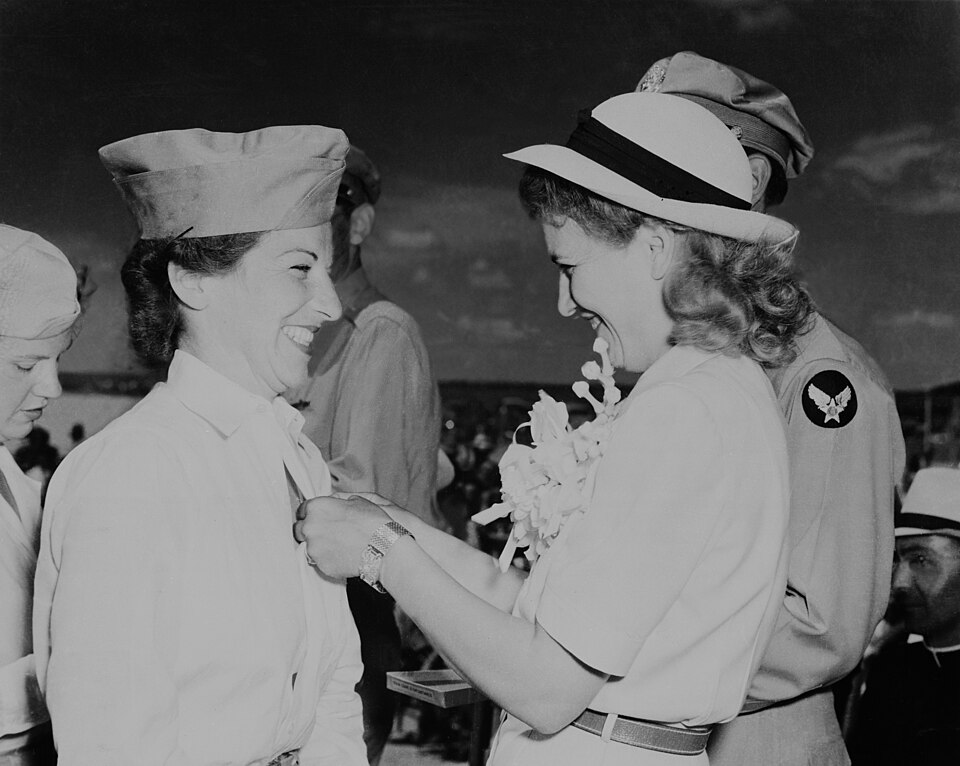
Texas aviation expanded dramatically again during World War II.
Military airfields trained pilots and crews, while maintenance and supply facilities supported the war effort.
One especially important chapter unfolded at Avenger Field in Sweetwater.
In 1943, the airfield became the principal training site for the Women Airforce Service Pilots, better known as the WASP.
These women flew military aircraft within the United States, transported planes between bases, tested aircraft, and performed other essential duties that freed male pilots for combat assignments.
Their work was demanding and sometimes dangerous.
Although they served in support of the military, WASP members were classified as civilians during the war. Congress did not grant them veteran status until 1977.
Their story remains one of Texas aviation's most significant contributions to women's history.
From Early Flights to Modern Airlines
As military aviation developed, commercial air travel was also changing how Texans moved around the state and country.
Early airline services carried mail before passenger travel became more common.
For a state as large as Texas, airplanes offered an obvious advantage: they could connect cities separated by hundreds of miles much faster than road or rail travel.
Dallas, Fort Worth, Houston, and San Antonio became increasingly important aviation centers.
One of the biggest changes came in 1971, when Dallas-based Southwest Airlines began passenger service between Dallas, Houston, and San Antonio.
Its original focus on frequent, relatively affordable flights between Texas cities helped reshape the airline business.
What had once been an expensive novelty was gradually becoming a practical option for everyday travelers.
Texas Aviation Today: From Airports to Space Exploration
More than a century after Paulhan's first documented flight, Texas remains deeply connected to aviation and aerospace.
Dallas–Fort Worth and Houston are major commercial air transportation centers, while San Antonio continues its long association with military aviation and aircraft maintenance.
The state's aerospace industry also extends beyond airplanes.
NASA's Johnson Space Center in Houston has played a central role in American human spaceflight since the 1960s, including the Apollo missions and ongoing astronaut training and mission operations.
Texas is also home to private aerospace companies and facilities involved in developing and testing spacecraft.
From experimental flying machines to space exploration, the state's aviation story has grown far beyond what spectators in South Houston could have imagined in 1910.
Where to Explore Texas Aviation History
You don't have to be a pilot to appreciate the state's flying heritage. Several Texas museums preserve aircraft, photographs, and stories from different eras of aviation.
Lone Star Flight Museum — Houston
Located at Ellington Airport, this museum features historic aircraft, aviation exhibits, and educational experiences highlighting the history and science of flight.
Frontiers of Flight Museum — Dallas
Situated at Dallas Love Field, the museum explores aviation and spaceflight through historic aircraft, artifacts, and exhibits.
National WASP WWII Museum — Sweetwater
Located at Avenger Field, this museum tells the story of the women who trained there and served as pilots during World War II.
Stinson Municipal Airport — San Antonio
While it's an active airport rather than a traditional history museum, Stinson is a fascinating place to connect with the legacy of Katherine and Marjorie Stinson and the early years of Texas aviation.
Check official visitor information before planning a trip, as museum hours, exhibits, and access arrangements may change.
Key Dates in Texas Aviation History
Year | Milestone |
|---|---|
1865 | Jacob Brodbeck's alleged flying-machine experiment near Luckenbach |
1903 | The Wright brothers achieve controlled, sustained powered flight in North Carolina |
1910 | Louis Paulhan makes the first recorded airplane flight in Texas on February 18 |
1910 | Benjamin Foulois flies the Army's first military airplane at Fort Sam Houston on March 2 |
1915 | The Stinson family establishes its flying school in San Antonio |
1917 | Kelly Field begins operations as Texas expands military aviation training |
1930 | Randolph Field is dedicated near San Antonio |
1933 | Wiley Post completes the first solo flight around the world |
1943 | Avenger Field becomes the main training site for the WASP |
1971 | Southwest Airlines begins service between three Texas cities |
Conclusion: Texas Aviation Started With a Leap Into the Unknown
Texas aviation history isn't just a story about airplanes getting bigger, faster, and more advanced.
It's about people willing to attempt things that once seemed impossible.
Jacob Brodbeck imagined a flying machine decades before powered flight became practical. Louis Paulhan amazed spectators in Houston. Benjamin Foulois helped the Army learn how to fly in San Antonio. And the Stinson sisters showed that women could be leaders in an industry still finding its wings.
Those early experiments helped lay the groundwork for the military airfields, airports, airlines, and aerospace facilities that followed.
The next time you watch an airplane take off over Texas, consider how far the state has come since that February day in 1910, when a French pilot and his biplane gave thousands of Texans a glimpse of the future.

Comments (0)
No comments yet. Be the first to share your thoughts.
Leave a comment