


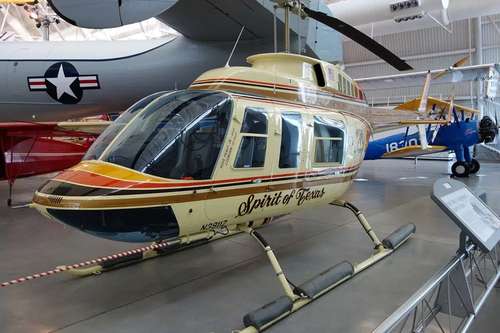
In September 1982, two American pilots made aviation history in a helicopter named the Spirit of Texas. H. Ross Perot Jr. and Jay Coburn flew a Bell 206L-1 LongRanger II around the world, starting and ending in Dallas, Texas. Their trip became the first successful circumnavigation of the globe by helicopter.
The journey covered about 26,000 miles, crossed 26 countries, and took 29 days, 3 hours, and 8 minutes. It was not just a long-distance flight. It was a test of planning, endurance, navigation, weather judgment, and mechanical trust in a single-engine aircraft.
A Bold Idea from Texas

Financial Times, Ross Perot Jr. 2018, CC BY 2.0
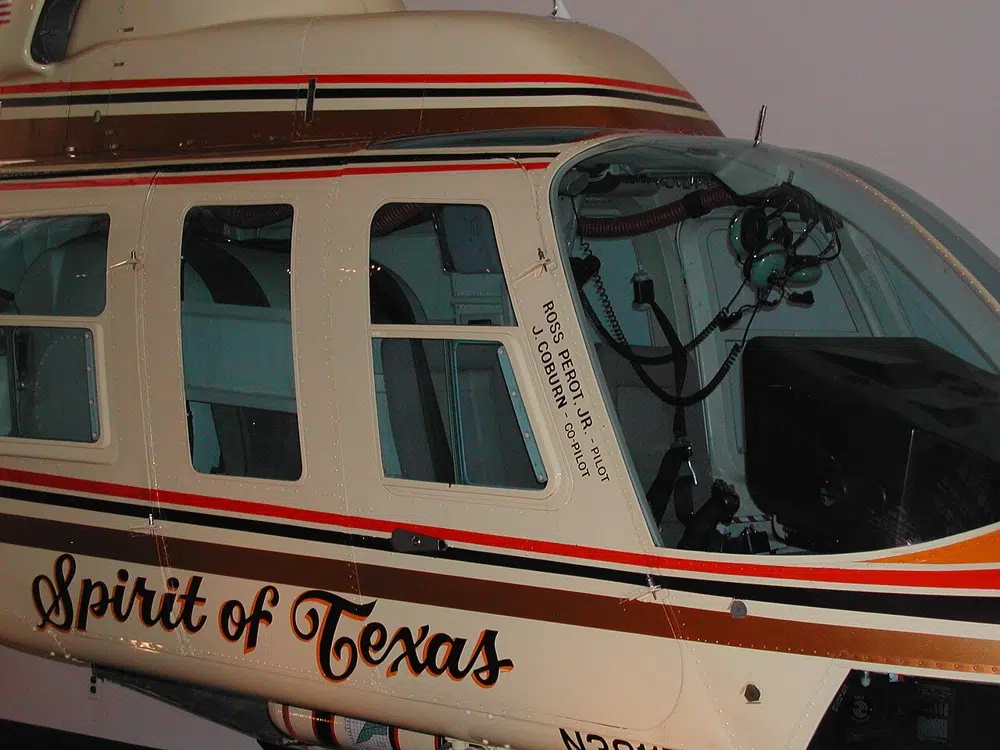
The Spirit of Texas was closely tied to the state from the beginning. The flight began in Dallas on September 1, 1982, and returned there on September 30. Ross Perot Jr., a native of Dallas, was only 23 years old at the time. His co-pilot, Jay Coburn, brought valuable aviation experience to the mission.
Their goal was ambitious: prove that a helicopter could fly around the world. Fixed-wing aircraft had already completed such journeys, but helicopters presented a different challenge. They usually fly shorter distances, require more frequent refueling, and are more vulnerable to weather and range limitations.
The Helicopter Behind the Journey
FlugKerl2, Spirit of Texas SI, CC BY-SA 3.0
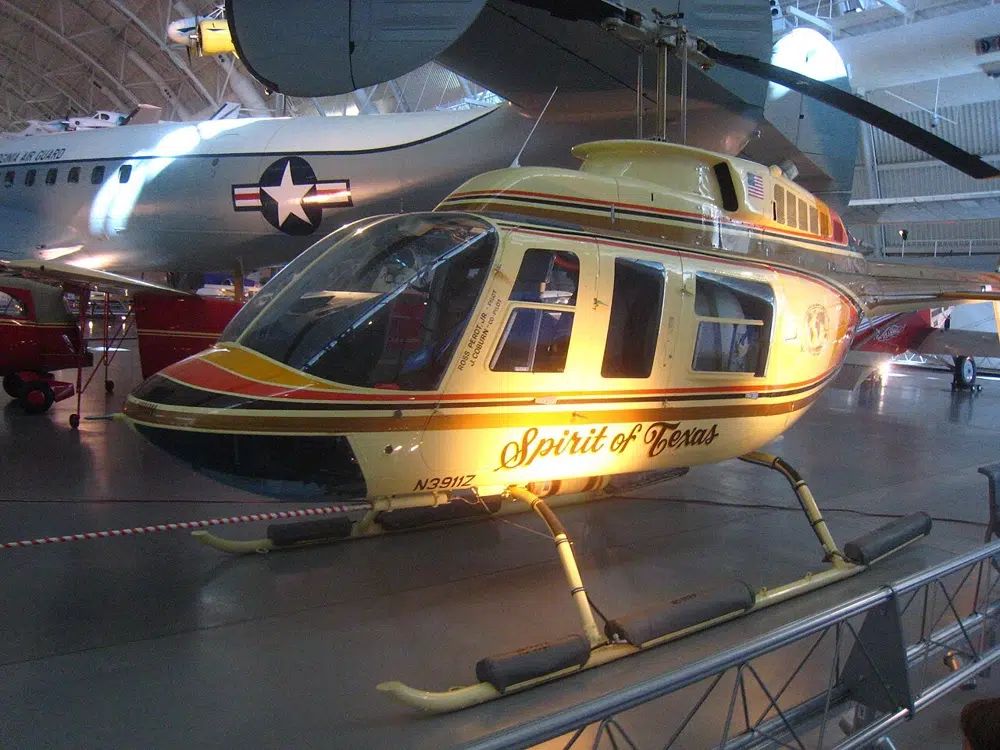
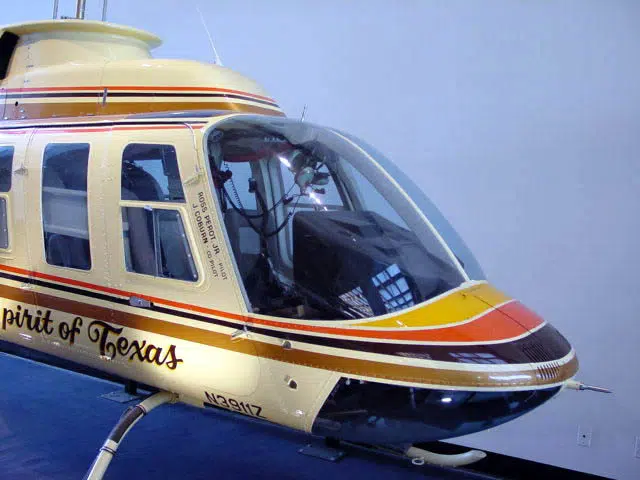
The aircraft was a Bell 206L-1 LongRanger II, a helicopter often used for business, utility work, and transportation. It was not originally built as a globe-circling aircraft, so it had to be modified for the mission.
Nonessential items were removed to reduce weight. An extra fuel tank was added, along with special safety, communication, and navigation equipment. These changes helped the pilots handle long overwater flights, difficult weather, and remote stretches where emergency options were limited.
The helicopter was powered by an Allison 250-C28B turbine engine. Despite the scale of the trip, the aircraft reportedly encountered no major mechanical problems along the way.
A Route Across Continents and Oceans
The flight route took the Spirit of Texas from North America across the Atlantic, through Europe, the Middle East, Asia, the Pacific, Alaska, Canada, and back to Dallas.
The pilots flew through changing climates, time zones, air traffic systems, and political boundaries. They had to manage permits, refueling stops, weather delays, and the physical demands of flying day after day.
According to the Smithsonian, Perot and Coburn flew an average of eight and a half hours per day and refueled 56 times during the trip.
The Challenge of Flying a Helicopter Around the World
Chris from Lincoln, USA, Spirit of Texas (287731025), CC BY-SA 2.0
A helicopter does not travel like a large airplane. It usually flies lower, slower, and with less range. That meant the Spirit of Texas needed careful fuel planning and reliable support.
The trip required more than courage in the cockpit. It needed a support system that could help coordinate fuel, permissions, weather information, equipment, and logistics. Every stop mattered because a missed refueling point could put the mission at risk.
Weather was one of the biggest concerns. Fog, storms, wind, and rough seas could turn an already difficult flight into a dangerous one. Over remote areas and oceans, the pilots had limited room for error.
The North Pacific Problem
One of the most dramatic parts of the journey came in the North Pacific. The pilots needed a way to bridge a long and difficult section of the route. Since normal refueling options were limited, arrangements were made for the helicopter to land on a container ship, the SS President McKinley.
This was not a simple landing. The ship was at sea, and conditions were rough. The event showed how much the journey depended on quick planning and creative solutions.
For a helicopter attempting a global flight, the ocean crossings were among the most difficult sections. Unlike land routes, there were few emergency landing options. The aircraft, crew, and support team had to work with extreme precision.
The Numbers Behind the Record
The Spirit of Texas flight remains impressive because of its scale and pace.
Key facts from the journey include:
- Distance: about 26,000 miles
- Duration: 29 days, 3 hours, and 8 minutes
- Flight time: 246.5 hours
- Countries crossed: 26
- Refueling stops: 56
- Starting and ending point: Dallas, Texas
These numbers help explain why the flight became a major aviation achievement. It was not a slow ceremonial trip. It was a demanding, tightly planned effort to circle the globe in less than a month.
Why the Flight Mattered
Pedro Vera from Reston, VA, USA, Bell 206 LongRanger "Spirit of Texas" (18271547), CC BY 2.0
The Spirit of Texas proved that a helicopter could complete a round-the-world flight. That may sound simple today, but in 1982 it was a major milestone.
The journey showed how improvements in helicopter reliability, navigation, communications, and logistical planning could make once-impossible routes achievable. It also highlighted the human side of aviation: stamina, judgment, teamwork, and the ability to solve problems quickly.
For Texas, the flight became a point of pride. The helicopter carried the state’s name around the world and returned to Dallas as a record-setting aircraft.
Where the Spirit of Texas Is Today
After its historic flight, the Spirit of Texas was preserved as an aviation artifact. It is part of the Smithsonian National Air and Space Museum collection, where it represents a major step in helicopter history.
Its preservation matters because the aircraft is more than a machine. It is a reminder of a time when a bold plan, a capable helicopter, and careful preparation pushed aviation into new territory.
A Texas Story With Global Reach
The flight of the Spirit of Texas was a rare mix of local pride and worldwide achievement. It began in Dallas, crossed continents and oceans, and returned home with a place in aviation history.
In 29 days, Ross Perot Jr. and Jay Coburn showed that helicopters could do more than serve cities, oil fields, news crews, and rescue missions. They could circle the planet.
The Spirit of Texas remains an important symbol of ambition, engineering, and determination. Its journey still stands as one of the most memorable helicopter flights ever completed.
Comments (0)
No comments yet. Be the first to share your thoughts.
Leave a comment