


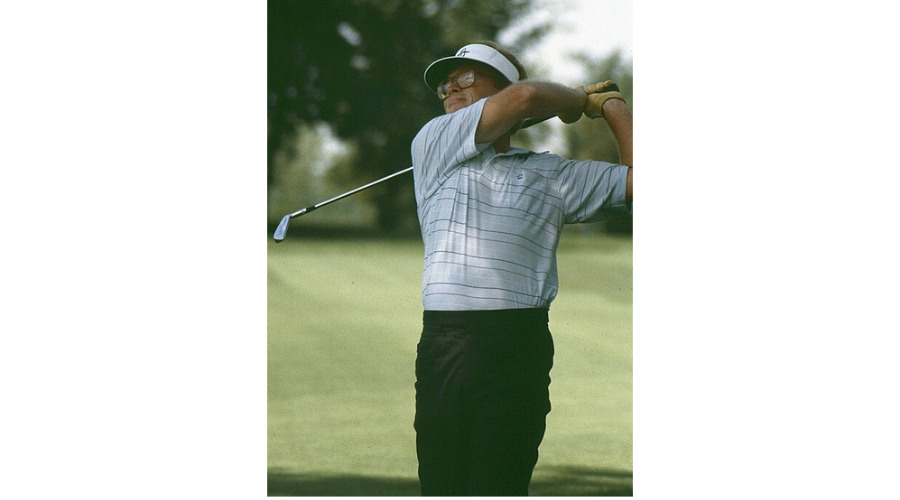
Image: Ted Van Pelt, TomKite, CC BY 2.0
Tom Kite, born in McKinney, Texas, started golfing at just six years old, showcasing his talent by winning his first tournament at eleven. He earned a scholarship to the University of Texas, shared the 1972 NCAA championship with Ben Crenshaw, and turned professional in 1972.
As a pioneer on the PGA Tour, Kite’s achievements include 19 PGA Tour victories and a win at the 1992 U.S. Open. Discover his remarkable journey and lasting contributions to golf.
Early Life and Beginnings in Golf

Tom Kite’s introduction to golf began early, growing up in McKinney, Texas, where he picked up his first club at just six years old.
By eleven, you would’ve seen him winning his first tournament, setting the stage for a promising future. His early life revolved around honing his skills, eventually earning a golf scholarship to the University of Texas.
There, under the legendary guidance of Harvey Penick, he flourished. In 1972, you could witness him achieving first-team All-American status and sharing the NCAA championship with Ben Crenshaw.
His dedication and talent shone brightly, reflecting his competitive upbringing in Texas. These formative years laid the groundwork for his successful amateur career, marking him as a rising golfing star.
College Years and Rising Stardom
During his college years, Kite’s golfing prowess truly began to shine. You’d find him at the University of Texas, where he became a top-tier All-American in 1972, impressing everyone by winning nine collegiate tournaments.
His skill and determination didn’t go unnoticed as he shared the 1972 NCAA Championship title with teammate Ben Crenshaw, a demonstration of the strength of their golfing talents. Under the mentorship of the legendary Harvey Penick, Kite’s strategic approach to the game was honed, leading the Texas Longhorns to NCAA team titles in 1971 and 1972.
His achievements in collegiate tournaments cemented his reputation as a premier player. These experiences set a strong foundation for his future professional success.
Transition to Professional Golf
After a stellar collegiate career at the University of Texas, Tom Kite made a seamless transition to professional golf in 1972. He quickly gained recognition, earning the title of Golf Digest Rookie of the Year. This marked the beginning of a remarkable career on the PGA Tour.
Kite’s innovative approach to the game set him apart. He was the first to use a third wedge and consult a sports psychologist, reflecting his dedication to improving performance. Kite’s efforts paid off, leading to 19 PGA Tour victories and making him the first player to surpass $9 million in career earnings.
His shift to professional golf showcased not just his skill but also his willingness to adopt new ideas in pursuit of excellence.
Breakthrough and Major Victories
In the world of professional golf, breakthroughs define careers, and for Tom Kite, the pinnacle came with his unforgettable 1992 U.S. Open victory at Pebble Beach. You can picture the moment: Kite sinking a lob wedge for birdie on the 7th hole and later sealing the win with precise putting under pressure.
But Kite’s career on the PGA Tour was filled with remarkable achievements, including 19 victories. In 1989, his exceptional performance earned him the prestigious title of PGA Tour Player of the Year. His success at THE PLAYERS Championship that same year further solidified his legacy.
Participating in seven Ryder Cups, Kite’s leadership shone, particularly when he captained the U.S. team in 1997, showcasing his dedication and skill.
Innovations and Contributions to the Game
Although Tom Kite’s name is synonymous with golfing prowess, his influence extends beyond the fairways and greens. His forward-thinking approach transformed how players view the game. By being the first to add a third wedge to his bag, he improved shot versatility, setting a new standard.
Kite also pioneered the use of sports psychologists in golf, highlighting the vital role of mental toughness. Understanding the importance of physical fitness, he championed workout routines long before they became mainstream in the sport.
His commitment to improvement led him to undergo laser eye surgery in 1994. Additionally, his dedication to instruction and collaboration with iconic teachers like Harvey Penick left a lasting impact on training methods for future generations.
Ryder Cup and Leadership Roles
Tom Kite’s innovative approach to golf extended into his leadership roles, particularly in the Ryder Cup. As captain of the U.S. team in 1997, he led them into fierce competition at Valderrama Golf Club in Spain.
Throughout his career, he participated in seven Ryder Cups, showcasing remarkable teamwork and strategic play. His leadership style, honed through years on the PGA Tour, emphasized collaboration and tactical intelligence, contributing greatly to the team’s spirit and success.
His influence elevated the Ryder Cup’s profile, making it more competitive and prestigious. Even beyond his playing days, he continued inspiring future golfers, leaving a lasting impact on the golf community.
Awards and Recognitions
Throughout his career, Tom Kite earned a remarkable array of awards and recognitions, underscoring his impact on the game.
As you examine Kite’s achievements, you’ll find his path started strong with the Golf Digest Rookie of the Year award in 1973. His integrity and sportsmanship earned him the Bob Jones Award in 1979.
Kite’s prowess led to him being a Vardon Trophy winner in 1981 and 1982, recognizing his scoring excellence on the PGA Tour.
His induction into the World Golf Hall of Fame in 2004 cemented his place among the game’s greats.
Accolades include:
- Rookie of the Year: 1973
- Bob Jones Award: 1979
- Vardon Trophy: 1981, 1982
- World Golf Hall of Fame: 2004
Legacy and Ongoing Impact
As you reflect on Tom Kite’s enduring legacy, it’s clear his impact on golf extends beyond impressive statistics.
Inducted into the World Golf Hall of Fame in 2004, Kite remains a benchmark for consistency, professionalism, and innovation. He was the first to break the $9 million barrier in career PGA Tour earnings.
His leadership as captain of the 1997 U.S. Ryder Cup team and participation in seven Ryder Cups secured his place in international competition history.
Even after retiring from regular tour play, Kite remains active on the Champions Tour, where he continues mentoring the next generation.
His contributions to golf course design, often in collaboration with his son, ensure his legacy will endure in the physical layout of the sport as well.

Comments (0)
No comments yet. Be the first to share your thoughts.
Leave a comment