


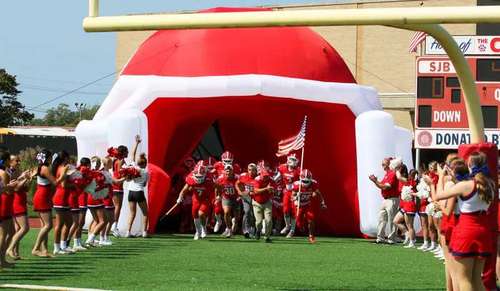
Texas has no shortage of great high school football teams, but certain places have become known for something even bigger than championships. These are the towns where football isn't simply an extracurricular activity—it has become part of the community's identity. Stadiums fill with thousands of fans on Friday nights, local businesses decorate in school colors, and generations of families can trace their own stories through the same football program.
Some of these towns gained national attention through books, movies, or television. Others quietly built decades of success that earned respect throughout Texas football circles. Whether they're known for legendary coaches, remarkable winning streaks, NFL talent, or passionate fan support, each has helped shape the culture surrounding Texas high school football.
If you're interested in experiencing the traditions behind Friday Night Lights, these are some of the Texas football towns every fan should know.
Odessa: The Town That Introduced Texas Football to the World
Few places are as closely associated with Texas high school football as Odessa.
The city's football reputation grew nationwide after journalist H. G. Bissinger published Friday Night Lights in 1990, documenting the 1988 season of Odessa Permian High School. The bestselling book later inspired the 2004 film and the acclaimed television series, introducing millions of people to the intensity of Texas football culture.
Permian's success predates the book by decades. Since opening in 1959, the Panthers have won multiple UIL state championships and produced numerous college and professional players. During their peak years, Ratliff Stadium regularly drew crowds exceeding 18,000, creating an atmosphere that rivaled many small colleges.
Even today, visitors often stop by Ratliff Stadium simply because it remains one of the most recognizable high school football venues in America.
Southlake: A Modern Football Powerhouse
When people discuss elite Texas football programs today, Southlake Carroll almost always enters the conversation.
Located northwest of Dallas, Southlake transformed into one of the state's dominant programs under legendary coach Todd Dodge during the early 2000s. The Dragons became nationally known for their explosive offenses, disciplined execution, and consistent success against top competition.
Southlake Carroll has produced numerous Division I athletes while winning multiple state championships across different decades. The program also became known for its remarkable home winning streaks and nationally ranked teams.
Dragon Stadium has become one of North Texas' premier Friday night destinations, regularly attracting packed crowds and showcasing the scale of football in suburban Texas.
Allen: Home to One of America's Largest High School Stadiums
Few football facilities attract as much attention as Allen Eagle Stadium.
Completed in 2012, the stadium seats approximately 18,000 spectators, making it one of the largest high school football stadiums in the country. With its massive video board, modern amenities, and collegiate atmosphere, it reflects the tremendous community investment Allen has made in athletics.
The Eagles have rewarded that support with outstanding success. Allen won three consecutive Class 6A Division I state championships from 2012 through 2014 under quarterback Kyler Murray, who later won the Heisman Trophy at Oklahoma and became the first overall pick in the 2019 NFL Draft.
For many football fans, attending a game in Allen offers one of the closest experiences to major college football without leaving the high school level.
Carthage: The Small Town That Built a Dynasty
Population alone doesn't determine football success.
With fewer than 7,000 residents, Carthage has become one of the most respected programs in Texas regardless of classification. Under longtime head coach Scott Surratt, the Bulldogs have won numerous UIL state championships since 2008, establishing themselves as one of the state's modern dynasties.
What makes Carthage particularly impressive is its consistency. While many powerhouse programs cycle through rebuilding periods, Carthage has remained a championship contender year after year despite competing against schools with much larger enrollments.
Friday nights in Carthage remain one of East Texas' signature sporting events, with community support extending well beyond the football team itself.
Aledo: A Tradition of Winning West of Fort Worth
For football fans, Aledo has become synonymous with sustained excellence.
Located west of Fort Worth, the Bearcats have built one of the most successful programs in Texas history, capturing numerous state championships while producing a long list of standout players. During the 2013 season, Aledo attracted national attention after a historic 91-0 victory, a game that sparked discussions about sportsmanship but also highlighted the extraordinary strength of the program.
Beyond individual seasons, Aledo's reputation rests on remarkable consistency. The Bearcats regularly advance deep into the playoffs and have become one of the state's benchmark programs in larger classifications.
The community's support reflects the pride residents take in maintaining one of Texas' premier football traditions.
Katy: Football Runs Deep in This Houston-Area Community
West of Houston, Katy has become one of Texas' most successful football towns.
Katy High School has collected numerous state championships while earning a reputation for disciplined, physical football. The Tigers' emphasis on strong defense, ball control, and consistent execution has made them one of the state's most respected programs for decades.
Football also extends beyond one school. The Katy Independent School District includes several highly competitive programs, making Friday nights throughout the area especially significant.
Modern facilities like Legacy Stadium, which serves multiple Katy ISD schools, reflect both the district's rapid growth and its long-standing commitment to high school athletics.
Longview: East Texas Football at Its Best
Football has long been central to the identity of Longview.
The Lobos have consistently ranked among East Texas' strongest programs, winning state championships while producing numerous Division I recruits and NFL players. Their rivalry with nearby Marshall remains one of the oldest and most anticipated matchups in the region, dating back more than a century.
Longview's reputation extends beyond wins and losses. The community's enthusiasm creates one of the most energetic Friday night atmospheres in East Texas, particularly during district games and playoff runs.
For visitors interested in experiencing traditional East Texas football culture, Longview offers an excellent introduction.
Canadian: Small School, Big Expectations
In the Texas Panhandle, Canadian demonstrates that football excellence isn't limited to larger cities.
The Wildcats have become one of the state's most successful small-school programs, regularly competing for Class 3A championships while maintaining remarkable consistency over several decades. Their sustained success reflects careful player development, strong coaching, and deep community involvement.
Because Canadian is a relatively small town, football naturally becomes one of the community's biggest gathering points each fall. Residents, alumni, and local businesses all contribute to an atmosphere where nearly everyone feels connected to the program.
The town's continued success has made it one of the most respected names in Texas small-school football.
Refugio: A Coastal Football Tradition
South Texas has produced its share of football powerhouses, and Refugio ranks among the best.
Despite its small enrollment, Refugio has won multiple state championships while consistently reaching the postseason. The Bobcats have developed a reputation for speed, disciplined execution, and strong coaching, allowing them to compete successfully year after year.
Football also serves as an important point of pride for the community. Friday night games routinely bring together families spanning multiple generations, reinforcing traditions that have remained strong for decades.
Refugio illustrates how deeply football culture extends across every region of Texas.
Highland Park: A Historic Dallas Program
Within the Dallas area, Highland Park represents one of Texas' most tradition-rich football programs.
The Scots have captured multiple state championships dating back to the 1950s while producing generations of standout athletes. Highland Park also became nationally known through coach Randy Allen, one of the winningest coaches in Texas history.
The program combines historic success with continued competitiveness, regularly advancing into the postseason while maintaining one of the state's most respected football traditions.
Games at Highlander Stadium remain major community events throughout the season.
Why These Towns Matter Beyond Football
What connects these communities isn't simply championship trophies.
Each town has developed traditions that extend throughout the entire community. Local restaurants fill before kickoff. School bands spend months preparing halftime performances. Cheer squads, drill teams, booster clubs, and volunteers all contribute to the atmosphere. Businesses decorate storefronts in school colors, while alumni return home for rivalry games and homecoming weekends.
These traditions often span generations. Grandparents who once played or cheered for the local school now watch grandchildren continue the same legacy. Family photographs frequently include football uniforms, championship rings, or team banquets alongside birthdays and graduations.
Football becomes part of local history because it connects people across decades.
Experiencing Friday Night Lights for Yourself
One of the best things about Texas high school football is that visitors don't need special connections to experience it.
Most regular-season games are open to the public, and many stadiums welcome visiting fans. Arriving early allows time to watch the marching band warm up, visit concession stands, and see how each community celebrates its football traditions before kickoff.
While every town has its own personality, several customs remain remarkably consistent. Fans proudly wear school colors, student sections create themed spirit nights, and halftime often receives nearly as much attention as the game itself. Rather than rushing home after the final whistle, many people stay to congratulate players, talk with neighbors, or simply enjoy the atmosphere.
That's part of what makes Texas football unique. The game may last four quarters, but the experience begins long before kickoff and continues long after the scoreboard goes dark.
The Legacy Continues Every Season
Texas football towns aren't defined only by their past.
Every season produces new players, new rivalries, and new memories that become part of local history. A game-winning touchdown, an undefeated season, or an unexpected playoff run quickly joins stories that older generations have been telling for decades.
Whether it's Odessa's place in football folklore, Carthage's modern dynasty, Allen's enormous stadium, or Canadian's remarkable small-town success, each community contributes something different to the story of Texas high school football. Together, they show why Friday nights continue to matter across the Lone Star State.
For football fans, visiting these towns offers more than a chance to watch a game. It provides an opportunity to experience one of Texas' most enduring traditions firsthand, where school pride, community identity, and generations of history all come together under the stadium lights.

Comments (0)
No comments yet. Be the first to share your thoughts.
Leave a comment