


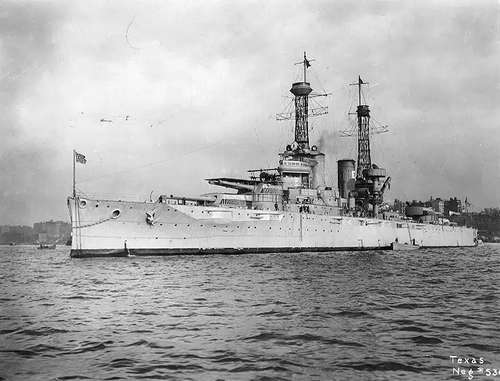
Few historic ships have survived as much as the Battleship Texas. Over more than a century, she has crossed the Atlantic during World War I, bombarded enemy positions in World War II, survived hurricanes, corrosion, and decades of exposure to the elements, and narrowly escaped becoming another lost piece of naval history.
Today, USS Texas (BB-35) is the last surviving dreadnought battleship in the world and the only remaining battleship that served in both World Wars. Her survival was never guaranteed. In fact, there were several points when the ship's deteriorating condition raised serious questions about whether she could ever be preserved.
Instead, one of the most ambitious ship preservation projects in American history is giving the vessel a second life. Saving Battleship Texas has required decades of public support, millions of dollars, hundreds of skilled workers, and an understanding that preserving the ship means preserving an important chapter of both Texas and American history.
A Battleship That Changed Naval Warfare
USS Texas was commissioned on March 12, 1914, only a few years after HMS Dreadnought revolutionized battleship design. Unlike older battleships that carried several different sizes of guns, dreadnoughts relied primarily on large-caliber main batteries and powerful steam turbines, fundamentally changing naval warfare around the world.
Built at Newport News Shipbuilding in Virginia, Texas measured nearly 573 feet long and displaced more than 27,000 tons when completed. She carried ten 14-inch guns mounted in five twin turrets, making her one of the most powerful ships in the U.S. Navy at the time.
Although she was named for Texas, the ship belonged to the United States Navy. Her name reflected a long tradition of naming battleships after states, giving Texans a unique connection to one of America's most important warships.
She Served in Two World Wars
During World War I, Texas joined the British Grand Fleet at Scapa Flow after the United States entered the war in 1917. Her primary role involved protecting Allied shipping and helping contain the German High Seas Fleet in the North Sea.
Her most famous service came during World War II.
The battleship supported Operation Torch in North Africa in 1942 before participating in some of the war's most significant amphibious invasions. On June 6, 1944, USS Texas fired on German defenses during the Normandy landings, helping Allied troops push inland from Omaha Beach. She later provided naval gunfire support during Operation Dragoon in southern France before moving to the Pacific, where she took part in the battles of Iwo Jima and Okinawa. Throughout both wars, she earned five battle stars for her World War II service.
One of the ship's more remarkable wartime moments occurred at Normandy, when the crew intentionally flooded torpedo blisters on one side of the ship to create a slight list. That tilt increased the elevation of the main guns, allowing them to strike German artillery positions farther inland than would otherwise have been possible.
Becoming America's First Battleship Museum
After more than three decades of naval service, USS Texas was decommissioned in 1948. Rather than sending the ship to a scrapyard, the U.S. Navy transferred her to the State of Texas. She became the first permanent battleship museum in the United States, opening near the San Jacinto Battleground outside Houston, where visitors could tour the vessel while also exploring one of the most important sites in Texas history.
For generations of Texans, a visit to Battleship Texas became a familiar school field trip or family outing. Millions of visitors walked her decks, climbed through engine rooms, explored gun turrets, and learned about the sailors who served aboard during two global conflicts.
The ship's location beside the San Jacinto Monument helped make it one of the state's best-known historic attractions.
Time Became the Greatest Enemy
Ironically, the battleship's greatest threat did not come from enemy fire. Steel ships require constant maintenance. Saltwater, humidity, rain, and changing temperatures slowly corrode metal, while protective coatings eventually wear away. Unlike an operational Navy vessel with a full maintenance crew, a museum ship depends on preservation funding and periodic restoration.
By the late twentieth century, Battleship Texas was showing her age.
Leaks became increasingly common as sections of the hull deteriorated. Volunteers and staff routinely operated pumps to remove water entering the ship, while temporary patches addressed areas where corrosion had weakened steel plates. Hurricanes and tropical storms along the Gulf Coast only added to the challenge.
Although restoration projects occurred periodically, preservation specialists recognized that many of the ship's underlying structural problems required much larger repairs than could be completed while she remained floating at her berth.
Why Restoring a Battleship Is So Difficult
Repairing a vessel like USS Texas is fundamentally different from restoring a historic building.
Large portions of the ship's steel structure sit below the waterline, making detailed inspection nearly impossible while afloat. To properly evaluate the hull, engineers needed access to every plate, rivet, weld, and support member beneath the surface.
That meant placing the ship into dry dock. Dry docking a vessel measuring more than 570 feet long and weighing tens of thousands of tons is itself a major engineering operation. Every movement must be carefully calculated to avoid stressing the hull, especially on a ship already weakened by decades of corrosion.
Even once dry-docked, preservation crews faced thousands of individual repairs rather than one simple restoration project.
A New Organization Took Charge
Recognizing the scale of the work ahead, Texas Parks and Wildlife transferred day-to-day operations of the ship to the Battleship Texas Foundation in 2020. The nonprofit organization was created specifically to oversee the battleship's preservation, fundraising, restoration, and future operations.
The Foundation assembled naval architects, marine engineers, historians, preservation specialists, and shipyard workers to develop a long-term restoration strategy.
Their goal extended beyond cosmetic improvements. They intended to stabilize the ship structurally so future generations could continue visiting her safely for decades to come.
The Historic Journey to Galveston
One of the most dramatic chapters in the ship's history occurred on August 31, 2022. For the first time in more than seventy years, Battleship Texas left her longtime home at San Jacinto. Assisted by tugboats, the ship traveled through the Houston Ship Channel to Gulf Copper Shipyard in Galveston, where the largest restoration effort in her museum history would begin.
The move attracted thousands of spectators who lined bridges, shorelines, and waterfront parks to watch the historic vessel slowly make her way toward dry dock.
Soon afterward, the ship was lifted completely out of the water, allowing engineers to examine portions of the hull that had remained submerged for decades.
What the Restoration Actually Involved
Many people imagine restoration as cleaning rust and applying fresh paint. The reality proved far more extensive.
According to the Battleship Texas Foundation, crews have replaced more than 700 tons of deteriorated steel, repaired sections of the superstructure, restored anti-aircraft weapons, replaced large portions of the wooden weather deck, renewed electrical systems, repaired watertight integrity, and carefully conserved historic equipment throughout the vessel.
Workers also removed decades of corrosion from the hull before applying modern marine coatings designed to better protect the steel against future deterioration.
Many components required custom fabrication because replacement parts for a battleship built in 1914 simply do not exist. Shipyard craftsmen often had to manufacture new pieces based on original drawings or surviving examples while preserving the vessel's historic appearance.
Balancing Preservation With Authenticity
One of the biggest challenges involved deciding what should remain original and what needed replacement.
Historic preservation does not always mean keeping every original material. If badly corroded steel threatens the entire structure, replacing it becomes necessary to save the rest of the ship.
Throughout the project, engineers worked closely with historians to ensure repairs remained faithful to the battleship's wartime appearance whenever possible. Original equipment was restored when practical, while replacement materials were carefully matched to historic designs and specifications.
For example, much of the replacement wooden decking follows the appearance of the World War II-era deck while incorporating modern techniques that improve durability and weather resistance.
Finding a Permanent Future
Saving Battleship Texas also required finding a sustainable long-term home.
For years, questions remained about whether the ship should return to San Jacinto or relocate elsewhere. After extensive planning, the Battleship Texas Foundation reached an agreement for the battleship's future public home at Pier 15 in Galveston.
Galveston offers several advantages. The city already attracts millions of visitors annually, has a strong maritime identity, and provides better opportunities for long-term tourism, educational programming, and ongoing maintenance.
The move also allows the San Jacinto Battleground to restore portions of the historic battlefield landscape while giving the battleship a dedicated waterfront setting designed specifically for her preservation.
Why Saving USS Texas Matters
The battleship's importance goes well beyond Texas.
USS Texas is the last surviving dreadnought battleship anywhere in the world, making her one of the most significant surviving naval vessels from the early twentieth century. She also represents the only surviving American battleship that fought in both World War I and World War II.
Her decks preserve evidence of changing naval technology, from coal-era engineering concepts to anti-aircraft defenses developed during World War II. Every compartment tells part of the story of thousands of sailors who lived and worked aboard during some of the twentieth century's defining events.
Without preservation, those connections would disappear forever.
The Work Is Still Continuing
Although major restoration milestones have already been completed, Battleship Texas has not yet fully reopened for regular public tours.
The Foundation continues restoring weapons, decks, interior spaces, electrical systems, and many smaller components while preparing the ship for her future permanent berth in Galveston. As of 2026, the goal is a grand reopening in 2027, with limited specialty tours resuming earlier as restoration allows.
The project has become one of the largest and most ambitious museum-ship restorations ever undertaken in the United States, ensuring that the vessel will remain accessible long after many comparable ships have disappeared.
A Battleship That Refused to Be Forgotten
Many famous warships survive only in photographs or museum collections. Battleship Texas survived because generations of Texans, veterans, historians, engineers, volunteers, donors, and preservation organizations refused to accept that such an important piece of history should be lost.
The ship has already outlived the naval era that created her. She survived two world wars, decades of exposure to the Gulf Coast, repeated flooding, and years of uncertainty about her future. Today, after one of the most extensive preservation efforts ever attempted on an American museum ship, she is preparing for another chapter rather than her final one.
That is why USS Texas remains much more than an old battleship. She is a reminder that preserving history often requires the same determination that created it in the first place—and that some ships are simply too important to let disappear.

Comments (0)
No comments yet. Be the first to share your thoughts.
Leave a comment