


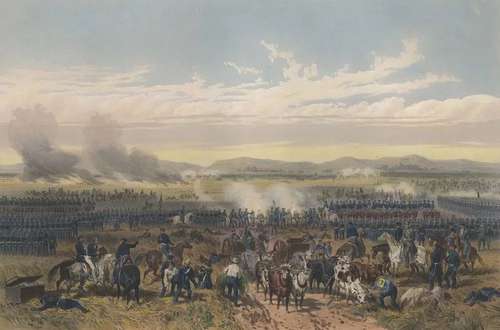
On May 8, 1846, American and Mexican forces met on a broad coastal plain near present-day Brownsville, Texas. The clash became the first major battle of the Mexican-American War and helped determine how the opening stage of the conflict would unfold.
Known as the Battle of Palo Alto, the engagement demonstrated the growing importance of mobile field artillery. It also took place in territory claimed by both countries, making the battlefield closely connected to the larger dispute that led to war.
A Border Dispute After Texas Annexation
The causes of the battle stretched back to the Texas Revolution and the creation of the Republic of Texas in 1836. Texas claimed that its southern border followed the Rio Grande, while Mexico maintained that the Nueces River, farther north, marked the boundary.
When the United States annexed Texas in 1845, it also accepted the Texas claim to the Rio Grande. Mexico did not recognize the annexation or the expanded border claim.
President James K. Polk sent General Zachary Taylor and thousands of American soldiers into the disputed region. Taylor eventually established a military position called Fort Texas across the Rio Grande from Matamoros, Mexico.
To Mexican leaders, the movement represented an occupation of Mexican territory. American officials considered the troops to be operating within Texas.
Fighting Begins Along the Rio Grande
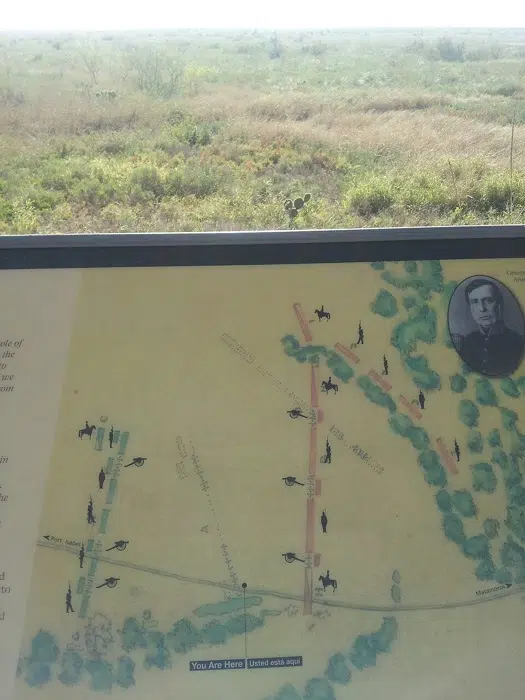
Pi3.124, Battle of Palo Alto site, CC BY-SA 3.0
Tensions turned violent in April 1846 when Mexican troops attacked an American patrol north of the Rio Grande. The encounter, commonly called the Thornton Affair, resulted in American deaths and captures.
Mexican forces under General Mariano Arista then crossed the Rio Grande in greater numbers and placed Fort Texas under siege. Taylor had moved much of his army to a supply base near Point Isabel on the Gulf Coast.
After gathering supplies, Taylor began marching back toward the fort. Arista positioned his army at Palo Alto to block the American advance.
Two Armies Meet at Palo Alto
The battlefield was a wide, mostly open prairie about five miles north of present-day Brownsville. Its name came from the tall trees growing in the area, but much of the ground offered few major obstacles or defensive positions.
Taylor commanded approximately 2,300 American troops. Arista’s force was larger, numbering roughly 3,700 soldiers. The Mexican line included infantry, cavalry and artillery spread across the plain.
The open terrain appeared to favor the larger Mexican army. However, the Americans possessed an important advantage: highly trained artillery units equipped with relatively light and mobile cannons.
The Advantage of Flying Artillery
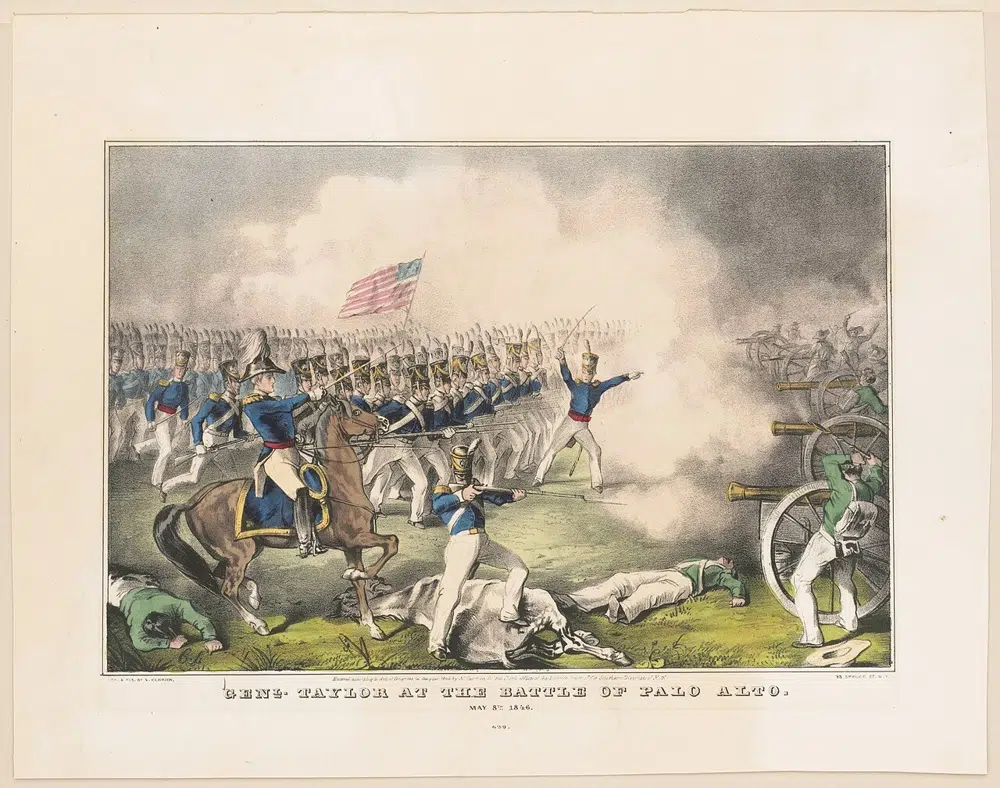
The American artillery units could move their cannons quickly, fire and then change positions before becoming easy targets. This method was sometimes called “flying artillery.”
Major Samuel Ringgold and Captain James Duncan directed batteries that repeatedly struck the Mexican lines. Their guns fired more rapidly and accurately than the heavier Mexican artillery.
Mexican infantry formations suffered under the bombardment, while American infantry remained largely in defensive positions. Arista attempted to use cavalry to attack the American flanks, but the charges failed to break Taylor’s line.
A grass fire also spread across part of the battlefield. Smoke temporarily limited visibility, but the fighting continued until evening.
Why Mexico Withdrew
The Mexican army was not destroyed at Palo Alto, but it had taken heavier losses and had been unable to stop Taylor’s advance. Arista withdrew south during the night and established a new position at Resaca de la Palma.
The Americans remained in control of the battlefield. Taylor’s forces had suffered relatively limited casualties compared with the Mexican army, although Major Ringgold was mortally wounded.
The effectiveness of the American artillery was the central factor in the outcome. Palo Alto showed how speed, range and accurate cannon fire could offset an opponent’s numerical advantage.
The Battle of Resaca de la Palma
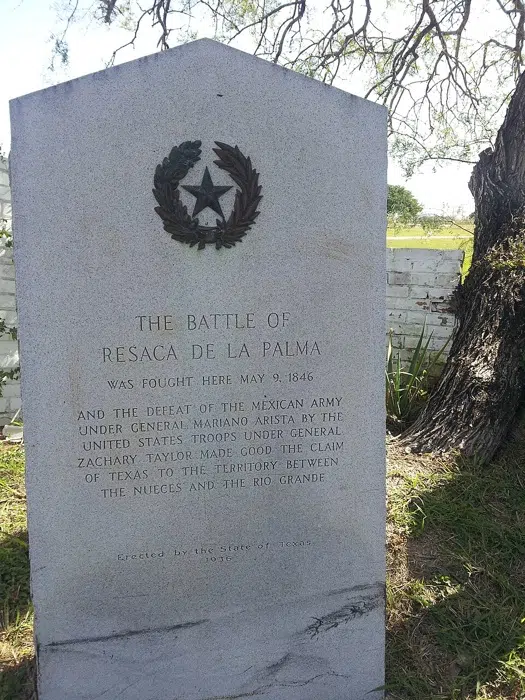
Pi3.124, Battle of Resaca de La Palma Texas historical marker, CC BY-SA 3.0
The fighting resumed on May 9, one day after Palo Alto. At Resaca de la Palma, the terrain was more crowded with brush, ravines and dense vegetation.
American troops attacked the Mexican position and eventually forced Arista’s army back across the Rio Grande. The two victories ended the immediate threat to Fort Texas and allowed Taylor to move into Matamoros.
Together, Palo Alto and Resaca de la Palma gave the United States control of the lower Rio Grande region during the opening weeks of the war.
A Battle Before the Formal Declaration of War
One unusual aspect of Palo Alto is that it occurred before the United States formally declared war on Mexico.
News traveled slowly in the 1840s, and the armies along the Rio Grande were already fighting while political leaders in Washington debated the situation. The U.S. Congress approved a declaration of war on May 13, 1846, five days after the battle.
President Polk argued that Mexico had attacked American soldiers on American soil. Critics responded that the troops had been sent into disputed territory, making the claim more complicated.
The disagreement over how the war began remained politically important throughout the conflict.
The Wider Mexican-American War
The Battle of Palo Alto opened a war that lasted from 1846 to 1848. American forces later advanced into northern Mexico, New Mexico and California. Another American army eventually captured Mexico City.
The war ended with the Treaty of Guadalupe Hidalgo in February 1848. Mexico recognized the Rio Grande as the border of Texas and transferred a large amount of western territory to the United States.
That land included present-day California, Nevada and Utah, along with parts of Arizona, New Mexico, Colorado and Wyoming.
The territorial changes greatly expanded the United States. They also intensified political arguments over whether slavery would be permitted in the newly acquired lands.
Preserving the Battlefield
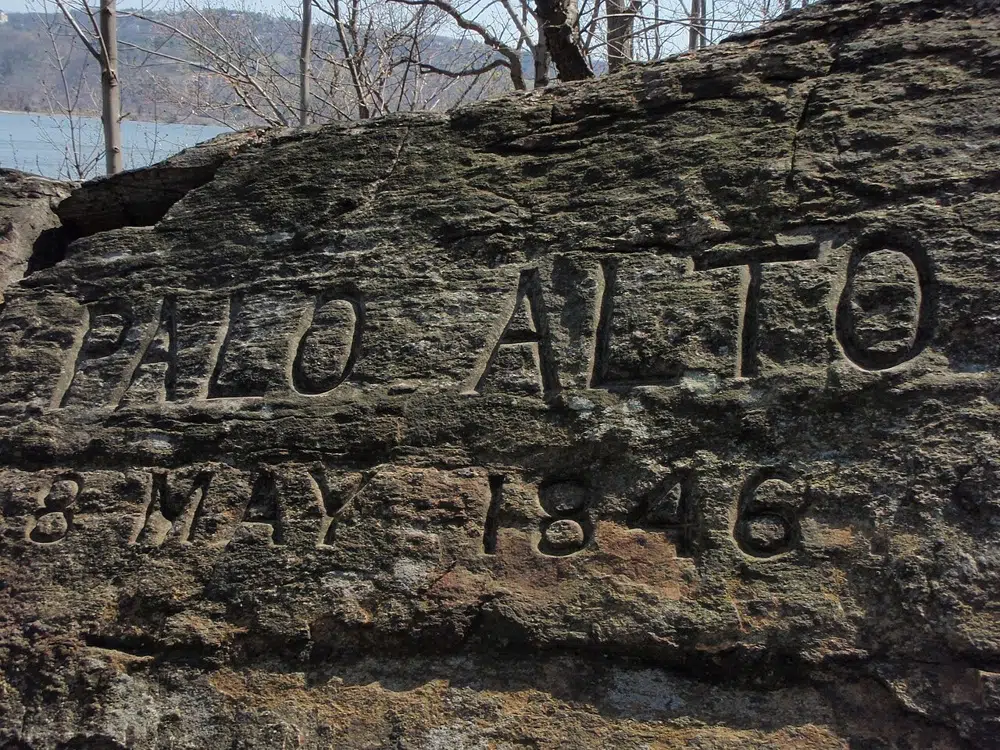
Today, the site is protected as Palo Alto Battlefield National Historical Park, a unit of the National Park Service near Brownsville.
The park preserves part of the ground where the two armies formed their lines. Exhibits and walking trails explain the battle, the border dispute and the experiences of both Mexican and American participants.
The park also includes the nearby Resaca de la Palma Battlefield, allowing visitors to study the two connected engagements. Its interpretation examines the war from both national perspectives rather than presenting the battle only as an American military victory.
Why Palo Alto Matters
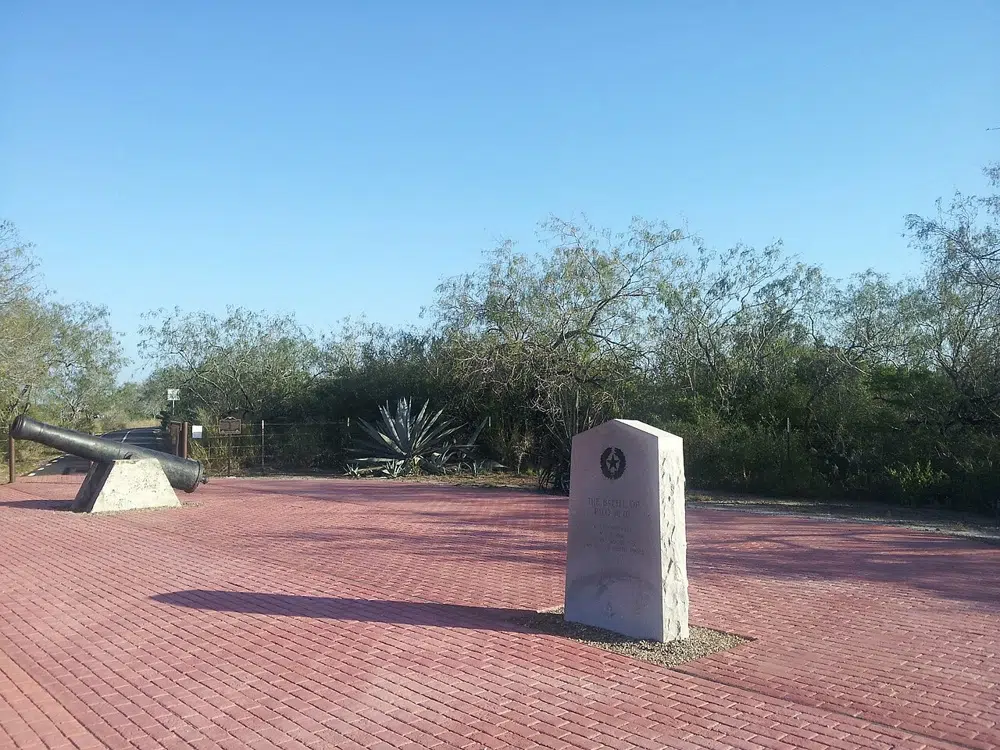
Pi3.124, Battle of Palo Alto Texas Historical Marker, CC BY-SA 3.0
Palo Alto was not the largest or bloodiest battle of the Mexican-American War. Its importance comes from its timing and its consequences.
The battle marked the first major confrontation between the two national armies. It protected the American position along the Rio Grande, raised Zachary Taylor’s public profile and demonstrated the power of mobile artillery.
It also began a conflict that permanently changed the borders of both Mexico and the United States. The quiet prairie outside Brownsville remains an important place for understanding how a disputed stretch of Texas became the starting point of a war with lasting effects across North America.

Comments (0)
No comments yet. Be the first to share your thoughts.
Leave a comment