


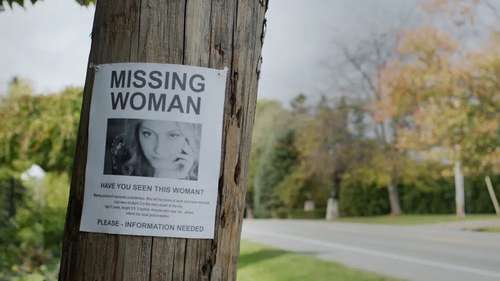
Some missing persons cases disappear from public attention quickly.
Others become deeply tied to the communities where they happened.
In Texas, certain disappearances have lingered for decades because the circumstances surrounding them never fully made sense. Families continued searching. Volunteers organized repeated efforts. Rumors spread through neighborhoods. Investigators revisited old evidence years later hoping advances in forensic science or technology might finally provide answers.
And in many cases, entire communities became emotionally connected to the search itself.
Texas has seen countless missing persons investigations over the years, but a few cases stand out because of how long they remained active in public memory and how strongly local residents continued hoping for closure.
Some cases eventually produced partial answers. Others remain completely unresolved. But all of them left lasting marks on the cities and towns where they unfolded.
Lina Sardar Khil and the Massive San Antonio Search Effort
One of the most widely followed recent missing persons cases in Texas involved Lina Sardar Khil, the three-year-old girl who disappeared from a San Antonio apartment complex in December 2021.
Lina vanished from the playground area of the family’s apartment complex on the city’s northwest side. Surveillance footage later showed the child walking away from the playground area shortly before she disappeared. Despite enormous search efforts, no confirmed trace of her has ever been found.
The case quickly drew national attention, but the strongest response came from San Antonio itself.
Volunteers searched nearby wooded areas, drainage systems, parks, and apartment grounds repeatedly. Law enforcement agencies including the FBI joined the investigation, while community members distributed flyers and organized public awareness campaigns across the city.
What made the case especially heartbreaking for many residents was how ordinary the final moments initially appeared.
Children playing at apartment playgrounds are common throughout San Antonio neighborhoods. That familiarity made Lina’s disappearance feel deeply unsettling to local families.
Years later, the case still remains active, and Lina’s family continues publicly asking for information.
The Beaumont Children Case of Texas: The Fort Worth Trio
Few Texas disappearances generated more long-term speculation than the case of the Fort Worth Missing Trio.
In December 1974, three girls — Rachel Trlica, Renee Wilson, and Julie Moseley — vanished after going Christmas shopping at Seminary South Shopping Center in Fort Worth. Their car was later discovered in the parking lot, but the girls themselves were never found.
The case devastated Fort Worth.
The girls ranged in age from 9 to 17, and the disappearance occurred just days before Christmas, intensifying public attention and emotional impact throughout the city.
Searches spread across North Texas while theories multiplied rapidly.
Over the decades, investigators pursued:
- possible abductions
- serial offender theories
- witness sightings
- and potential organized crime connections
Letters connected to the case only deepened confusion, particularly one mailed to Rachel’s husband shortly after the disappearance.
The case became so deeply embedded in Fort Worth history that generations of residents grew up hearing about it.
Even today, the disappearance remains one of Texas’ most discussed missing persons mysteries.
Brandon Lawson and the Rural Highway Mystery
The disappearance of Brandon Lawson became one of the most heavily discussed Texas missing persons cases in the internet era.
In August 2013, Lawson disappeared near Bronte, Texas, after his truck ran out of gas along Highway 277 during the early morning hours. What transformed the case into a national mystery was Lawson’s strange and frantic 911 call shortly before vanishing.
During the call, Lawson appeared distressed and suggested someone may have been chasing or threatening him, though portions of the audio were difficult to understand clearly.
Search teams repeatedly combed the surrounding ranchland and oilfield terrain, but years passed without answers.
The case drew enormous attention online because the final hours seemed simultaneously urgent and confusing. Podcasts, forums, and amateur investigators discussed the case heavily for years.
In 2022, human remains discovered near the area where Lawson disappeared were later confirmed to be his.
Even after that discovery, the strange circumstances surrounding his disappearance continued fueling debate and speculation.
The Search for Kelly Dae Wilson
The disappearance of Kelly Dae Wilson left East Texas communities searching for decades.
Wilson vanished in January 1992 from Gilmer, Texas, after leaving work to make a nearby bank deposit. Her vehicle was later found abandoned with slashed tires, while her purse and belongings remained inside.
The case immediately alarmed residents because Wilson’s disappearance disrupted what appeared to be a completely ordinary routine.
For years, investigators pursued numerous theories involving local suspects, organized criminal activity, and alleged witness accounts.
Grand jury investigations and arrests tied to associated crimes kept the case active in East Texas long after many missing persons investigations typically fade from public attention.
But Wilson herself was never found.
The case became one of the region’s most haunting long-term mysteries because so many people believed someone in the community knew more than they admitted publicly.
Michael and Pamela Mayfield
Houston residents still remember the disappearance of siblings Michael Ray Mayfield and Pamela Denise Mayfield.
The children vanished in January 1985 while walking home from Betsy Ross Elementary School in Houston. Witnesses reportedly saw them playing in a nearby park before entering a green vehicle.
The disappearance terrified local families.
Children walking home from school was a normal part of daily life across Houston neighborhoods, which made the case feel frighteningly relatable to parents throughout the city.
Law enforcement launched extensive searches and distributed missing child information widely, but the siblings were never located.
Decades later, the case still appears regularly in discussions about Houston’s oldest unresolved disappearances.
The Long Search for Amber Hagerman
Although the tragic case of Amber Hagerman eventually became associated with a confirmed abduction and murder investigation, it also permanently changed how communities respond to missing children nationwide.
Amber disappeared in Arlington, Texas, in January 1996 while riding her bicycle near an abandoned grocery store parking lot. Witnesses reported seeing a man force her into a truck. Four days later, her body was discovered in a nearby creek.
The crime itself remains officially unsolved.
But the community response created something far larger.
Public outrage and fear surrounding the case eventually led to the creation of the AMBER Alert system, which transformed how missing child emergencies are communicated across the United States and internationally.
The case left an enormous emotional impact on Arlington and North Texas overall because residents realized how quickly an ordinary afternoon could turn into tragedy.
The Fort Hood Disappearances and Ongoing Questions
Texas communities surrounding Fort Hood — now known as Fort Cavazos — experienced repeated concern over missing soldiers and suspicious disappearances tied to the military installation over recent years.
Cases involving soldiers such as Vanessa Guillén generated national attention and sparked intense public discussion about safety, reporting systems, and investigative procedures within military environments. (en.wikipedia.org)
Although Guillén’s case eventually produced arrests and confirmed criminal findings, the widespread public concern surrounding missing service members left long-term effects on communities around Killeen and Central Texas.
The broader issue reinforced how missing persons investigations can deeply affect entire regions, particularly when families believe institutions failed to respond quickly enough.
How Technology Changed Missing Persons Investigations
Many older Texas missing persons cases began before:
- DNA databases
- cellphone tracking
- surveillance cameras
- digital records
- and forensic genealogy
- became widely available.
As a result, some investigations struggled with extremely limited evidence during their critical early stages.
Today, advances in technology allow investigators to revisit cold cases in ways that were impossible decades ago.
Age-progression imaging, DNA testing, geolocation data, and digital evidence analysis all improved modern investigations dramatically.
That progress explains why some long-unsolved Texas disappearances continue receiving renewed investigative attention years later.
Comments (0)
No comments yet. Be the first to share your thoughts.
Leave a comment