


Some crimes slip out of public conversation after a few news cycles.
Others never really leave.
Texas has a long history of cases that still feel unfinished, even decades later. Families keep speaking out. Detectives keep reviewing files. Reporters return to the same names and dates. And the public keeps remembering, partly because the crimes were so shocking, and partly because the missing answers still feel close enough to touch.
That is what gives a cold case its strange power. It is not only an old investigation. It is a story with an open wound.
Texas has hundreds of unsolved homicide cases still tracked through the Texas Rangers’ cold case work, and the state continues to spotlight these investigations because homicide cases do not simply lose their weight with time.
Some of these cases stayed in memory because of the victims’ ages. Some because of the violence involved. Some because they changed the way the country responds to crime. Others remain unforgettable because they seem to capture a larger fear, that a person can vanish or be killed in plain view of ordinary life, and the truth can still remain out of reach.
Here are some of the Texas cold cases that continue to haunt the state.
The Fort Worth Missing Trio
On December 23, 1974, three girls went Christmas shopping in Fort Worth and never came home.
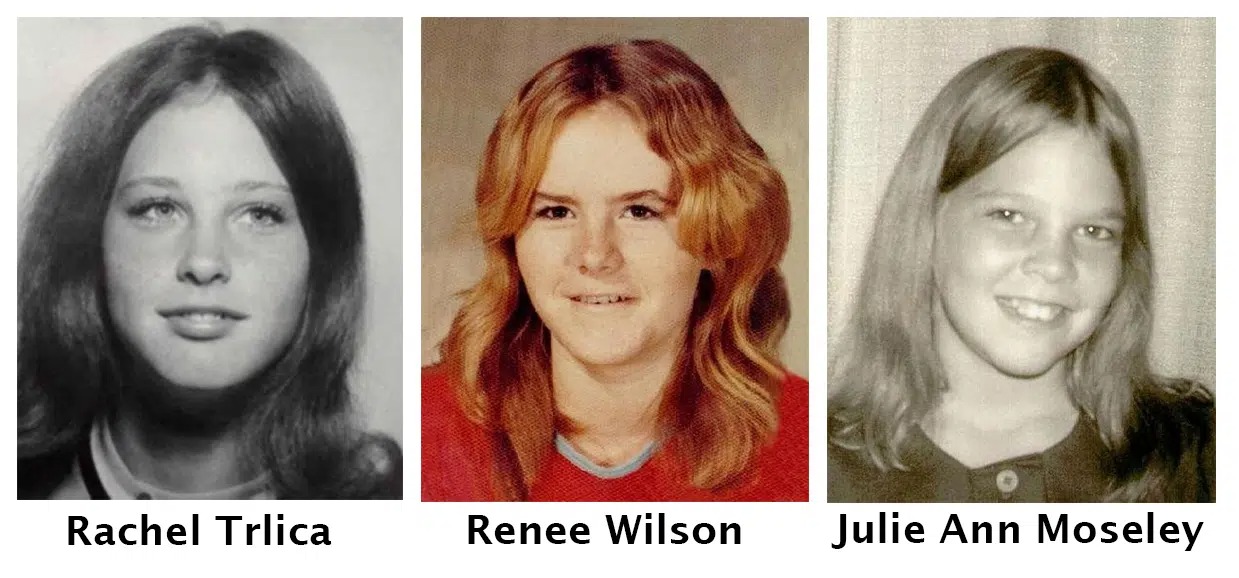
Mary Rachel Trlica was 17. Lisa Renee Wilson was 14. Julie Ann Moseley was 9. They went to Seminary South Shopping Center during the holiday rush, which should have made the trip feel safe. Instead, it became one of the most haunting disappearances in Texas history.
Their car was later found abandoned in the mall parking lot.
That single detail has kept the case alive for generations. The girls did not simply vanish on a lonely road or in a remote area. They disappeared during a normal daytime outing in a busy public place just before Christmas. The setting makes the case feel especially unsettling because it strips away the comfort people tend to attach to routine.
Fort Worth police still list long-term missing person investigations through their major case work, and the missing trio remains one of the city’s best-known unsolved cases.
Over the years, there have been leads, reported sightings, and recurring public interest around odd details tied to the case, including a mailed letter that arrived after the girls disappeared. Yet none of it has brought a clear answer.
That absence is part of why the case never fades.
In many older murder cases, the public at least learns the rough outline of what happened. Here, there is a hole where the story should be. No one can say with certainty what happened in the parking lot, whether the girls knew the person involved, whether they were forced into another vehicle, or how far they may have been taken. The lack of a confirmed chain of events keeps the case suspended in time.
Even now, the image is hard to shake. Three girls leave for a holiday errand. Their car stays behind. The rest is silence.
The Austin Yogurt Shop Murders
If the Fort Worth trio case is remembered for disappearance, the Austin yogurt shop murders are remembered for sheer horror.
Late on December 6, 1991, a fire broke out at an I Can’t Believe It’s Yogurt! shop in Austin. When firefighters responded, they found four girls dead inside: Jennifer Harbison, 17; Sarah Harbison, 15; Eliza Thomas, 17; and Amy Ayers, 13. The girls had been bound, gagged, and shot before the fire.
The crime shocked Austin in a way that never fully wore off.
Part of that is because the victims were so young. Part of it is because the crime scene was so brutal. But another reason is the investigation itself. This case came to represent the frustration people feel when a case seems close to resolution, then slips away again.
At different points, investigators gathered confessions and charged suspects. Yet the legal case unraveled, and those prosecutions did not deliver a final answer. Damage from the fire and sprinkler system complicated the evidence from the start, and that made the search for reliable proof even harder.
For years, the yogurt shop murders seemed locked in a grim pattern. The public remembered. The families grieved. Detectives kept working. But no true breakthrough arrived.
Then, in September 2025, Austin police announced major new DNA findings. The department said Robert Eugene Brashers had been identified as a suspect through renewed forensic testing. Brashers had died by suicide in 1999, so the development did not lead to a trial, but it marked the biggest movement in the case in decades.
That update changed the case in an important way.
It showed that cold cases are not dead files. They can change when science changes. Evidence that once seemed too weak or damaged can become meaningful years later. Even so, the emotional weight of this case remains. Four girls were killed in a place where they worked, joked, and spent time like countless teenagers do. That contrast between everyday life and sudden violence is one reason Texans still remember the case so vividly.
The Texas Killing Fields
Some cold cases are tied to one crime scene.
The Texas Killing Fields are tied to a landscape.
The phrase usually refers to areas between Houston and Galveston, especially around League City and the Calder Road region, where multiple female victims were found over the years. The name alone became enough to spark fear, and the cases linked to the area turned into one of the most disturbing long-running mysteries in Texas crime history.
What made this case linger in public memory was the pattern.
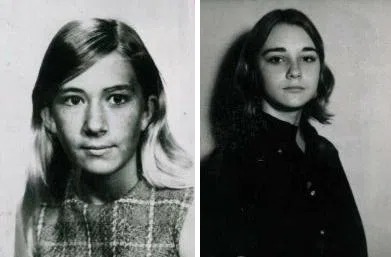
Young women disappeared. Bodies were found in isolated spots. Different cases appeared to echo one another. The FBI has described the region as a place where repeated killings raised the possibility of a predator familiar with the terrain, though investigators have also left room for the possibility that more than one offender may have been involved.
That uncertainty gave the Killing Fields a special kind of menace.
It was not one mystery. It was a cluster of them.
For decades, the area came to symbolize fear across Southeast Texas. Families of missing daughters saw their own worst worries reflected in every headline. Residents knew the name of the place even if they did not know all the individual victims. The land itself seemed to hold unfinished stories.
In 2026, the long-stalled picture shifted. Galveston County grand jury action led to the indictment of James Dolphs Elmore Jr. in connection with the deaths of Laura Miller and Audrey Cook, two cases associated with the wider Killing Fields story. The development did not solve every death connected to the area, but it showed that the broader case still has movement after more than 40 years.
That matters because the Killing Fields have long stood for the bleakest version of a cold case, with many victims, overlapping timelines, shifting theories, and no single clean ending.
Now there is at least some legal motion.
But the reason this story stays in memory goes beyond indictments. It is the scale of the grief. These were daughters, sisters, and young women whose lives were cut short, then folded into a mystery so large that it began to feel almost mythic. That is exactly why people keep returning to it. They want the myth broken down into names, facts, and accountability.
Amber Hagerman
Not every cold case stays famous for the same reason.
Amber Hagerman’s case never faded because it changed the country.
In January 1996, 9-year-old Amber Hagerman was abducted in Arlington while riding her bicycle. She was later found murdered. Her killer has never been identified. The crime horrified the Dallas-Fort Worth area, and the public reaction helped lead to the creation of the first AMBER Alert system. The Texas Department of Public Safety still notes that the original AMBER Alert program grew out of local response to Amber’s abduction and death.
That gives Amber’s case a different place in memory than most unsolved murders.
Many cold cases are remembered because justice never came.
Amber’s case is remembered for that reason too, but also because her death led to a lasting public safety response. The system created in her name became a national model for rapidly alerting the public to child abductions. In that sense, her story became both tragedy and legacy.
Still, the larger truth remains hard to accept.
The very case that helped transform child recovery efforts remains unsolved. That fact gives the story a painful edge. The public knows Amber’s name. People know what the alert system is for. Yet the person who took her has never been brought to justice.
That gap is what keeps the case alive.
Each time people hear an AMBER Alert, there is an indirect echo of Arlington in 1996. The case never becomes a distant piece of history because its legacy still flashes across phones, highway signs, and broadcasts. Amber Hagerman is remembered both as a child whose murder remains unsolved and as the reason millions of people now recognize an emergency warning meant to save another child.
Walker County Jane Doe, now known as Sherri Jarvis
Some cases refuse to fade because the victim’s identity itself became part of the mystery.
For more than 40 years, one of Texas’s most haunting cold cases centered on a teenage girl found murdered in Walker County in 1980. For decades, she was known only as Walker County Jane Doe. She was buried without a name, and the case became one of the most painful examples of how a victim can be mourned publicly while still remaining unknown.
In 2021, forensic genealogy finally gave her name back.
Investigators identified her as Sherri Ann Jarvis, a 14-year-old from Minnesota. The identification came through a multi-agency effort involving the Walker County Sheriff’s Office, the FBI, the Texas Rangers, and forensic genealogy work.
That breakthrough brought one kind of answer, but not the final one.
Sherri’s killer has still not been identified. So the case sits in a painful middle ground. The world now knows who she was, but not who murdered her. That keeps the case active in public memory because it shows both the power and the limits of modern forensic science. A name can be restored. A family can finally know. Yet justice can still remain unfinished.
There is another reason this case endures.
For years, people visited the grave of a girl they did not know. Artists worked on reconstructions of her face. Investigators kept trying even after decades had passed. Once she was identified, all of that care gained a deeper emotional meaning. The case became a reminder that unknown victims are not forgotten victims. Sometimes they are remembered so strongly that an entire community helps carry them forward until science catches up.
Why These Cases Still Hold Texas
Texas cold cases tend to stay in public memory for a few clear reasons. These cases are not remembered only because they remain unsolved. They also reflect larger patterns that shape how communities respond to violent crime, missing persons investigations, and long-term uncertainty.
- Many involve children or teenagers.
- Cases involving young victims often leave a deeper mark on the public. People tend to view them as especially tragic because the victims were at the beginning of life, which makes the loss feel even more immediate and unfair.
- Several began in places that seemed ordinary and safe.
- A shopping mall, a yogurt shop, a neighborhood street, or a bike ride close to home are settings people associate with daily life. When a crime happens in a place like that, it becomes easier for the public to imagine themselves or their loved ones in the same situation.
- Some cases changed public systems or public awareness.
- Certain crimes became larger than the original investigation. Amber Hagerman’s case, for example, is remembered not only because it remains unsolved, but also because it led to the AMBER Alert system. That kind of impact keeps a case in public discussion for generations.
- Unsolved cases create lasting emotional tension.
- A solved case usually gives the public a sequence of events, a suspect, and a legal outcome. A cold case leaves key questions open. That lack of resolution keeps people returning to the story because the human mind naturally wants closure.
- Families and communities keep the cases alive.
- Cold cases often remain visible because relatives, friends, journalists, and local residents continue to speak about them. Anniversaries, memorials, interviews, and renewed appeals for tips help prevent these stories from disappearing.
- New forensic tools can reopen old investigations.
- Advances in DNA testing, forensic genealogy, and evidence review have changed what is possible in older cases. Even after decades, investigators may be able to identify a victim, name a suspect, or connect evidence that once seemed unusable.
- The victims continue to feel present, not distant.
- These cases do not feel like abstract history. A missing person is still missing. An unidentified victim still deserves to be named. A family that never received answers is still living with that uncertainty.
For all of these reasons, Texas cold cases remain part of the state’s public memory. They are not simply old investigations sitting in storage. They are ongoing reminders of lives interrupted, families still waiting, and questions that continue to matter long after the headlines fade.
Comments (0)
No comments yet. Be the first to share your thoughts.
Leave a comment