


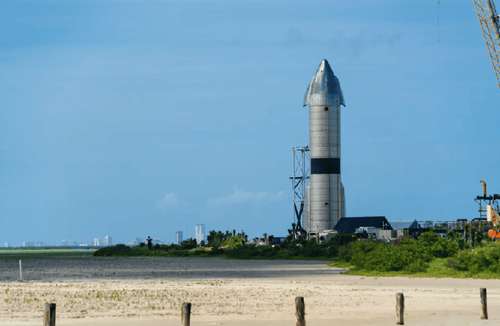
Texas has played a role in American aerospace history for decades, but no company has reshaped that connection as visibly as SpaceX. What began as a private launch company with ambitious goals has grown into one of the most influential forces in modern spaceflight. Over time, Texas has become a major operational hub for SpaceX, supporting everything from rocket development and testing to satellite production and advanced engineering work.
SpaceX’s presence in Texas is not limited to one location or one purpose. The company operates multiple facilities across the state, each serving a distinct function within its broader mission. Together, these sites form a network that reflects SpaceX’s focus on vertical integration, rapid iteration, and long-term planning. Texas offers the land, regulatory flexibility, workforce, and geographic advantages that align with those goals.
his article explores how SpaceX established itself in Texas, why the state matters to the company’s future, and how these operations continue to shape the region’s economic and technological identity.
Why Texas Attracted SpaceX
Several factors made Texas an appealing choice for SpaceX long before rockets ever lifted off its southern coastline.
First, Texas offers vast stretches of land with relatively low population density. This is especially important for rocket testing and launches, where safety buffers are essential. Coastal access along the Gulf of Mexico allows for launch trajectories over water, reducing risk to populated areas and simplifying range safety planning.
Second, the state has a long history of aerospace and engineering work. From NASA’s Johnson Space Center in Houston to military aviation and private manufacturing, Texas has built a deep talent pool. Engineers, technicians, machinists, and software developers are already part of the regional workforce, making recruitment easier for a fast-growing company.
Third, Texas state and local governments have shown consistent interest in attracting advanced manufacturing and technology firms. Incentives, infrastructure investment, and streamlined permitting processes have all played a role in SpaceX’s expansion decisions.
Finally, Texas aligns with SpaceX’s operational culture. The company values speed, flexibility, and in-house problem solving. Texas regulations and zoning frameworks, particularly in less urban areas, allow SpaceX to build, test, modify, and rebuild quickly when designs evolve.
Starbase: The Centerpiece in South Texas
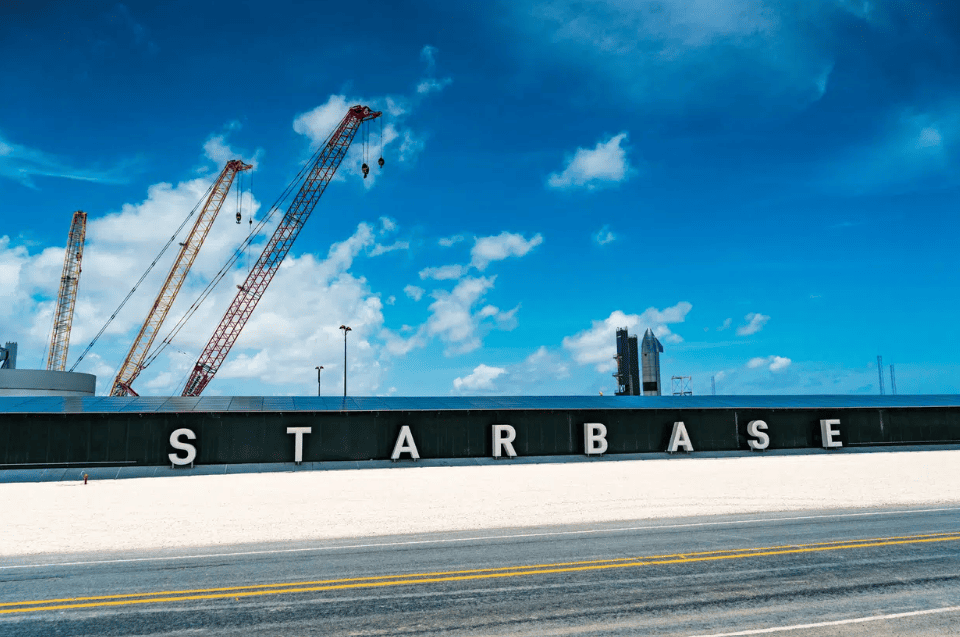
The most visible symbol of SpaceX in Texas is Starbase, located near Boca Chica in Cameron County. This site has become synonymous with the company’s Starship program, which aims to develop a fully reusable spacecraft capable of carrying cargo and crew to Earth orbit, the Moon, Mars, and beyond.
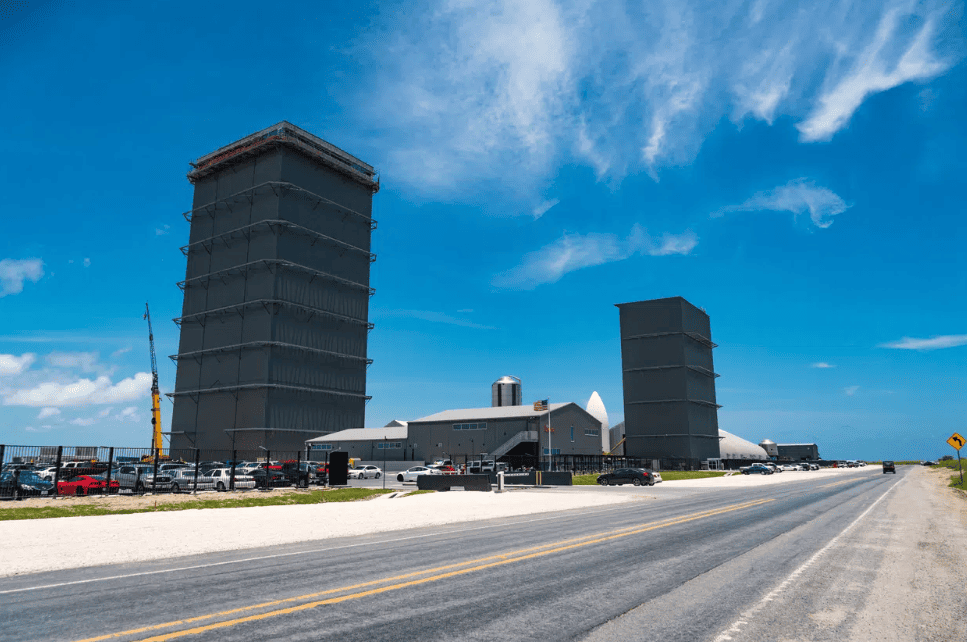
Starbase serves multiple functions at once. It is a manufacturing site, a testing ground, and a launch facility. Unlike traditional aerospace programs that separate these steps across different locations, SpaceX deliberately concentrates them in one place. This allows engineers and technicians to move quickly from design to construction to testing, often within days or weeks.
Large stainless steel structures rise directly from the coastal plain. Test stands sit close to assembly areas. Launch mounts are built, reinforced, and modified as new data comes in. This proximity shortens feedback loops and supports SpaceX’s philosophy of learning through real-world testing.
The location itself is strategic. Starbase sits near the Gulf of Mexico, enabling launch paths over water. The surrounding area has limited residential development, which helps manage safety concerns during testing. The site also benefits from year-round access, with fewer weather delays than more northern locations.
The Role of Starship in Texas Operations
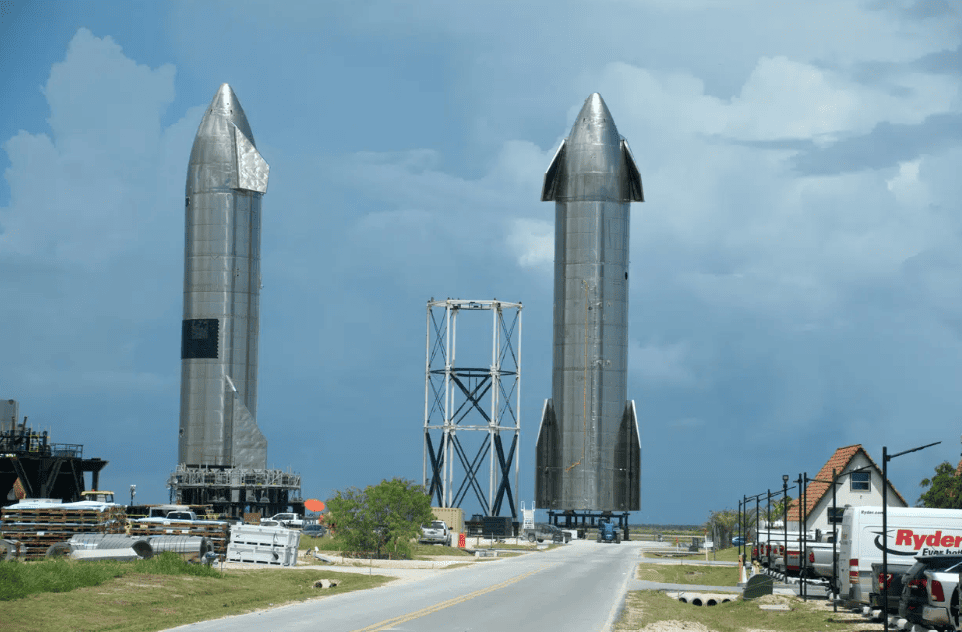
Starship is the primary reason Starbase exists, and Texas plays a central role in its development.
The vehicle is designed to be fully reusable, including both the booster and the spacecraft. This goal requires repeated testing, frequent failures, and continuous redesign. Texas provides the physical and regulatory space for this process to unfold in real time.
Test campaigns at Starbase have included static fire tests, short hop flights, high-altitude test flights, and orbital launch attempts. Each test adds to the data SpaceX uses to refine propulsion systems, structural design, heat shielding, and landing techniques.
While setbacks have occurred, the Texas approach allows SpaceX to recover quickly. Damaged hardware is replaced with updated versions. Lessons learned from one test are incorporated into the next build. Over time, this cycle has accelerated development in ways that traditional programs often struggle to match.
Starbase is also expected to support future operational missions once Starship becomes fully operational. These may include satellite deployments, cargo missions, and crewed flights tied to lunar and deep-space objectives.
Central Texas: Engineering, Electronics, and Expansion
While South Texas handles large-scale launch and vehicle development, Central Texas supports a different side of SpaceX’s operations.
Facilities in the Austin area, including Bastrop, focus on engineering, electronics, and satellite-related work. These sites are closely connected to SpaceX’s Starlink program, which provides satellite-based internet service around the world.
In Bastrop, SpaceX has invested in manufacturing and research space dedicated to advanced electronics and satellite components. This work includes semiconductor development, testing, and packaging, all of which are critical to maintaining Starlink’s growing constellation.
Unlike Starbase, these Central Texas facilities resemble advanced manufacturing and research campuses. They employ engineers, technicians, and specialists in fields such as materials science, electrical engineering, and production optimizatio.
The proximity to Austin’s broader tech ecosystem also matters. Central Texas has become a major hub for technology companies, startups, and research institutions. SpaceX benefits from this environment through hiring, collaboration, and access to specialized expertise.
Workforce Growth and Local Impact
SpaceX’s expansion across Texas has brought significant changes to local communities.
In South Texas, the growth of Starbase has transformed a previously quiet coastal area into a center of global attention. New jobs have emerged in construction, manufacturing, logistics, and engineering. Support businesses, including housing, food services, and transportation, have also grown to meet demand.
In Central Texas, SpaceX’s presence adds to an already competitive job market. High-skill positions offer salaries and career paths that attract professionals from across the country. At the same time, the company relies on local suppliers and contractors, spreading economic activity beyond its own payroll.
There have also been challenges. Infrastructure demands increase as populations grow. Environmental concerns require ongoing oversight, particularly near sensitive coastal ecosystems. Local governments continue to balance economic opportunity with community priorities.
Over time, SpaceX has worked with state and local agencies to address these issues through planning, investment, and compliance efforts. The long-term impact continues to evolve as operations mature.
Texas and SpaceX’s Broader Strategy
SpaceX’s Texas footprint reflects its broader business strategy.
The company aims to control as much of its production and testing process as possible. Texas supports this by offering space for large-scale manufacturing and experimentation. By building rockets, engines, launch infrastructure, and satellite components in-house, SpaceX reduces dependence on external suppliers and accelerates innovation.
Texas also allows SpaceX to separate different operational functions geographically while keeping them within a single state. Launch and heavy manufacturing remain in South Texas. Electronics, research, and software-related work concentrate in Central Texas. This distribution reduces congestion at any one site while maintaining logistical efficiency.
At the same time, Texas operations complement SpaceX’s facilities in other states. California continues to play a role in design and management. Florida remains critical for Falcon launches. Texas fills the gap by supporting next-generation development and high-volume experimentation.
Environmental and Regulatory Considerations
Operating large aerospace facilities comes with environmental responsibilities, especially in ecologically sensitive areas.
In South Texas, SpaceX operates near coastal habitats that support wildlife and protected species. Launch activities, construction, and testing require permits and environmental assessments. State and federal agencies oversee these processes to ensure compliance with environmental laws.
SpaceX has made adjustments over time to address concerns, including changes to infrastructure design, debris management, and scheduling. Environmental monitoring remains an ongoing part of operations, particularly as launch frequency increases.
In Central Texas, environmental considerations focus more on industrial development, water usage, and land management. These facilities operate within established industrial zones, which simplifies permitting but still requires adherence to environmental standards.
Regulatory frameworks continue to evolve alongside SpaceX’s activities. As launch cadence increases and new vehicle types enter service, coordination between SpaceX and regulators will remain essential.
The Future of SpaceX in Texas
Texas is expected to remain central to SpaceX’s future plans.
Starbase is likely to continue evolving as Starship moves from testing to regular operations. Infrastructure upgrades, additional launch mounts, and expanded support facilities are all possible as mission demands grow.
In Central Texas, continued investment in satellite technology and advanced manufacturing points toward long-term commitment. As Starlink expands and new space-based services emerge, these facilities may grow in size and scope.
Texas also positions SpaceX to adapt to future opportunities. Whether supporting lunar missions, Mars preparation, or next-generation satellite systems, the state provides the flexibility SpaceX values.
The relationship between SpaceX and Texas is no longer experimental. It has matured into a strategic partnership shaped by geography, policy, and shared ambition.
Conclusion
SpaceX’s presence in Texas represents a major shift in how and where space technology is developed. From the coastal launch sites of South Texas to the engineering hubs of Central Texas, the state supports a wide range of activities that are central to SpaceX’s mission.
Texas offers land, talent, infrastructure, and regulatory conditions that allow SpaceX to operate at scale while moving quickly. In return, SpaceX has brought investment, jobs, and global attention to regions that were once far removed from the center of spaceflight.
As private space exploration continues to expand, Texas is positioned to remain a key player in that story. SpaceX’s facilities across the state reflect a long-term commitment, one that ties the future of spaceflight closely to the Lone Star State.
Comments (0)
No comments yet. Be the first to share your thoughts.
Leave a comment