


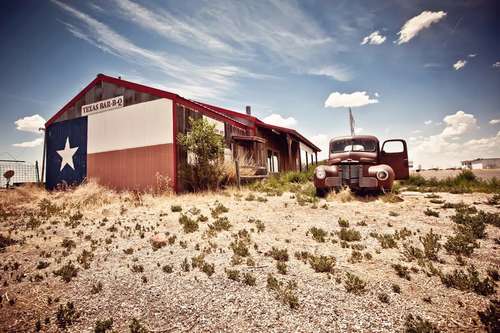
Long before fast food chains lined the highways, travelers crossing Texas on Route 66 relied on diners and cafés that promised one thing above all else. A hot meal served fast, filling, and fair-priced. These places were more than stops along the road. They were rest points, social hubs, and sometimes the highlight of a long drive across wide-open land.
Route 66 cut through the Texas Panhandle for just under 200 miles, but that stretch left a lasting mark. Towns like Shamrock, Amarillo, McLean, and Vega became essential stops for anyone heading west or east. The diners and cafés in these towns fed families on vacation, truckers chasing deadlines, soldiers on leave, and dreamers heading toward California.
This article takes a close look at the diners and cafés that kept Texas travelers fed along Route 66. Some are long gone, some still operate, and others live on through stories and old photographs. All played a role in shaping the experience of driving America’s most famous highway.
Why Diners Mattered on Route 66
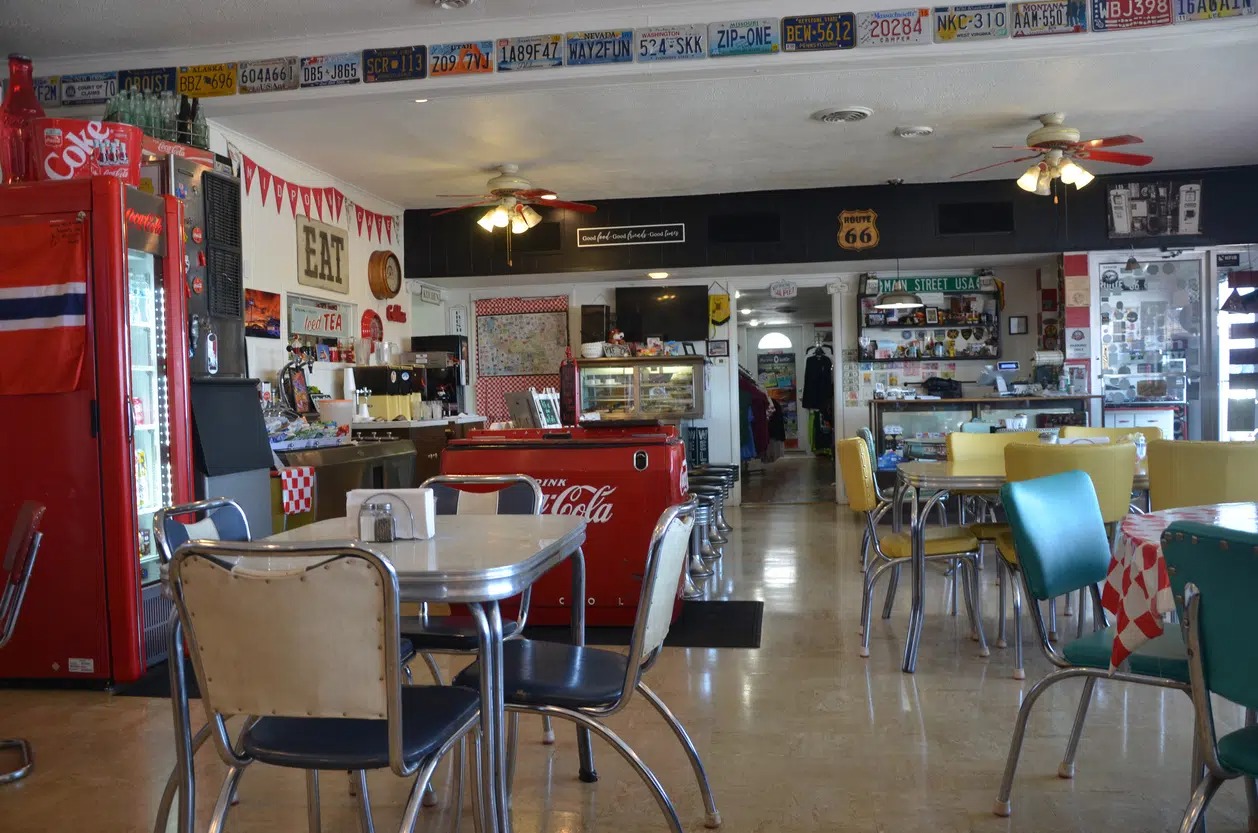
Route 66 travelers spent long hours on the road. Cars were slower, air conditioning was rare, and rest areas were limited. A diner was not just a place to eat. It was a place to sit, stretch, cool down, and reset before heading back onto the highway.
In Texas, distances between towns felt especially long. The Panhandle offered open skies, flat roads, and few distractions. When a neon sign advertising coffee, burgers, or homemade pie came into view, drivers paid attention.
Diners became reliable landmarks. People planned their stops around them. Locals depended on them too, especially in towns where Route 66 traffic brought steady business. Many café owners lived nearby and knew their regulars by name.
The Look and Feel of Route 66 Diners in Texas
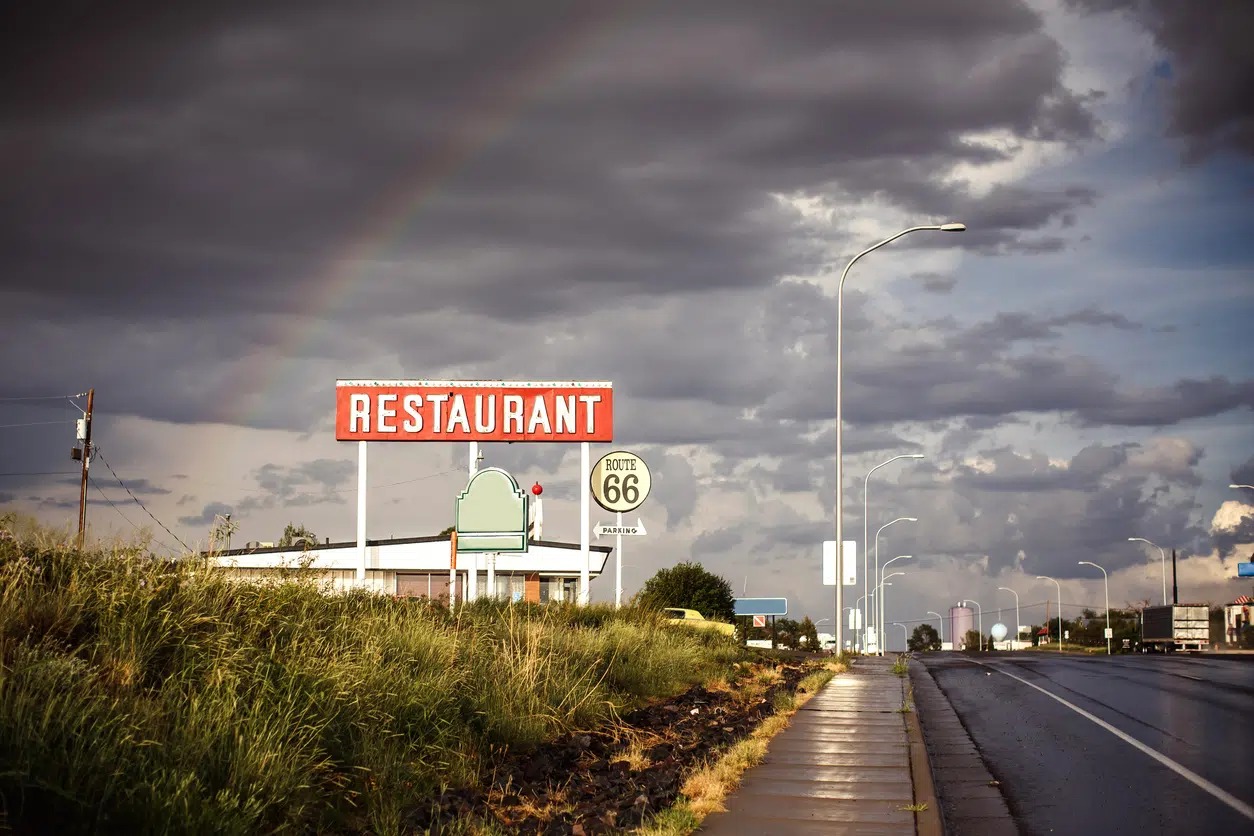
Texas Route 66 diners came in many forms. Some were classic stainless-steel buildings with long counters and spinning stools. Others were simple brick cafés attached to gas stations or motor courts. What they shared was a practical design meant to serve people quickly and comfortably.
Inside, the décor was often simple. Vinyl booths, checkerboard floors, wall-mounted fans, and large windows were common. Menus were short and easy to read. Prices were posted clearly. Portions were generous.
Many diners stayed open early and late. Breakfast might start before sunrise to serve truckers. Dinner could stretch well into the evening when travelers rolled in after dark.
The U Drop Inn Café in Shamrock
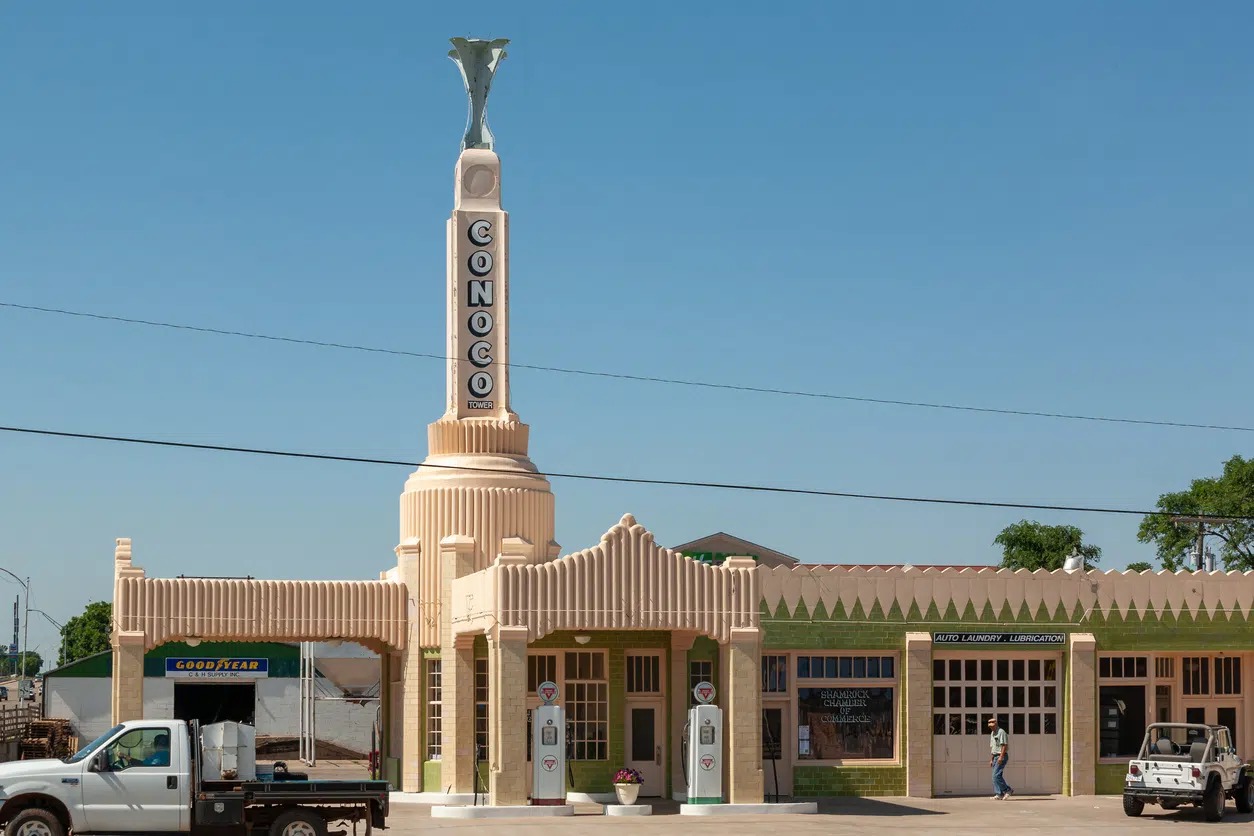
One of the most famous Route 66 stops in Texas is the U Drop Inn Café in Shamrock. Built in 1936, it stood out immediately thanks to its bold Art Deco design and bright neon lighting.
The café became an instant landmark. Travelers could spot it from far down the road. Inside, the U Drop Inn served classic American meals. Breakfast plates, sandwiches, steaks, and pies filled the menu.
The café was also known for its hospitality. Staff welcomed travelers who were tired, dusty, or unsure of what lay ahead. During the Dust Bowl years, this kindness mattered. Many families were heading west with limited money and few possessions.
Though the original café eventually closed, the building was restored and now houses a visitor center and museum. It remains one of the most photographed Route 66 locations in Texas.
Amarillo’s Cafés and Coffee Counters
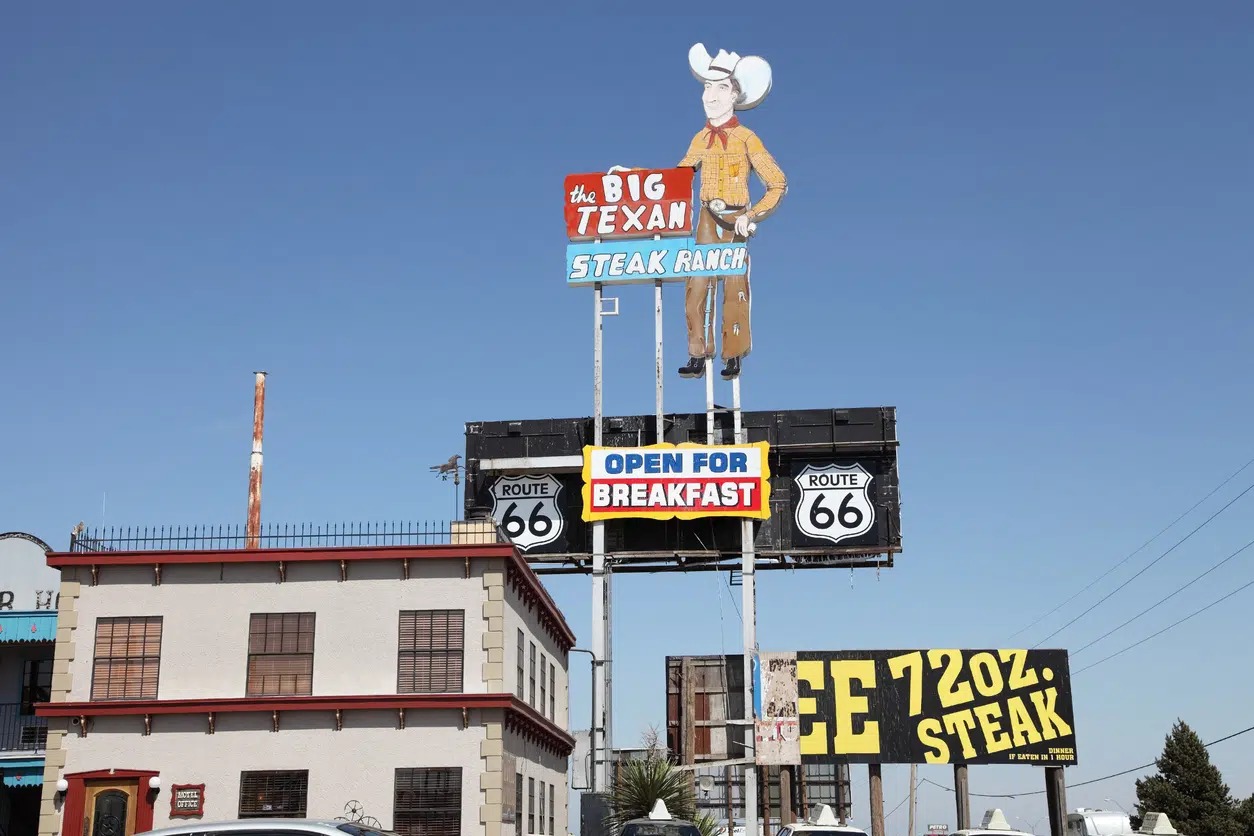
Amarillo was the largest city along Texas Route 66, and it offered more dining options than smaller towns. Travelers could find everything from short-order cafés to sit-down restaurants.
One well-known stop was the Cactus Café, which served hearty meals to locals and travelers alike. Amarillo cafés often specialized in beef dishes, reflecting the area’s ranching culture. Steaks, burgers, and chicken-fried steak appeared frequently on menus.
Coffee counters were especially popular. Many travelers stopped just for coffee and pie before moving on. Waitresses worked fast, refilling cups and taking orders with efficiency learned from years of highway traffic.
Amarillo’s cafés also served as meeting places. Farmers, salesmen, and travelers shared booths and stories. The mix of accents and license plates reminded everyone that Route 66 connected far more than just towns.
The Little Cafés of McLean
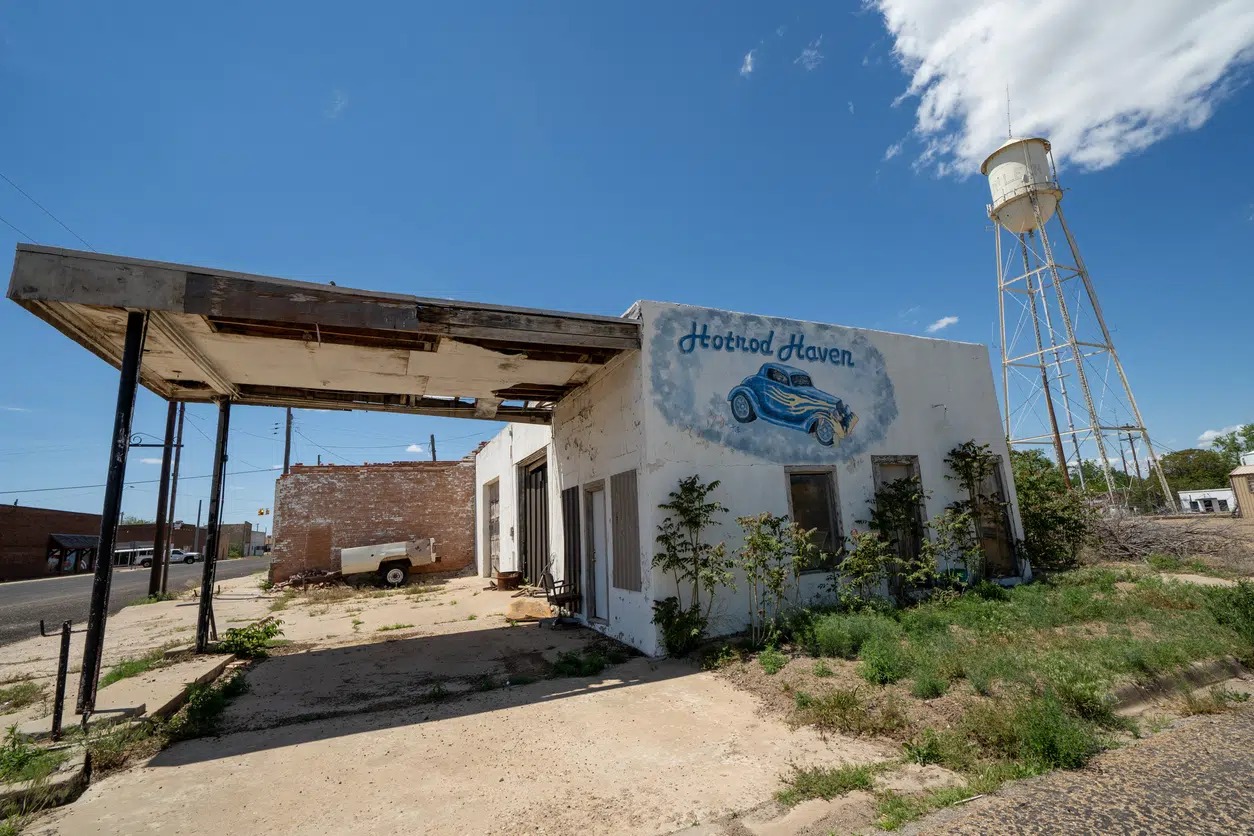
McLean may have been small, but it played a big role for Route 66 travelers. Located roughly halfway between Amarillo and Shamrock, it became a natural stopping point.
Several small cafés lined the road, each offering similar menus but with their own personalities. These cafés often had just a handful of tables, a counter, and a small kitchen. Owners and staff usually lived nearby.
Breakfast was a strong seller in McLean. Eggs, bacon, biscuits, and gravy fueled travelers starting early or catching up after a late night drive. Lunch brought burgers, sandwiches, and soups. Dinner focused on meat-and-potatoes meals that stuck with you.
Many travelers remembered McLean cafés for their friendliness. Locals liked to ask where people were headed and how the road treated them so far.
Pie as a Route 66 Tradition
Pie deserves special mention when talking about Route 66 diners in Texas. It was more than dessert. It was a symbol of comfort and home.
Texas diners often baked pies daily. Apple, cherry, peach, and pecan were common. Coconut cream and chocolate pie appeared in some cafés. Slices were large and usually served with strong coffee.
For travelers far from home, pie offered familiarity. It was easy to order, easy to eat, and easy to remember. Many Route 66 stories include mentions of pie stops that became highlights of the journey.
Some cafés built reputations around their pies. Word spread among travelers, and certain diners became known as must-stop locations because of them.
Vega and Its Roadside Eateries
Vega sat near the western edge of Texas Route 66. For many travelers heading west, it marked the end of one chapter and the beginning of another.
Cafés in Vega catered to this feeling. They were often the last Texas stop before New Mexico. Meals here felt like a send-off.
Menus stayed classic. Burgers, fries, sandwiches, and breakfast plates dominated. Portions were large, and service was quick. Travelers wanted fuel for the road ahead.
Some Vega cafés also served as informal information centers. Locals shared tips about road conditions, weather, and the best places to stop next.
Diners During Hard Times
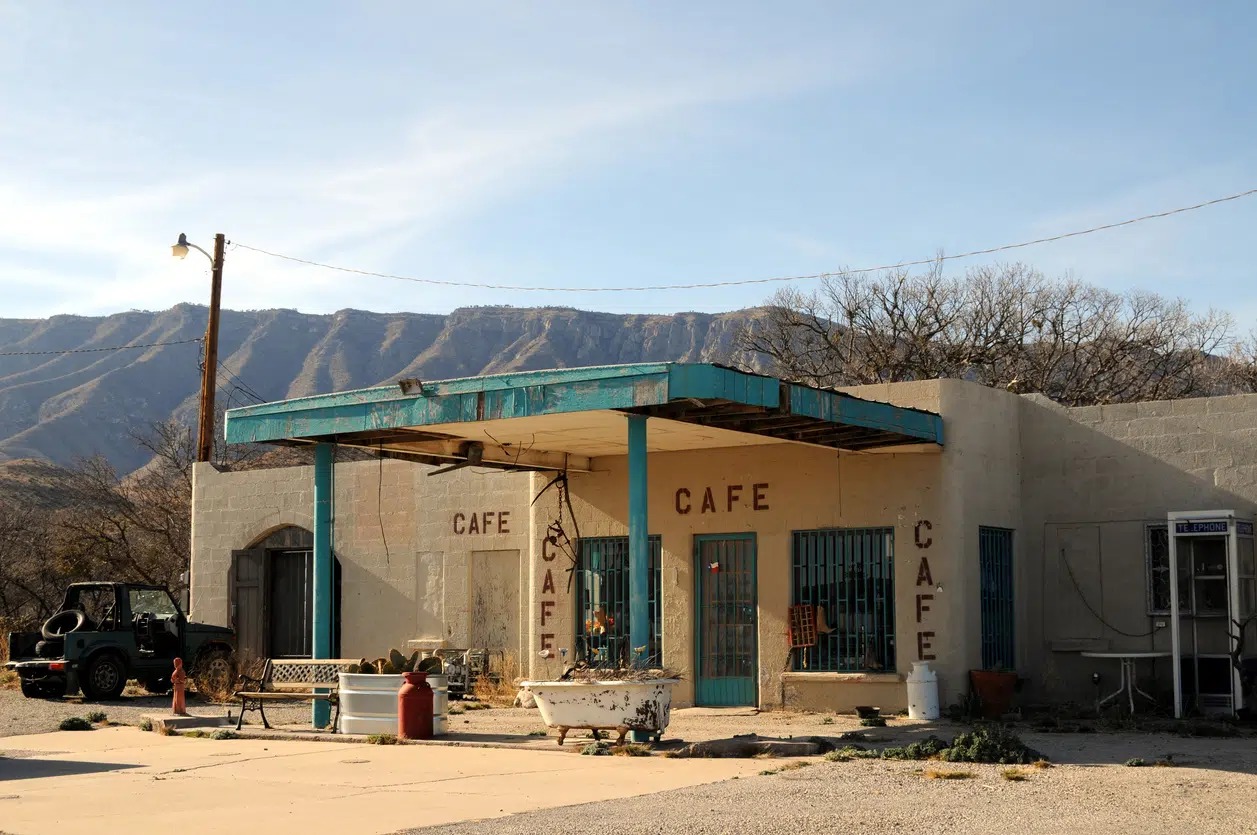
Route 66 saw heavy traffic during the Great Depression and Dust Bowl years. Texas diners played a role in helping people survive difficult journeys.
Some café owners offered credit or reduced prices to struggling families. Others allowed people to share meals or linger longer than usual. While these gestures were not universal, they were common enough to become part of Route 66 lore.
During World War II, diners served soldiers and defense workers. Rationing affected menus, but cafés adapted. Meatless dishes, smaller portions, and creative substitutions kept kitchens running.
These diners were resilient. They adjusted to changing times while continuing to serve the people who depended on them.
The Decline of Route 66 Diners
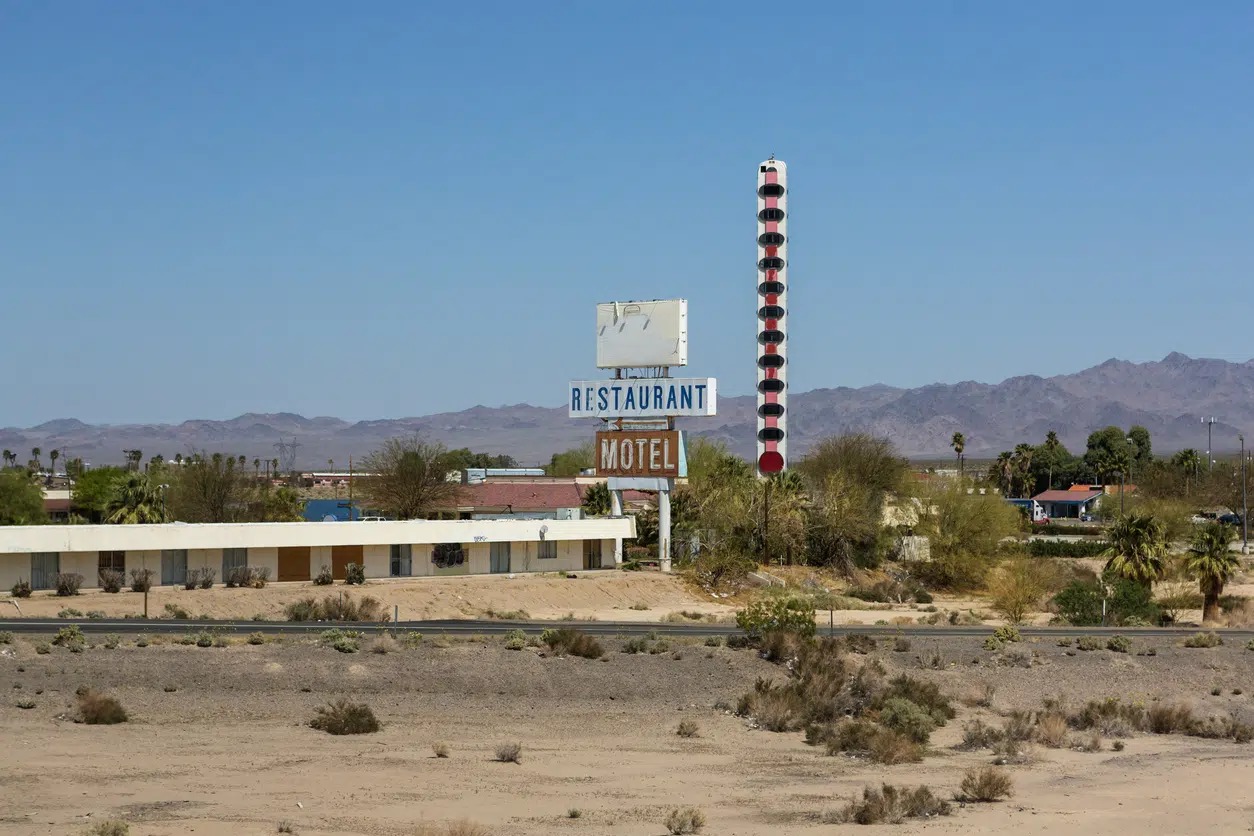
The construction of Interstate 40 changed everything. Traffic moved faster and bypassed many Route 66 towns. Diners that once sat right on the road suddenly found themselves off the main route.
Some cafés closed quickly. Others tried to survive by catering to locals. A few adapted by adding new menu items or remodeling their spaces.
Fast food chains also drew business away. Their consistency and speed appealed to drivers eager to reach their destinations.
By the late twentieth century, many classic Route 66 diners in Texas were gone. Their buildings fell into disrepair or were repurposed. Yet memories remained strong.
Preservation and Revival
In recent years, interest in Route 66 has grown again. Travelers now seek out history, nostalgia, and local flavor. This shift has led to renewed appreciation for old diners and cafés.
Some Texas Route 66 buildings have been restored. Others inspire new cafés designed to capture the look and feel of the originals. While not every revival is exact, the spirit remains.
Events, festivals, and guided tours often highlight historic diners. Old menus, photographs, and stories help keep these places alive in public memory.
The U Drop Inn stands as the best-known example, but it is not alone. Across the Panhandle, signs, foundations, and restored buildings remind travelers of what once was.
Why These Diners Still Matter
Route 66 diners and cafés fed more than hunger. They offered rest, connection, and reassurance. For many travelers, they were the first friendly face after miles of empty road.
In Texas, these diners reflected local values. Practicality, generosity, and straightforward service defined them. You came in hungry and left full. You were treated like a person, not just a customer.
Their stories help explain why Route 66 remains so powerful in American culture. The road was about movement, but the diners were about stopping. Both were necessary.
Visiting Texas Route 66 Today
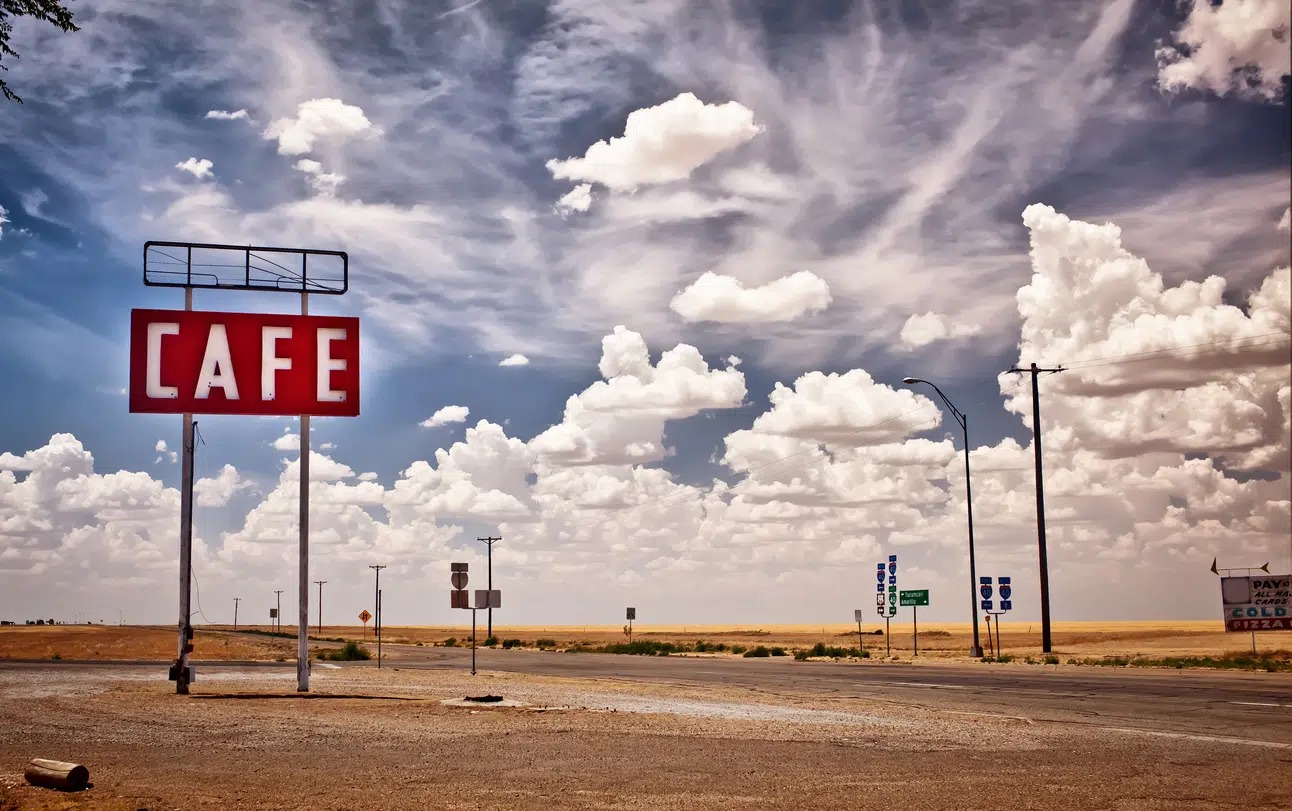
Modern travelers can still trace Route 66 through Texas. While many original diners are gone, their influence lingers.
Museums, visitor centers, and preserved buildings offer insight into the dining culture of the road. Some modern cafés embrace Route 66 themes while serving contemporary menus.
Driving this stretch today invites reflection. It is easy to imagine neon signs glowing at dusk and the smell of coffee drifting out open doors.
Final Thoughts
Route 66 diners and cafés that fed Texas travelers were simple places with lasting impact. They turned long drives into shared experiences. They offered comfort during uncertain times. They became part of countless personal journeys.
Though many no longer stand, their role in Route 66 history remains clear. They helped define the road and the people who traveled it.
For anyone interested in Texas history, food culture, or the story of American travel, these diners deserve remembrance. They fed the road, one plate at a time.
Comments (0)
No comments yet. Be the first to share your thoughts.
Leave a comment