


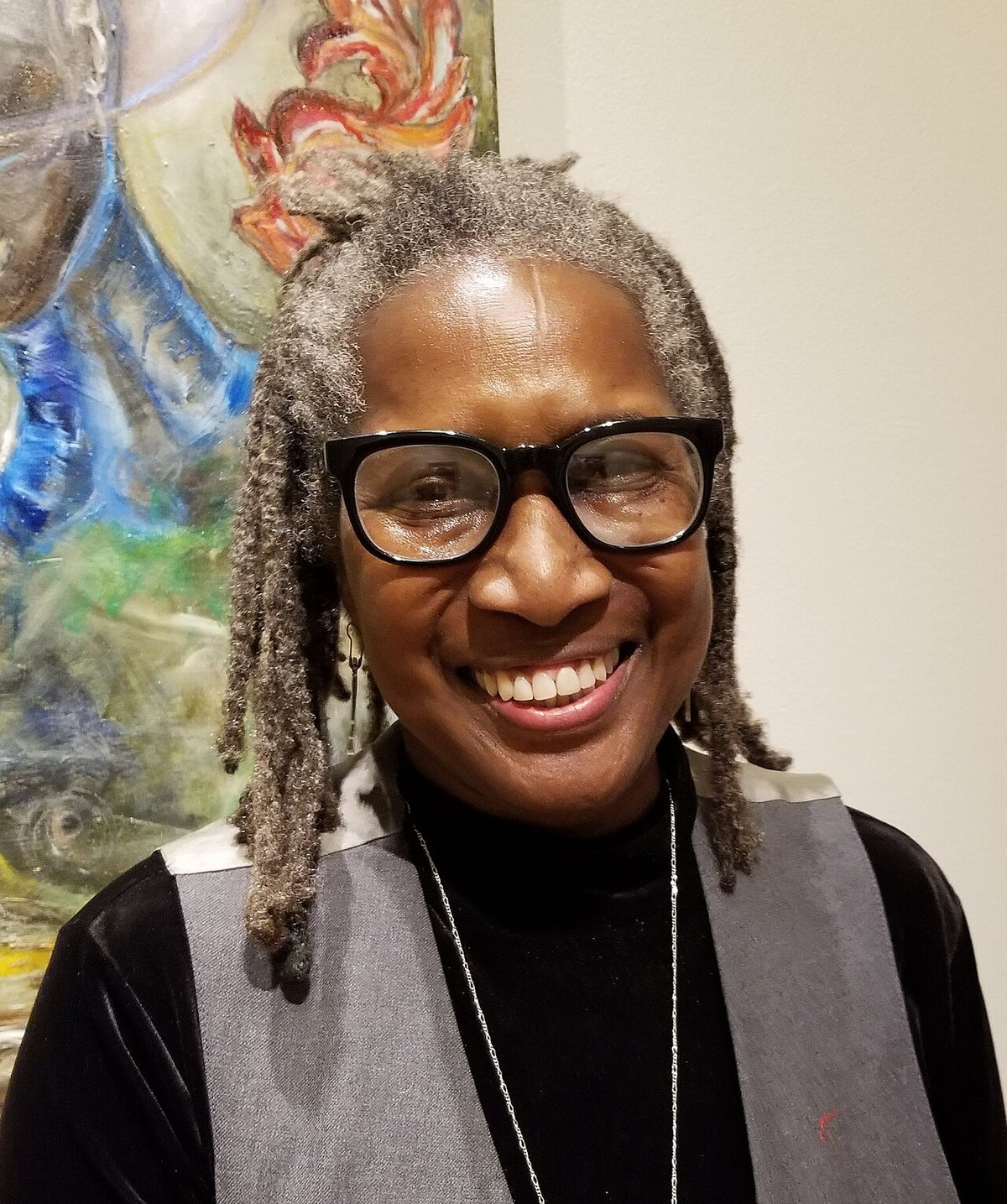
Image: Mark B Coats, RejinaThomas CarverMuseum 26OCT2017, CC BY-SA 4.0
Reji Thomas, an esteemed glass artist and painter, continues to revolutionize Austin’s creative scene with her innovative work. Growing up in California and influenced by her diverse background, she transitioned from a U.S. Air Force medic to a leading figure in Austin’s art world.
Founding Pine Street Station, Reji created a space for collaboration and creativity. Her significant contributions have shaped the city’s cultural identity, leaving an enduring legacy. Discover how her journey continues to inspire.
Reji Thomas’s Early Life and Artistic Inclinations
Although Reji Thomas was born in California, her early artistic tendencies were shaped by a blend of technical curiosity and natural creativity. Raised by a nurse and an engineer, she was encouraged to explore both structure and imagination.
By age 15, Reji sold her first painting, affirming her deep passion for visual expression. Her time on a farm in Alabama further rooted her connection to nature—a recurring theme in her art.
After serving as a medic in the Air Force, Reji began experimenting with glass, famously using a diamond dental drill as her artistic tool. She later trained at the Pilchuck Glass School in Washington, founded by renowned artist Dale Chihuly, reinforcing her dedication to the medium.
Transition From Air Force to Artistic Pursuits
Reji Thomas’s transition from the structured world of the Air Force to the open expression of art was bold and inspiring.
After completing her military service as a medic, Reji reconnected with her artistic side, having already sold a painting at 15. The precision tools she once used in medicine helped her develop detailed etching techniques in her glasswork.
Her education at Pilchuck Glass School refined her skills and helped her blend technical expertise with artistic freedom. Once in Austin, she committed fully to her creative path, integrating these influences into a distinctive style of glass art and painting.
Founding of the Glass Art Studio in Austin
In 1979, Reji Thomas established her glass studio in Austin, launching a career that would leave a lasting imprint on the city’s arts community.
The studio soon evolved into a collaborative space, attracting local and visiting artists. It later expanded into Pine Street Station, which played a key role in shaping East Austin into a vibrant creative hub.
The space hosted visual art exhibitions, readings, music performances, and creative workshops. Even after closing in 2014, the impact of Reji’s studio on Austin’s art scene endures.
Pine Street Station: A Hub for Artistic Collaboration
Pine Street Station became more than just Reji’s studio—it was a dynamic artist collective.
Founded in the 1980s, the venue offered studios, event space, and a platform for artists across disciplines. It was instrumental in growing East Austin’s cultural scene, becoming a home for events like QueerBomb and the East Austin Studio Tour (EAST).
Reji’s vision fostered a culture of inclusion, experimentation, and empowerment, allowing artists to grow within a supportive environment. Even post-closure, Pine Street Station’s influence still resonates in the local arts community.
Exploration of Diverse Artistic Mediums
Reji Thomas’s portfolio extends far beyond glass. At the George Washington Carver Museum, her installations explore fluidity, light, and depth, encouraging viewers to engage from multiple angles.
Her materials include etched glass, fiber optics, and reclaimed metals, often reflecting themes of nature and resilience. Notable works like “Floating on the Water” emulate organic motion, capturing elements such as debris patterns and aquatic rhythm.
She also explores cubist surrealism and abstract painting, and through her educational work with the School of Glass in Austin, Reji mentors the next generation of artists to explore fearlessly.
Noteworthy Projects and Collaborations
Among Reji’s signature achievements was her role in the 1995 Texas State Capitol restoration, where she recreated 600 etched glass panels using a rare double-acid etching process.
She has collaborated with cultural institutions and venues including the Laguna Gloria Art Museum and The Contemporary Austin.
Reji’s mural work, such as the piece on East 11th Street, has received critical praise. Her involvement in SXSW events, including Fader Fort and QueerBomb, positioned her at the crossroads of art, activism, and music.
Impact on Austin’s Cultural Landscape
Through Pine Street Station and her broader artistic efforts, Reji helped turn East Austin into a nationally recognized arts corridor.
She bridged communities—creating space for underrepresented voices, LGBTQ+ artists, and experimental projects. Her participation in community events and cultural revitalization anchored her as a major figure in Austin’s transformation into a creative capital.
Her work is featured in collections including that of Queen Elizabeth II and the Texas State Capitol, underscoring her global and local impact.
Reji Thomas’s Continuing Artistic Influence
Today, Reji Thomas continues to create, exhibit, and mentor. Her most recent projects include her “Seattle Series”, a blend of glasswork and narrative installation.
She serves as an Artist-in-Residence at Prizer Arts & Letters, and her initiative “Reji Thomas Makes Space” promotes artistic collaboration and social engagement.
Her enduring influence is visible not only in her art, but in the generations she inspires and the community she’s helped shape.

Comments (0)
No comments yet. Be the first to share your thoughts.
Leave a comment