


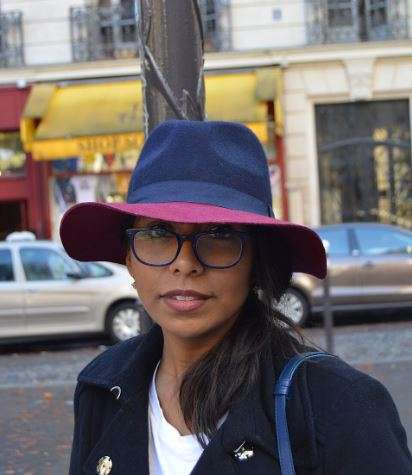
Syghost, Natalia Anciso PFW15, CC BY-SA 4.0
You’re captivated by the powerful work of Natalia Anciso, a remarkable Texas-born artist and educator based in California, not Austin. Drawing from her Chicana-Tejana heritage, she explores identity, social justice, and the vibrant Rio Grande Valley border culture.
Her art, blending traditional vernacular practices with contemporary media, advocates for marginalized voices while offering profound insights into issues of race, class, and representation. With a deep commitment to education and equity, Anciso’s work inspires transformation.
Natalia Anciso’s Artistic Journey
While tracing Natalia Anciso’s artistic path, you’ll uncover the profound impact of her Chicana-Tejana roots. Born in Weslaco, Texas, Anciso’s connection to the Rio Grande Valley shapes her creative lens.
As a visual artist, she intertwines the legacy of generational trauma with contemporary stories of identity, reflecting the lived realities of communities along the Texas–Mexico border. Her education in Studio Art at The University of Texas at Austin, and an MFA from California College of the Arts, enriches her narrative depth and precision.
Anciso’s series like “Flora and Fauna” captures both struggle and resilience, earning her national acclaim. Her art is not just visually impactful—it conveys the enduring strength of communities facing historical and contemporary injustices.
Themes of Identity and Social Justice
As you explore Natalia Anciso’s work, you’ll find deep engagement with identity and social justice. Her art reflects her own lived experience as a Chicana-Tejana and examines the tensions of borderland life.
Through visual storytelling, she addresses the school-to-prison pipeline, working to:
- Provide representation for students of color
- Empower marginalized communities
- Engage with issues like poverty, immigration, and human rights
- Reinforce cultural resilience through symbolic motifs
Using both vibrant and muted imagery, Anciso creates layered compositions that highlight the dual realities of border life—beauty and pain, pride and sorrow.
The Influence of Rio Grande Valley
Natalia Anciso’s art draws deeply from the Rio Grande Valley, embedding her pieces with cultural, historical, and emotional resonance.
She illustrates the tensions and richness of border life, portraying the survival of indigenous peoples and Tejanos in the face of systemic neglect and violence. She often incorporates pano arte, a Chicano prison art tradition, to echo stories of resistance and endurance.
The region isn’t just her subject—it’s her source, grounding every thread of her work.
Exploring Vernacular Arts
At the heart of Anciso’s creative practice are vernacular arts, which she reinterprets with precision and vision.
She explores pano arte, developed by Chicano prisoners in the mid-20th century, and blends it with other traditions like huipil embroidery—textiles historically crafted by indigenous Mesoamerican women.
These forms are more than craft; they’re powerful symbols of identity, dignity, and political resistance. Her art:
- Represents community voices
- Addresses contemporary and ancestral injustices
- Elevates domestic and grassroots art into institutional conversations
Innovative Artistic Techniques
Natalia Anciso’s mixed-media work is a masterclass in form and meaning.
She juxtaposes delicate watercolors of native Texas flora with stark black-and-white imagery, drawing attention to the contrast between natural beauty and sociopolitical violence. She frequently works on domestic objects like handkerchiefs and pillowcases, embedding narratives into traditionally feminine and private spaces.
This use of domesticana reclaims everyday items as vehicles for cultural memory and political urgency.
Her signature style layers beauty with brutality, capturing the nuances of La Frontera—the U.S.–Mexico border—and its emotional terrain.
Recognizing Struggles and Resilience
The depth of Anciso’s work lies in its insistence on honoring both struggle and survival.
In pieces like “Madre y Hijos”, themes of grief, migration, and maternal strength emerge through a fusion of soft fabric and bold imagery. Her “Flora and Fauna” series uses vibrant colors to portray stark truths—human trafficking, border militarization, and cartel violence.
The Rio Grande River features as a symbol of both division and heritage, running through the heart of many of her compositions.
Each piece invites viewers to acknowledge trauma while witnessing resilience.
Impact on Education and Community
Natalia Anciso is not only a visual artist—she is an educator devoted to equity through creative pedagogy.
Her classroom work integrates arts-based learning and cultural studies, helping students understand complex issues like racial injustice and economic disparity. Her series “School” critiques the school-to-prison pipeline, particularly in California’s public schools.
In her educational practice, she:
- Engages in urban education reform
- Encourages students to embrace their cultural identities
- Fosters community activism through curriculum
National and International Recognition
While rooted in the borderlands, Anciso’s influence reaches a global audience.
She has been profiled in ELLE Magazine, The Huffington Post, and Texas Monthly. She was also the only visual artist featured in TVyNovelas’ Top 50 Latinos Today, acknowledging her role as a cultural influencer.
Her exhibitions include:
- San Jose Museum of Art
- National Museum of Mexican Art in Chicago
- Various community-centered spaces that align with her social vision
Former U.S. Secretary of Education John B. King Jr. recognized her for her contributions to arts and education.
Current Projects and Artistic Focus
Natalia Anciso’s recent work continues to center on urgent societal issues.
Her “School” series critiques systemic oppression in public education, especially how students of color are criminalized. Her recent work retools pano arte and huipil patterns to narrate injustices faced by immigrant communities.
She aims to amplify voices silenced in traditional academic spaces and continues to work on projects intersecting arts, education, and policy.
Bridging Art and Social Change
Through her hybrid art practice, Natalia Anciso offers a blueprint for how creative work can fuel real-world change.
Her focus on border identity, incarceration, and education inequality sparks conversations in both museums and classrooms.
- “School” illustrates how art can dismantle oppressive narratives.
- Her work uplifts Tejana/o and Chicana/o experiences.
- Visual storytelling becomes a platform for reclaiming voice and space.
- Her educational work empowers the next generation to lead with consciousness.
Anciso’s art doesn’t just reflect the world—it dares to reshape it.
Comments (0)
No comments yet. Be the first to share your thoughts.
Leave a comment