


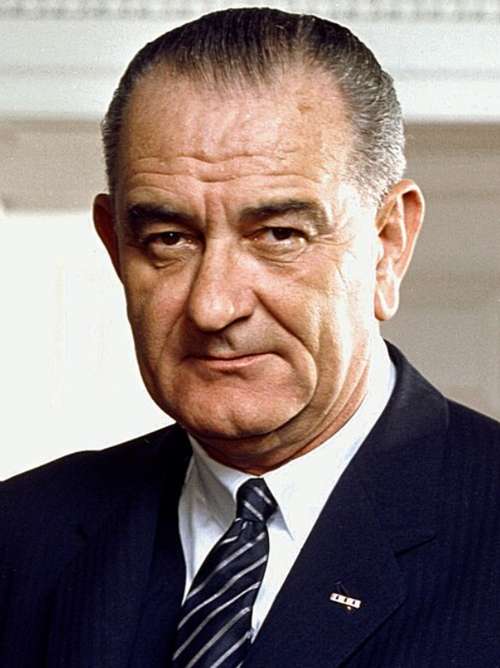
Born in Stonewall, near Johnson City, Texas, Lyndon B. Johnson rose to prominence as a significant figure in American history. He utilized his political skills to push through major legislation, including the Civil Rights Act and the ambitious Great Society programs aimed at reducing poverty and promoting justice.
Though domestic achievements marked his presidency, it was overshadowed by the divisive Vietnam War. Exploring his path reveals how he navigated these challenges and left a lasting impact.
Early Life and Education
Although born into a family with a strong political background near Johnson City, Texas, on August 27, 1908, Lyndon B. Johnson didn’t immediately embrace the path of education.
Initially reluctant to continue schooling after graduating from Johnson City High School, he eventually enrolled at Southwest Texas State Teachers College in 1927. There, he pursued an education degree, juggling various jobs to support himself.
His experiences teaching in a segregated school in Cotulla, Texas, profoundly shaped his understanding of poverty and discrimination. Influenced by his mother, Rebekah Baines Johnson, a college-educated teacher, Lyndon developed a deep commitment to addressing social issues.
This foundation in education and awareness of societal challenges played a critical role in shaping his future policies.
Early Career and Marriage
Despite the challenges of the Great Depression, Lyndon B. Johnson’s determination led him to graduate with a degree in education in 1930. He worked as a teacher and principal at the Welhausen School in Cotulla, Texas, where he taught disadvantaged Mexican-American students.
This early commitment to education and leadership shaped his future political career. Johnson’s path continued as he became a top aide to Congressman Richard Kleberg, honing his skills in leadership and political strategy.
In 1934, Johnson’s life took a notable turn when he met Claudia Alta “Lady Bird” Taylor. Their marriage on November 17, 1934, marked the beginning of a powerful partnership.
Lady Bird Johnson became a crucial adviser, supporting his ambitions and contributing considerably to his political success.
Political Career and Legislative Achievements
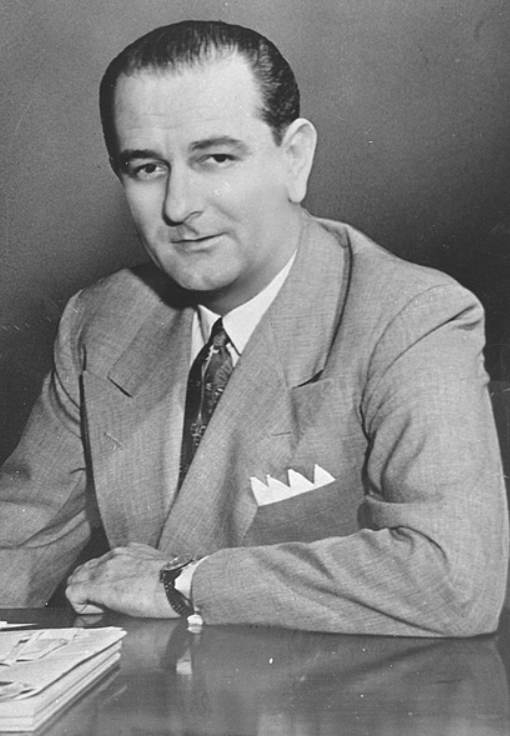
Lyndon B. Johnson began his political career in the House of Representatives in 1937, where he supported New Deal initiatives. As a rising star in the Democratic Party, he focused on rural electrification and public works.
After 12 years in the Senate, he became the majority leader, championing the Civil Rights Act of 1957. His legislative legacy further solidified with the Civil Rights Act of 1964 and the Voting Rights Act of 1965, which dismantled racial injustice and guaranteed voting rights for African Americans.
Johnson’s Great Society programs tackled poverty and social inequality, introducing Medicare, Medicaid, and over sixty education and anti-poverty laws. His influence in the Senate and House left a lasting impact on American life.
Presidency and Great Society Initiatives
When John F. Kennedy was assassinated, Lyndon B. Johnson stepped into the presidency and swiftly prioritized passing the Civil Rights Act of 1964.
As a seasoned legislator turned president, Johnson didn’t waste time launching his ambitious Great Society initiatives in 1965. These aimed to combat poverty and racial injustice, expanding federal support through sweeping domestic policies.
The Medicare Amendment to the Social Security Act provided healthcare for the elderly, transforming the American welfare landscape.
With the Voting Rights Act of 1965, he dismantled voting barriers for African Americans, empowering millions in the South.
Johnson’s Great Society programs helped reduce the poverty rate significantly—from around 19% in 1964 to 11.1% by 1973—showcasing the transformative power of his presidency.
Challenges and Controversies
While Lyndon B. Johnson’s presidency achieved significant domestic milestones with the Civil Rights Act and Great Society initiatives, it was marred by the escalating Vietnam War.
U.S. troop numbers surged from 16,000 to over 500,000, sparking anti-war protests that highlighted deep national divisions. Events like the 1968 Democratic National Convention underscored this turmoil, as his Vietnam policies faced intense scrutiny.
The war’s toll, with approximately 30,000 American soldiers killed by 1968, led to declining public approval and damaged his foreign policy reputation.
Despite his legislative successes, Johnson’s decision not to seek re-election in March 1968 was driven by the political fallout from Vietnam, marking a crucial moment where controversy overshadowed his presidency’s achievements.
Johnson and the Vietnam War
Despite his notable achievements on the domestic front, Johnson’s presidency is often defined by his role in the Vietnam War.
He considerably escalated U.S. involvement, increasing troop numbers from 16,000 to over 500,000. This decision, rooted in the “domino theory,” led to widespread anti-war protests and a growing number of casualties.
By 1968, the war’s toll on domestic issues and the public’s disillusionment with his leadership were undeniable. As the death count rose to approximately 30,000 American soldiers, Johnson’s popularity plummeted.
On March 31, 1968, he announced he wouldn’t seek re-election, hoping to focus on peace. The Vietnam War overshadowed his presidency, affecting his legacy and altering public perception of his leadership.
Legacy and Impact
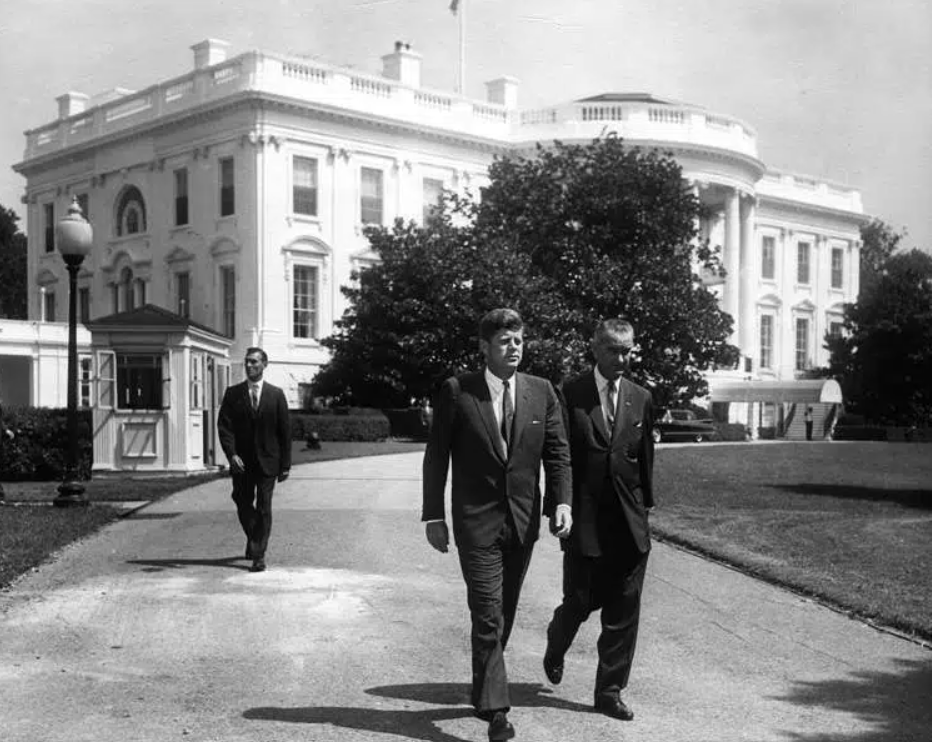
Lyndon B. Johnson’s presidential legacy is defined by transformative legislative achievements. His push for civil rights law led to the Civil Rights Act of 1964 and the Voting Rights Act of 1965, reshaping America’s social landscape.
Under the banner of the Great Society, he expanded healthcare access through Medicare and Medicaid, significantly reducing the national poverty rate. Urban development thrived with the creation of the U.S. Department of Housing and Urban Development, offering better housing assistance.
Despite these successes, Johnson’s escalation of the Vietnam War overshadowed his presidency, sparking protests and diminishing his popularity.
However, the enduring relevance of his policies continues to spark debates on government intervention, cementing his complex presidential legacy.
Remembering Lady Bird Johnson
Lady Bird Johnson was more than just a First Lady; she was a force of nature in her own right. As Lyndon B. Johnson’s steadfast supporter and adviser, she played a crucial role throughout his political career.
She didn’t just stand by; she actively contributed to his campaigns, famously traveling 30,000 miles across 11 Southern states during the 1964 election to promote civil rights.
Her passion for environmental initiatives led to the Highway Beautification Act of 1965, reflecting her commitment to America’s natural beauty.
Beyond this, she championed education, health, and urban renewal programs. Her dedication to the “War on Poverty” initiatives aimed to uplift rural Americans, leaving a lasting legacy of compassion and progress.
Lady Bird’s influence remains undeniable.
Comments (0)
No comments yet. Be the first to share your thoughts.
Leave a comment