


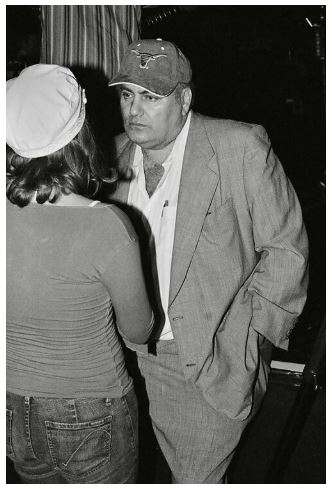
anonymous, CliffordAntone, CC BY 2.5
Clifford Antone, born in Port Arthur, Texas, transformed Austin’s music scene by establishing Antone’s nightclub in 1975. With his enthusiasm for blues, he provided a stage for legendary artists like B.B. King and nurtured the careers of rising stars such as Stevie Ray Vaughan.
Despite legal challenges, Antone’s influence on Austin’s cultural landscape remains profound. His story continues to shape the city’s dynamic soundscape, and there’s so much more to uncover.
Early Life and Influences
Born on October 27, 1949, in Port Arthur, Clifford Antone grew up in a Lebanese-American family that instilled in him a strong sense of cultural heritage and family loyalty.
You can trace his love for the blues back to his early years, where local radio stations and record shops introduced him to legends like Muddy Waters and Clifton Chenier.
Graduating from Thomas Jefferson High School in 1968, Antone moved to Austin and briefly attended the University of Texas, initially intending to pursue a law degree.
However, his passion for music, particularly the blues, took center stage. The lively Austin music scene, combined with his deep-rooted heritage, inspired him to embrace the authentic sounds of blues, forever shaping his life’s trajectory.
Establishing Antone’s Nightclub
Transforming an old furniture store into a vibrant blues venue, Clifford Antone opened Antone’s nightclub on July 15, 1975, in downtown Austin.
As a passionate club owner, Antone created a space where both legendary blues artists and emerging talents could thrive. The original Antone’s quickly became the “Home of the Blues,” setting the stage for Austin’s music renaissance during the post-hippie era.
Here’s why Antone’s stood out:
- Hosted iconic blues legends like B.B. King, Muddy Waters, and John Lee Hooker
- Launched careers of young stars such as Stevie Ray Vaughan and The Fabulous Thunderbirds
- Offered a welcoming home for both seasoned and emerging blues artists
- Reinforced Austin’s reputation as a live music capital
- Pioneered a thriving blues scene amid other dominant musical trends
Musical Contributions and Collaborations
Despite challenges, Clifford Antone’s contributions to the blues scene were transformative.
For decades, Antone’s served as a premier venue, hosting artists like Stevie Ray Vaughan, Lou Ann Barton, and Jimmie Vaughan. These performances helped solidify the modern Texas blues sound.
Antone also founded Antone’s Records in 1987, which became instrumental in producing and promoting blues music, featuring artists such as James Cotton, Angela Strehli, and Kim Wilson.
His passion for education led him to teach blues history at The University of Texas at Austin, sharing stories and recordings that brought the genre’s history to life.
Thanks to Antone, Austin became a cradle for blues talent that extended far beyond the club’s stage.
Navigating Legal Challenges
While Clifford Antone left an indelible mark on music, his journey wasn’t without hardship. He faced legal trouble, including federal prison sentences in 1985 and 2000 for marijuana trafficking.
These cases impacted his reputation and finances, though they didn’t deter his mission to support live music. Contrary to some perceptions, Antone was known for running a club that emphasized respect and professionalism, not drug culture.
Support from the music community surged after his second arrest, as artists and fans defended his value to Austin. A DEA raid in 1997 marked a low point, but public sentiment remained largely in his favor.
- Federal prison terms: 1985, 2000
- Drug charges: Centered around marijuana
- Strong community defense: Musicians advocated for his legacy
- Reputation: Affected by legal troubles but preserved through goodwill
Legacy and Impact on Austin’s Music Scene
Although Clifford Antone endured setbacks, his impact on Austin’s musical identity is undeniable. Founding Antone’s nightclub helped incubate artists who would later become blues icons.
Antone mentored young musicians, offering guidance, stage time, and unshakable belief in their potential. His club played a pivotal role in turning Sixth Street into the live music district it is today.
In 2025, Antone’s will celebrate its 50th anniversary, a testament to its enduring role in Austin’s music heritage.
Clifford Antone’s vision helped elevate Austin into a global music capital. Though he passed away in 2006, his legacy continues through Antone’s and the artists he uplifted.
While The Continental Club—established in 1955—is another iconic venue, it wasn’t founded by Antone. Still, both clubs exemplify the spirit of Austin’s live music culture, thanks in part to Antone’s foundational influence.
Comments (0)
No comments yet. Be the first to share your thoughts.
Leave a comment