


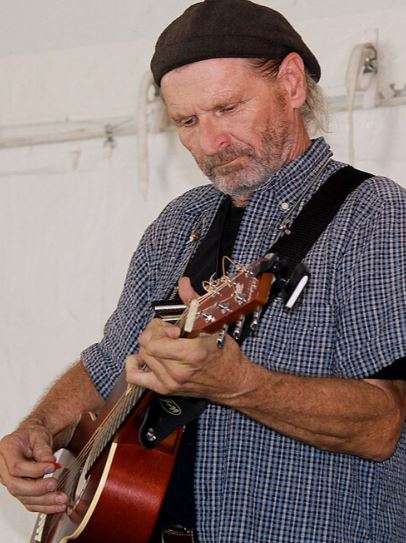
Photo: Butch Hancock (2011), © Larry D. Moore, via Wikimedia Commons, licensed under CC BY 4.0.
Butch Hancock, born in Lubbock, Texas, is a true legend in the Austin music scene. As a founding member of The Flatlanders, he helped shape the progressive country movement.
Known for his clever songwriting and unique “singsong talking blues” style, Butch’s music blends humor with insightful reflections on life. Also a photographer and visual artist, his varied talents highlight his profound creative spirit. Uncover more about this iconic Texan’s influential journey.
Early Life and Musical Beginnings
Butch Hancock’s journey into music began in Lubbock, Texas, where he was born on July 12, 1945.
Growing up in the vast landscapes of Texas, Hancock nurtured his songwriting talent amidst the simplicity of rural life. He attended Texas Tech University, initially pursuing architecture, but his calling lay elsewhere.
Working on his father’s farm provided the contemplative solitude needed for creativity. Driving a tractor, he found inspiration for his lyrics, weaving stories with a touch of philosophy.
This passion led him to co-found The Flatlanders in 1972, a crucial moment in Texas music history.
His solo debut, West Texas Waltzes and Dust-Blown Tractor Tunes, released in 1978, marked the start of a prolific career in songwriting.
The Flatlanders and Texas Country Music
With a deep-rooted passion for storytelling and music, Hancock’s journey took a transformative turn when he teamed up with fellow musicians Jimmie Dale Gilmore and Joe Ely to form The Flatlanders in 1972.
This seminal group carved its niche in Texas music by blending folk, rock, and traditional country, laying the groundwork for the progressive country movement. Although The Flatlanders disbanded after a year, their self-titled album became an enduring classic, influencing countless artists.
The band’s intricate harmonies and storytelling lyrics resonated deeply, contributing to the cultural narrative of Texas music. Reuniting in the 1990s, they continued to perform and record, solidifying their legacy.
As part of the so-called “Lubbock Mafia,” The Flatlanders remain essential in shaping Texas country music.
Solo Career and Musical Style
Starting his solo career in 1978, Hancock released his debut album, West Texas Waltzes and Dust-Blown Tractor Tunes, marking the start of a career that would yield over 15 albums.
Butch Hancock’s songwriting is an enthralling blend of country and folk, characterized by puns, humor, and a world-weary perspective. His musical style embodies a unique storytelling ability, weaving narratives that resonate with listeners.
You’ll notice his “singsong talking blues” delivered with pinched nasal vocals, a distinctive sound shaped by his High Plains Texas upbringing. Hancock’s music is a journey through rhythms and tales, reflecting his spontaneous approach to songwriting.
With his recent project, Seven Cities of Gold, he continues to innovate, connecting with fans through modern avenues like Kickstarter.
Songwriting Inspirations and Processes
While drawn from the vast landscapes of the High Plains, Butch Hancock’s songwriting is deeply rooted in personal reflections and keen observations of his surroundings.
As a songwriter, he views writing as a sacred act, seeing each song as a seed ready to grow. His themes are often rich with storytelling that blends humor and poignancy, addressing love, politics, and self-history.
Hancock’s process is organic, often gathering phrases and bits of writing during everyday activities like walking or driving.
His distinctive style emerges through metaphor and irony, echoing the folk movement of the 1960s.
- Combines humor and poignancy in lyrics.
- Writes spontaneously, integrating observations into songs.
- Themes of love, politics, and self-history through storytelling.
Contributions to Photography and Visual Arts
Beyond his songwriting, Butch Hancock’s creative spirit shines brightly in his contributions to photography and visual arts. Operating the “Lubbock or Leave It” gallery in the 1980s and 1990s, he showcased his photography alongside other artists, reflecting a deep connection to Texas culture.
His work at the Bluebird Gallery in Wimberley, Texas, illustrates how he merges musical and visual artistic influences. Hancock’s stint as an architectural photographer on the West Coast in 1969–70 enriched his understanding of visual composition.
His exhibitions, like the one at the Texas State Capitol Rotunda in 1978, highlight the transient nature of art and personal philosophies. Through these exhibitions, Hancock curates narratives that weave personal experiences into the fabric of visual arts.
Collaborations and Live Performances
Since the early ’70s, Butch Hancock’s collaborative spirit has been a powerful force in shaping the Texas music scene. As a co-founder of The Flatlanders with Jimmie Dale Gilmore and Joe Ely, Hancock helped create a seminal band in Texas country music.
Although they disbanded after just one album, the trio’s occasional live performances still highlight their remarkable chemistry.
Butch Hancock’s collaborations don’t stop there; he’s worked with artists like Terry Allen, enriching the cultural tapestry of Texas with his songwriting prowess.
- The Flatlanders’ enduring influence in Texas country music.
- Hancock’s No Two Alike series showcases unique songwriting.
- Over 140 original songs performed live, demonstrating his versatility.
As a songwriter, his live performances are evidence of his enduring talent.
Legacy and Influence in the Austin Music Scene
Though Butch Hancock’s roots in the progressive country movement of the 1970s helped shape the Austin music scene, his legacy extends far beyond those early days.
As a songwriter, his contributions to Texas country music are immense, especially through his work with The Flatlanders. Teaming up with Joe Ely and Jimmie Dale Gilmore, Hancock helped solidify their place as a seminal band still influencing artists today.
His songwriting, rich with metaphor, irony, and humor, has been welcomed by many, including Emmylou Harris.
Butch’s commitment to artistic independence is evident in founding Rainlight Records, where he prioritizes personal expression over commercial pressures.
Through his live performances and visual arts, Hancock continues to impact Texas’s cultural landscape profoundly.
Comments (0)
No comments yet. Be the first to share your thoughts.
Leave a comment