


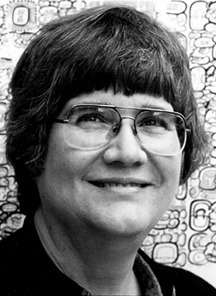
Image: Nicoleeyarb, Linda Schele, CC BY-SA 4.0
Linda Schele, Austin’s renowned Mayanist and art historian, transformed how we understand ancient Maya civilization. Through deciphering hieroglyphs, she provided insights into Maya language, politics, and ritual life. Her work bridged past and present, connecting modern Maya communities with their ancestral heritage.
She also co-founded the Maya Hieroglyphic Workshop and was instrumental in shaping events like the Maya Meetings. Curious how Schele’s legacy shapes today’s scholarship? Her influence continues to resonate throughout the field of Mesoamerican studies.
Early Life and Academic Pursuits
Though her academic journey began in Nashville, Tennessee, Linda Schele’s path to becoming a celebrated Mayanist took several unexpected turns.
After earning a Master of Fine Arts from the University of Houston, she began her career teaching studio art. However, a trip to Palenque in 1970 sparked her enduring passion for Maya art and epigraphy.
At the University of Texas at Austin, she pursued doctoral research in Latin American Studies. Her dissertation, “Maya Glyphs: The Verbs”, earned widespread acclaim for its originality and linguistic insight.
Her trajectory was shaped by mentorship from Merle Greene Robertson and her key role in the Mesa Redonda de Palenque, a pivotal moment in Maya epigraphic research.
Journey Into Maya Studies
After her first visit to Palenque, Linda Schele’s interest in ancient Maya culture ignited a professional journey that would reshape the field.
With guidance from Merle Greene Robertson, Schele delved deeply into the study of glyphs and iconography. She contributed significantly to the inaugural Mesa Redonda de Palenque in 1973, helping establish it as a critical gathering of Maya scholars.
In 1977, she co-founded the Maya Hieroglyphic Workshop at UT Austin, creating a unique space where scholars and students could collaborate on the decipherment of glyphs.
Her dissertation, published in 1982, laid the groundwork for later breakthroughs in understanding the structure and grammar of Maya writing.
Deciphering Maya Hieroglyphs
Schele’s research was central to the decipherment of Maya hieroglyphs, fundamentally altering how we understand their writing system and civilization.
Her analysis of inscriptions revealed the phonetic and syllabic nature of Maya script, overturning earlier beliefs that it was largely symbolic or ideographic. In particular, “Maya Glyphs: The Verbs” broke new ground by identifying linguistic patterns within glyphic texts.
Today, more than 85% of Maya glyphs are understood, thanks in large part to her efforts and collaborations with scholars such as Peter Mathews and David Stuart.
Key accomplishments include:
- Demonstrating that Maya glyphs recorded spoken language.
- Advancing understanding of grammar, verbs, and titles in inscriptions.
- Contributing to major site decipherments like Copán, Yaxchilán, and Palenque.
Establishment of the Maya Hieroglyphic Workshop
In 1977, Schele helped launch the Maya Hieroglyphic Workshop at the University of Texas at Austin, designed to make glyph decipherment more accessible and collaborative.
These workshops, which evolved into the annual Maya Meetings (now Mesoamerica Meetings), welcomed both scholars and indigenous Maya participants, setting a new standard for inclusive academic dialogue.
By fostering open discussions and hands-on translation sessions, the workshop helped democratize access to ancient texts, ensuring that research was not limited to elite institutions.
Schele’s vision made the Workshop a global destination for students of Maya epigraphy.
Contributions to Maya Scholarship
Schele’s intellectual contributions reshaped how scholars understand Maya society, history, and artistic expression.
Notable achievements include:
- Publishing “Maya Glyphs: The Verbs” (1982), a foundational epigraphic study.
- Co-curating “The Blood of Kings” (1986), a revolutionary exhibit emphasizing Maya kingship and warfare.
- Co-authoring “A Forest of Kings” (1990) with David Freidel, bringing Maya dynastic history to a wider audience.
- Advocating for visual literacy, emphasizing that art and text must be read together in Maya monuments.
Her interdisciplinary approach combined art history, linguistics, and archaeology, enriching all three fields.
Engagement With Contemporary Maya Culture
Beyond academic research, Linda Schele was dedicated to empowering contemporary Maya communities through education.
From 1988 to 1997, she conducted 13 workshops in the U.S., Mexico, Guatemala, and Belize, where she taught hieroglyphic writing to Maya-speaking participants. These efforts helped modern Maya reconnect with ancestral history and language.
In 1998, the Guatemalan government honored her with Diplomas of Recognition for her service to cultural revitalization.
Her inclusive vision emphasized that Maya history belongs to the Maya, not just academics.
Honors and Recognitions
Schele received numerous accolades for her transformative work:
- Her dissertation, “Maya Glyphs: The Verbs,” received the Association of American Publishers’ Award for scholarly excellence.
- The catalog for “The Blood of Kings” won the Alfred H. Barr Jr. Award, recognizing it as the year’s best art exhibition catalog.
- In 1998, she was honored by both the Museo Popol Vuh and Universidad Francisco Marroquín.
- The Linda Schele Precolumbian Endowment at UT Austin supports continued research in Maya studies and Pre-Columbian art.
These awards underscore her lasting influence in art history and Mesoamerican research.
The Legacy of the Maya Meetings
The Maya Meetings, co-founded by Schele, became an annual cornerstone in the field of Maya studies.
Held at UT Austin, these gatherings continue to attract hundreds of participants from around the world—ranging from scholars to indigenous language activists.
Unlike traditional academic conferences, the meetings emphasize interactive learning, making room for collaborative translation, public lectures, and community engagement.
They carry forward Schele’s vision of open access and knowledge-sharing across cultures and disciplines.
Impact on Future Generations
Schele’s mentorship and teaching have shaped a generation of Maya scholars.
Her legacy endures through:
- Her former students, including David Stuart, now a leading authority on Maya writing.
- Her foundational books and lectures that remain essential to Mesoamerican coursework.
- Workshops and community initiatives that revive ancestral knowledge among contemporary Maya.
- Ongoing fieldwork supported by the Linda Schele Endowment.
Few scholars have done more to bridge academia and living heritage.
The Linda Schele Endowment and Continuing Influence
Established at the University of Texas, the Linda Schele Precolumbian Endowment supports scholarships, fellowships, and research in Mesoamerican studies.
In addition, the Linda Schele Chair in Pre-Columbian Art and Writing ensures that her legacy continues to guide teaching and research at UT Austin.
Her commitment to accessibility, community, and cultural respect remains a model for scholars worldwide.
Through these ongoing programs, Schele’s passion for deciphering the ancient past and empowering the present lives on.

Comments (0)
No comments yet. Be the first to share your thoughts.
Leave a comment