


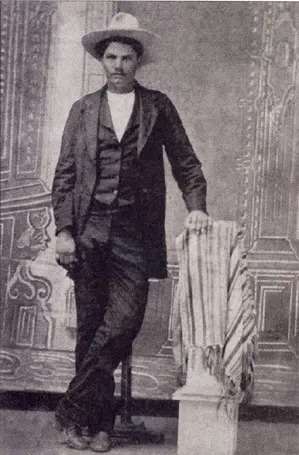
John Wesley Hardin is one of those Texas names that refuses to stay in the past. More than a century after his death, his story still gets argued, embellished, corrected, and retold—partly because he was notorious, and partly because he helped shape his own myth.
Hardin was a gunman who claimed a staggering body count, lived as a fugitive, and spent years running from the law before his capture. Yet the twist that keeps people hooked is what happened after the violence: Hardin went to prison, studied law, and eventually became a licensed attorney in Texas.
That arc—killer to lawman in a suit—sounds like a tall tale. But the core of it is real. Hardin did study law during his long sentence at the Texas state prison in Huntsville, and after his release, he passed the Texas bar and was licensed to practice.
The bigger question is what that transformation meant. Was it redemption, reinvention, or just another chapter in a life built on conflict and attention? To understand why Hardin still fascinates, you have to look at the full story: the upbringing, the violence, the capture, the prison years, the law license—and the final gunshots that ended his life in El Paso.
A Texas Childhood That Didn’t Stay Peaceful for Long
Hardin was born on May 26, 1853, in Bonham, Texas. His father, James Gibson Hardin, was a Methodist preacher and also worked as a teacher (and in some accounts, as a lawyer).
That background is one reason Hardin’s story often feels contradictory. He wasn’t raised in a gambling hall or a rough mining camp. He came from a religious household, in a Texas that was rapidly changing in the years leading up to and following the Civil War.
Reconstruction-era Texas was tense and violent in many places. Feuds, politics, racial conflict, and weak law enforcement all combined into an environment where disputes could turn deadly quickly. Hardin’s later life can’t be excused by that context, but it does help explain why a teenager with a temper and a gun could become a feared figure so early.
According to the Texas State Historical Association, his violent path began young, including a stabbing incident in 1867 and a killing at around age fifteen.
From there, Hardin’s life became a chain of confrontations that escalated—sometimes driven by fear, sometimes by pride, sometimes by his own storytelling. Hardin would later claim far more killings than historians can confirm, and even friendly sources often acknowledge that he exaggerated, distorted, or invented parts of his legend.
The Making of an Outlaw
Hardin’s reputation grew alongside Texas’s own frontier mythology. He became tied to the image of the fast, ruthless gunman—deadly in a fight, impossible to tame, and always one step away from the next killing.
Some stories place him in places like Abilene, Kansas during the cattle-drive era. Others describe his conflicts with lawmen and state police in Texas. But what remains consistent is the broad pattern: Hardin lived by violence, he lived armed, and he repeatedly ended disputes with gunfire.
At the time of sentencing later in his life, Hardin claimed he had killed 42 men, though contemporary accounts and later research suggest a lower number—still high, but not as dramatic as his own tally.
Hardin’s most consequential killing—the one that finally put him on a path to a long prison sentence—was the murder of Deputy Sheriff Charles Webb in Comanche, Texas in 1874. That death became a turning point. Hardin fled, and the manhunt expanded.
The Capture: A Train, a Ranger, and the End of the Run
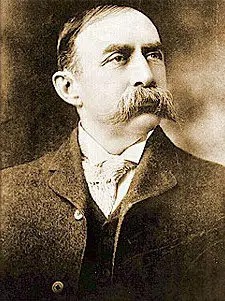
Hardin managed to stay on the run for years, traveling under aliases and drifting across state lines. Eventually, he was tracked down in Pensacola, Florida, and captured on August 24, 1877 after a confrontation on a train.
The arrest is strongly associated with Texas Ranger John B. Armstrong, whose name is repeatedly linked to Hardin’s capture in both popular history and more formal accounts.
Hardin was returned to Texas to stand trial, and the outlaw era of his life ended not with a final showdown in the street, but with handcuffs, transport, and a courtroom.
Huntsville Prison: The Years That Changed the Story
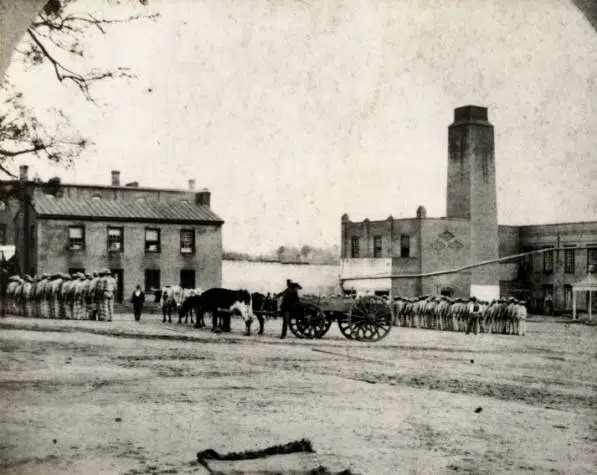
Hardin was convicted and sentenced to 25 years in the state prison at Huntsville.
This is where the narrative shifts from gunfights to books.
During his time in prison, Hardin studied law and also wrote an autobiography. Sources note that he read widely, including religious material, and took on roles that suggested he was at least attempting to reform his behavior—though the sincerity of that change is still debated.
It’s worth pausing here, because this isn’t a small detail. Studying law in prison wasn’t unheard of, but it wasn’t common. Hardin didn’t just “read about law.” He worked toward a real goal: he wanted to come out with credentials and a new identity.
In a state where he was widely known as a violent criminal, that was an ambitious, almost audacious move—very much in line with Hardin’s lifelong habit of challenging whatever world he was in.
Release, Reinvention, and a Texas Law License
Hardin was released on February 17, 1894, after serving about 17 years of his sentence.
Later that year, he passed the Texas bar and was licensed to practice law. One widely cited date for his bar exam and licensing is July 21, 1894.
That moment is the centerpiece of the “killer who studied law in jail” storyline: a man once hunted as one of the most feared gunmen in Texas becomes a credentialed attorney.
But becoming a lawyer didn’t erase Hardin’s old life. After prison, he moved through Texas and eventually settled in El Paso, practicing law for a time. Yet trouble stayed close. By many accounts, Hardin remained involved in disputes, gambling problems, and public conflicts.
His transformation was real in paperwork and profession, but it wasn’t a clean moral conversion. It was a reinvention layered on top of a volatile personality and a history that still shaped how people treated him—and how he treated others.
The Death: Shot in the Acme Saloon
Hardin’s life ended the way it had been lived: violently.
On August 19, 1895, he was killed in El Paso at the Acme Saloon, shot by constable John Selman.
Accounts differ on the exact dynamics of the moment—whether Hardin was reaching for his gun, whether Selman shot him from behind, and what was said right before the gunfire. But the core facts are consistent across major references: Hardin died from a gunshot in the saloon, and Selman was the shooter.
In a grimly fitting footnote, Selman’s own legal fate was messy. He was tried for the killing, and the outcome did not bring a clean conclusion. The story of Hardin’s death became part of Texas’s broader saloon-and-gunfighter mythology, even though it happened decades after the peak of the frontier era.
What Hardin’s Story Really Reveals
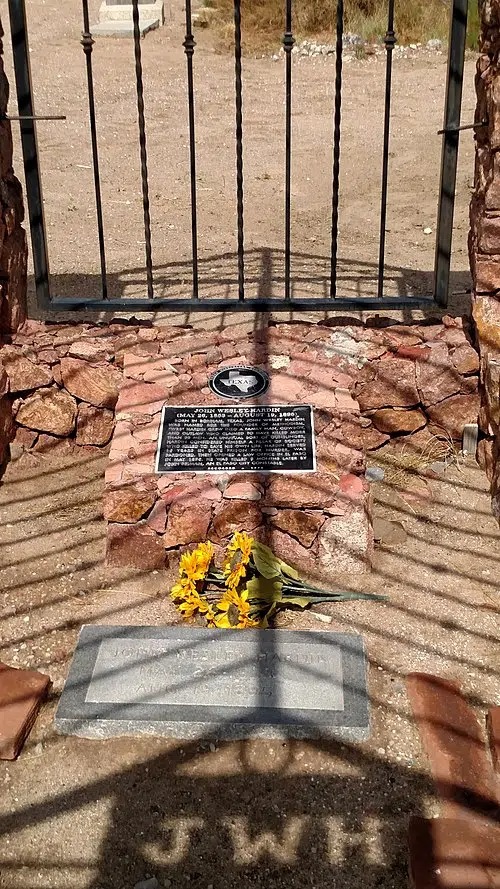
AZGUNZ, John Wesley Hardin Grave and Cage, CC BY-SA 4.0
John Wesley Hardin’s life is often told like a Western: a violent young gunman, a long manhunt, a prison sentence, a surprising reinvention, and a fatal ending in a saloon.
But the deeper story is about contradiction.
Hardin is a reminder that the “Old West” wasn’t made only of simple heroes and villains. It was built from chaotic places and complicated people. Hardin could be educated and brutal. He could be reflective and reckless. He could attempt self-improvement and still remain dangerously combustible.
His legal studies and law license complicate the myth in a way that makes it more interesting, not less. They show that even someone with a public reputation for violence could attempt a new social role, especially in a period when formal systems of justice were still evolving and personal history often followed you like a shadow.
Hardin also demonstrates how myths are made. He helped write his own legend, claimed killings that likely weren’t his, and understood that notoriety itself carried power.
That’s why the fascination persists. Hardin wasn’t just a killer. He was a storyteller about himself—one who wanted his name to echo, even if the details were contested.
Final Thoughts
John Wesley Hardin’s story is unsettling, tragic, and undeniably gripping. A man who left real destruction behind also managed, for a time, to present himself as something else: a lawyer with a past, a convict with a credential, a former outlaw trying to operate inside the system he once fought.
Whether that counts as redemption depends on what you believe redemption requires. But as history, it’s clear: Hardin did not simply disappear into a prison cell and fade away. He studied, wrote, returned, passed the bar, and stepped back into public life—only to be killed within a year of his release.
That short, intense final chapter is what makes the headline true and haunting: John Wesley Hardin really was the killer who studied law in jail—and Texas never quite stopped arguing about what that means.
Comments (0)
No comments yet. Be the first to share your thoughts.
Leave a comment