


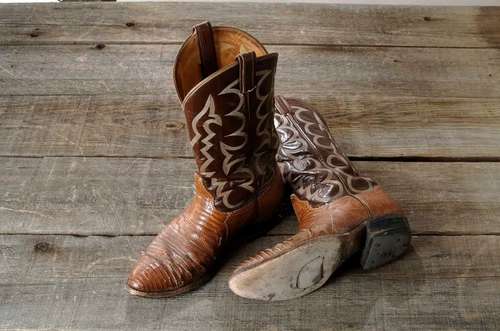
A quality pair of cowboy boots is rarely treated as disposable in Texas. Instead of throwing them away when the soles wear thin or the leather begins showing its age, many owners take them to a boot repair shop or pass them on to someone who will continue wearing them. That approach has helped create a strong resale market where older boots continue serving new owners long after they leave the original closet.
The idea isn't driven only by nostalgia. Well-made cowboy boots are designed to be repaired, making them very different from many modern shoes that are difficult or impossible to restore economically. Combined with Texas' long tradition of quality bootmaking, that repairability has allowed countless pairs to remain in use for decades.
Today, repair shops, resale businesses, collectors, and everyday boot buyers all play a role in extending the life of boots that might otherwise have been discarded.
Quality Boots Were Designed with Repairs in Mind
The reason repair works so well begins with how traditional cowboy boots are made.
Premium boots from respected makers typically use full-grain leather, leather linings, stacked leather heels, and welted construction rather than relying entirely on adhesives. One of the most important features is the Goodyear welt, a construction method that allows worn soles to be removed and replaced without rebuilding the entire boot.
That design gives boots a much longer working life. Instead of replacing the entire pair after years of use, owners often invest in maintenance that preserves the original upper leather while renewing the parts that naturally wear out first.
For buyers looking at used boots, this construction is one of the biggest reasons older pairs remain attractive.
Leather Ages Better Than Many Modern Materials
Another advantage of traditional cowboy boots is the leather itself.
High-quality leather rarely looks its best when it's brand new. Instead, it gradually develops a richer appearance as it softens, darkens slightly, and forms a natural patina through years of wear. Small creases and subtle color changes often become part of the boot's character rather than signs that it should be replaced.
Unlike synthetic materials that may crack or peel with age, properly maintained leather often becomes more attractive over time. Regular conditioning helps prevent excessive drying, while careful cleaning removes dirt before it causes unnecessary damage.
This natural aging process makes many older boots appealing to secondhand buyers.
Boot Repair Is a Longstanding Texas Tradition
Texas has never lacked skilled leatherworkers.
Throughout the state, experienced boot repair shops continue providing services that extend the life of cowboy boots. Depending on the condition of the footwear, repairs may include replacing soles, rebuilding heels, stitching loose seams, replacing insoles, restoring welts, conditioning leather, repairing pull straps, or refinishing the exterior.
Many boot owners schedule maintenance long before major problems develop. Replacing a worn heel cap, for example, is far less expensive than waiting until the entire heel structure is damaged.
This emphasis on preventative care helps explain why some cowboy boots remain wearable for several decades.
Resale Gives Boots a New Purpose
Repair alone doesn't keep boots in circulation. Resale plays an equally important role.
A pair that no longer fits its original owner may be exactly what someone else has been searching for. Others enter the resale market through estate sales, vintage clothing stores, Western consignment shops, antique malls, or family downsizing.
Because premium cowboy boots often outlast their first owner, they naturally become candidates for resale. A carefully maintained pair may continue serving several people throughout its lifetime.
This steady movement from one owner to another keeps thousands of quality boots in use every year.
Vintage Stores Help Preserve Texas Craftsmanship
Specialty retailers have become an important part of the resale market.
One of the best-known examples is Full Circle Vintage, which began in Austin before expanding to Lockhart. The shop focuses heavily on vintage cowboy boots, carefully sourcing, cleaning, and preparing older pairs for resale. Rather than treating them as ordinary used footwear, the business presents them as examples of traditional craftsmanship worth preserving.
Across Texas, other vintage boutiques, antique stores, estate sales, flea markets, and Western resale shops perform a similar function. Together, they help ensure that well-made boots continue reaching buyers who appreciate their quality.
Without these businesses, many excellent boots would likely remain forgotten in storage or end up discarded.
Some Brands Hold Up Especially Well
Not every boot survives decades of wear equally well.
Boots from respected makers such as Lucchese, Justin Boots, Rios of Mercedes, Fenoglio Boot Company, and Heritage Boot Company are frequently found on the resale market because they were built with durability in mind. Their construction often makes professional restoration practical, even after years of regular use.
Custom makers such as M.L. Leddy's and Rocketbuster Handmade Custom Boots also produce boots that frequently remain in circulation because owners recognize the value of preserving handmade craftsmanship.
For many buyers, these names provide confidence that an older pair is worth repairing rather than replacing.
Restoration Is About Preservation, Not Perfection
Professional restoration rarely aims to make old boots look factory new.
Instead, experienced repair specialists usually try to preserve the original leather while restoring the boot's function. Natural creases, color variation, and signs of honest wear often remain because they contribute to the boot's authenticity.
Many buyers actually prefer this appearance. A boot that shows decades of careful use often feels more genuine than one that appears artificially distressed.
That balance between restoration and preservation is one reason vintage cowboy boots retain their appeal.
Repair Often Costs Less Than Replacement
Another factor keeping the market active is simple economics.
Replacing soles or heels on a quality boot usually costs significantly less than purchasing a comparable handmade pair new. Since premium cowboy boots can cost hundreds—or even thousands—of dollars, repairing an existing pair often represents good value.
Owners also avoid the lengthy break-in period associated with new boots. Leather that has already molded comfortably to the foot remains one of the biggest advantages of restoring an older pair.
This practical benefit encourages many Texans to repair before replacing.
Sustainability Has Increased Interest
Modern consumers are also paying more attention to sustainability.
Choosing to repair boots rather than discard them reduces waste while extending the useful life of high-quality materials. Purchasing secondhand boots has a similar effect by keeping existing products in circulation instead of increasing demand for new manufacturing.
Although cowboy boot owners have been repairing footwear for generations, today's sustainability movement has introduced the practice to many younger buyers discovering Western boots for the first time.
The result has been broader interest in both repair and resale.
Every Pair Carries Its Own History
One quality that distinguishes older cowboy boots is the sense of history they carry.
Some may have spent years on working ranches. Others attended rodeos, weddings, county fairs, church services, dance halls, or family celebrations. While buyers rarely know every detail of a boot's past, the visible signs of use often make each pair feel distinctive.
That history becomes part of the appeal. Rather than purchasing something anonymous, buyers acquire footwear that reflects years of genuine Texas life.
The stories may be incomplete, but the craftsmanship remains visible.
The Market Benefits Collectors and Everyday Buyers
The resale market isn't driven only by collectors.
Some shoppers are looking for rare handmade boots from respected makers, while others simply want a dependable everyday pair at a more affordable price than buying new. Vintage boots can satisfy both groups because quality construction remains valuable regardless of whether someone views the purchase as a collectible or practical footwear.
This broad customer base helps keep the market healthy. Collectors preserve historically significant boots, while everyday wearers ensure many restored pairs continue serving their original purpose.
A Tradition That Reflects Texas Values
Repairing and reselling cowboy boots reflects values that have long been part of Texas culture: taking care of well-made equipment, appreciating skilled craftsmanship, and avoiding unnecessary waste.
Instead of treating boots as disposable fashion items, many Texans view them as long-term investments. Regular maintenance, occasional repairs, and responsible resale allow those investments to remain useful long after many other types of footwear would have been replaced.
That's one reason it isn't unusual to find boots that have already served multiple owners while still having years of life ahead of them.
Why Old Texas Boots Keep Walking
The continued success of Texas' resale and repair culture comes down to a simple reality: quality boots deserve a long life. Traditional construction methods make repairs practical, skilled craftspeople keep older pairs wearable, and an active resale market connects those boots with new owners who value their craftsmanship.
Whether discovered in a vintage shop, inherited from a family member, found at an estate sale, or restored by a trusted boot repair specialist, old Texas cowboy boots continue proving that good craftsmanship doesn't have an expiration date. Instead of ending their story after one owner, many begin an entirely new chapter—one repaired sole, one new owner, and one more Texas adventure at a time.
Comments (0)
No comments yet. Be the first to share your thoughts.
Leave a comment