


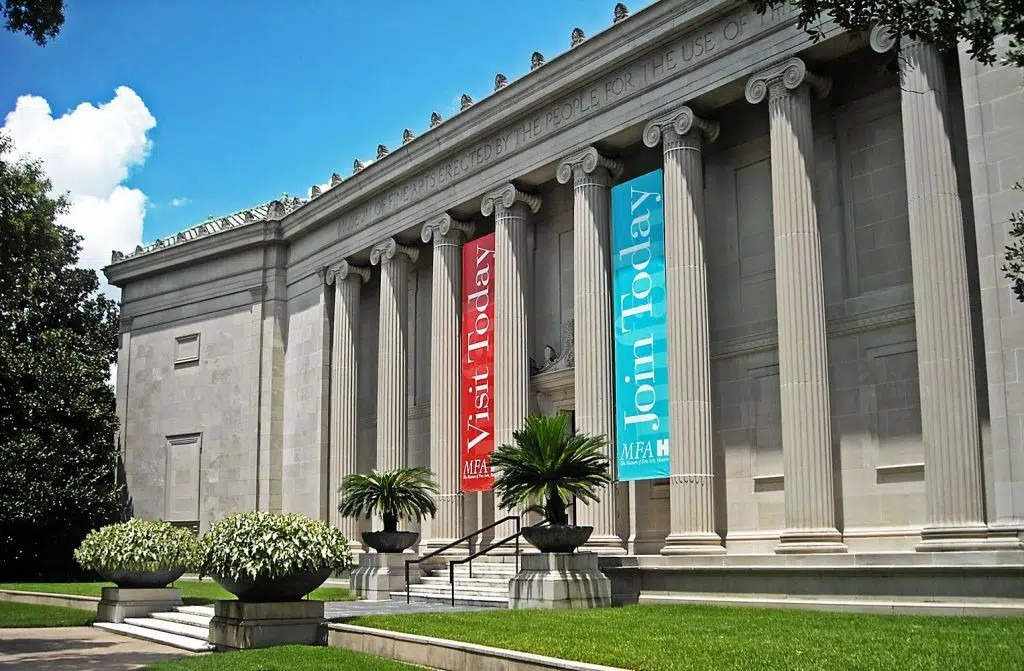
The Museum of Fine Arts, Houston, is one of the oldest and most significant cultural institutions in Texas. Located in Houston's Museum District, it developed from a small educational organization into a major art museum with nearly 80,000 works. Its collection encompasses centuries of artistic traditions, while its galleries, educational programs, and historic properties reflect more than a century of community support and cultural development.
Key Takeaways
- The Museum of Fine Arts, Houston, traces its origins to the Public School Art League, established in 1900.
- The first permanent museum building opened on April 12, 1924, making it the oldest art museum in Texas.
- Early donations from George and Belle Dickson, Annette Finnigan, Ima Hogg, and Edith and Percy Straus helped establish its collections.
- The museum expanded significantly during the twentieth century through philanthropy, acquisitions, and architectural development.
- Audrey Jones Beck donated an important collection of Impressionist and Post-Impressionist paintings, with the major gift completed in 1998.
- The museum's three principal gallery buildings are the Caroline Wiess Law Building, Audrey Jones Beck Building, and Nancy and Rich Kinder Building.
- The broader museum complex includes the Glassell School of Art, a sculpture garden, and two historic house museums.
- Today, the MFAH preserves nearly 80,000 artworks and offers exhibitions, educational activities, and cultural programs.
The Early History of the Museum of Fine Arts, Houston
The Museum of Fine Arts, Houston, began in 1900 when a group of women established the Public School Art League. Led by artist Emma Richardson Cherry, the organization sought to introduce art appreciation into Houston's public schools through reproductions of famous artworks, educational activities, and exhibitions.
In 1913, the organization became the Houston Art League, reflecting its expanding cultural ambitions. Members began acquiring original artworks and planning a permanent public museum. The future museum site, located near Main Street and Montrose Boulevard, was formally dedicated on April 12, 1917.
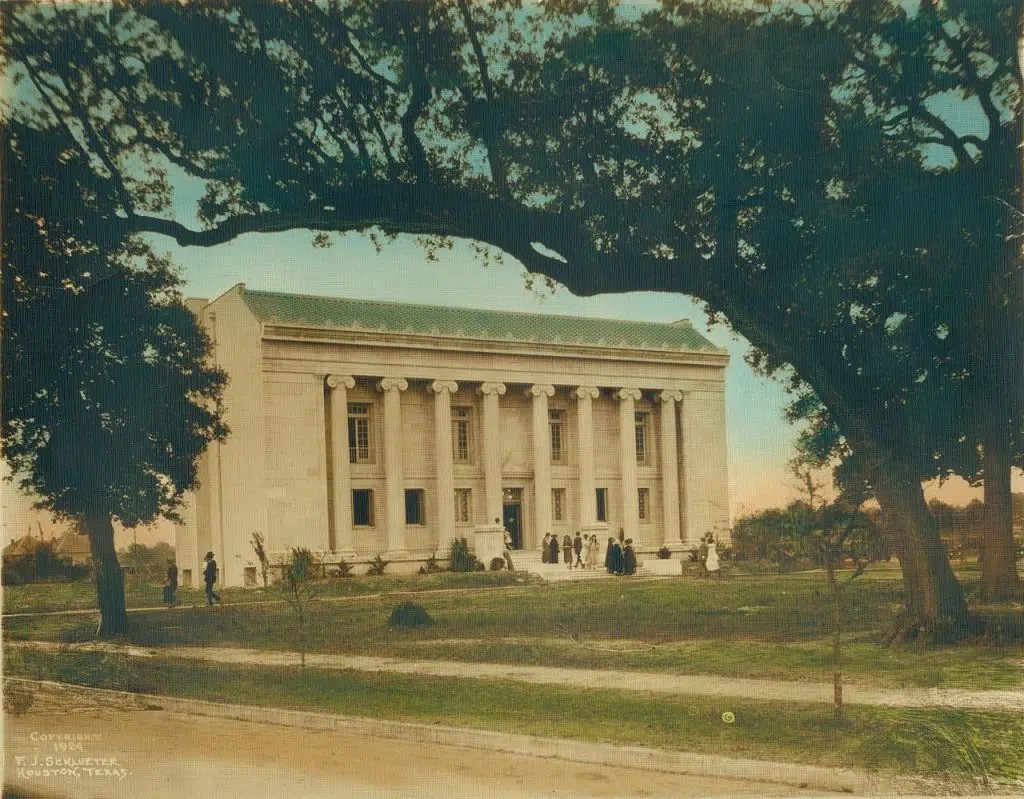
Fundraising efforts slowed during World War I but resumed afterward. With assistance from local philanthropists, the organization secured enough financial support to construct its first building. The museum officially opened on April 12, 1924, establishing a permanent home for Houston's growing art collection.
The Opening of the Original Watkin Building in 1924
Houston architect William Ward Watkin designed the museum's original building in the Neoclassical style. Its symmetrical architecture, classical details, and prominent entrance reflected the importance placed on establishing a permanent cultural institution. The building opened with a relatively modest collection of approximately 60 artworks.
The original structure was expanded in 1926 with additional wings, providing space for exhibitions and educational activities. Although limited financial resources initially prevented the completion of some interior spaces, the museum continued developing programs for visitors, students, and local artists.
In 1929, the institution formally adopted the name Museum of Fine Arts of Houston, which was later shortened to Museum of Fine Arts, Houston. Its early leadership emphasized bringing art into everyday life, establishing a mission that would guide the institution's educational and community activities.
Early Art Donations That Built the Museum's Collection
The museum's earliest significant artworks came from local collectors who recognized the importance of creating a public collection. In 1919, George M. Dickson and his sister Belle donated paintings and other works that helped establish the foundation of the museum's permanent holdings.
During the 1930s, Annette Finnigan contributed antiquities and decorative objects from several ancient cultures. Texas philanthropist Ima Hogg also supported the museum through gifts involving artworks, prints, and Native American materials. These contributions gradually expanded the collection beyond European and American paintings.
Another major development occurred through Edith and Percy Straus, prominent New York art collectors. Their collection was donated in 1941, with 83 artworks arriving in 1944. The gift included Renaissance paintings, sculptures, and works on paper, significantly strengthening the museum's European art holdings.
How the Museum Expanded During the Twentieth Century
Following World War II, the Museum of Fine Arts, Houston, experienced substantial growth in its collections, exhibition programs, and facilities. Donations from prominent families and charitable foundations supported acquisitions of European paintings, contemporary artworks, and objects representing African, Asian, and Indigenous American artistic traditions.
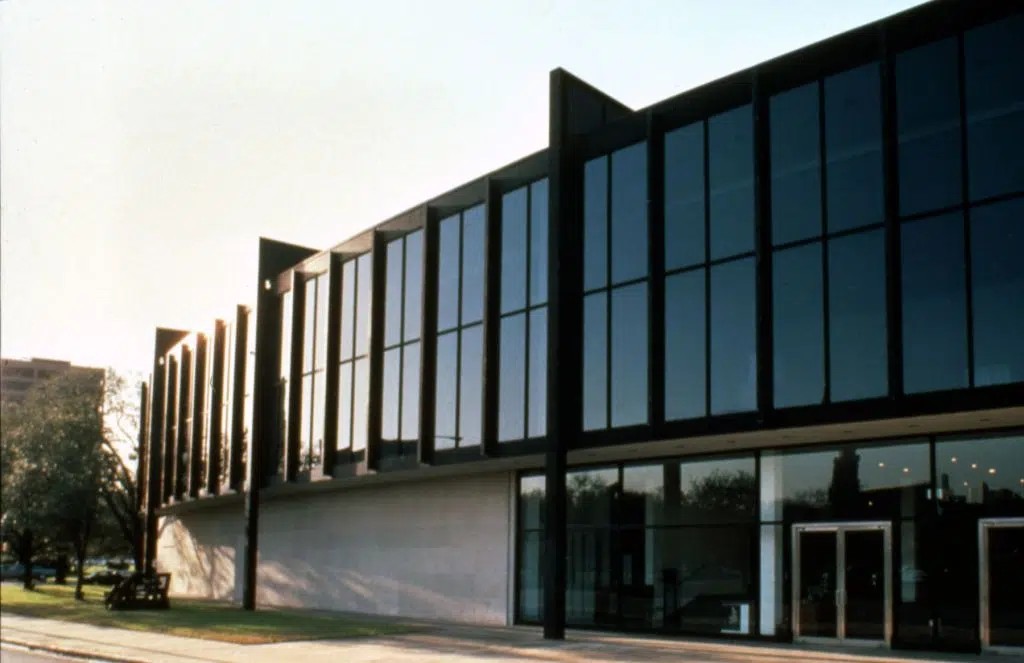
In 1958, an important addition designed by architect Ludwig Mies van der Rohe expanded the museum's exhibition space. A second phase of his design opened in 1974. These improvements introduced modern architectural elements that contrasted with the original Neoclassical building.
Financial support also became increasingly important to the museum's development. In 1976, the Brown Foundation established a major challenge grant that encouraged additional contributions. Such financial commitments supported collection growth, museum operations, and future acquisitions, helping transform the institution into a major American art museum.
The Audrey Jones Beck Collection and Its Importance
John and Audrey Jones Beck assembled an important collection of Impressionist, Post-Impressionist, and early modern European paintings beginning in the 1960s. Their acquisitions included works by artists such as Vincent van Gogh, Claude Monet, Camille Pissarro, Henri Matisse, and Pierre Bonnard.
The collection became closely associated with the Museum of Fine Arts, Houston, through long-term loans and subsequent donations. Audrey Jones Beck gradually transferred the artworks to the institution, completing the major gift in 1998. These paintings strengthened the museum's international reputation for European art.
In 2000, the museum opened the Audrey Jones Beck Building, designed by Spanish architect Rafael Moneo. The building provided expanded gallery space and a dedicated setting for important permanent collections. It also helped accommodate the museum's growing exhibition program and increasing visitor interest.
The Caroline Wiess Law and Nancy and Rich Kinder Buildings
The Caroline Wiess Law Building incorporates the original 1924 museum structure and its later architectural expansions. Renamed in 1998, it combines Watkin's Neoclassical design with the modern additions developed by Mies van der Rohe. Its galleries accommodate selections from the museum's permanent collection and temporary exhibitions.
The museum continued expanding during the twenty-first century to accommodate a growing collection and changing exhibition needs. The Nancy and Rich Kinder Building, designed by Steven Holl Architects, opened in November 2020. Its translucent glass exterior and innovative interior spaces introduced a distinctive architectural addition to the campus.
The Kinder Building focuses primarily on modern and contemporary art. Its galleries include paintings, sculptures, photography, installations, and multimedia works. Together with the Law and Beck buildings, it forms the museum's principal exhibition complex, providing visitors with access to artistic traditions from different periods and regions.
The Glassell School of Art and Other Museum Attractions
Education has remained central to the Museum of Fine Arts, Houston, since its earliest years. The Glassell School of Art offers studio instruction for children and adults, including classes in drawing, painting, sculpture, and other artistic disciplines. Its programs encourage creativity and artistic development.
A new Glassell School of Art building, designed by Steven Holl Architects, opened in 2018. The museum campus also includes the Lillie and Hugh Roy Cullen Sculpture Garden, designed by Isamu Noguchi. This outdoor space provides opportunities to experience modern and contemporary sculpture.
Beyond its main campus, the museum maintains two historic house museums. Bayou Bend Collection and Gardens preserves American decorative arts and furnishings, while Rienzi focuses on European decorative arts. These properties offer visitors additional opportunities to explore art, architecture, and domestic history.
The Museum of Fine Arts, Houston, Today
Today, the Museum of Fine Arts, Houston, maintains a collection of nearly 80,000 artworks representing diverse cultures and historical periods. Its holdings include European paintings, Asian art, African art, Latin American art, photography, decorative arts, textiles, and modern and contemporary works.
The museum also presents rotating exhibitions, films, lectures, performances, and educational programs. Visitors can explore permanent collections, attend special events, and participate in activities designed for different age groups. These offerings extend the institution's educational mission beyond traditional gallery exhibitions.
More than a century after its beginnings as a volunteer educational organization, the Museum of Fine Arts, Houston, remains an important part of the city's cultural identity. Through continued collecting, preservation, education, and architectural development, the museum connects Houston residents and visitors with artistic traditions from around the world.

Comments (0)
No comments yet. Be the first to share your thoughts.
Leave a comment