


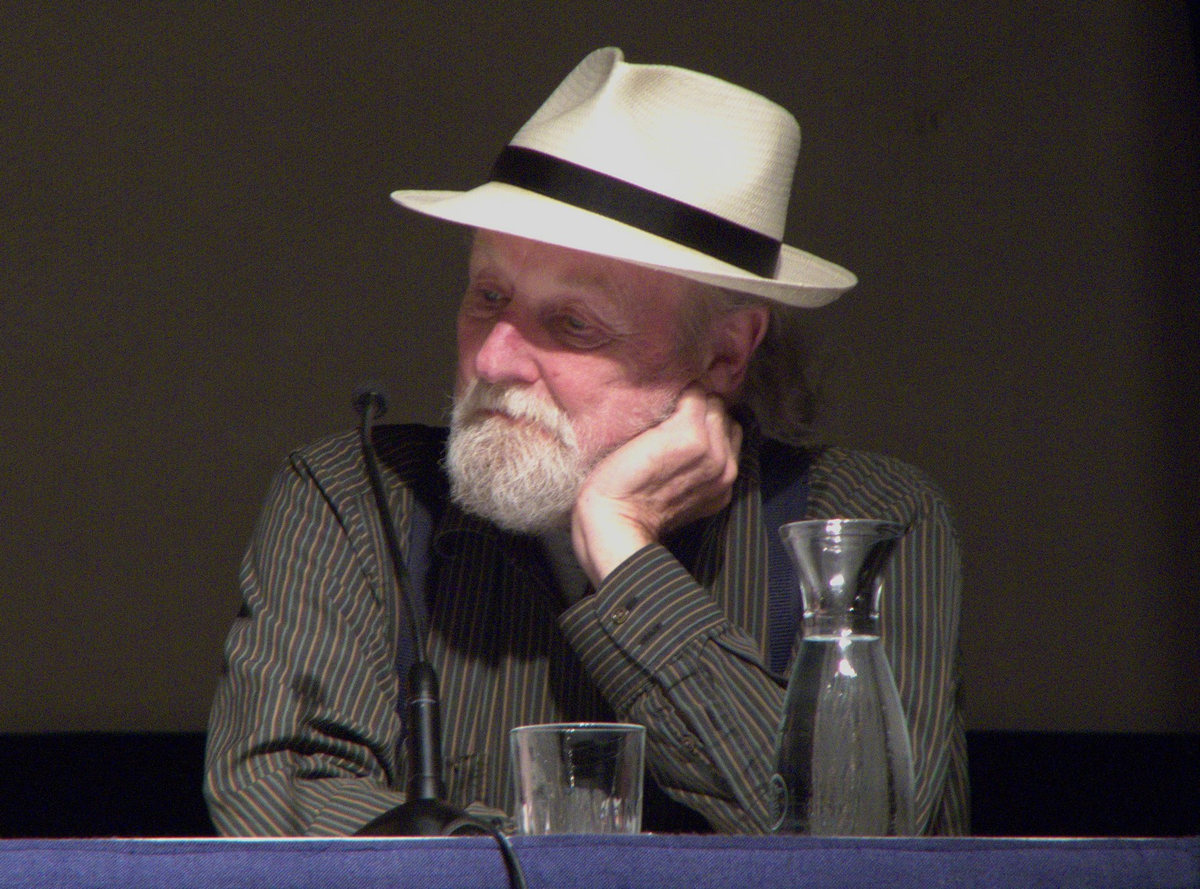
Image: Maikel, Shelton, Gilbert 4, CC BY-SA 3.0
You’re exploring the world of Gilbert Shelton, the influential comic book artist who crafted The Fabulous Furry Freak Brothers. Born in 1940 in Houston, Texas, and inspired by Austin’s vibrant counterculture, Shelton developed iconic characters like Freewheelin’ Franklin Freek and Fat Freddy Freekowtski, capturing the 1960s hippie spirit.
He co-founded Rip Off Press, furthering the underground comix scene. This rebellious creation, with over 40 million copies sold, has left a lasting cultural impact. There’s more to explore.
Early Life and Influences
Gilbert Shelton’s journey as an influential comic book artist began in Houston, Texas, where he was born in 1940.
His path took him to Austin, where he studied social sciences and art at the University of Texas. There, the city’s countercultural scene sparked his creativity.
Shelton’s fascination with the emerging underground comix movement shaped his unique artistic voice. While working on posters for the Vulcan Gas Company, Austin’s artistic environment inspired him to merge humor and social commentary in his comics.
In 1969, Shelton co-founded Rip Off Press in San Francisco, cementing his role in underground comix history and helping bring the Freak Brothers to national audiences.
The Birth of The Fabulous Furry Freak Brothers
After immersing himself in Austin’s dynamic counterculture, Shelton’s imagination gave birth to The Fabulous Furry Freak Brothers in 1968.
While promoting an underground film and designing posters for the Vulcan Gas Company, Shelton developed his iconic characters. Their first appearance came in the self-published comic Feds ‘n’ Heads.
The trio—plus Fat Freddy’s Cat—quickly found popularity via the Underground Press Syndicate, reaching alternative publications across the U.S.
This momentum led to the creation of Rip Off Press, which began publishing full-length Freak Brothers comics starting in 1971, ensuring continued success.
Characters and Their Unique Traits
In the colorful world of The Fabulous Furry Freak Brothers, each character stands out with distinctive personalities and quirks.
- Freewheelin’ Franklin Freek, the sharp-tongued realist, is street-smart and cynical, often delivering the strip’s punchlines.
- Phineas T. Phreak is the intellectual idealist, obsessed with revolutionary politics and inventive (often dangerous) drug experiments.
- Fat Freddy Freekowtski, the bumbling and eternally hungry member of the trio, serves as comic relief with his obliviousness and bad luck.
- Meanwhile, Fat Freddy’s Cat, cleverer than his owner, runs a series of subplots beneath the main comics—offering sarcastic commentary on the Freaks’ misadventures.
Side characters like Hiram “Country” Cowfreak and Norbert the Narc deepen the universe with satirical flair.
Iconic Themes and Storylines
Readers immerse themselves in the broader themes that make The Fabulous Furry Freak Brothers legendary.
Shelton’s comic is a sharp satire of American society, tackling themes of freedom, anti-establishment rebellion, and the absurdities of everyday life through the eyes of three perpetually stoned protagonists.
Typical plots start with the trio seeking weed or escaping rent and spiral into chaotic parodies of government bureaucracy, war, and capitalism.
Shelton uses absurdist humor to reflect real societal concerns, making his work a snapshot of the counterculture era—yet still eerily relevant today.
The Impact of Fat Freddy’s Cat
While the Freak Brothers hold the spotlight, Fat Freddy’s Cat quickly became a fan favorite after debuting in early Freak Brothers strips.
This orange tabby, sarcastic and resourceful, often serves as the strip’s most rational voice. Its solo comic, The Adventures of Fat Freddy’s Cat, ran across several issues from the 1970s through the 1990s.
The cat’s stories, often printed as bottom-of-page asides, grew into their own full-length comic spinoffs, further expanding the Freak Brothers universe.
Shelton’s ability to give a side character such narrative depth showcases his brilliance in subversive humor and world-building.
The Underground Comix Movement
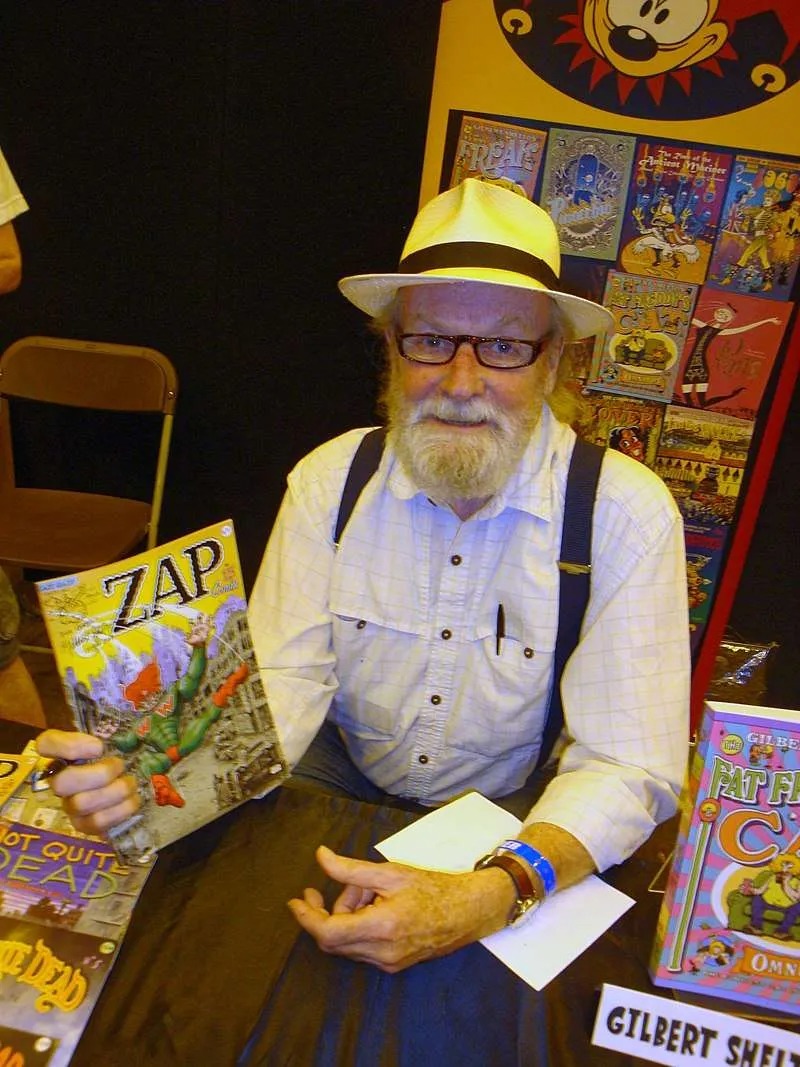
Image: BennyOnTheLoose, Gilbert Shelton, CC BY-SA 4.0
The underground comix movement of the late 1960s and 70s redefined comic books, challenging taboos and opening new avenues for adult storytelling.
Gilbert Shelton stood at the forefront alongside peers like R. Crumb, Trina Robbins, and Spain Rodriguez.
Through Rip Off Press, Shelton’s work reached thousands via alternative outlets like The Rag and Zap Comix. His stories tackled drugs, war, poverty, and government distrust—topics mainstream publishers avoided.
This movement paved the way for today’s independent comics and graphic novels, emphasizing creator ownership and artistic freedom.
Artistic Style and Visual Elements
Gilbert Shelton’s art is easily recognizable: expressive, densely detailed, and packed with visual gags. His exaggerated characters and chaotic backdrops evoke the lawless, vibrant energy of the era.
His pages reward re-reading—each panel often hides sight gags, graffiti, or background jokes that enhance the punchlines.
Characters like Notorious Norbert and Country Cowfreak stand out not only for their personalities but for their bold visual design.
Over time, Shelton’s style evolved to become cleaner and more refined, especially in later Freak Brothers issues and Fat Freddy’s Cat collections, though he never lost the satirical bite of his earlier work.
Film and Television Adaptations
Attempts to adapt The Fabulous Furry Freak Brothers began in the 1970s but stalled for decades.
The 1978 parody film Up in Flames was unauthorized, and Universal’s 1979 attempt at a live-action adaptation never moved forward. A clay animation project by Grass Roots Films launched in 2006 but was shelved by 2013.
However, success came in November 2021 with the animated series “The Freak Brothers” on Tubi, featuring stars like Woody Harrelson, Pete Davidson, and John Goodman.
The show reimagines the Freaks waking from a 50-year slumber and adjusting to modern San Francisco, using the contrast to explore gentrification, technology, and modern cultural absurdities.
Legacy and Cultural Significance
Gilbert Shelton’s legacy lies in how his comics captured and critiqued an era while remaining timeless in their wit and cultural observations.
The Fabulous Furry Freak Brothers have sold over 40 million copies globally and continue to influence indie comics, animation, and satire.
Shelton’s work was honored with induction into the Will Eisner Hall of Fame in 2012, recognizing his profound influence on comic history and alternative publishing.
Through bold characters and boundary-pushing themes, Shelton gave voice to the anti-establishment ethos of his generation—leaving behind one of the most distinctive artistic imprints in underground comix.

Comments (0)
No comments yet. Be the first to share your thoughts.
Leave a comment