


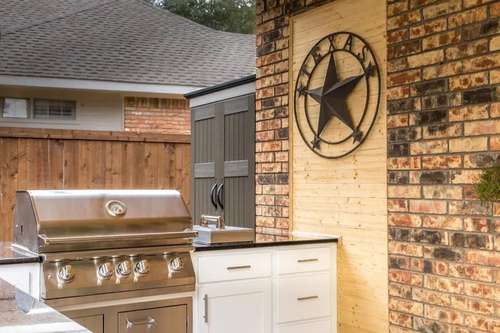
Outdoor living plays an important role in many Texas homes. With long warm seasons, frequent gatherings, and a strong culture of hospitality, the backyard often functions as an extension of indoor living space. An outdoor kitchen supports this lifestyle by offering a dedicated area for cooking, dining, and entertaining in the open air. When designed carefully, it remains functional and comfortable throughout the year.
A Texas-style outdoor kitchen focuses on durability, comfort, and practical design. Rather than relying on decorative features alone, it emphasizes materials and layouts that withstand local weather conditions. The following guide outlines the key considerations for creating an outdoor kitchen suited for year-round use across Texas.
Planning Around the Texas Climate
Texas weather varies by region, but several conditions are common across the state. These factors should guide every design decision.
Key climate considerations include:
- Prolonged summer heat and intense sun exposure
- Sudden storms with heavy rainfall
- Seasonal humidity
- Mild winters with occasional cold snaps
High temperatures can affect cooking comfort and appliance performance. Direct sunlight can overheat surfaces and fade finishes. Rainfall requires proper drainage and moisture-resistant materials. Even though winters are typically short, exposed plumbing and surfaces must tolerate temperature changes.
Designing with these conditions in mind helps prevent premature wear and ensures the space remains usable throughout the year.
To further ensure your outdoor kitchen performs well in year-round Texas conditions, consider the design principles recommended in our Texas Remodeling Guide: Renovations Built for Heat, Space, and Modern Living, which emphasizes choosing materials and layouts that withstand heat and weather while enhancing comfort and functionality.
Choosing the Right Location
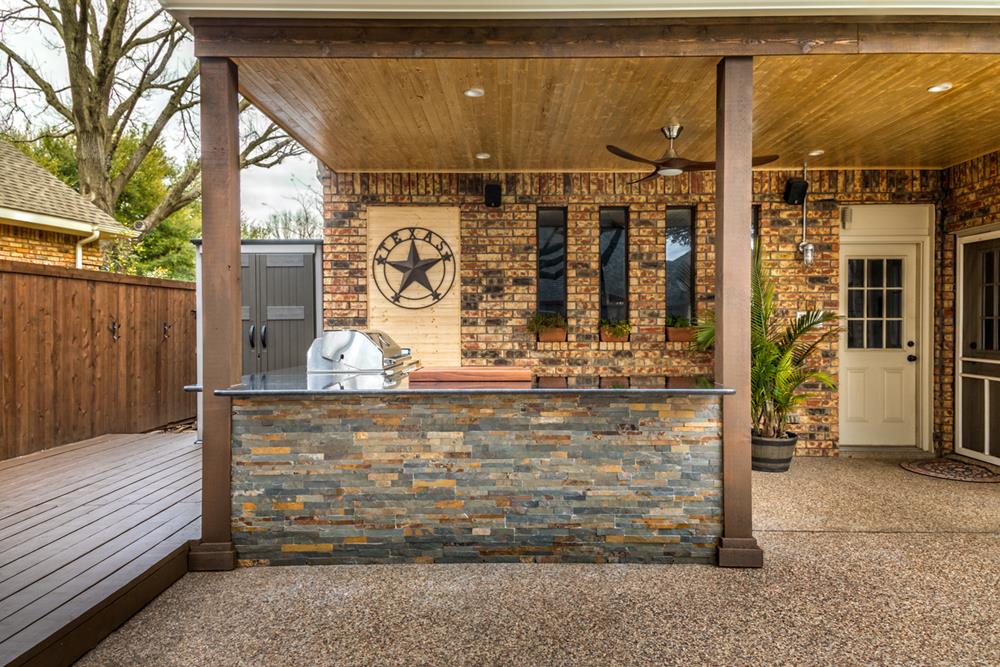
The placement of the outdoor kitchen has a direct impact on convenience and comfort. Most homeowners position the kitchen close to the house to reduce travel distance when carrying food and supplies. At the same time, adequate spacing is necessary to allow for ventilation and safe cooking.
When evaluating location, consider:
- Sun exposure during afternoon hours
- Natural wind patterns
- Proximity to indoor kitchen access
- Privacy and noise impact on neighboring properties
North- or east-facing locations often reduce heat exposure during peak hours. Partial walls, fencing, or landscaping can help manage wind while preserving airflow.
Roofs and Shade Structures
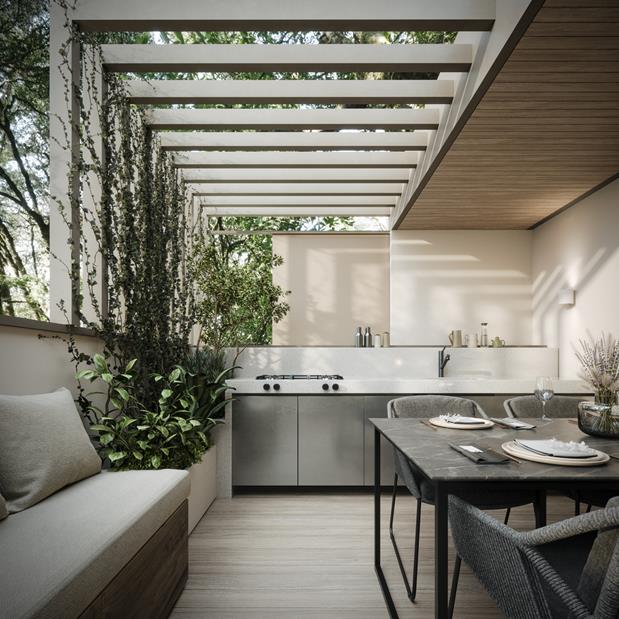
Coverage is essential for year-round use. A protected outdoor kitchen remains usable during extreme heat, rain, and cooler evenings.
Common shade options include:
- Permanent roof structures, which provide the highest level of protection and support lighting, fans, and heaters
- Pergolas, which offer partial shade and visual appeal, especially when paired with retractable fabric covers
- Retractable awnings, which allow flexible coverage depending on weather conditions
Durable materials are critical. Structures should withstand strong sun exposure and seasonal storms without frequent repairs.
Flooring Materials for Outdoor Kitchens
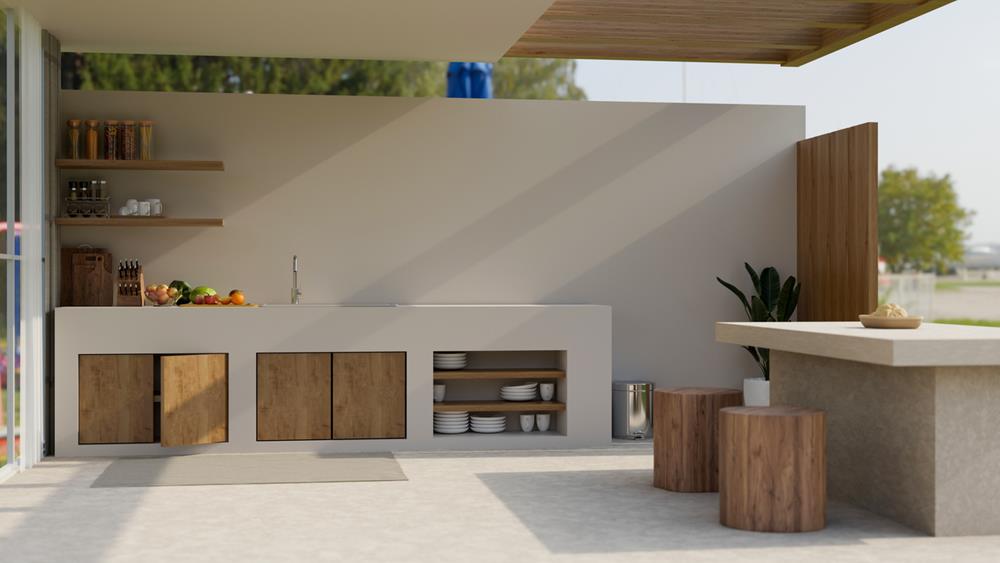
Flooring must be durable, slip-resistant, and comfortable in high temperatures.
Popular options include:
- Concrete, valued for its durability and design flexibility
- Natural stone, such as limestone or travertine, which remains cooler underfoot
- Porcelain pavers, which resist fading and moisture
- Composite decking, which offers a wood-like appearance with lower maintenance
Lighter colors help reflect heat and improve comfort during summer months.
Selecting Outdoor-Rated Appliances
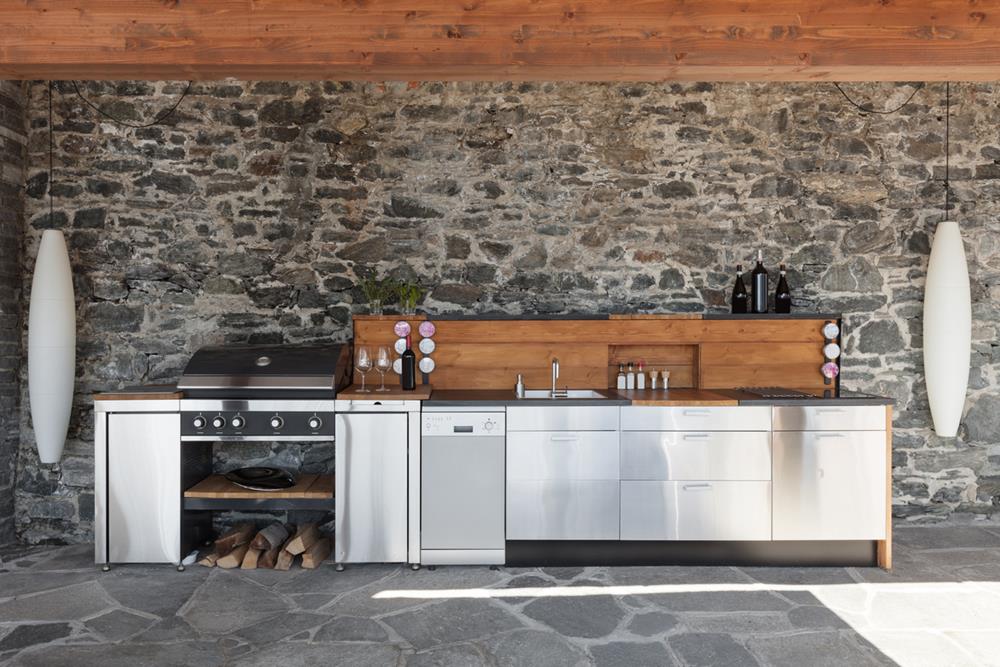
Appliances form the functional core of the kitchen. All equipment should be rated specifically for outdoor use to handle heat and humidity.
Common appliance choices include:
- Gas or charcoal grills
- Smokers for long cooking sessions
- Side burners for sauces and side dishes
- Outdoor refrigerators for beverages and ingredients
- Pizza ovens or specialty cooking units
Outdoor-rated ice makers and warming drawers can further enhance usability, particularly during large gatherings.
Countertops That Withstand Sun and Heat
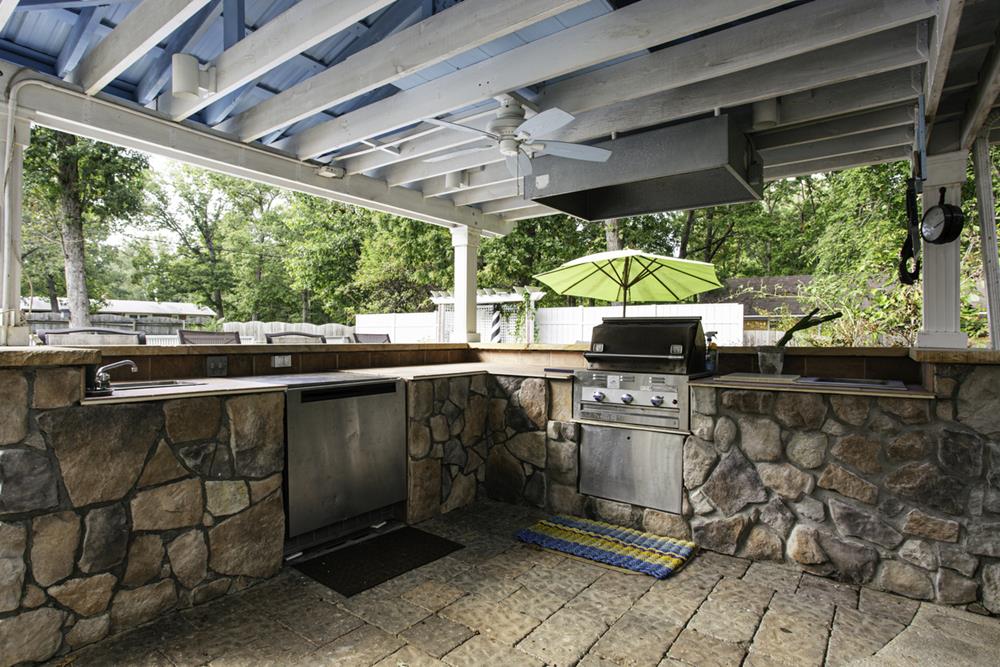
Countertops should resist UV exposure, moisture, and temperature changes.
Recommended materials include:
- Concrete, offering durability and customization
- Granite, particularly in lighter shades, when properly sealed
- Porcelain slabs, known for low maintenance and weather resistance
Materials designed for indoor use, such as laminate, should be avoided due to poor performance outdoors.
Outdoor Storage Solutions
Storage must protect contents from moisture, insects, and heat.
Effective options include:
- Stainless steel cabinetry
- Masonry bases with sealed cabinet doors
- Ventilated storage areas for fuel and cooking tools
Simple layouts tend to perform best, keeping frequently used items within easy reach.
Layout and Seating Design
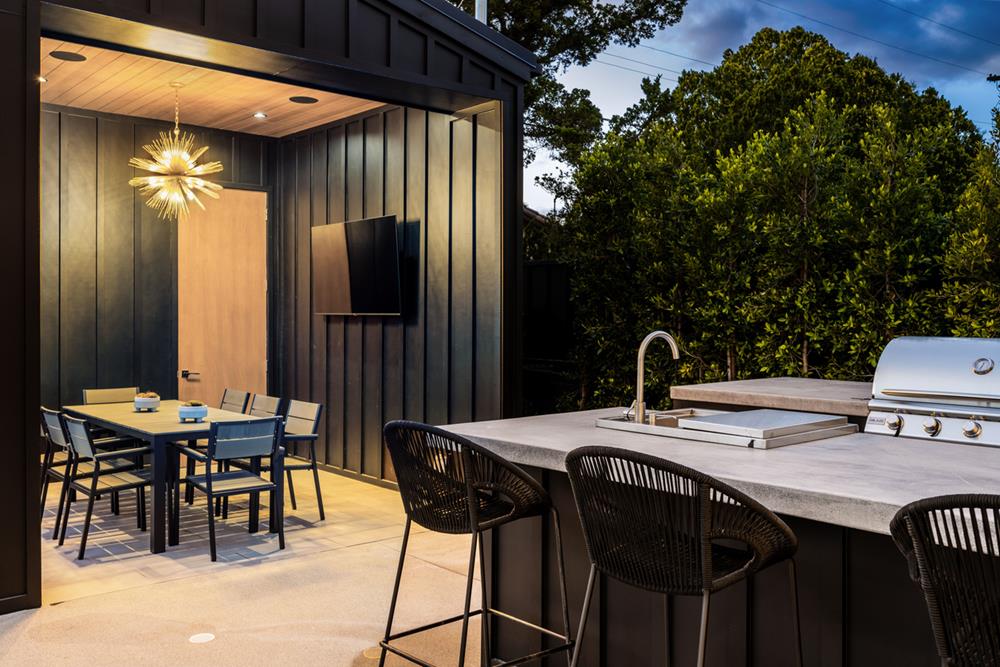
An outdoor kitchen should support both cooking and social interaction.
Common seating arrangements include:
- Island counters with bar seating
- Nearby dining tables for sit-down meals
- Built-in benches to save space and encourage casual gathering
Clear walkways improve safety and prevent crowding during events.
Lighting for Function and Ambience
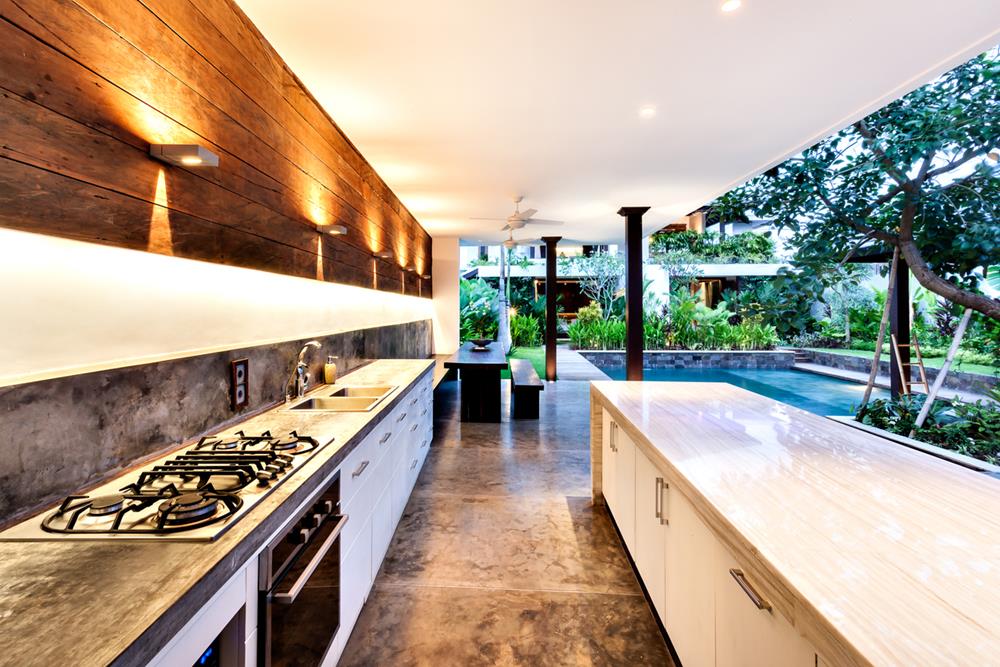
Lighting extends usability into the evening and improves safety.
A well-lit outdoor kitchen typically includes:
- Task lighting over grills and prep areas
- Ambient lighting for seating and dining zones
- Pathway lighting for navigation and safety
Warm lighting tones create a more inviting atmosphere than harsh white light.
Heating Options for Cooler Months
Although winters are generally mild, supplemental heat improves comfort.
Effective heating solutions include:
- Ceiling-mounted infrared heaters
- Gas fireplaces or fire pits
- Portable heaters for smaller spaces
Covered areas allow heat to remain concentrated and effective.
Cooling Strategies for Summer Comfort
Cooling begins with thoughtful design rather than mechanical systems.
Common cooling strategies include:
- Ceiling fans to improve airflow
- Misting systems in dry climates
- Strategic shade placement
- Light-colored surfaces to reduce heat absorption
These features help maintain comfort without excessive energy use.
Utilities and Infrastructure Planning
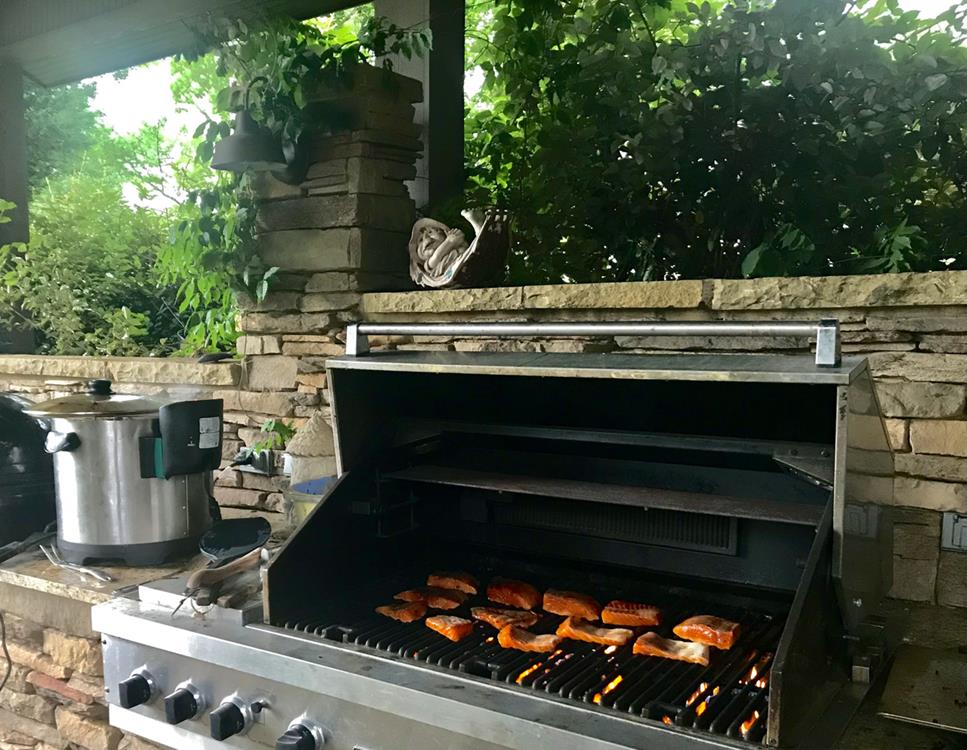
Outdoor kitchens require proper utility connections for safe operation.
Key infrastructure elements include:
- Gas lines for grills and heaters
- Electrical outlets for appliances and lighting
- Plumbing for sinks and ice makers
All installations should comply with local building codes and permitting requirements.
Incorporating Texas Style
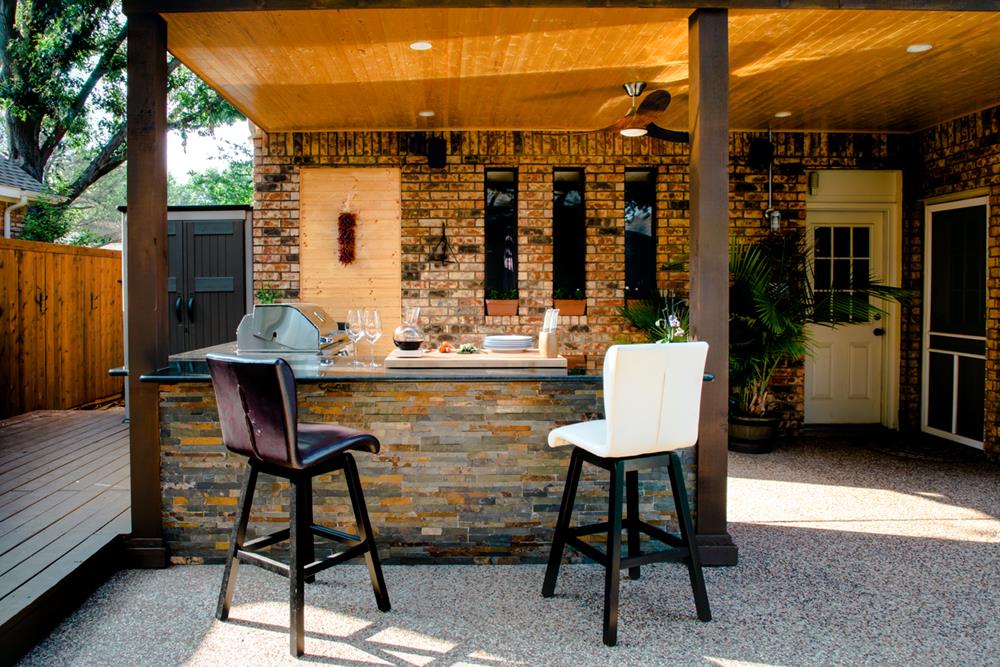
Texas-style design often reflects the surrounding landscape and regional traditions.
Common design elements include:
- Natural stone, brick, and wood
- Earth-toned color palettes
- A balance between rustic materials and modern appliances
Personal touches such as regional influences or family traditions add character and authenticity.
Maintenance and Long-Term Care
Regular maintenance preserves both appearance and function.
Recommended practices include:
- Cleaning cooking surfaces after use
- Sealing stone and concrete periodically
- Covering appliances during extended periods of non-use
- Inspecting gas and electrical connections annually
Creating a Functional Year-Round Space
A Texas-style outdoor kitchen should reflect how the household uses the space, whether for large gatherings or quiet family meals. With thoughtful planning, durable materials, and attention to climate, it becomes a reliable extension of the home.
Designed correctly, an outdoor kitchen supports year-round enjoyment and serves as a comfortable place for cooking, conversation, and connection throughout every season.
Comments (0)
No comments yet. Be the first to share your thoughts.
Leave a comment