


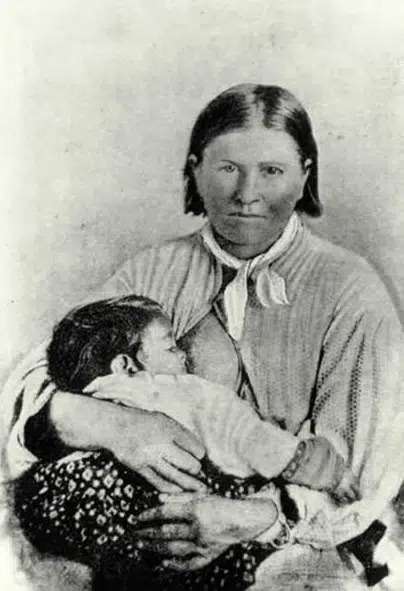
Texas history has no shortage of dramatic stories, but few are as layered—and as often misunderstood—as the life of Cynthia Ann Parker. Taken from her family as a child during a violent raid, she grew up within the Comanche world, built a life there, and became a mother to children who would shape Texas history in their own right.
Her story is sometimes told like a simple before-and-after: pioneer child captured, then “returned.” The reality is far more human, and far more painful. Cynthia Ann Parker did not simply “go back.” She lived between two identities, and the way her life ended tells you as much about Texas as the way it began.
Fort Parker, 1836: The Raid That Changed Everything
On May 19, 1836, Fort Parker—an early settler outpost on the Texas frontier—was attacked by a large raiding party that included Comanche and Kiowa, along with allies described in sources as Caddo and Wichita groups.
In the attack, several settlers were killed and several captives were taken. Cynthia Ann Parker was among them, captured at about nine years old (sources vary slightly on her birth year, but the “age nine” description is widely repeated).
The raid at Fort Parker has been remembered and retold for generations in Texas, sometimes as frontier tragedy, sometimes as a symbol of conflict between expanding settlements and Indigenous life. But for Cynthia Ann Parker, it wasn’t a symbol. It was the moment her childhood ended and her new life began.
A New Name, a New Life: Cynthia Becomes Na’ura (Naduah)
After her capture, Cynthia Ann Parker was brought into Comanche society and known by a Comanche name rendered in sources as Na’ura / Naduah / Narua, often translated as “was found” or “someone found.”
This part of her story is essential, because it’s where the common modern misunderstanding begins. Cynthia Ann Parker did not remain a perpetual “outsider” waiting to be returned. She is described as having assimilated into Comanche life over the course of 24 years, which means language, daily rhythm, relationships, and identity were formed there—not on the settlement side of the frontier.
It’s also where the emotional core of her story sits: when a child grows up entirely inside another culture, “home” is not a place you can simply swap back and forth. For Cynthia, the Comanche world became the world she knew.
Marriage and Motherhood: The Family She Built
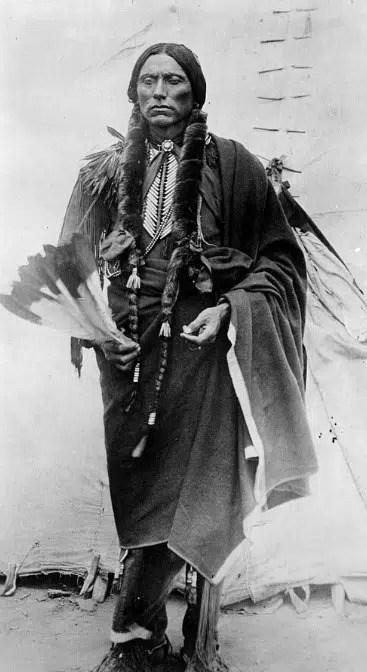
As an adult, Cynthia Ann Parker lived as a Comanche woman and is widely described as having married Peta Nocona, often identified in popular accounts as a Comanche chief, and having children with him.
Her children are named in major historical summaries as Quanah Parker, Pecos, and Topʉsana (also rendered Topsannah, often translated as “Prairie Flower”).
Quanah Parker would later become widely known as the “last free Comanche chief,” and his life—bridging Comanche leadership and the reservation era—often overshadows his mother’s story. But Cynthia’s life is not just a prologue. It stands on its own, especially because it shows what it meant to belong fully to a people that the expanding state increasingly treated as something to remove.
1860 at Pease River: “Rescue,” Re-Capture, and Controversy
In December 1860, Texas Ranger forces and allied fighters attacked a Comanche camp near the Pease River in what sources refer to as the Battle of Pease River, also described as the Pease River Massacre.
During this event, Cynthia Ann Parker was taken into custody along with her young daughter, Topʉsana.
This is the moment many histories frame as her “return,” but multiple accounts emphasize that she was taken against her will.
The Pease River event itself remains debated in how it is characterized and remembered. Some sources underscore that those killed were largely women and children and use the word “massacre” to reflect the imbalance and the human cost.
This nuance matters because Cynthia Ann Parker’s story is often told in the language of “saved.” Yet the evidence repeatedly notes that she was forcibly separated from the life she knew, from her Comanche family, and from her sons—especially Quanah, who was not recovered with her and remained with Comanche bands.
Attempts to Return: Grief, Escape, and Forced Adjustment
After Pease River, Cynthia Ann Parker was brought back among her Anglo-Texan relatives. Accounts describe relatives and communities viewing her as “redeemed,” while failing to grasp how thoroughly she identified as Comanche.
The difficulty wasn’t simply cultural discomfort. Many summaries point to deep grief: she missed her sons and her Comanche life, and she did not want the “new” life being imposed on her.
Sources also state she escaped at least once but was brought back.
It’s easy to read this chapter as inevitable tragedy, but it also reveals something sharper. Cynthia Ann Parker’s suffering wasn’t only the result of her original capture as a child. It also came from the inability of the surrounding society to recognize her adult agency—her right to define what “home” meant after decades of life, marriage, and motherhood.
The Final Years: Loss of Prairie Flower and Cynthia’s Death
Cynthia Ann Parker’s daughter, Topʉsana (Prairie Flower), died after being brought into Anglo-Texan society. One widely cited summary describes her death as due to influenza and pneumonia in the mid-1860s.
After her daughter’s death, Cynthia’s grief deepened, and some accounts describe her refusing food and water.
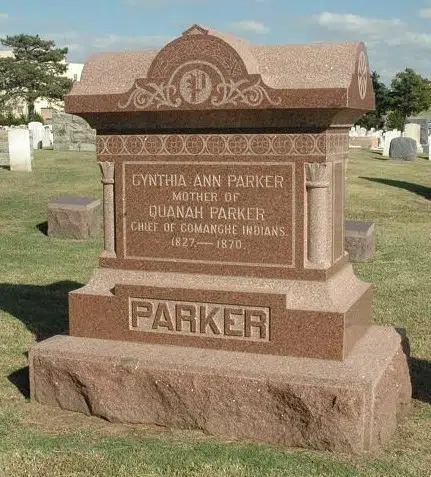
She died in March 1871 in Anderson County, Texas, though exact dates and records vary and are sometimes discussed as uncertain in historical summaries.
Her remains were later moved, and she is now buried at Fort Sill Post Cemetery in Oklahoma, alongside family members including Quanah Parker after later reinterments.
What Her Story Often Gets Wrong (and What It Really Tells Us)
Cynthia Ann Parker’s life is not a neat morality tale about civilization “winning” someone back. If anything, her story challenges that kind of narrative. It shows that identity is not fixed by blood alone. It is shaped by language, family, daily life, love, memory, and belonging.
It also exposes how easily a word like “rescue” can blur into something else when the person being “rescued” is an adult who does not consent. Cynthia Ann Parker is repeatedly described as unwillingly separated from her Comanche life after Pease River, and that unwillingness is central—not optional—to understanding what happened next.
Finally, her story is a reminder that Texas history includes not only battles and treaties, but individual lives altered—and sometimes broken—by the collision of cultures, violence, and state-building on contested land.
Visiting the Places Connected to Cynthia Ann Parker (Thoughtfully)
If you’re exploring Texas history, there are real places where this story is anchored. Fort Parker’s site is commemorated near modern-day Groesbeck, and Pease River is associated with North Texas Panhandle history near present-day Foard County.
If you visit sites or museums connected to this history, it helps to go with a mindset that holds multiple truths at once: settler families experienced real loss and fear, and Comanche communities experienced real violence and displacement. Cynthia Ann Parker’s story sits right in the middle, where easy slogans don’t fit.
The Texas Takeaway
Cynthia Ann Parker is remembered because her life refuses to be simplified. She was a child taken in violence. She was also an adult who built a life, a marriage, and a family inside Comanche society. She was later taken again—this time labeled a “return”—and she never truly recovered from the removal.
Her story lives on in books, historical markers, and the legacy of her son Quanah Parker, but Cynthia deserves more than a footnote. She is one of the clearest examples in Texas history of what it means for a person to belong to a culture—and what it costs when that belonging is denied.
Comments (0)
No comments yet. Be the first to share your thoughts.
Leave a comment