


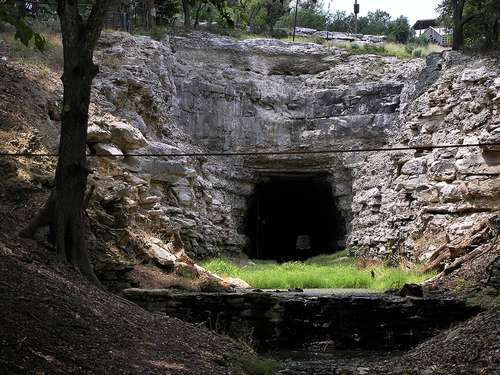
Image Attribution: Larry D. Moore, Old tunnel state park tunnel 2013, CC BY 4.0
Situated in the scenic Texas Hill Country, the abandoned train tunnel lies within Old Tunnel State Park, just south of Fredericksburg in Kendall County. As Texas’ smallest state park, Old Tunnel offers a unique glimpse into the past, easily accessible via local roads. Check the Texas Parks & Wildlife Department website for precise directions and to plan your route using local transportation options.
Located near Fredericksburg, Texas, this tunnel was once part of the Fredericksburg & Northern Railway, a short-lived railroad that connected Fredericksburg to San Antonio. The line operated for just 29 years, opening in 1913 and shutting down by 1942. Harsh terrain, financial struggles, and the increasing popularity of automobiles made the railway unprofitable, leading to its closure. The tracks were removed, but the tunnel remained—a forgotten relic swallowed by time and overgrown vegetation.
Historical Overview
How did the abandoned train tunnel in Texas Hill Country come to be?
It all started in 1913 when the San Antonio, Fredericksburg and Northern Railroad Company constructed this tunnel to conquer the region’s steep terrain. This structure wasn’t just a marvel of engineering; it played a crucial role in early 20th-century transportation, enhancing the economic impact by facilitating the movement of goods and people, thereby driving growth in the area.
Though it was operational until 1942, the railroad company’s bankruptcy led to its abandonment. Today, the tunnel stands as a historical symbol of the period’s transportation development and retains its historical significance. It attracts historians and enthusiasts keen to investigate Texas’ rail history, along with hidden artifacts and tales of mystery.
This tunnel is part of the broader narrative of economic development and expansion in Texas, reflecting the state’s transition from frontier challenges to infrastructural advancements.
Architectural Features
While exploring the architectural features of the Texas Hill Country‘s abandoned train tunnel, you’ll uncover a remarkable showcase of early 20th-century engineering. Built in 1913, the tunnel exemplifies the architectural styles and engineering techniques of its period. Its semi-circular cross-section, crafted from local limestone, not only provides structural integrity but also connects you to the region’s geological roots.
The stone masonry and arched openings are hallmarks of the time, allowing efficient passage through the steep terrain. Ingenious drainage features manage water runoff, ensuring the tunnel’s longevity despite the elements. As you approach the entrance, you’ll notice remnants of railway infrastructure, like old tracks and ties, which further highlight the tunnel’s historical significance in transportation. The Texas ranching economy thrived in the 1840s-1850s, with the development of large ranches contributing to the state’s historical richness.
Railroad Legacy
As you investigate the railroad legacy of the Texas Hill Country, the abandoned train tunnel stands as a testament to the area’s rich industrial past. It symbolizes the period of railroad expansion, marking a significant chapter in the transportation evolution of Texas. The architectural techniques used in its construction reflect early 20th-century innovation and ambition. When the railroad went bankrupt in 1942, it marked the decline of rail transport, leaving the tunnel as a silent witness to the economic shifts that followed. Today, historians and adventurers are drawn to this relic, captivated by its storied contribution to Texas’s industrial history.
Intriguing Tales
Legends and whispers surround the abandoned train tunnel, drawing you into its eerie allure with tales of ghosts and hidden stories. Curiosity tugs at your adventurous spirit as you step into the darkness, where ghostly encounters are said to linger in the air.
Paranormal enthusiasts whisper of sightings and unexplained sounds echoing through the stone walls, while urban legends promise thrilling adventures for those daring enough to investigate further.
The tunnel’s unique architecture, a silent witness to Texas’s early transportation period, sets the stage for these spine-tingling tales. As you probe deeper, the mix of history and mystery fuels your imagination, making every step a thrilling revelation.
Artifacts and Discoveries
Hidden within the forgotten depths of the abandoned train tunnel in Texas Hill Country lie potential riches from a past period. As you investigate, you might unearth artifacts from the early 20th century, each holding significant clues about the region’s transportation history. Uncovering these valuables requires careful methods, as many parts of the tunnel remain untouched. Enthusiasts often report finding remnants of old railroad equipment, which provide a unique window into the operations of bygone rail systems.
The significance of each artifact can’t be overstated; they serve as tangible links to history, drawing historians and curious adventurers alike. These findings not only enrich our understanding but also fuel ongoing efforts to document and preserve the tunnel’s historical narrative for future generations.
Exploring Safely
Before setting off on your adventure to investigate the abandoned train tunnel in Texas Hill Country, guarantee you’re prepared to do so safely. Start by checking for any park regulations and safety guidelines from the Texas Parks & Wildlife Department. Wear sturdy footwear and appropriate clothing to tackle uneven terrain and obstacles.
When visiting, keep in mind the park’s limited parking facilities. Arriving early, especially during peak seasons, guarantees you get the most out of your visit. Operating hours can vary, so it’s essential to review the latest visitor guidelines for access times. By planning ahead, you’ll improve your experience exploring this hidden gem in Texas Hill Country. A flashlight is crucial for better visibility inside the tunnel, helping you avoid hazards in dimly lit areas. Stay mindful of the local wildlife, especially the bats, and maintain a respectful distance. For a safer exploration experience, consider joining a guided tour. Knowledgeable park rangers can provide insights on the area’s history and ecology while ensuring adherence to safety precautions. Enjoy the exploration with peace of mind!
Visitors planning a trip to Big Bend National Park should consider the Chisos Mountains, known for their breathtaking views and diverse ecosystems, as an additional destination.
A Bat-Watching Haven
Though trains no longer pass through, the abandoned tunnel has a new claim to fame. Each summer evening, visitors gather near its entrance to witness one of nature’s most spectacular sights—millions of Mexican free-tailed bats emerging at dusk, swirling into the sky in massive formations.
For those interested in experiencing this phenomenon, the park has two viewing areas:
- Upper Viewing Deck (Free, first-come, first-served) – Offers a general view of the bats exiting the tunnel.
- Lower Viewing Area ($5 per person) – Provides an up-close, ranger-led experience with more information about the bats and the tunnel’s history.
How to Visit the Abandoned Train Tunnel
If you’re planning to see this piece of Texas history, the Old Tunnel State Park is the best way to access the site. Located 13 miles south of Fredericksburg off Old San Antonio Road, the park is easy to reach but maintains a quiet, off-the-beaten-path feel.
- Address: 10619 Old San Antonio Rd, Fredericksburg, TX 78624
- Hours: Open daily, though bat-viewing programs are seasonal (May–October)
- Best Time to Visit: Late spring through early fall for the bat flights, or during cooler months for a quiet historical visit
Hiking trails surround the area, offering short but scenic walks through Hill Country’s limestone outcroppings and oak-filled landscapes. While visitors cannot walk through the tunnel itself (to protect the bats), standing near the entrance gives a sense of just how massive this structure is.
Photography Tips
Capturing the essence of the abandoned train tunnel in Texas Hill Country requires a keen eye and the right techniques. For bat photography, focus on the dramatic contrasts between the tunnel’s dark interior and the lively hues of sunset. Use a tripod to stabilize your camera for long exposures, capturing the movement of bats as they emerge. A wide-angle lens helps encompass the tunnel entrance and landscape, adding context to your shots.
Final Thoughts
The abandoned train tunnel in Texas Hill Country isn’t just an old passageway carved into rock—it’s a glimpse into a forgotten era and a thriving natural habitat all in one. Standing at its entrance, it’s easy to imagine the sound of train whistles echoing through the hills, the steam engines cutting through the Texas landscape. Now, instead of trains, it’s the sound of wings fluttering and the sight of millions of bats taking flight that makes this place so extraordinary.

Comments (0)
No comments yet. Be the first to share your thoughts.
Leave a comment