

Edward Burleson was born on December 15, 1798, in Buncombe County, North Carolina. He was the son of James Burleson, a veteran of the American Revolutionary War, and Elizabeth Byrd. Growing up in a frontier family, Edward was exposed to the challenges and demands of frontier life from a young age. His father’s military background and the family’s pioneering spirit likely influenced Edward’s future endeavors as both a soldier and a settler. The Burleson family moved several times during Edward’s childhood, eventually making their way to Tennessee, where Edward began his own family before ultimately moving to Texas in search of new opportunities.
Involvement in the Texas Revolution
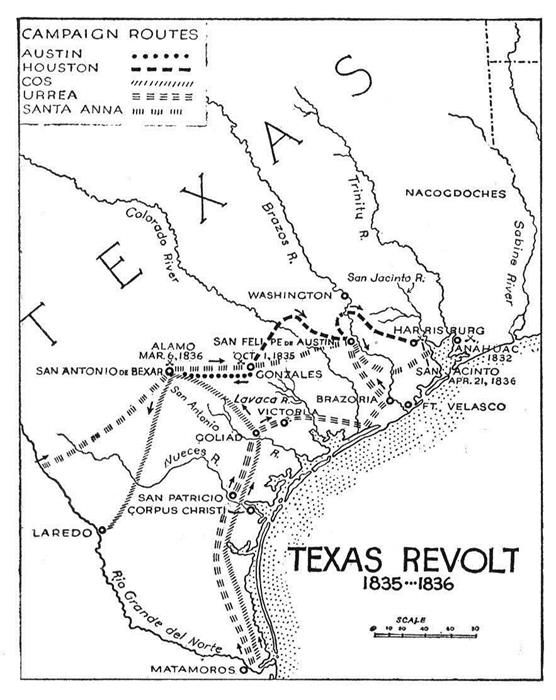
In the Siege of Bexar, which took place in late 1835, Burleson served as the second-in-command to General Stephen F. Austin. His efforts were instrumental in the Texian forces’ successful capture of San Antonio, a critical victory that boosted the morale of the Texian army. Burleson also fought in the Battle of San Jacinto on April 21, 1836, a decisive engagement that resulted in the defeat of the Mexican army and the capture of General Santa Anna. This victory effectively secured Texas independence from Mexico.
Service in the Republic of Texas Army
Following the Texas Revolution, Edward Burleson continued to serve in the Republic of Texas Army. He was actively involved in various campaigns and skirmishes, defending the nascent republic from both external and internal threats. In recognition of his consistent leadership and bravery, Burleson was promoted to Brigadier General in 1837.
Participation in the Texas Congress
Edward Burleson made significant contributions to the political landscape of Texas through his active participation in the Texas Congress. After the successful fight for independence, Burleson was elected to the Texas Congress, where he represented Bastrop County. His tenure in the congress was marked by his efforts to shape the newly formed Republic of Texas, contributing to legislation that aimed to stabilize and develop the young nation.
Role as Vice President of the Republic of Texas
In 1838, Edward Burleson was elected Vice President of the Republic of Texas, serving under President Mirabeau B. Lamar. During his term, which lasted until 1841, Burleson played a crucial role in supporting President Lamar’s policies, including efforts to improve public education and manage conflicts with Native American tribes. His position as Vice President allowed him to influence significant decisions that helped lay the foundation for the future state of Texas.

Contributions to Texas Statehood and Early Governance
Edward Burleson’s contributions extended beyond his military and congressional roles, impacting the transition of Texas from a republic to a state. He was a strong advocate for Texas’s annexation to the United States, which was achieved in 1845. After Texas became a state, Burleson continued to serve in public office, including a term in the Texas Senate. His efforts in governance and advocacy for statehood were pivotal in shaping Texas’s early political framework and ensuring a smooth transition into the Union.
Contributions to Texas Rangers
In addition to his other roles, Edward Burleson played a significant part in the early formation of the Texas Rangers, a law enforcement agency that remains iconic in Texas history. His leadership in organizing and directing ranger companies helped to establish a tradition of law and order on the Texas frontier, providing security and stability during a period of significant upheaval and conflict.
Personal Life
Edward Burleson married Sarah Griffeth in 1816, and together they had nine children. His family life was as dynamic as his public one, with many of his descendants continuing to play significant roles in Texas history. Burleson County in Texas is named in his honor, reflecting the lasting impact of his contributions to the state.
Later Life and Death
Edward Burleson’s contributions to Texas did not end with his political and military service. After Texas joined the United States, Burleson continued to influence state politics. He served in the Texas Senate from 1846 to 1849, where he continued to advocate for the interests of his constituents and the broader Texas community. Burleson’s health began to decline in his later years, and he passed away on December 26, 1851, in Austin, Texas. He was buried in the Texas State Cemetery, a testament to his enduring legacy and the high regard in which he was held by his fellow Texans.
Conclusion
Edward Burleson’s contributions have been recognized in various ways over the years. In addition to Burleson County, there are numerous streets, schools, and public buildings named in his honor throughout Texas. His induction into the Texas State Cemetery and various historical societies highlights the enduring respect and admiration for his role in Texas history.