


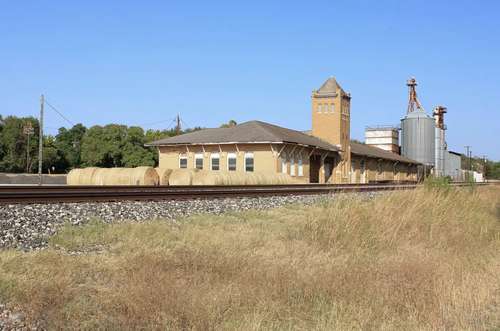
Weatherford, Texas sits just west of Fort Worth, yet it feels like a place with its own rhythm. Known widely as the Peach Capital of Texas, this Parker County city blends frontier history, agricultural pride, and steady modern growth. It offers a mix of classic Texas traditions and a welcoming, everyday charm that keeps longtime residents rooted and newcomers curious.
This is a town shaped by ranching, railroads, and resilience. Over time, it has grown into a community that values its past while staying practical about the future. To understand Weatherford, it helps to look at how it began, how it grew, and why so many people choose to call it home today.
Early History and Settlement
Weatherford was founded in 1858 and named after Texas state senator Thomas J. Weatherford. Its early development followed a familiar Texas pattern. Settlers arrived seeking land, opportunity, and security during a period of westward expansion. The city’s location along important travel routes made it a natural stopping point for cattle drives and supply wagons.
Parker County was established just two years earlier, in 1856. Weatherford quickly became its county seat, giving the town political and administrative importance from the start. Courthouses, law offices, and businesses soon followed, anchoring the area as a regional hub.
During the Civil War and Reconstruction, Weatherford remained small but active. Agriculture and livestock sustained the local economy. Ranching families passed down land and traditions that still influence the area today.
The Impact of the Railroad
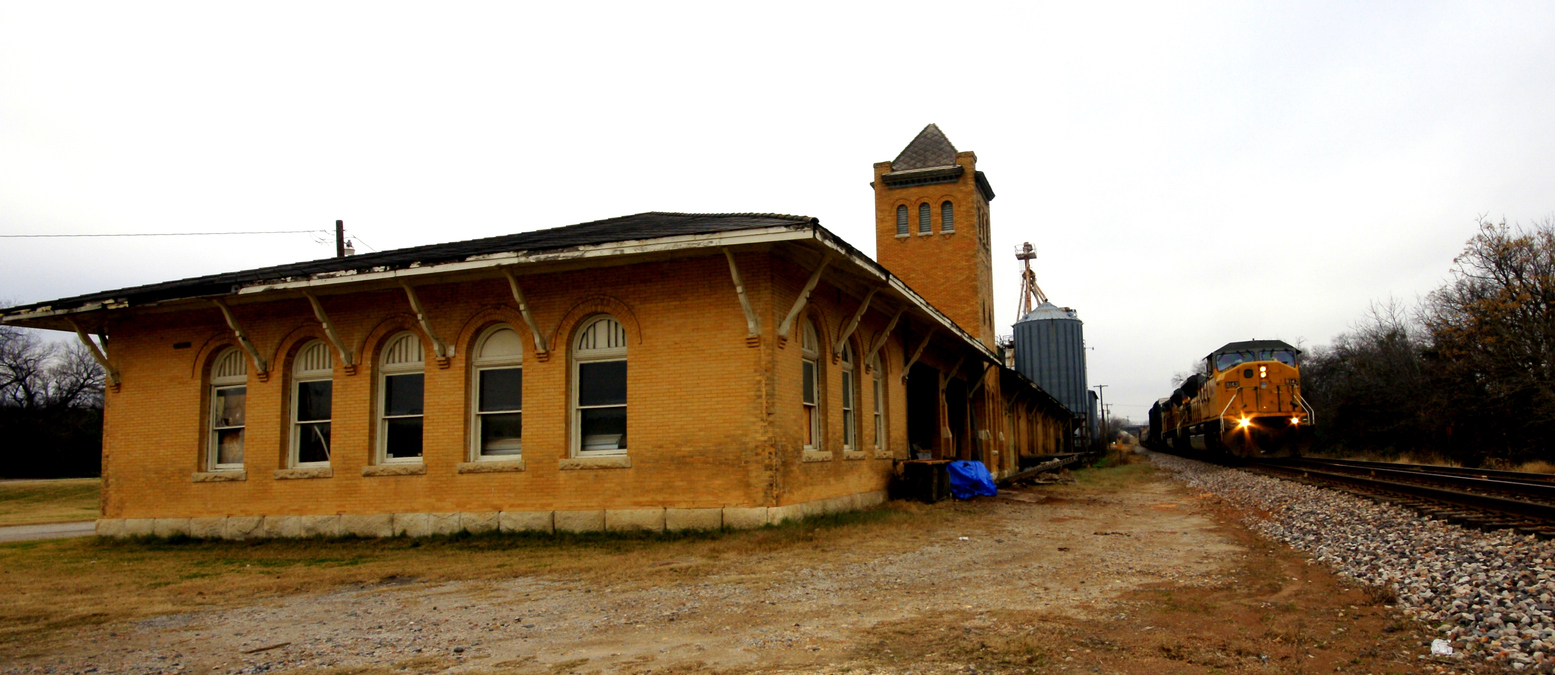
The arrival of the Texas and Pacific Railway in the 1880s changed Weatherford’s future. Rail access connected the town to Fort Worth, Dallas, and beyond. Farmers could ship crops more efficiently. Merchants could stock a wider range of goods. New residents arrived, bringing skills, capital, and ambition.
Railroads helped Weatherford move from a frontier settlement into a structured town with schools, churches, hotels, and civic buildings. Many of the brick structures in downtown Weatherford date from this era, reflecting a period of confidence and growth.
The railroad also reinforced Weatherford’s role as a regional marketplace. Nearby rural communities relied on the town for supplies, services, and social life.
The Peach Capital of Texas
One of Weatherford’s most recognizable identities comes from fruit orchards rather than rail lines. In the late 1800s and early 1900s, Parker County became a major peach-producing region. The area’s sandy soil and climate proved ideal for growing peaches with strong flavor and reliable yields.
By the early twentieth century, peaches were a defining feature of the local economy. Farmers shipped fresh fruit across Texas and neighboring states. Packing sheds and orchards dotted the countryside.
Today, Weatherford proudly carries the title of Peach Capital of Texas. The annual Parker County Peach Festival celebrates this heritage with food, music, crafts, and family activities. It draws visitors from across the region and serves as a reminder of how agriculture shaped the town’s identity.
Even as development has expanded, peach orchards remain an important symbol of local pride.
Downtown Weatherford and Historic Architecture
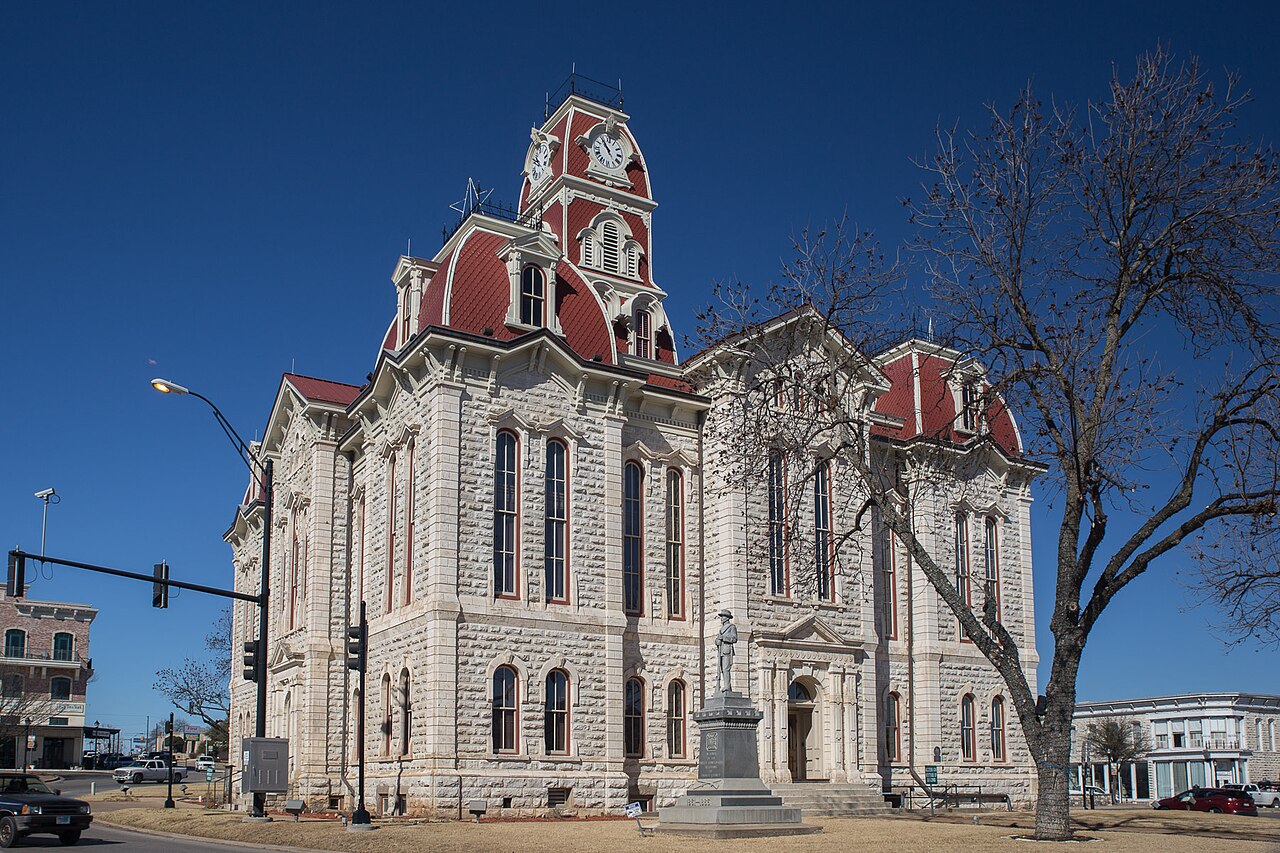
Renelibrary, Parker County Courthouse Weatherford Wiki (1 of 1), CC BY-SA 4.0
Downtown Weatherford offers a clear window into the city’s past. At its center stands the Parker County Courthouse, a limestone structure completed in 1886. Designed in the Second Empire style, it features a prominent clock tower and remains one of the most recognizable landmarks in North Texas.
Surrounding the courthouse are historic storefronts, many carefully restored. These buildings now house antique shops, boutiques, cafes, offices, and restaurants. Walking through downtown feels relaxed and personal, with familiar faces and friendly greetings.
The city has made consistent efforts to preserve its historic character. Renovations tend to balance modern needs with respect for original design. This approach helps maintain a sense of continuity while allowing downtown to stay active and relevant.
Community events often center on the square, reinforcing downtown’s role as both a physical and social heart of Weatherford.
Education and Community Life
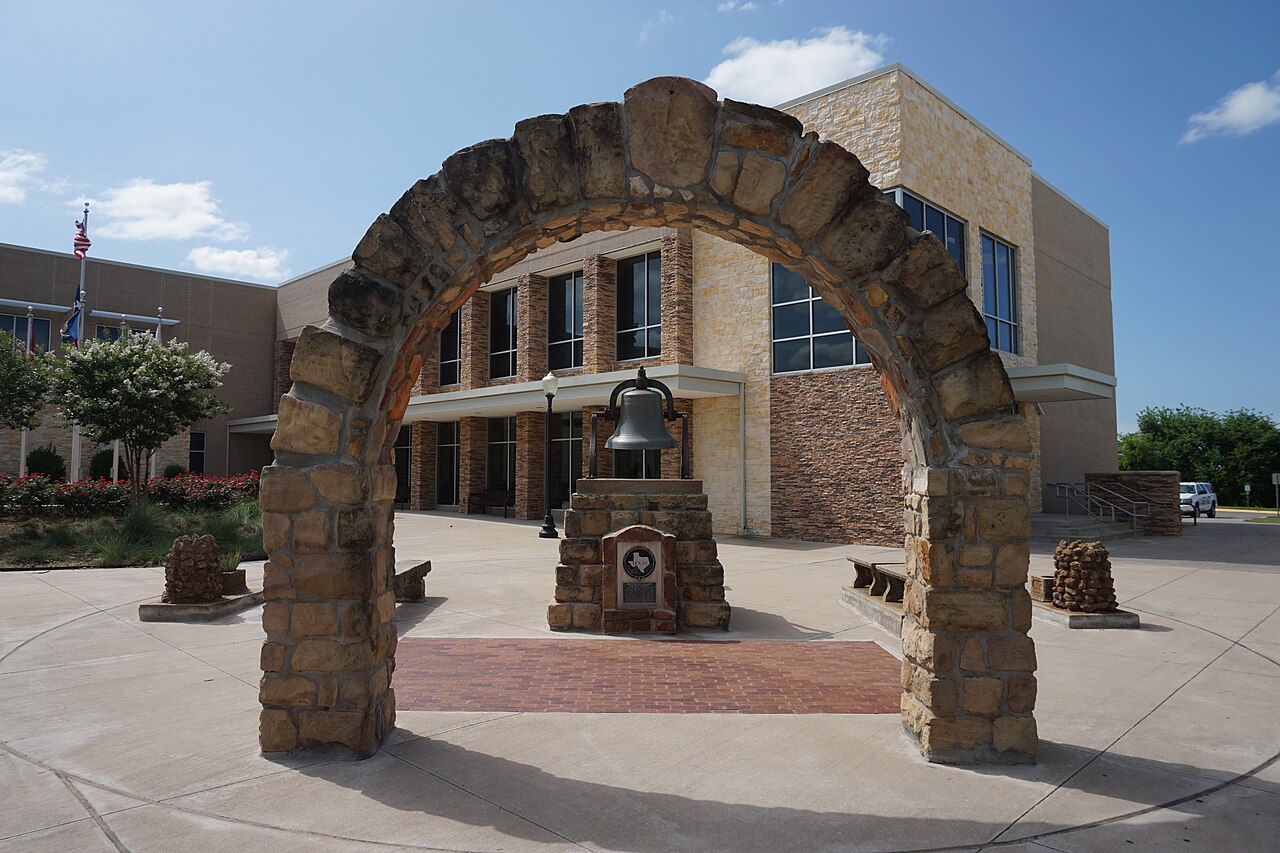
Michael Barera, Weatherford College May 2017 09 (Roy and Jeanne Grogan Historic Plaza), CC BY-SA 4.0
Education has always been important in Weatherford. Public schools serve students from early childhood through high school, offering academic programs, athletics, and extracurricular activities. The Weatherford Independent School District continues to expand as the population grows.
Higher education also plays a role. Weatherford College, founded in 1869, is one of the oldest community colleges in Texas. It offers academic transfer programs, technical training, and continuing education. The college adds energy to the city and provides opportunities for students of all ages.
Beyond schools, Weatherford places strong emphasis on community involvement. Churches, civic organizations, youth sports leagues, and volunteer groups are active throughout the year. These networks help newcomers feel connected and give residents many ways to contribute.
Parks, Recreation, and the Outdoors
Weatherford’s location offers easy access to outdoor recreation. The city maintains several parks that support walking, sports, and family activities. Chandor Gardens stands out as a unique destination. Created by artist Douglas Chandor in the early twentieth century, the gardens combine European design with Texas plant life. Today, they serve as both a public park and cultural site.
Nearby Lake Weatherford provides fishing, boating, and scenic views. It also serves as an important water supply for the city. Residents often spend weekends enjoying the lake or surrounding green spaces.
Parker County’s rural areas add to the appeal. Rolling hills, open pastures, and quiet roads create opportunities for horseback riding, cycling, and country drives. Even as development increases, access to nature remains a strong part of local life.
Growth and Development
In recent decades, Weatherford has experienced steady population growth. Its proximity to Fort Worth makes it attractive to people who want more space without losing access to major employment centers. Improved highways and infrastructure have made commuting easier.
New neighborhoods, retail centers, and medical facilities reflect this growth. At the same time, city leaders often emphasize managed development. The goal is to support economic progress while preserving the character that defines Weatherford.
This balance shows up in zoning decisions, historic preservation efforts, and investment in public services. Growth brings challenges, but Weatherford tends to approach them with practical planning rather than rapid change.
Economy and Employment
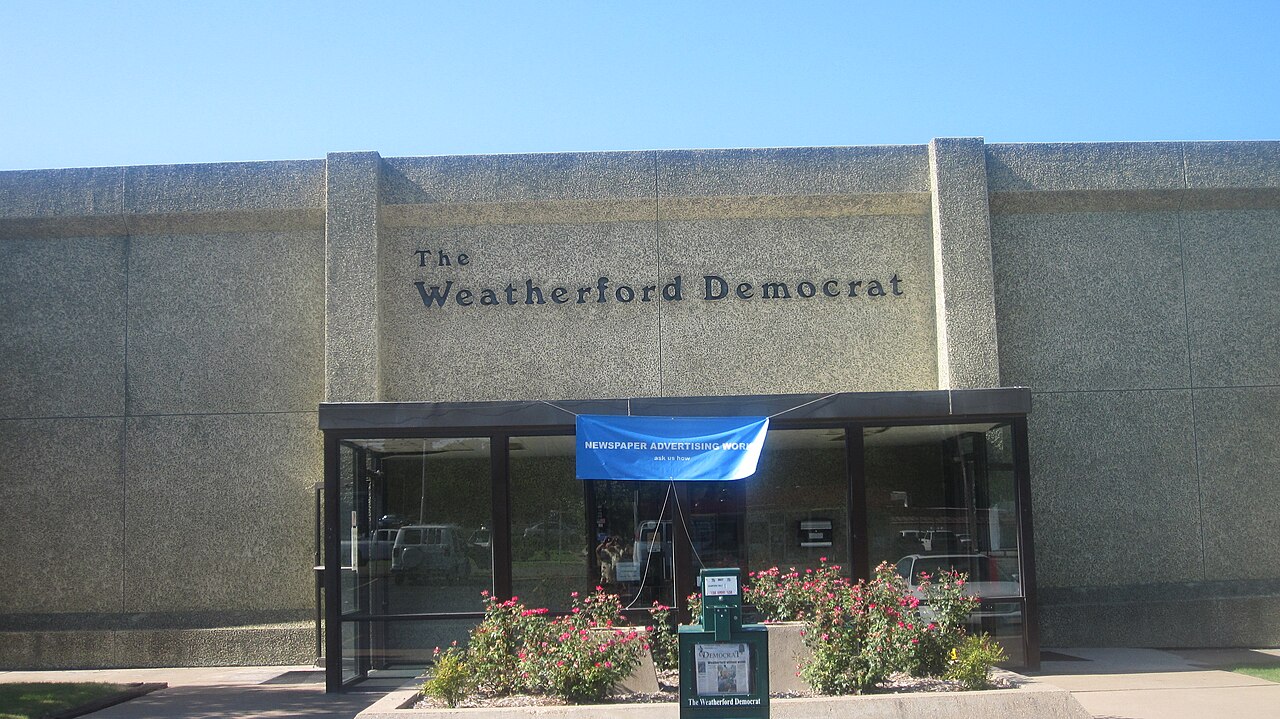
Billy Hathorn, Weatherford Democrat newspaper IMG 6463, CC BY-SA 3.0
Weatherford’s economy has diversified over time. Agriculture remains part of the picture, especially ranching and specialty farming. However, healthcare, education, retail, and construction now employ a significant portion of the workforce.
Small businesses play an important role. Locally owned shops, service providers, and restaurants give the city a personal feel and keep money circulating within the community. Larger employers nearby in Fort Worth also contribute by providing jobs while allowing employees to live in Weatherford.
Industrial parks and business developments along major highways support logistics and manufacturing. These sectors help stabilize the local economy and provide opportunities across different skill levels.
Weatherford’s Western Heritage
Western heritage runs deep in Weatherford. The city’s history is tied closely to cattle ranching, rodeos, and rural traditions. This influence appears in local events, architecture, and everyday life.
The Doss Heritage and Culture Center offers exhibits on Parker County history, including Native American presence, pioneer settlement, and the cattle industry. It serves as an educational resource and gathering place for cultural programs.
Western wear is common at local events, and rodeo culture still holds a place of respect. These traditions are not treated as museum pieces but as living parts of the community.
Arts, Culture, and Local Flavor
While Weatherford honors tradition, it also supports creative expression. Art shows, live music, and theater productions appear regularly on local calendars. Weatherford College and community groups often collaborate on cultural programming.
Restaurants range from classic Texas barbecue to casual cafes and family-owned diners. Many places emphasize comfort, conversation, and familiar flavors. Food plays a social role, bringing people together rather than chasing trends.
Seasonal events such as holiday parades, farmers markets, and outdoor concerts help keep the city lively throughout the year.
Living in Weatherford Today
People choose Weatherford for many reasons. Some are drawn by affordability compared to larger cities. Others value the slower pace and sense of belonging. Families appreciate schools and outdoor space. Retirees enjoy quiet neighborhoods and community involvement.
Housing options range from historic homes near downtown to newer developments on the outskirts. Many properties offer larger lots, reflecting the area’s rural roots.
Despite growth, Weatherford still feels approachable. Residents tend to recognize one another at grocery stores, school events, and local gatherings. This familiarity shapes daily life in ways that are hard to quantify but easy to feel.
Looking Ahead
Weatherford continues to evolve. Infrastructure improvements, business expansion, and residential growth will shape its next chapters. At the same time, the city’s leaders and residents show strong interest in protecting what makes the place distinctive.
The balance between progress and tradition remains a guiding principle. Weatherford’s story is not about rapid reinvention. It is about steady adaptation rooted in shared history and practical values.
For visitors, Weatherford offers a glimpse of North Texas beyond the interstate. For residents, it provides a place where past and present coexist in comfortable ways. And for those considering a move, it stands as an example of how a growing town can still feel like home.
Weatherford, Texas may not chase attention, but it earns respect through consistency, community, and a clear sense of place.
Comments (0)
No comments yet. Be the first to share your thoughts.
Leave a comment