


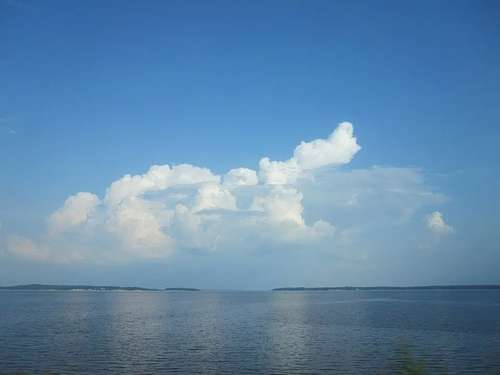
Billy Hathorn, View of Toledo Bend between LA and TX IMG 1806, CC BY-SA 3.0
If you want a Texas lake trip that feels like you’ve left the calendar behind, Toledo Bend Reservoir is the kind of place that makes that happen fast. It stretches along the Sabine River and sits right on the Texas–Louisiana line, which means you can spend the day fishing on one side, grab dinner in a Louisiana lake town, and still wake up to the same pine-lined water the next morning.
This is not a “drive in, snap a photo, drive out” lake. Toledo Bend is enormous, with reporting commonly describing it at over 180,000 acres and roughly 1,250+ miles of shoreline, depending on the source and how shoreline is measured.
It’s also frequently described as the largest artificial body of water in the American South, and it has the scale to match that title.
How Toledo Bend Was Made, and Why It Still Matters
Toledo Bend exists because the Sabine River was dammed to create a major water project shared by Texas and Louisiana. The reservoir filled and was completed in 1969, after several years of construction, and it was designed with practical purposes in mind—water conservation and hydroelectric power—while also becoming a recreation magnet almost immediately.
That origin story still shapes the lake experience today. You’ll see it in the way the shoreline twists into coves and long arms, and you’ll feel it if you spend time on the water: Toledo Bend has a reputation for underwater timber and stumps, especially in certain areas, which is part of what makes it such a productive fishery and also a place where boaters need to stay alert.
The Lake at a Glance: Size, Shoreline, and Depth
Toledo Bend is often described as roughly 65 miles long, with a maximum depth commonly cited around 110 feet. The shoreline figure varies by reference, but the “more than 1,200 miles” description is widely repeated because the lake’s shape is so intricate, with countless coves and fingers that add up quickly.
For travelers, that scale translates to options. You can find busy marinas and tournament energy, or you can tuck into quieter water where the only sound is wind in the trees and the occasional outboard in the distance.
Why Toledo Bend Is a National-Level Fishing Destination
Toledo Bend is especially known for largemouth bass, and the Texas Parks & Wildlife Department calls bass the most popular game fish at the reservoir, with strong year-round opportunities. Crappie and catfish are also consistently mentioned as solid fisheries, which is one reason Toledo Bend works for mixed groups—hardcore anglers and “I’m just here to relax” lake friends can both have a good weekend.
Striped bass are part of the story too, but they come with a specific detail: TPWD notes that striped bass are maintained through annual stockings because conditions at Toledo Bend usually don’t allow successful natural spawning. That’s a great example of how the lake is actively managed, not just passively enjoyed.
If you’re planning to fish both sides of the waterline, remember that Toledo Bend is bi-state. Regulations can differ depending on where you’re fishing, so it’s smart to check rules before you cast. TPWD explicitly points out that Texas limits apply on the Texas portion, and Louisiana regulations should be checked separately.
Boating and Water Time: The “Pick Your Pace” Lake
Some lakes feel like they have one primary personality—party lake, quiet lake, ski lake, fishing lake. Toledo Bend has more range than that. It’s big enough to accommodate speedboats and family cruising, but it’s also shaped in a way that rewards slow exploration.
The lake’s many coves and protected arms can feel calm even when the main water is busy, and the shoreline’s Piney Woods character makes even a simple boat ride feel scenic rather than purely functional. The tradeoff is that boaters should stay mindful of submerged hazards in certain areas, especially when venturing off familiar routes.
Paddling Trails: A Quieter Way to See Toledo Bend
If you like your lake days with a paddle instead of a propeller, Toledo Bend has been expanding that side of its recreation identity. Texas Parks & Wildlife has opened designated paddling trails at Toledo Bend, adding more structured options for kayakers and canoeists who want defined routes rather than improvising every turn.
These trails are a great fit for travelers who want a “nature-forward” lake trip: calmer water, shoreline wildlife, and the kind of slower pace where you actually notice how many birds are out and how the light changes as you move through coves.
Camping, Cabins, and State Parks: Where to Set Up Base
Toledo Bend works best when you treat it like a full weekend rather than a quick stop. That’s because lodging options around the reservoir are part of the experience—cabins, campgrounds, and waterfront stays that make it easy to start and end the day outside.
On the Louisiana side, South Toledo Bend State Park is a well-known base with scenic reservoir views from small bluffs and activities that go beyond fishing, including hiking, cycling, birding, and camping. The park also notes the area is a nesting ground for bald eagles, which adds a “bring binoculars” bonus to a trip that might have started as a fishing plan.
On the Texas side, Toledo Bend’s western shores connect heavily with forested land and outdoor access, including areas tied to the Sabine National Forest, which contributes to the lake’s “remote in places” feel even though it draws big crowds in peak seasons.
Wildlife, Birding, and the Piney Woods Atmosphere
Toledo Bend sits in a landscape where the water and trees feel equally important. It’s a Piney Woods lake—tall trees, wooded shorelines, and long stretches where you can look across the water and feel like you’re in a quieter version of the South.
If you’re visiting for wildlife, early morning is the sweet spot. That’s when the lake feels most still, and it’s when you’re most likely to notice birds working the shoreline and fish activity changing the surface. Even if you never pick up a rod, the lake’s scale and texture make it easy to spend hours simply watching the water.
A Simple Weekend Plan That Actually Feels Relaxing
A Toledo Bend weekend doesn’t need to be complicated to feel full. A simple structure works well:
- Arrive and get oriented in the afternoon, then take a short sunset drive or shoreline walk to get your bearings.
- Make your first morning an “early start” morning—either fishing, paddling, or a quiet coffee moment with the water.
- Use midday for slower activities: a swim area, a scenic boat ride, a picnic, or a nap that doesn’t come with guilt.
- Spend one evening at a lakeside spot for an easy dinner, then end the day somewhere you can actually see the stars.
That’s the Toledo Bend advantage. The lake is big enough to offer endless options, but it also supports the simplest lake goal of all: doing less, on purpose.
Final Thoughts
Toledo Bend Reservoir is one of those rare Southern-scale places where the numbers sound exaggerated until you see the water in person. With its massive footprint, long shoreline, and two-state identity, it offers a mix of tournament-grade fishing, mellow coves, paddling routes, state park camping, and that wooded, quiet-lake atmosphere that makes weekends feel longer than they are.
If you want a lake trip that can be as active or as slow as you want, Toledo Bend is built for both.
Comments (0)
No comments yet. Be the first to share your thoughts.
Leave a comment