


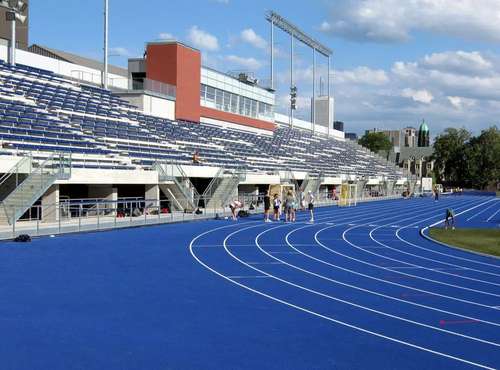
Few places take high school football as seriously as Texas. Across the state, Friday nights regularly draw thousands of spectators, marching bands perform elaborate halftime shows, and entire communities gather around their local teams. While the players may still be teenagers, the experience often feels much closer to a college sporting event than a typical high school game.
One reason is the stadiums themselves. Texas is home to some of the largest and most impressive high school football venues in the United States, with several seating 10,000 to more than 20,000 spectators. These facilities are more than oversized football fields—they have become community gathering places that host playoff games, marching band competitions, graduations, and other major events throughout the year.
Why Texas Built Such Large High School Stadiums
Visitors often wonder why a high school would need a stadium larger than some college facilities.
The answer begins with Texas' population growth. Large suburban school districts around Dallas-Fort Worth, Houston, Austin, and San Antonio have expanded rapidly over the past several decades, with many districts serving tens of thousands of students across multiple high schools.
Instead of each campus constructing its own stadium, many districts built large shared facilities.
These stadiums host games for several schools, making them practical investments that remain busy throughout the football season. Outside athletics, they are also used for commencement ceremonies, district celebrations, band contests, soccer matches, and community events, allowing school districts to maximize the value of the facilities.
Legacy Stadium Helped Redefine Expectations
One of the best-known examples is Legacy Stadium in Katy. Opened in 2017, the stadium seats approximately 12,000 spectators and serves Katy Independent School District, one of the state's most successful football districts. The project cost roughly $70 million, reflecting both the district's size and its commitment to providing a first-class venue for multiple schools.
Legacy Stadium includes amenities that many people associate with college football.
Large video boards, modern locker rooms, extensive concession areas, premium seating, professional-quality lighting, and advanced sound systems all contribute to an atmosphere that feels far beyond a traditional high school venue. During major rivalry games and playoff matchups, the stadium often fills with thousands of enthusiastic fans.
Eagle Stadium Became a National Talking Point
When Eagle Stadium opened in Allen in 2012, it quickly attracted national attention. The stadium seats approximately 18,000 people and cost nearly $60 million to build. At the time, it became one of the most expensive high school football stadiums in the country and generated widespread discussion about Texas' commitment to high school athletics.
Allen Independent School District designed the stadium to serve much more than football. Graduations, community ceremonies, soccer matches, and marching band competitions all take place there throughout the year. Despite the publicity surrounding its construction, the stadium functions as a multi-purpose district facility rather than a venue used by only one team.
McKinney ISD Stadium Serves an Entire School District
Another impressive example can be found in McKinney. McKinney ISD Stadium seats approximately 12,000 spectators and serves all of the district's comprehensive high schools. Rather than dividing resources among several smaller venues, the district created one large facility capable of hosting numerous athletic and community events.
The stadium's design reflects modern expectations. Artificial turf, spacious press facilities, high-definition video displays, expanded concession areas, and updated accessibility features make it comfortable for large crowds. During playoff games, the atmosphere often resembles a small college football venue.
The Star Gives High School Football an NFL Setting
Perhaps no Texas venue creates a more memorable experience than The Ford Center at The Star in Frisco. Although it serves as the Dallas Cowboys' world headquarters and practice facility, the indoor stadium also hosts numerous UIL high school football games, state championship contests, and other scholastic events. For many student-athletes, playing on the same field used by an NFL franchise becomes one of the highlights of their high school careers.
The venue itself seats roughly 12,000 spectators. Its professional lighting, enormous video board, climate-controlled environment, and television-ready production facilities make championship games feel even more significant. For visiting families, the surrounding restaurants, hotels, and entertainment options also turn game day into a full weekend experience.
Ratliff Stadium Became Famous Beyond Texas
Some Texas high school stadiums achieved national recognition long before modern facilities were built. Ratliff Stadium in Odessa opened in 1982 and seats roughly 19,300 spectators. It became internationally known through Friday Night Lights, H. G. Bissinger's bestselling book about Odessa Permian High School and the subsequent film and television adaptations.
The stadium remains one of Texas' most iconic football venues. Although newer stadiums feature more modern technology, Ratliff continues representing the deep cultural importance of high school football in West Texas. Visiting the stadium offers fans an opportunity to connect with one of the sport's most famous stories.
Memorial Stadium Reflects Austin's Football Tradition
In Central Texas, House Park has historically served Austin football, but Tony Burger Stadium and Memorial Stadium have become important venues for Austin-area schools.
Memorial Stadium, operated by Austin ISD, seats around 15,000 spectators and hosts football, soccer, band events, and graduation ceremonies. Like many district stadiums across Texas, it supports multiple schools rather than serving only one campus.
That shared approach has become increasingly common. Growing districts often find it more practical to build one well-equipped stadium capable of hosting numerous events than to maintain several separate facilities.
The Stadium Experience Goes Beyond Football
The stadium itself is only part of what makes Texas high school football special.
Long before kickoff, parking lots fill with families, alumni, booster clubs, and food vendors. School bands warm up nearby, cheerleaders organize pregame activities, and local businesses often sponsor community gatherings that extend well beyond the game itself.
Halftime remains one of the evening's highlights. Texas marching bands are nationally respected, and halftime performances frequently involve hundreds of student musicians performing intricate formations, choreography, and music. For many spectators, the band show is just as anticipated as the football game.
Rivalries Create Electric Atmospheres
Large stadiums become even more impressive during major rivalry games.
Annual matchups between longtime opponents often attract crowds that rival small college attendance figures. Students wear school colors throughout the week, alumni return home, and local restaurants experience increased business before and after games.
Playoff contests amplify that excitement even further. Neutral-site games frequently bring together supporters from two communities, creating energetic crowds that fill stadiums with school spirit. Because many Texas playoff games are held at these larger district venues, fans often experience postseason football in facilities designed to accommodate thousands of visitors.
The Investment Supports More Than Athletics
Although football receives much of the attention, these stadiums benefit many other programs. Soccer teams, marching bands, color guards, ROTC organizations, graduation ceremonies, and district-wide celebrations all make regular use of the facilities. Some stadiums also host youth sports championships, community festivals, and charity events throughout the year.
That broader usage helps explain why districts continue investing in these venues. Rather than sitting empty for much of the year, they function as community gathering places that support education, extracurricular activities, and civic life well beyond Friday nights.
Visiting a Texas High School Stadium
Even visitors with little interest in football often find attending a Texas high school game worthwhile.
The combination of community pride, student participation, marching bands, and enthusiastic crowds creates an atmosphere that feels distinctly Texan. Unlike many professional sporting events, high school games remain deeply connected to the towns and neighborhoods they represent.
Many stadiums also welcome visitors. Playoff games, district championships, and rivalry matchups provide excellent opportunities to experience the tradition firsthand. Purchasing a ticket is typically affordable, making it one of the easiest ways to experience an authentic piece of Texas culture.
Tips for Attending a Texas High School Football Game
If you're planning to experience Friday Night Lights for yourself, these tips can help:
- Arrive early, especially for rivalry games and playoff matchups, as parking fills quickly.
- Stay for halftime, since the marching band performances are often as impressive as the game.
- Check the UIL schedule before traveling, as kickoff times and locations occasionally change.
- Bring weather-appropriate clothing, since many stadiums are outdoors and Texas weather can change quickly.
- Support local concession stands, which are often operated by school booster clubs and student organizations.
More Than Just Bigger Stadiums
Texas high school stadiums attract attention because of their size, but their real significance comes from what happens inside them. They provide places where students perform, families gather, communities celebrate, and traditions continue across generations.
Whether it's a nationally known venue like Eagle Stadium, the historic atmosphere of Ratliff Stadium, the modern design of Legacy Stadium, or the professional setting of The Star, each reflects the unique role high school football plays in Texas life. Together, these stadiums demonstrate why Friday Night Lights remain one of the state's most enduring traditions—and why attending a Texas high school football game is about much more than watching a sport.
Comments (0)
No comments yet. Be the first to share your thoughts.
Leave a comment