


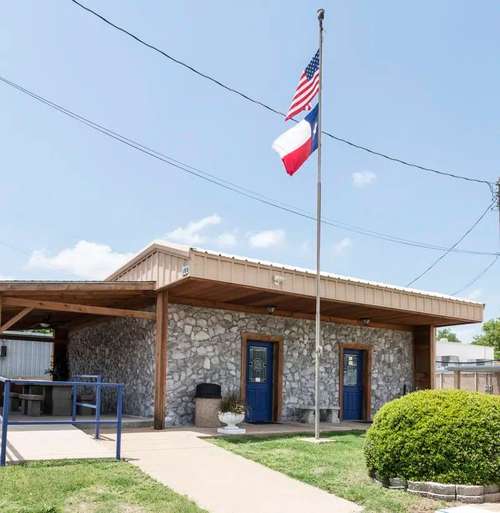
Tucked into the modest town of Grand Saline, Texas in Van Zandt County — about an hour east of Dallas — the Salt Palace stands as a one-of-a-kind testament to Texas’s salt-mining heritage and architectural whimsy. Rather than simply house a museum about salt, the building is built of salt. Massive blocks of pure rock salt form its façade and structure, creating an attraction that is as quirky as it is fascinating.
A Salt Story Rooted in Geology and History
The story begins long before the edifice went up. Beneath Grand Saline lies a massive salt dome formed when ancient seas receded and left behind thick deposits of sodium chloride. Native peoples including the Caddo People used the salt flats in the area as early as AD 800 for evaporation and trade. The modern salt industry arrived in the mid-19th century, and the town’s name “Grand Saline” reflects those subterranean riches.
In this setting, the Salt Palace is both a monument to and a promotional piece for the salt business. The current structure is actually the fourth version of the Salt Palace building; the very first one built in 1936 during the Texas Centennial was patterned after the Alamo. The version you see today was completed in 1993 and constructed using salt blocks sourced from the local dome.
Architecture That’s Literal Salt
When you arrive at the Salt Palace, you’re greeted by what looks like a modest, stone-looking building—but it isn’t stone. It’s salt. The translucent blocks reflect daylight with a soft glow. Inside and out, the surfaces invite — yes — touching and even tasting. The museum encourages visitors to lick the walls: the salt is safe, germ-resistant, and part of the experience.
The museum occupies the footprint of downtown Grand Saline at 100 West Garland Street. While the building itself isn’t large—its footprint has been described as about the size of a small gas station—its uniqueness gives it outsized appeal.
What to See Inside
Inside the Salt Palace you’ll find exhibits about the region’s salt-mining past, including artifacts, photos, and multimedia displays that document how salt shaped the economy and identity of the area. The museum doubles as a visitors’ center for the town, making it a good starting point if you’re exploring Grand Saline and the surrounding East Texas piney woods.
One of the quirky highlights: the admission is free, and you’re encouraged to walk up, examine the salt blocks, and yes, give them a taste—many visitors do. It’s not every day you get to lick a museum wall.
Why the Visit Matters
For those who care about Texas travel, the Salt Palace offers something special: it’s off-beat, authentic, and rooted in local geology and industry. It aligns well with the mission of sites like Texas Happens, which highlight lesser-known destinations, local history, and unique Texas culture.
Moreover, it tells a broader story: how a natural resource—salt—can shape a town, a building, and a sense of place. That makes it more than just an oddity: it’s a piece of heritage.
Planning Your Visit
If you’re heading out from the Dallas–Fort Worth area, Grand Saline is a manageable trip and makes a good stop on a regional day outing. The museum’s hours are roughly 9 a.m. to 4 p.m. Monday through Saturday (though you should check before you go).
Since the town is small, it’s worth combining your visit with a drive through the East Texas countryside or exploring nearby local businesses. Bring a camera: those salt-block walls glow in midday light and make for memorable photographs. Casual dress is fine—this is comfy, quirky Texas road-trip style.
Why It’s Worth the Detour
- Uniqueness. There is no other building like it, anywhere. As one article put it: “the only building in the world made of pure rock salt.”
- Taste-the-buildings. You’re literally encouraged to lick the walls—a fun and weird experience that makes memories.
- Geologic underpinning. The salt dome beneath Grand Saline is enormous—estimated to extend 20,000 feet deep.
- Local flavor. The Salt Palace is embedded in the community. Visiting helps you connect with East Texas beyond the major metro areas.
Final Thoughts
If you’re assembling a list of “weird and wonderful” Texas attractions—or simply looking for a memorable stop on a Texas road trip—the Salt Palace in Grand Saline deserves space on your itinerary. It delivers history, geology, architecture and adventure (yes, licking the wall) in one compact, enjoyable package.
Whether you’re a seasoned Texas explorer or simply someone looking for something different, this build-of-salt museum is a standout.

Comments (0)
No comments yet. Be the first to share your thoughts.
Leave a comment