



Texas Wesleyan University is a private university located in Fort Worth, Texas, with a history dating back to 1890. Originally established as Polytechnic College, the institution has undergone several transformations, including a period as a women's college before returning to coeducation. Today, Texas Wesleyan offers undergraduate and graduate programs while maintaining its historic Methodist affiliation and commitment to small classes and individualized education.
Key Takeaways
- Texas Wesleyan University was founded in 1890 by the Methodist Episcopal Church, South, under the original name Polytechnic College.
- The institution welcomed its first students in September 1891, with an initial enrollment of 111.
- Polytechnic College became Texas Woman's College in 1914 after church leaders selected Dallas for Southern Methodist University.
- In January 1989, the institution officially became Texas Wesleyan University.
- The university acquired a law school in 1992, which later became Texas A&M University School of Law in 2013.
- Texas Wesleyan offers undergraduate and graduate education with an emphasis on smaller classes and personalized instruction.
- The university maintains its affiliation with the United Methodist Church while welcoming students from different religious backgrounds.
History of Texas Wesleyan University
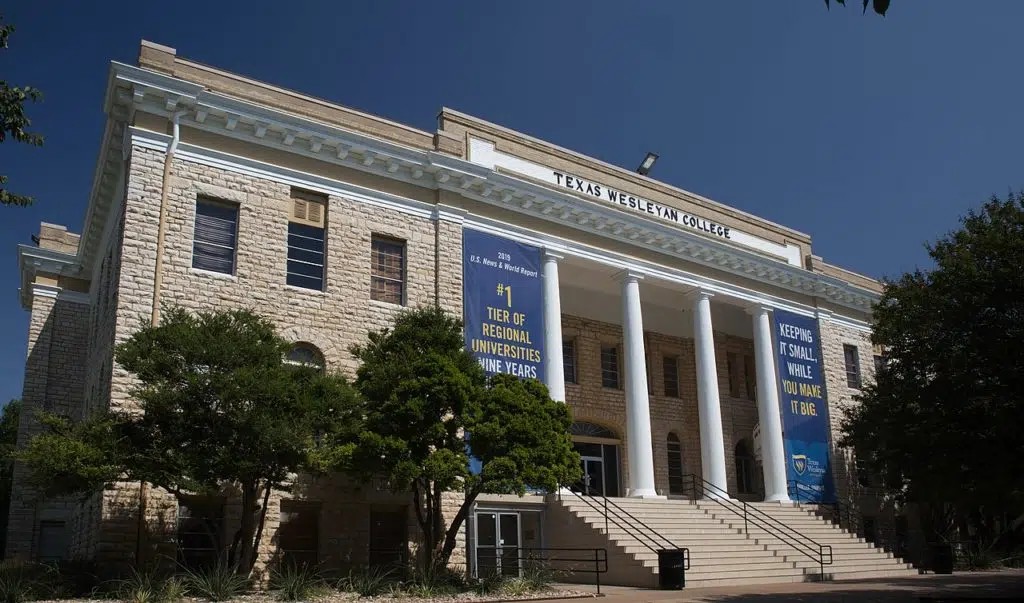
Texas Wesleyan University's history began in 1890 when the Methodist Episcopal Church, South, established Polytechnic College in Fort Worth. Bishop Joseph S. Key led a committee responsible for selecting a suitable location. Local pioneers A. S. Hall, W. D. Hall, and George Tandy donated land east of the city.
The college opened its doors in September 1891 with a small faculty and 111 students. Its name, Polytechnic, reflected the institution's intention to provide education across several fields of study. Early academic programs combined liberal arts instruction with religious education and practical learning.
In 1902, Hiram A. Boaz became college president and oversaw a period of institutional growth. He envisioned transforming Polytechnic College into a major Methodist university. Although that particular ambition was never realized in Fort Worth, the institution continued developing its educational programs and campus facilities.
How Polytechnic College Became Texas Woman's College
During the early twentieth century, Methodist leaders considered establishing a major university in the Southwest. Polytechnic College was initially discussed as a possible location. However, church officials ultimately selected Dallas, leading to the establishment of Southern Methodist University.
Following this decision, the Fort Worth institution underwent a significant transformation. In 1914, Polytechnic College became Texas Woman's College, concentrating on higher education for women. The new identity reflected the Methodist Church's commitment to providing educational opportunities for young women throughout the region.
Texas Woman's College attracted students from communities across Texas and neighboring states. Its academic programs emphasized liberal arts, education, and cultural development. Despite facing financial challenges, the institution continued serving students and became an established part of Fort Worth's educational landscape.
How the College Survived the Great Depression
The Great Depression created serious financial difficulties for Texas Woman's College. Declining enrollment and limited institutional resources threatened its ability to continue operating. In 1931, the board of trustees voted to close the school, although efforts to preserve the institution continued.
A merger with Texas Wesleyan Academy in Austin eventually provided a path toward financial stability. In 1934, trustees authorized the return to coeducation, and the institution formally became Texas Wesleyan College in 1935. Male students were readmitted that same year.
The reorganization allowed the college to broaden its student population and continue providing liberal arts education. Returning to coeducation also created opportunities for institutional growth. Texas Wesleyan College subsequently expanded its academic offerings while retaining the Methodist educational traditions established during its earliest years.
The Transition to Texas Wesleyan University in 1989
During the decades following World War II, Texas Wesleyan College expanded its academic programs and campus facilities. The institution strengthened its undergraduate offerings while developing opportunities for advanced education. Graduate programs in education were introduced during the 1970s, followed by nurse anesthesia programs in the 1980s.
Campus development also reflected the college's commitment to Fort Worth. Although administrators considered relocating to another part of the city, the institution ultimately remained in the historic Polytechnic Heights neighborhood. Construction of the Eunice and James L. West Library represented an important investment in its existing campus.
As academic programs expanded, university officials recognized that the institution had developed beyond its original college structure. Trustees approved a name change that became effective in January 1989. Texas Wesleyan University has continued operating under that name while maintaining its historical connections to the surrounding community.
Texas Wesleyan University's Former School of Law
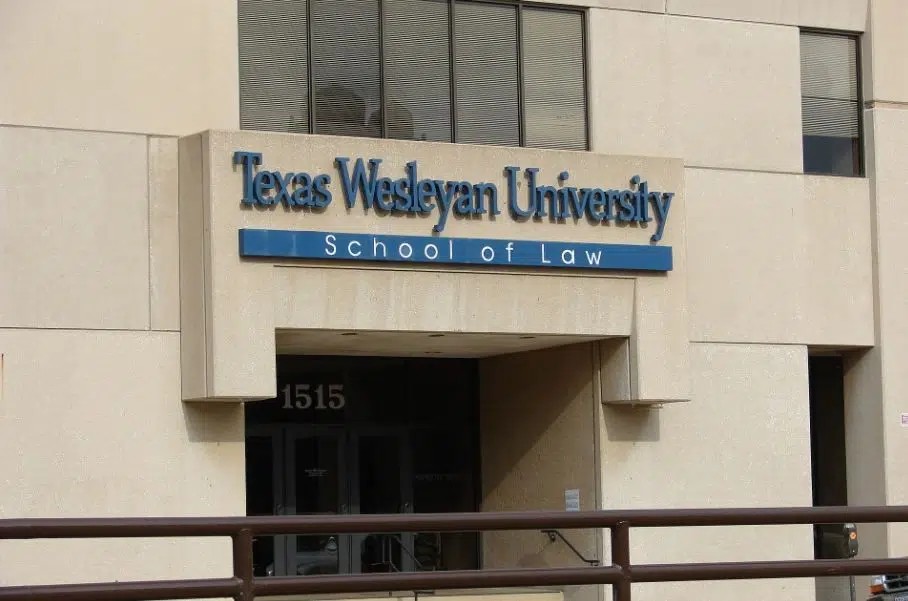
Texas Wesleyan University expanded into legal education in 1992 when it acquired the Dallas/Fort Worth School of Law. The school had originally opened in Irving, Texas, in 1989. Its acquisition allowed Texas Wesleyan to introduce professional legal education alongside its existing undergraduate and graduate programs.
In 1997, the university relocated its law school to downtown Fort Worth. The new location provided students with access to the city's legal community and professional opportunities. The school subsequently received full accreditation from the American Bar Association in 1999.
In August 2013, Texas A&M University acquired the law school from Texas Wesleyan. The institution was renamed Texas A&M University School of Law and continued operating in Fort Worth. Following the acquisition, Texas Wesleyan no longer offered its own law degree program, but retained its other academic and professional programs.
Academic Programs at Texas Wesleyan University
Texas Wesleyan University offers undergraduate programs across disciplines including business, education, natural sciences, social sciences, humanities, and the arts. Students can pursue degrees designed to prepare them for professional careers, graduate education, and other academic opportunities. The university emphasizes analytical reasoning, communication, and problem-solving.
Graduate offerings include business administration, education, counseling, computer science, and nursing-related programs. The university's nurse anesthesia program is especially notable for its national reach. Other advanced programs include doctoral studies in education, marriage and family therapy, and nursing practice.
The university also provides preparation for students pursuing specialized careers. Academic advising and pre-professional coursework support students interested in fields such as medicine, dentistry, and law. Through its combination of liberal arts and professional education, Texas Wesleyan aims to develop graduates with practical knowledge and transferable skills.
Small Class Sizes and Student Learning Experiences
One defining characteristic of Texas Wesleyan University is its emphasis on smaller classes. University information lists an average class size of 16 students and a student-to-faculty ratio of approximately 16:1. These figures reflect its approach to maintaining a relatively personal academic environment.
Smaller classrooms can provide opportunities for discussion, collaboration, and individual interaction with instructors. Texas Wesleyan encourages students to develop critical thinking, communication, and analytical skills through academic assignments and classroom participation. Faculty members also assist students with educational planning and academic development.
Beyond traditional classroom instruction, students can participate in internships, research activities, and experiential learning opportunities. The university offers academic support services and extracurricular programs that complement formal education. These experiences are intended to help students develop practical skills while preparing for employment or further study.
Texas Wesleyan University's Methodist Heritage and Campus Life
Texas Wesleyan University has maintained a connection to Methodism since its founding in 1890. Today, the university remains affiliated with the United Methodist Church and maintains relationships with Methodist congregations. Some members of its governing board represent the church, preserving links to the institution's religious heritage.
Although Texas Wesleyan has Methodist roots, it welcomes students from different religious and cultural backgrounds. Its educational environment emphasizes inclusivity, community participation, and personal development. The university's mission reflects a combination of academic achievement, ethical responsibility, and service to others.
The university's main campus remains in Fort Worth's Polytechnic Heights neighborhood, preserving its long-established connection to the surrounding community. Student organizations, athletic programs, and campus activities contribute to university life. More than 135 years after its founding, Texas Wesleyan continues balancing its historical traditions with contemporary educational opportunities.

Comments (0)
No comments yet. Be the first to share your thoughts.
Leave a comment