


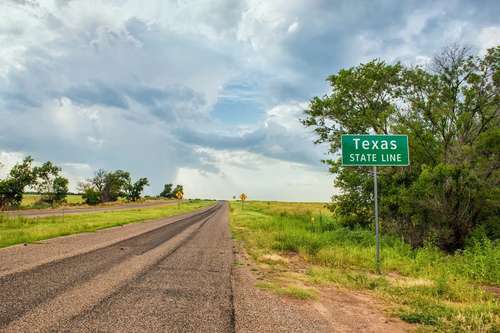
When people think about Route 66, they often picture Arizona deserts, California palm trees, or neon-lit diners in New Mexico. What gets overlooked is how deeply the highway shaped the Texas Panhandle. In this wide-open stretch of land, Route 66 was not just a road. It was an economic engine, a lifeline for small towns, and a reason many of them existed at all.
Route 66 entered Texas near the Oklahoma border and crossed the Panhandle for just over 170 miles. That short distance packed a long list of towns whose growth, survival, and identity became tied to the steady flow of travelers heading west or east. Gas stations, cafes, motor courts, and repair shops popped up almost overnight. For decades, the highway kept these towns alive.
This article explores the Texas Panhandle towns that were built or transformed by Route 66. Each one has its own story, shaped by geography, timing, and the people who took a chance on a road that promised opportunity.
Route 66 Comes to the Texas Panhandle
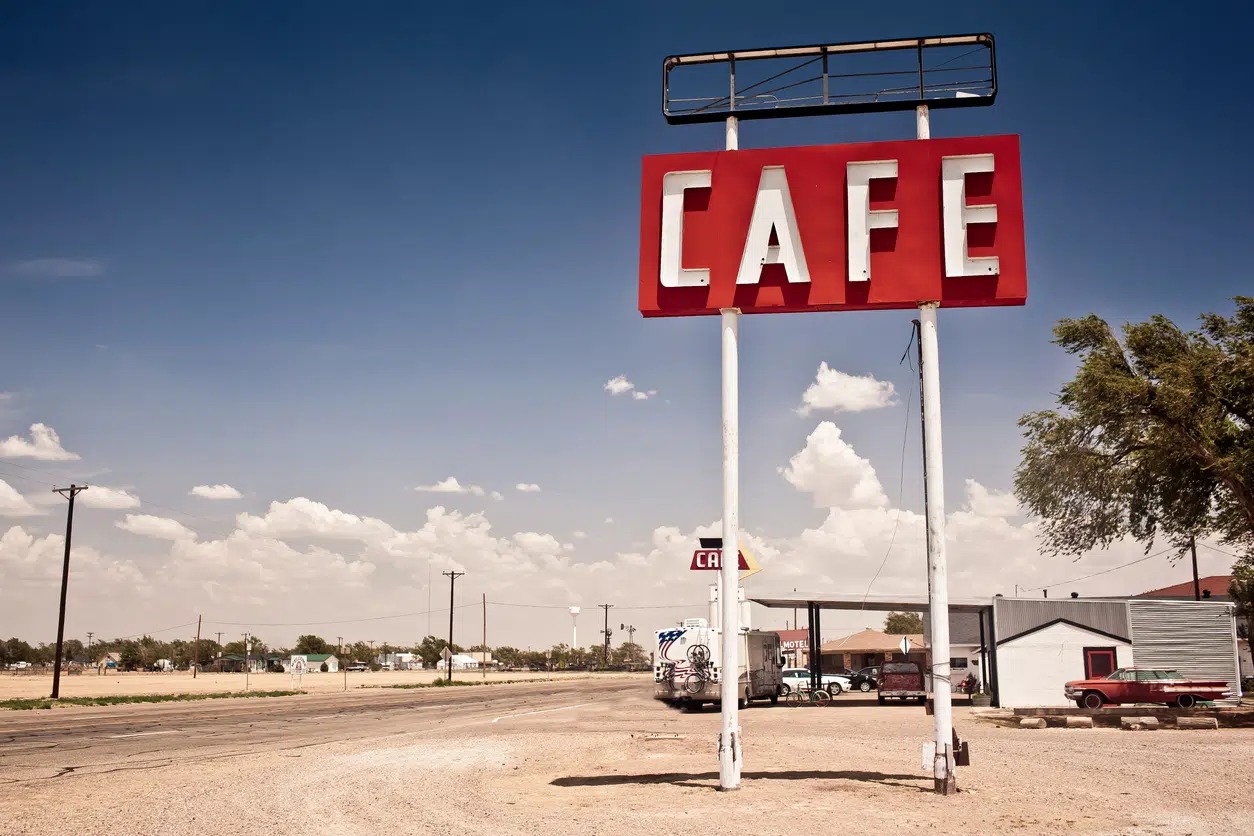
Before Route 66 was officially designated in 1926, the Texas Panhandle already had railroads, ranching communities, and farming towns. What it lacked was a reliable east to west automobile route. Early travelers followed dirt roads that changed with the weather and offered few services.
When Route 66 was laid out, it followed existing roads where possible. In the Panhandle, this meant upgrading paths that ran parallel to the Rock Island Railroad. Towns along the rail line suddenly found themselves on a major national highway. For others, the new road created opportunities where little existed before.
The result was a chain of towns that grew alongside the pavement. Some boomed quickly. Others developed slowly but steadily. All were shaped by the movement of people, goods, and ideas flowing through the Panhandle.
Shamrock: A Symbol of Route 66 Texas
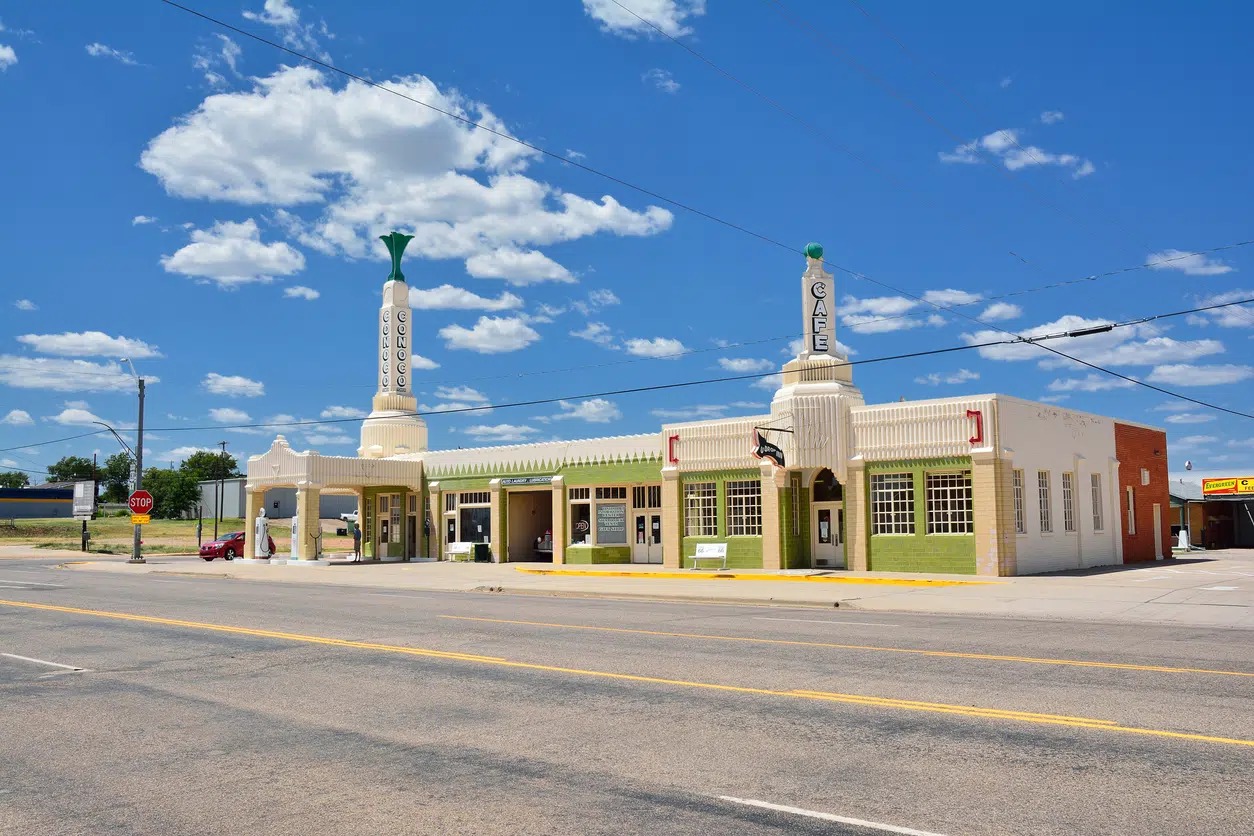
Shamrock is one of the most recognizable Route 66 towns in Texas. Founded in the early 1900s as a railroad stop, it truly came into its own once Route 66 arrived.
The town embraced travelers with enthusiasm. Gas stations lined the road. Cafes served hearty meals to families heading west. Motor courts offered clean beds and a sense of safety after long hours on the road.
Shamrock’s most famous landmark is the U Drop Inn, built in 1936. Designed in an Art Deco style, it combined a gas station, café, and garage into one striking building. It was modern, eye-catching, and perfectly placed to draw in motorists.
Even today, Shamrock leans into its Route 66 identity. The town hosts events, preserves historic buildings, and welcomes visitors who want to experience a classic roadside stop. Route 66 did not just pass through Shamrock. It gave the town a personality that still defines it.
McLean: Small Town, Big Role
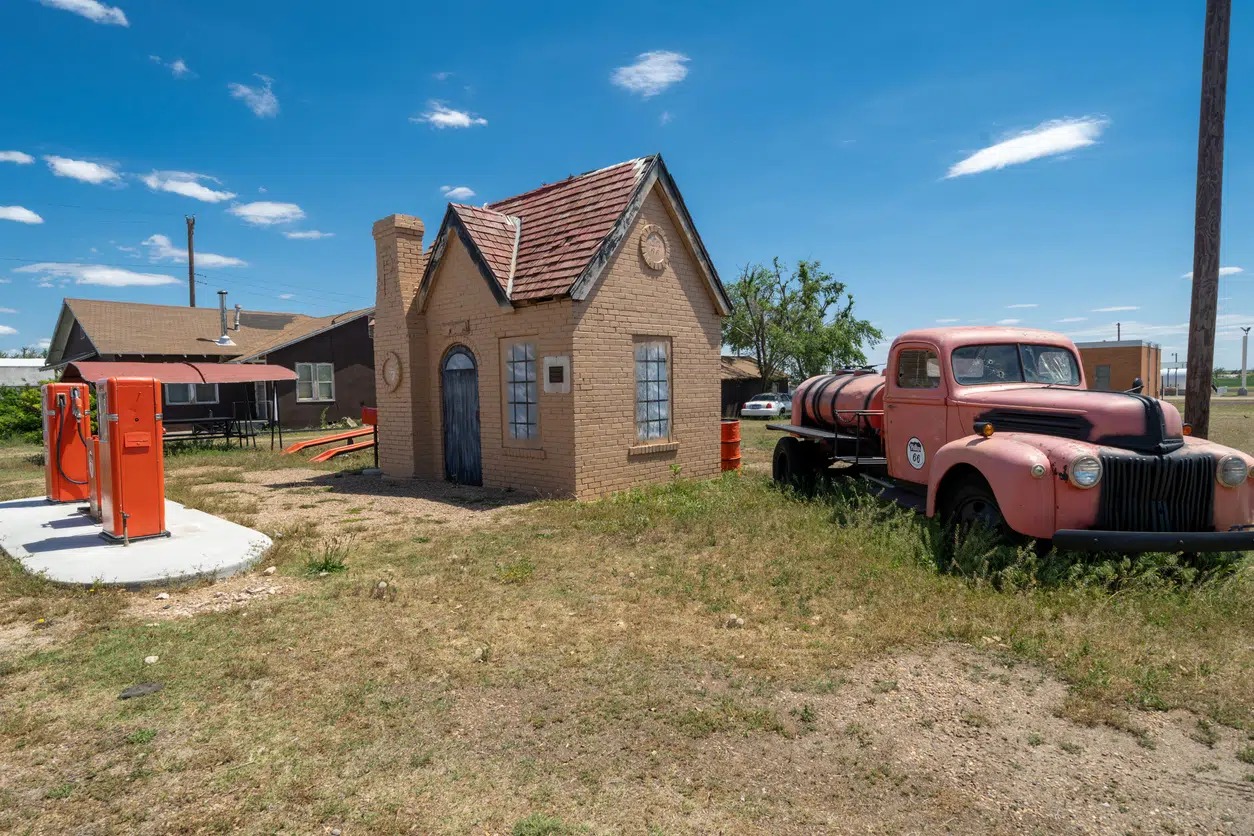
McLean sits east of Amarillo and developed around the railroad in the early 1900s. When Route 66 followed the tracks, the town found itself positioned as an important stop for travelers entering or leaving Texas.
McLean became known for its service businesses. Gas stations, tire shops, and cafes catered to drivers dealing with long distances and rough roads. The town also benefited from nearby ranching and farming, which kept the local economy steady.
One of McLean’s lasting contributions to Route 66 history is the Devil’s Rope Museum. While focused on barbed wire, the museum reflects the broader story of settlement and travel in the Panhandle. Route 66 brought visitors who might never have stopped otherwise, giving McLean a chance to share its story.
Although smaller than many Route 66 towns, McLean shows how even modest communities could thrive when positioned along the highway.
Amarillo: The Panhandle’s Route 66 Hub
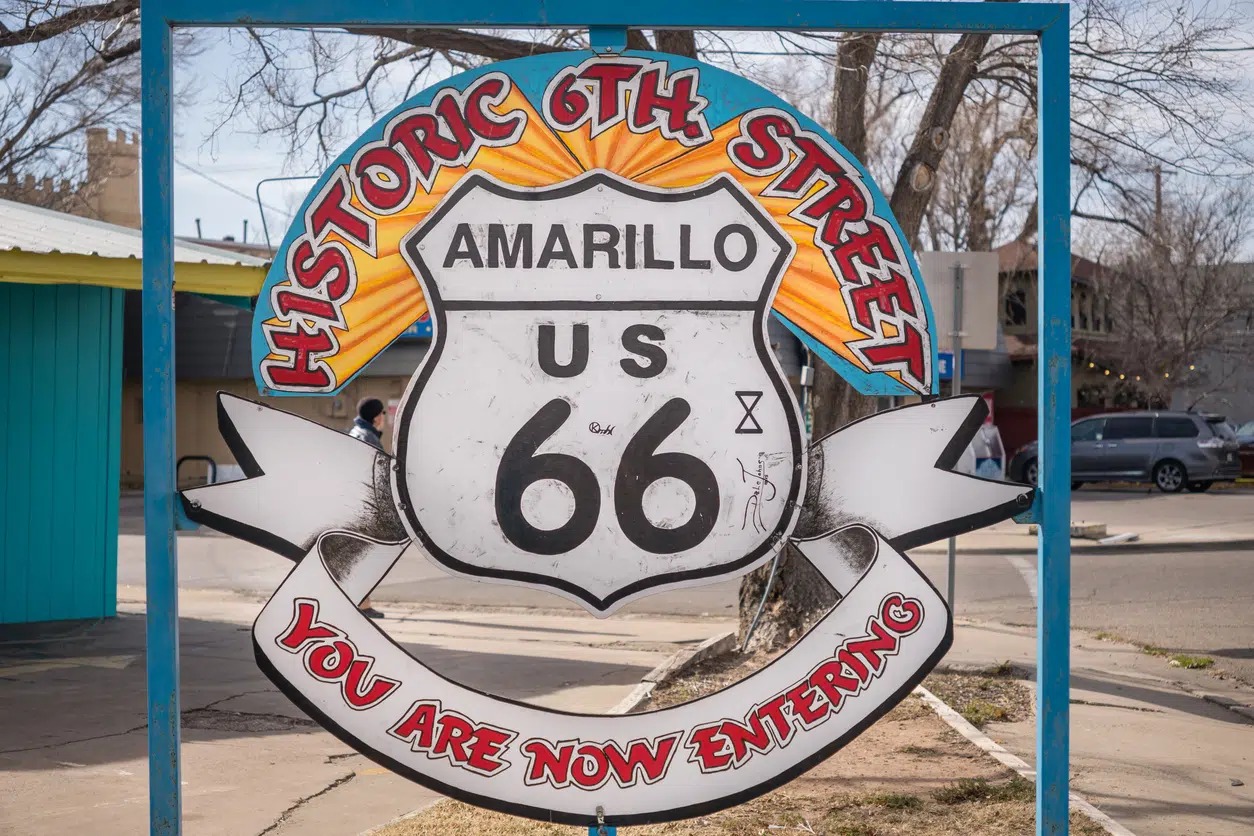
Amarillo was already a growing city before Route 66 arrived, thanks to railroads, cattle, and oil. The highway took that growth to another level.
Route 66 cut straight through Amarillo, turning it into the largest service center in the Texas Panhandle. Travelers could find everything they needed here, from hospitals and hotels to car dealerships and entertainment.
Restaurants flourished along the route. Steakhouses became a local specialty, serving meals that matched the region’s ranching reputation. Motor courts ranged from simple cabins to larger, more comfortable lodgings.
Amarillo also became a cultural crossroads. People from across the country passed through, bringing new ideas and influences. Music, fashion, and business trends followed the traffic.
Even after Interstate 40 bypassed much of old Route 66, Amarillo remained a major city. Still, the historic route is visible in neighborhoods, old motels, and surviving businesses that trace their roots to the highway era.
Vega: A Quiet Stop with Deep Roots
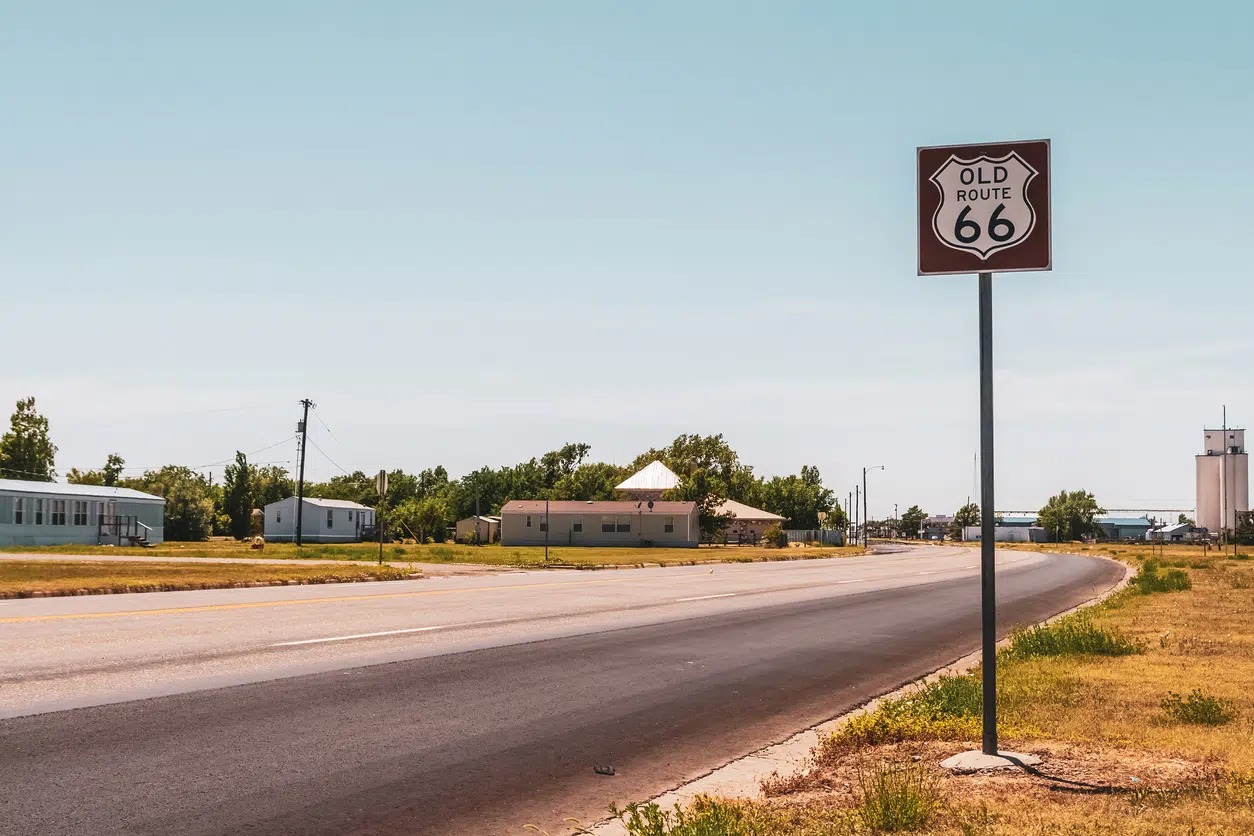
Vega sits west of Amarillo and played a quieter but important role along Route 66. Originally a railroad town, Vega became a reliable stop for fuel, food, and rest.
The town’s location made it a natural break point for travelers tackling the wide, open stretches of the Panhandle. Local businesses focused on practicality. Gas stations stayed open late. Cafes served simple, filling meals. Motels offered clean rooms without frills.
Vega never aimed to be flashy. Its strength came from consistency. Travelers knew what to expect, and that trust kept traffic flowing through town for decades.
Today, Vega still reflects the calm, steady character that defined its Route 66 years. The highway helped the town grow, but it never overwhelmed its small-town feel.
Adrian: The Midpoint of Route 66
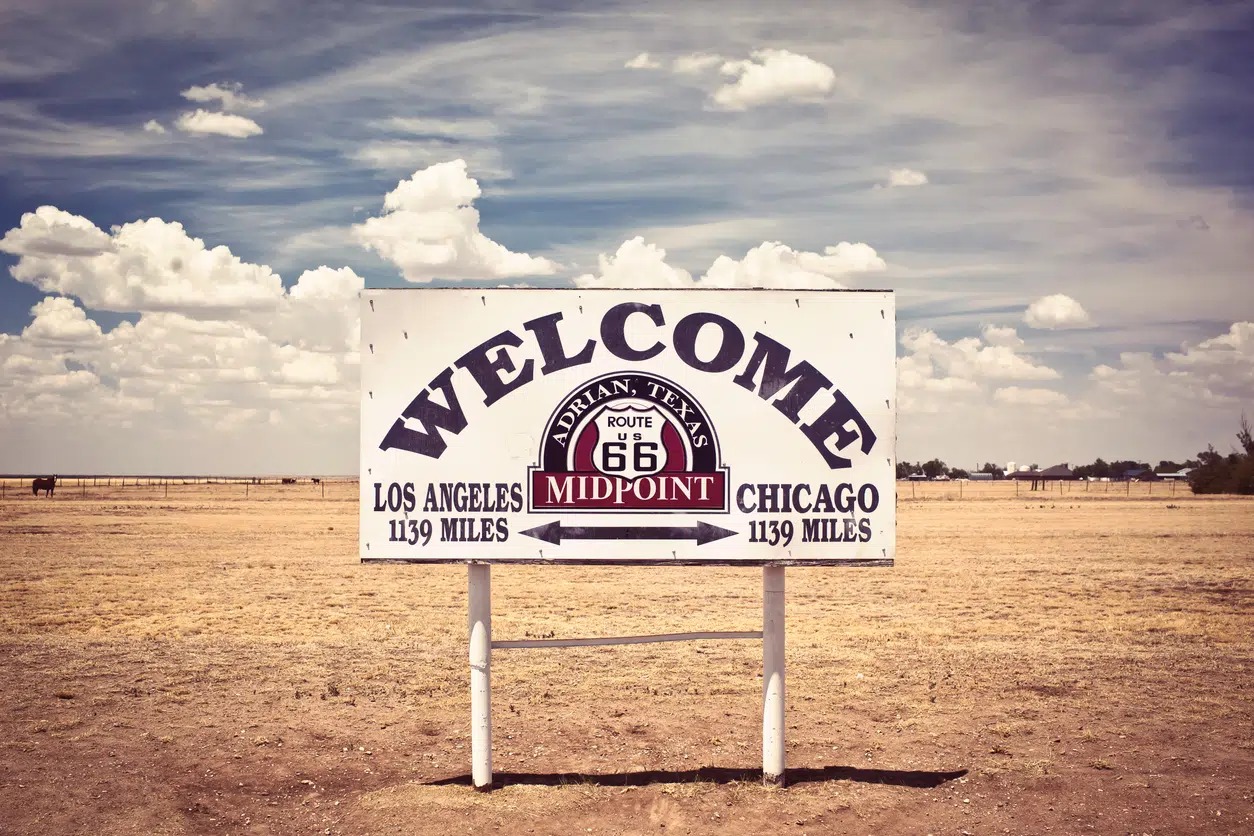
Adrian holds a unique place in Route 66 history as the midpoint of the entire highway. Located halfway between Chicago and Los Angeles, the town embraced this distinction.
Adrian existed before Route 66, but the highway gave it national recognition. Travelers often stopped to take photos, rest, and enjoy a meal at the Midpoint Café, which became a famous landmark.
The café offered homemade food and a welcoming atmosphere that appealed to road-weary drivers. Its pies gained a reputation that spread far beyond the Panhandle.
Because of its small size, Adrian depended heavily on Route 66 traffic. When the interstate diverted travelers, the town faced challenges. Still, its midpoint status continues to draw visitors who want to stand at the center of a legendary road.
Adrian shows how a single geographic fact, combined with Route 66, could define a town’s identity.
Groom: Built Around the Roadside Stop
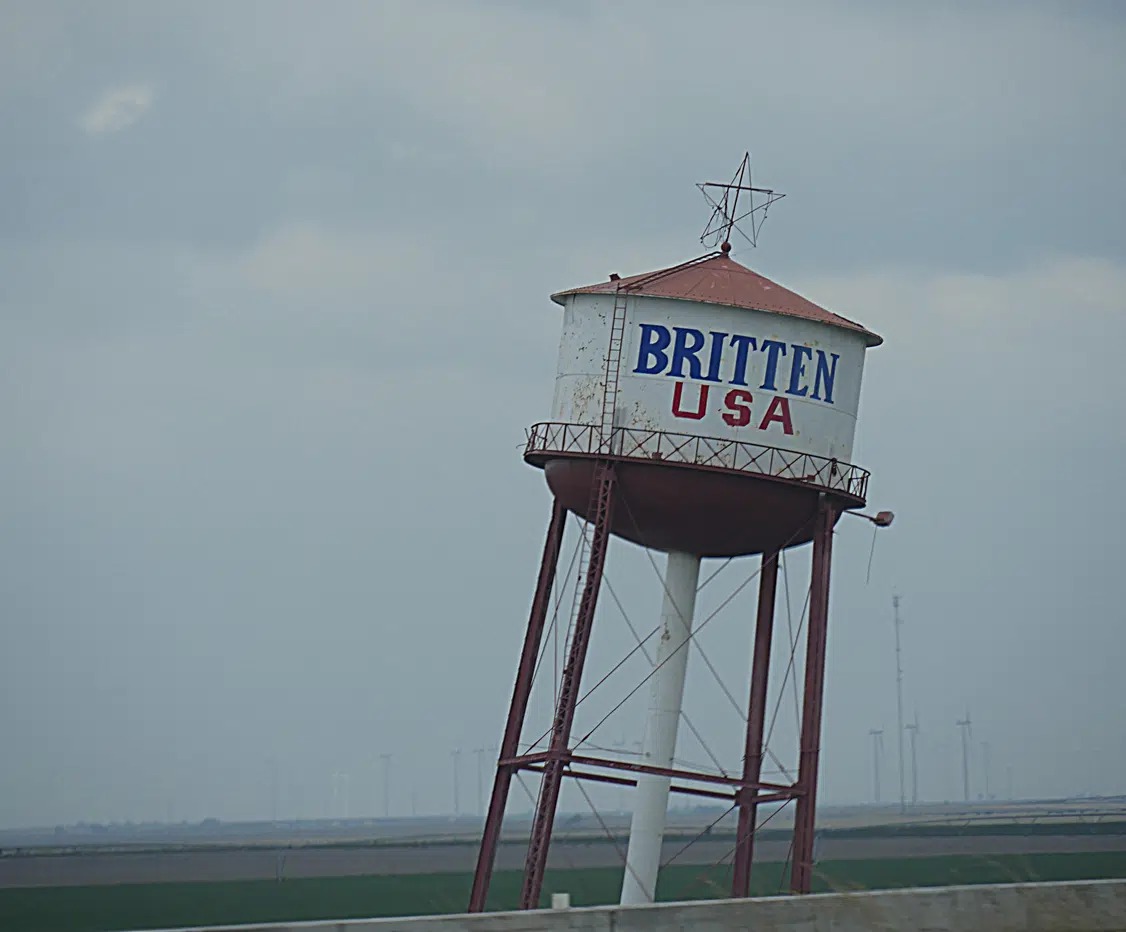
Groom developed as a railroad town, but Route 66 transformed it into a roadside destination. Its location made it a convenient stop for fuel and rest just east of Amarillo.
One of Groom’s most notable features is the towering cross near the highway, built decades after Route 66’s peak but still tied to the tradition of serving travelers. Earlier businesses included gas stations, cafes, and small motels designed to catch the attention of passing drivers.
Groom’s economy balanced local needs with tourist traffic. Farmers and ranchers used the same services as travelers, creating a steady customer base.
The town remains small, but its roadside presence continues. Route 66 helped Groom establish itself as a place people remembered rather than passed without notice.
Conway: A Community Sustained by Movement
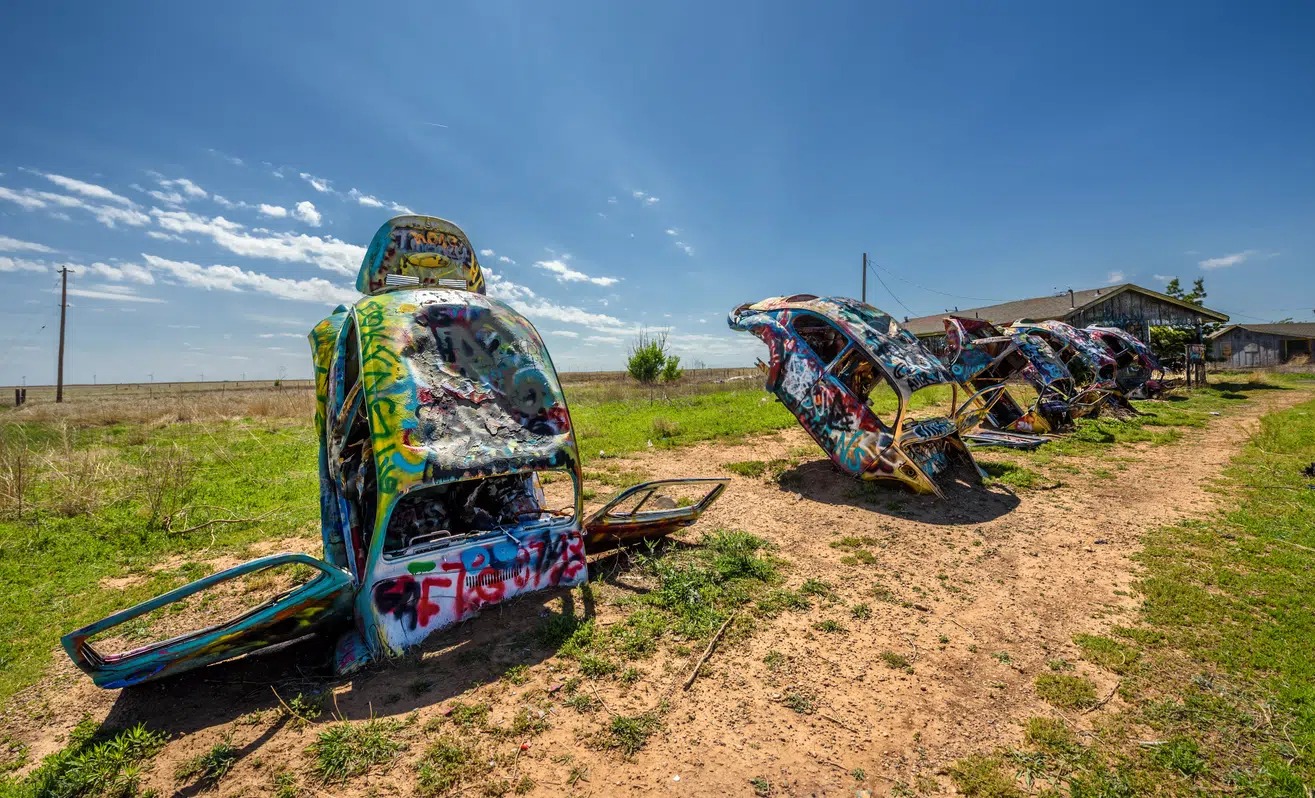
Conway is one of the smallest towns along Route 66 in Texas, yet it played a role in the highway’s story. Located between Amarillo and Groom, Conway served travelers looking for quick stops rather than overnight stays.
Gas pumps, cafes, and repair shops handled the basics. The town never tried to compete with larger neighbors. Instead, it focused on being reliable and accessible.
For local residents, Route 66 provided access to markets, supplies, and opportunities beyond the Panhandle. For travelers, Conway offered a moment of connection in a vast landscape.
Though traffic has decreased, the town remains a reminder that Route 66 supported communities of all sizes.
The Businesses That Built These Towns
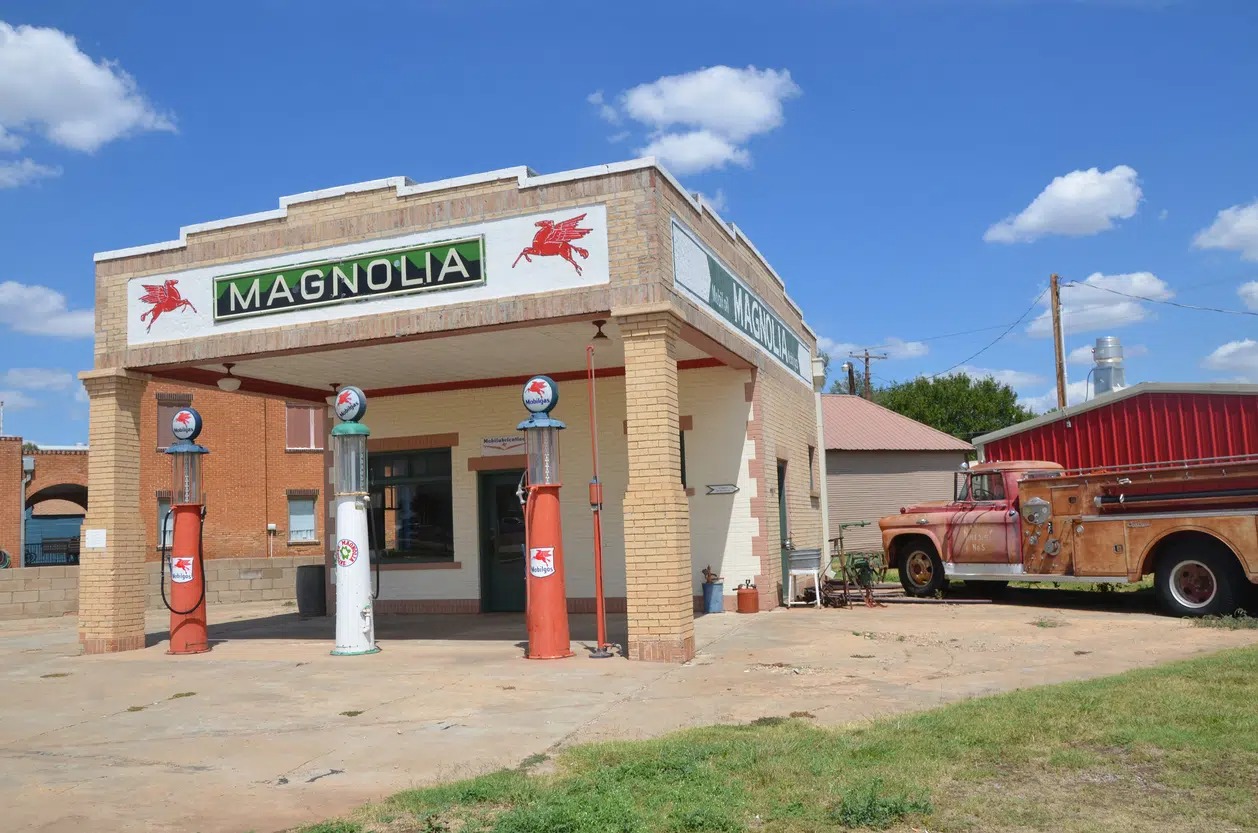
Across the Texas Panhandle, Route 66 shaped towns through a common set of businesses. Gas stations were often the first to appear, followed by cafes and motor courts. Repair shops handled flat tires and overheated engines. Small grocery stores stocked snacks and supplies.
Many of these businesses were family-run. Owners lived behind or near their shops, working long hours to serve travelers at all times of day. Their success depended on reputation and word of mouth.
Architecture also reflected the highway’s influence. Bright signage, modern designs, and roadside visibility became priorities. Buildings were meant to be seen from a distance and remembered after travelers moved on.
These businesses created jobs, attracted residents, and gave towns reasons to grow. Route 66 was not just a road through these communities. It was their main street.
Life Along the Highway
Living along Route 66 meant constant motion. Residents grew accustomed to seeing license plates from every state. Accents, clothing styles, and music changed with the traffic.
Children watched cars roll by and dreamed of distant places. Adults heard stories from travelers and learned about life beyond the Panhandle. The highway connected small towns to a wider world.
At the same time, Route 66 brought challenges. Accidents happened. Weather could shut down travel. Economic shifts affected traffic patterns. Towns had to adapt quickly to survive.
Still, the sense of connection created by the highway left a lasting mark. Many residents remember Route 66 as a time when their towns felt important on a national scale.
The Impact of Interstate 40
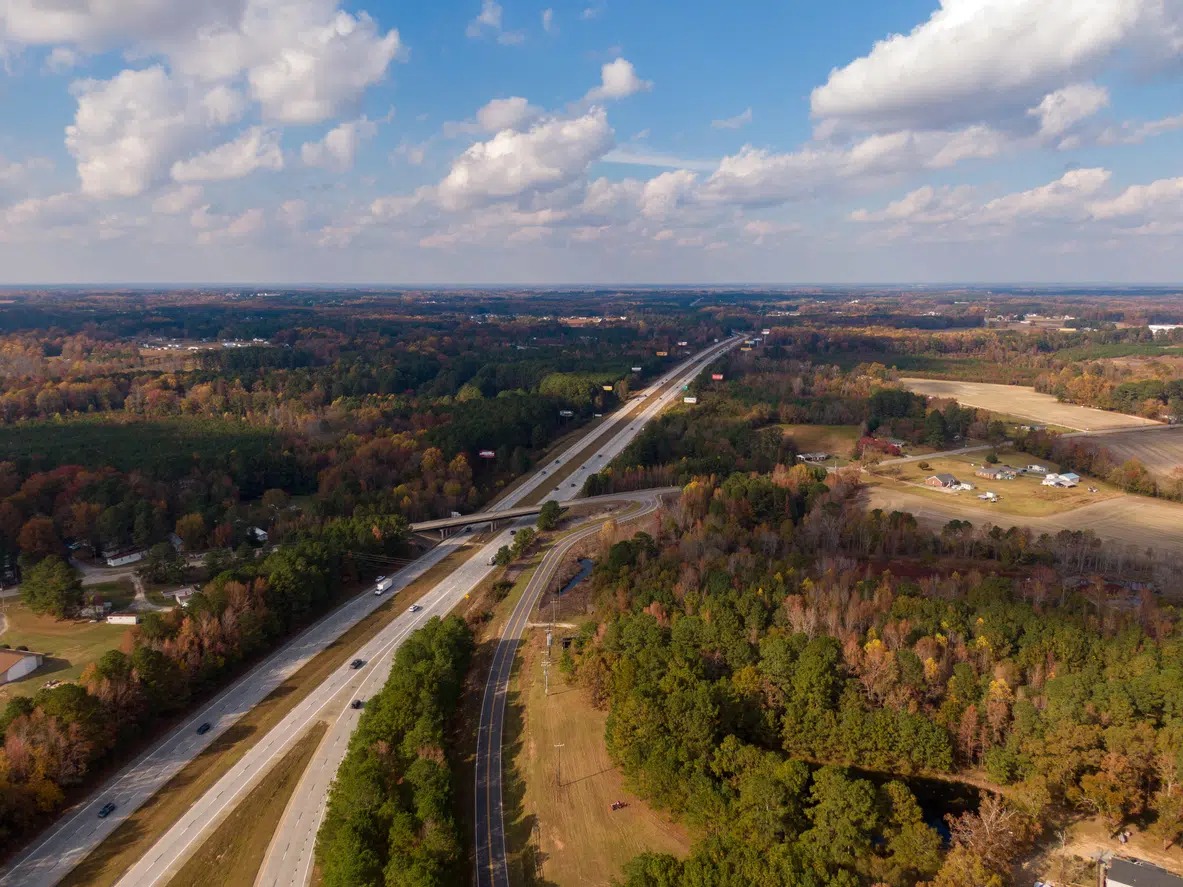
The construction of Interstate 40 in the 1950s and 1960s changed everything. The new highway bypassed many Route 66 towns, diverting traffic away from their main streets.
Some towns adapted by building businesses near the interstate. Others struggled as customer numbers dropped sharply. Motels closed. Cafes shut their doors. Gas stations fell into disuse.
Amarillo managed the transition more easily due to its size. Smaller towns like Adrian and McLean faced harder adjustments.
Despite these challenges, Route 66 never disappeared completely. Its legacy remained in buildings, memories, and the growing interest in historic travel.
Preservation and Revival
In recent decades, Route 66 has seen a revival driven by tourism and nostalgia. Visitors from around the world seek out the original road, looking for authentic experiences and local stories.
Texas Panhandle towns have embraced this renewed interest in different ways. Some restored historic buildings. Others opened museums or hosted festivals. Even simple roadside markers help travelers understand the highway’s past.
Shamrock’s U Drop Inn restoration stands as a strong example of preservation done right. Adrian’s Midpoint Café continues to draw visitors. McLean’s museum offers context and education.
These efforts do not recreate the past exactly, but they honor it. They keep Route 66 relevant while supporting local economies.
Why These Towns Matter Today
The Texas Panhandle towns built by Route 66 matter because they tell a broader story about mobility, opportunity, and change. They show how a single road can shape communities, economies, and identities.
Route 66 brought national attention to places that might otherwise have remained isolated. It encouraged entrepreneurship and cultural exchange. It connected rural Texas to a larger narrative of American travel.
Even as traffic patterns change, these towns remain tied to the highway that helped build them. Their stories add depth to the legend of Route 66 and remind us that the road’s impact reached far beyond major cities.
Final Thoughts
Route 66 may only cross a small portion of Texas, but its influence on the Panhandle runs deep. From Shamrock’s iconic architecture to Adrian’s midpoint fame, the highway shaped towns in lasting ways.
These communities grew because people stopped, stayed, and shared moments along the road. Today, they stand as living reminders of a time when travel felt personal and the journey mattered as much as the destination.
Exploring the Texas Panhandle through the lens of Route 66 offers more than history. It offers insight into how roads build towns, connect people, and leave marks that last long after the traffic moves on.

Comments (0)
No comments yet. Be the first to share your thoughts.
Leave a comment