


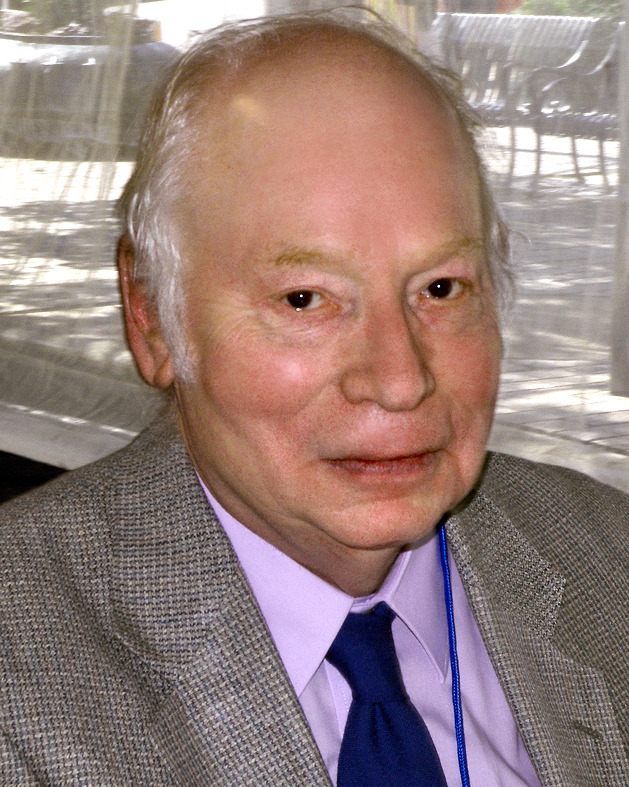
Image: Larry D. Moore, Steven weinberg 2010, CC BY 4.0
Renowned physicist Steven Weinberg transformed theoretical physics by unifying the weak nuclear force with electromagnetic interactions and contributing to the Standard Model, which classifies fundamental forces and particles.
Winning the 1979 Nobel Prize, he mentored future leaders and made science accessible through his writings. A reflection of his influence, Weinberg’s work continues to inspire new generations. Discover how his groundbreaking ideas changed scientific understanding and education.
Pioneering Contributions to Theoretical Physics
Although the field of theoretical physics can seem complex, Steven Weinberg’s groundbreaking work helped bring clarity and deeper insight.
As a professor at the University of Texas at Austin, Weinberg developed the electroweak theory, elegantly unifying electromagnetic and weak nuclear forces. This crucial work formed the basis of the Standard Model of particle physics, which classifies the universe’s most fundamental particles and forces.
You’d be amazed to learn that his insights helped support the development of the Higgs mechanism, which explains how particles acquire mass.
Weinberg also made important contributions to quantum field theory and cosmology, especially in understanding the early universe.
His efforts not only earned him the Nobel Prize in Physics but also reshaped our understanding of the cosmos.
Nobel Prize and Other Prestigious Recognitions
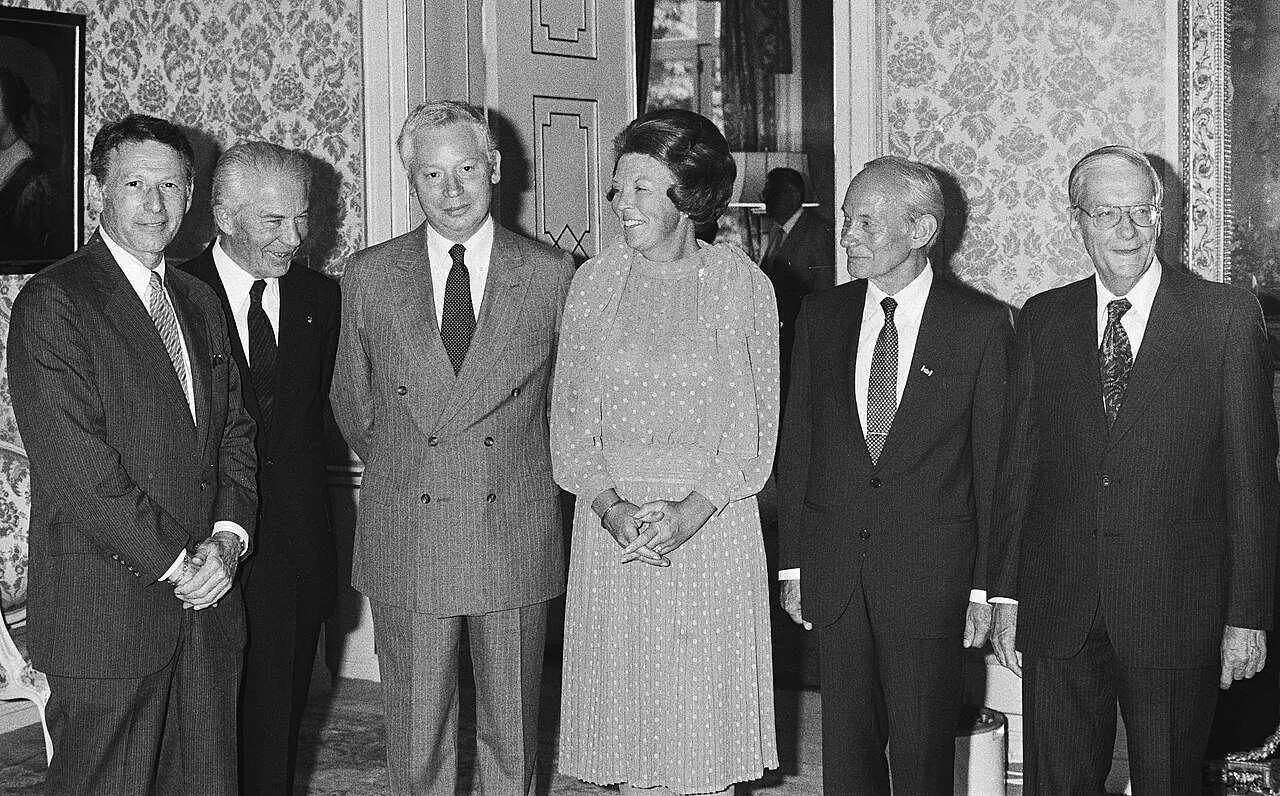
Image: Croes, Rob C. for Anefo, Queen Beatrix meets Nobel Laureates in 1983b, CC BY-SA 3.0 NL
Winning the 1979 Nobel Prize in Physics was a defining moment for Steven Weinberg, recognizing his central role in unifying the weak nuclear force and electromagnetic interaction into the electroweak theory.
He shared the honor with Abdus Salam and Sheldon Glashow, whose independent but related work contributed to this revolutionary advancement in physics.
Weinberg’s esteemed career continued with the 1991 National Medal of Science, awarded for his profound scientific contributions.
You’d be impressed by his eloquence, too—he received the Lewis Thomas Prize for the Scientist as Poet in 1999.
His extraordinary work was further recognized with the 2020 Breakthrough Prize in Fundamental Physics.
Elected to both the National Academy of Sciences and The Royal Society, Weinberg’s global influence remains unmatched.
Impact on Science Education and Public Engagement
Steven Weinberg’s achievements extended far beyond the lab; they fueled his passion for science communication and education. He demystified advanced science in his acclaimed book, The First Three Minutes, making cosmology approachable to the public.
At the University of Texas, he founded the Theory Group, which became a hub for cutting-edge physics research and mentorship.
His legacy extends through three major efforts:
- Public Engagement: He gave influential lectures and wrote extensively to emphasize science’s value and the need for educational funding.
- Scientific Advocacy: Weinberg championed the Superconducting Super Collider, advocating for ambitious scientific infrastructure.
- Institutional Legacy: The Weinberg Institute for Theoretical Physics and future lectureships at UT ensure his vision continues to shape physics research.
Personal and Academic Journey
Born on May 3, 1933, in New York City, Steven Weinberg embarked on a remarkable academic path that would leave a lasting mark on theoretical physics.
He studied at the prestigious Bronx High School of Science, an institution renowned for producing Nobel laureates. He earned his undergraduate degree from Cornell University in 1954 and completed his Ph.D. at Princeton University in 1957.
Weinberg’s academic appointments included posts at Columbia University, UC Berkeley, MIT, and Harvard, before joining the University of Texas at Austin, where he held the Jack S. Josey-Welch Foundation Chair in Science.
There, his work on electroweak interactions and the Standard Model revolutionized our understanding of particle physics.
Weinberg also authored several popular science books, making his complex field accessible to lay audiences.
Legacy and Lasting Influence on Future Generations
While the universe of theoretical physics can seem abstract, Steven Weinberg’s legacy makes it more tangible and inspiring for generations to come. His critical role in building the Standard Model, particularly the unification of weak and electromagnetic forces, forms a foundation of modern physics.
Here are three highlights of his enduring influence:
- Mentorship: At UT Austin, he trained a generation of physicists who now lead research around the world.
- Public Writing: Through books like The First Three Minutes, he sparked curiosity and understanding in countless readers.
- Science Advocacy: His efforts to promote funding and public awareness of research highlighted the need for continued investment in scientific discovery.
Steven Weinberg’s legacy lives on through his students, his writings, and the continuing impact of his revolutionary ideas.

Comments (0)
No comments yet. Be the first to share your thoughts.
Leave a comment