


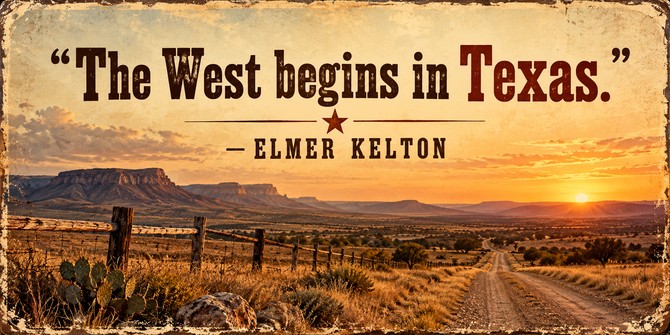
The American West has long been associated with vast landscapes, cattle ranches, open plains, and the independent spirit of frontier communities. Texas holds an important place in this history, serving as a geographical and cultural connection between the American South and the Western frontier.
The statement attributed to Elmer Kelton suggests that Texas represents a starting point for the traditions, landscapes, and experiences commonly associated with the American West.
More than a description of geography, the quote reflects the state's historical role in shaping Western culture. From its cattle drives and ranching heritage to its distinctive landscapes, Texas helped establish many of the images that people continue to associate with the West.
Texas and the Origins of Western Culture
During the nineteenth century, Texas became an important center of cattle ranching and livestock commerce. Following the Civil War, large cattle drives carried Texas longhorns northward along routes such as the Chisholm Trail.
These journeys helped establish the cowboy as one of the most recognizable figures in American Western history.
Texas ranching traditions developed through a combination of influences, particularly the skills and practices of Spanish and Mexican vaqueros. Their methods of horseback riding, cattle handling, and ranch management became essential parts of the cowboy culture that later spread throughout the American West.
This history helps explain why Texas is so closely connected to the development of Western traditions.
Elmer Kelton's Understanding of the American West
Elmer Kelton was an acclaimed Texas novelist known for his realistic portrayals of ranching life, frontier communities, and the changing American West.
Born in Andrews County, Texas, in 1926, Kelton grew up with firsthand knowledge of the ranching industry. His experiences influenced novels such as The Time It Never Rained and The Good Old Boys, which examined the challenges, responsibilities, and personal relationships of people living in rural Texas.
Unlike many romanticized Western stories, Kelton's writing often emphasized the practical difficulties of ranching, including drought, economic uncertainty, and changing social conditions.
The quote reflects themes closely associated with his work, particularly the importance of Texas in understanding the history and cultural identity of the American West.
The Landscapes That Define Western Texas
The western regions of Texas provide some of the state's most recognizable frontier scenery. Expansive plains, rugged mountains, desert valleys, and remote ranchlands create environments strongly associated with the traditional American West.
The Big Bend region, Davis Mountains, and wide-open areas of the Texas Panhandle illustrate the geographic diversity of this landscape.
These environments influenced settlement patterns, transportation, agriculture, and the everyday experiences of people who lived and worked in the region.
For generations, the scale and character of these landscapes have inspired writers, artists, filmmakers, and travelers interested in the history of the West.
The Spirit of Independence in Western Traditions
The American West is frequently associated with independence, determination, and the ability to adapt to demanding conditions.
Texas ranchers, cowboys, and frontier communities often relied on practical knowledge, hard work, and cooperation to overcome challenges. Managing livestock, traveling long distances, and maintaining isolated ranches required considerable skill and perseverance.
These experiences helped shape the cultural image of the West as a place where people valued resourcefulness and personal responsibility.
However, Western independence was rarely achieved through individual effort alone. Ranching communities depended on teamwork, shared knowledge, and the contributions of people from different cultural backgrounds.
How Texas Influenced the Image of the American West
Texas played an important role in establishing the familiar image of the cowboy in American literature, film, and popular culture.
Cowboy hats, cattle drives, ranching equipment, and horseback riding became recognizable symbols of Western life. Many of these traditions had roots in Spanish and Mexican ranching practices before becoming associated with the broader American West.
Western novels and films later popularized these images, sometimes emphasizing adventure and individual heroism over the everyday realities of ranching.
Texas continues to preserve much of this heritage through rodeos, working ranches, museums, historic sites, and community celebrations.
The Lasting Meaning of the Quote
“The West begins in Texas” expresses the importance of the Lone Star State in the history and cultural identity of the American West.
It recognizes Texas as a place where ranching traditions, frontier experiences, and distinctive landscapes helped shape ideas that became central to Western storytelling.
Ultimately, the quote suggests that the American West is more than a geographic region. It is also a collection of historical experiences, cultural traditions, and enduring images, many of which have important connections to Texas.