


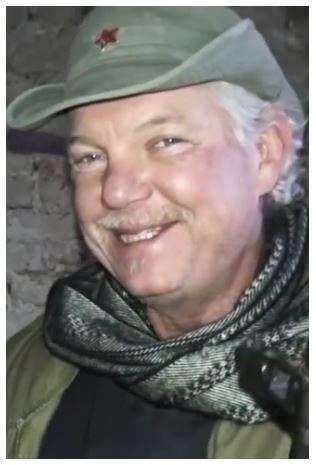
Суть времени, Рассел Бентли (cropped), CC BY 3.0
Russell Bentley’s journey from a privileged upbringing in Dallas to a notable figure on the international stage is enthralling. Leaving high school early, Bentley served in the U.S. Army, which fueled his political beliefs. He went from pro-marijuana activism to a fugitive life after escaping prison.
Eventually, Bentley moved to Donbas, advocating for pro-Russian forces and became a YouTube figure. He faced a tragic end, sparking discussions on the challenges faced by foreign volunteers.
Early Life and Background
Russell Bentley’s early years were marked by a blend of privilege and rebellion. Growing up in Highland Park, Dallas, Bentley experienced a comfortable lifestyle, yet he chose a path less conventional.
At just 16, he dropped out of high school, but he didn’t let that stop him. He earned his GED and joined the U.S. Army as a demolition specialist. This decision set the stage for his distinctive path.
Bentley’s life took a turn when he moved to South Padre Island and later Minneapolis, delving into activism and politics. His evolving beliefs steered him toward socialism and eventually communism.
These convictions ultimately led him to seek Russian citizenship, where his story continued to unfold in unexpected ways.
Military Service and Political Awakening
Though dropping out of high school might’ve seemed like a setback, joining the U.S. Army marked the start of a transformative journey for Russell Bentley.
Serving three years as a demolition specialist and combat engineer, his military service laid a foundation for his future endeavors.
However, it was his early exposure to leftist literature that sparked a political awakening.
This shift evolved during a radicalizing trip to Cuba, which deepened his critique of U.S. foreign policy.
Bentley’s course took a significant turn as he adopted communism and opposed NATO interventions.
Here’s what defined his path:
- Military Service: Three years in the U.S. Army.
- Political Awakening: Began with leftist literature.
- Radicalization: Cemented during a Cuba visit.
Activism and Legal Troubles
Bentley’s radical political awakening naturally evolved into a life of activism, marked by both fervent advocacy and legal challenges.
After moving to Minneapolis in 1990, he became a pro-marijuana activist and even ran for the U.S. Senate as a third-party candidate, garnering 1.65% of the vote.
However, Bentley’s activism didn’t come without its share of legal troubles. In 1996, he faced arrest for felony trafficking of marijuana, leading to a federal prison sentence of over five years.
Despite these setbacks, his time in prison only fueled his passion for social rights movements.
Bentley used social media to amplify his voice, shifting from a figure entangled in legal issues to an advocate for his beliefs in diverse global conflict zones.
Life as a Fugitive
In 1999, after escaping from a minimum-security prison, Russell Bentley embarked on nearly a decade of life as a fugitive. You’d find him living under the radar, constantly moving to elude capture. This perilous existence was a dance with life and death, shaping his perspective on the world.
Bentley’s fugitive years fueled his radicalization, deepening his disillusionment with U.S. policies. His journey included a crucial trip to Cuba, which intensified his socialist beliefs and set the stage for future activism.
During these years, Bentley:
- Evaded law enforcement: He skillfully avoided capture until 2007.
- Developed radical views: His beliefs evolved, especially regarding state oppression.
- Experienced disillusionment: This led to his eventual involvement in Ukraine’s conflict.
Transition to Communism
While navigating the tumultuous landscape of his fugitive years, Russell Bentley’s political beliefs underwent a profound transformation.
Initially a pro-marijuana activist, he moved to communism, spurred by dissatisfaction with U.S. foreign policy and wealth disparity. His radicalization deepened during a crucial trip to Cuba, where he embraced communist ideals, fueling his anti-imperialism.
Bentley protested U.S. military interventions, viewing them as oppressive, and stood firmly against perceived fascism and imperialism, labeling the Ukrainian government as such.
Bentley’s journey earned him the moniker “Donbas Cowboy” as he left the U.S. in 2014 to join pro-Russian forces in Donbas.
There, he remained committed to communism, advocating for civilian rights and utilizing social media to broadcast his anti-U.S. sentiments.
Journey to Donbas
Russell Bentley, originally from Texas, began a radical path in December 2014, moving to Donetsk to join the pro-Russian side in the ongoing conflict. Disillusioned by U.S. foreign policy, he took on the name “Texas” and became known as the Donbas Cowboy. His mission was fueled by a desire to protect civilians from what he perceived as Ukrainian government aggression.
In Donbas, Bentley:
- Joined the Vostok Battalion: He initially fought with this group before shifting to other militia units.
- Became a Media Personality: Utilizing his YouTube channel, he shared experiences and pro-Russian narratives.
- Gained Support: His online presence attracted financial support through crowdfunding.
Role in the Armed Conflict
After arriving in Donbas, Bentley quickly immersed himself in the armed conflict.
You’d find Russell engaged in action with pro-Russian forces, serving in several militia battalions until 2017.
Bentley’s dedication didn’t stop at combat; he was also driven to speak out against what he viewed as fascist elements in the Ukrainian government.
His advocacy extended to defending the rights of Donbas civilians.
Media Persona and YouTube Influence
Launching his YouTube channel in 2015, Bentley quickly utilized the platform to share his firsthand experiences and views on the Donbas conflict, where he fought as a pro-Russian volunteer.
His media persona as “Texas” or “the Donbas Cowboy” emerged through homemade videos showcasing his life in the Donetsk People’s Republic. He cleverly incorporated Texan culture, like prominently displaying the Texas flag, which helped create a distinct identity.
Bentley capitalized on YouTube to:
- Engage with audiences: Sharing controversial views, he attracted both supporters and critics.
- Finance his activities: He used crowdfunding to support his media efforts.
- Shape narratives: His content highlighted social media’s role in public perception.
Personal Beliefs and Ideologies
Although Russell Bentley’s journey took him from Texas to the heart of the Donbas conflict, his personal beliefs and ideologies always drove his actions.
Bentley identified as a communist, a perspective that shaped his support for pro-Russian forces. His political beliefs were cemented by a trip to Cuba, where he shifted from socialism to communism. In Bentley’s view, the Ukrainian government represented fascism, prompting his involvement in the conflict.
He was an outspoken critic of the U.S. government, condemning its policies as oligarchic and fascist. Through social media, Bentley highlighted the plight of Donbas civilians, advocating for their rights and criticizing American wealth concentration and totalitarian tendencies.
Mysterious Disappearance and Death
Russell Bentley’s conviction in his beliefs took him into the heart of conflict, but his path met a tragic and mysterious end. On April 8, 2024, he vanished in the Petrovsky district of Donetsk.
Witnesses reported that he was detained by unidentified Russian troops who allegedly mistook him for a Ukrainian agent. On April 19, his death was confirmed by pro-Russian forces. Reports indicate he had been killed by Russian troops, and later investigations revealed severe abuse and desecration of his body.
Here’s what unfolded:
- Disappearance and Detention: Bentley was seized while aiding civilians.
- Confirmation of Death: Verified 11 days later, raising concerns about friendly-fire incidents.
- Legal Actions: Russian investigators charged four servicemen for abuse of power and desecrating his remains.
Comments (0)
No comments yet. Be the first to share your thoughts.
Leave a comment