


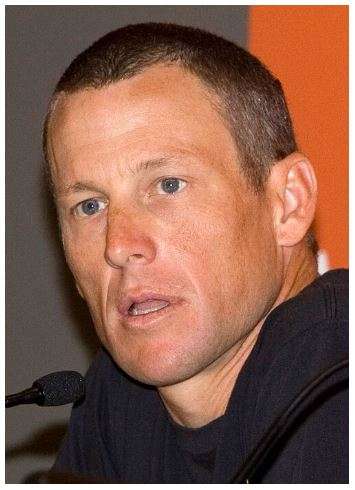
Paul Coster, Lance Armstrong (Tour Down Under 2009), CC BY 2.0
Lance Armstrong, Austin’s cycling legend, captured the world with his remarkable career. Born in Texas, he became a national champion triathlete before shifting to cycling and winning seven straight Tour de France titles.
His inspiring comeback from stage three testicular cancer made headlines, but doping allegations later clouded his achievements, resulting in a lifetime ban. Despite controversies, Armstrong’s legacy remains compelling, and there’s more to uncover about his journey beyond cycling.
Early Life and Athletic Beginnings
Although Lance Armstrong was born in Plano, Texas, it was there—not Richardson—where he truly began his journey toward athletic greatness.
Raised in a single-parent household, Armstrong’s early life was enveloped in sports, though he initially struggled to find his niche. He dabbled in football, baseball, and basketball but found success in swimming, placing third in the Texas state championships for the 1,000 free at the age of 12.
His real passion emerged as he shifted to endurance sports, particularly triathlons. Competing against top athletes, he realized his potential in cycling. By the age of 20, Armstrong became the U.S. amateur national champion, marking a significant milestone.
Joining the Motorola Cycling Team in 1992 further cemented his path in professional cycling.
Transition to Cycling and Olympic Pursuits
While exploring different sports, Lance Armstrong found his true calling in cycling by his teenage years. As he honed his skills as an endurance athlete, Armstrong set his sights on the Olympic stage.
By 1991, he focused entirely on cycling, aiming for the Olympics, since triathlons weren’t yet featured. His determination paid off when he made the U.S. team for the 1992 Barcelona Games, marking a pivotal moment in his budding professional career.
Life threw a curveball with a diagnosis of stage three testicular cancer in October 1996, shortly after competing in the 1996 Atlanta Olympics. Armstrong’s determination only grew stronger, and following his recovery, he joined the U.S. Postal Service team, gearing up for the iconic Tour de France.
Triumphs and Challenges in the Tour De France

Bjarte Hetland, Lance Armstrong 2005, CC BY 3.0
Lance Armstrong’s path from Olympic hopeful to Tour de France champion took the cycling world by storm. As a cancer survivor, he made a remarkable comeback, winning seven consecutive titles from 1999 to 2005. This achievement redefined cycling’s modern history.
Armstrong’s victories weren’t solely individual; they reflected the strength of his U.S. Postal Service team, which helped him overcome rivals like Jan Ullrich, especially during the 2001 Tour.
However, his career faced significant challenges. Doping allegations culminated in a lifetime ban from professional cycling in 2012, voiding all results from August 1, 1998, onward.
Armstrong’s Tour de France career remains a complex story of historic dominance shadowed by controversy.
Battle With Cancer and Inspiring Comeback
In 1996, when doctors diagnosed Lance Armstrong with stage three testicular cancer that had spread to his lungs and brain, his odds of survival were as low as 40%.
But Armstrong’s resilience was extraordinary. Through intensive treatment, including surgery and chemotherapy, he emerged cancer-free by early 1997.
His return was swift and powerful. In 1999, he won the Tour de France, marking the first of seven straight titles.
Armstrong’s comeback redefined public perception of cancer survivorship and athletic resilience.
His success led to the creation of the Livestrong Foundation, which has raised over $500 million for cancer support and advocacy.
Doping Allegations and Controversy
Armstrong’s extraordinary return and cycling success took a darker turn when allegations of doping emerged.
Following his 1999 Tour de France win, suspicions grew, culminating in a USADA investigation. In 2012, the U.S. Anti-Doping Agency concluded that Armstrong had led “the most sophisticated doping program” in sports history.
This resulted in a lifetime ban and the disqualification of all his victories from August 1, 1998, including his Tour wins.
Armstrong admitted to doping in a 2013 Oprah Winfrey interview, stating that success at that level was not possible without it.
The scandal led him to resign from the Livestrong Foundation, significantly damaging his public image and legacy.
Reflections on Legacy and Personal Growth
A fall from grace often leads to reflection and growth, and Lance Armstrong’s journey reflects this path. Once celebrated for Tour victories, he is now also remembered for the scandal that shook the sport.
Still, Armstrong’s growth is evident in his acknowledgment of wrongdoing and efforts to rebuild. He has publicly expressed regret for his deception and its consequences.
While no longer involved with Livestrong, his role in raising over $500 million has left a lasting impact.
Armstrong now speaks candidly about systemic doping in cycling and how that environment shaped his choices. His journey illustrates the complexity of redemption, integrity, and accountability.
From Cycling to Venture Capital and Podcasting
Lance Armstrong’s career after cycling reflects resilience and adaptability.
He transitioned into venture capital, using lessons from cycling to guide long-term investments. His early investment in Uber, introduced through investor Chris Sacca, is now widely recognized as one of his best financial decisions.
Unlike the high-adrenaline nature of cycling, venture capital demanded patience and strategy, skills Armstrong welcomed.
In podcasting, Armstrong connected with audiences on topics ranging from cycling to health and personal growth. His show “The Move” gained traction during major cycling events.
His ability to shift focus and still engage with fans reveals a new phase in a multi-dimensional career.
Current Endeavors and Future Prospects
Though Lance Armstrong’s cycling career has concluded, his current pursuits reflect continued evolution.
He remains active in venture capital, targeting investments that align with personal and ethical values. His podcast continues to grow, offering insight into sports, business, and personal transformation.
While his public reputation remains mixed, Armstrong advocates for modernizing cycling to attract younger audiences and expand the sport’s appeal.
Here are three areas of focus:
- Livestrong Foundation: Though no longer a leader, the organization continues cancer advocacy.
- Investments: Armstrong’s interest in startups reflects his ongoing business instincts.
- Legacy: Through podcasting and public appearances, he shares hard-earned lessons from fame, failure, and redemption.
Comments (0)
No comments yet. Be the first to share your thoughts.
Leave a comment