


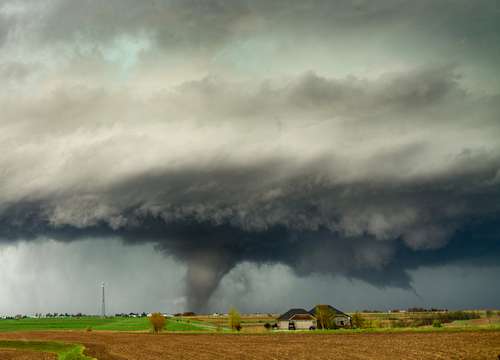
Yes, San Antonio gets tornadoes. Although the city generally experiences fewer tornadoes than parts of North Texas, severe thunderstorms can produce damaging winds, hail, flash flooding, and occasionally tornadoes across San Antonio and Bexar County.
Tornadoes are most common during spring and early summer, but they can occur at other times of the year. Whether you live in San Antonio or are visiting, knowing how to recognize weather alerts and where to shelter can help you stay safe.
How Common Are Tornadoes in San Antonio?
San Antonio is not among Texas's most tornado-prone cities, but its tornado risk is real.
Bexar County has experienced dozens of documented tornadoes over the decades. However, exact totals depend on the years covered, whether the records include tornadoes crossing county boundaries, and the database used.
Tornadoes in the region range from brief, relatively weak events to stronger storms capable of damaging homes, uprooting trees, and bringing down power lines.
Even when a tornado does not develop, severe thunderstorms can produce dangerous straight-line winds and large hail.
For residents, the important takeaway is that a lower tornado frequency does not mean tornadoes can be ignored.
When Is Tornado Season in San Antonio?
Spring is the main severe weather season in San Antonio, with tornado activity generally peaking from March through June.
During these months, warm, moist air from the Gulf of Mexico can interact with weather systems moving across Texas, creating conditions favorable for severe thunderstorms.
Tornadoes are possible outside this period, too. Fall and winter storm systems can occasionally produce severe weather, so residents should pay attention to forecasts throughout the year.
A tornado can develop during the afternoon, evening, or overnight. Nighttime tornadoes are especially dangerous because they are harder to see and may strike while people are sleeping.
Notable Tornadoes in San Antonio's History
San Antonio and the surrounding area have experienced several significant tornado events.
One of the best-known occurred on February 19, 2017, when multiple tornadoes struck the San Antonio area overnight.
The storms damaged homes and businesses, knocked down trees, and left residents dealing with power outages and debris.
The National Weather Service confirmed several tornadoes in the region, including an EF2 tornado that affected neighborhoods in northern San Antonio.
The event demonstrated that damaging tornadoes can occur well outside the traditional spring peak.
Historical records also document earlier tornadoes in Bexar County, including events during the 1950s.
Because older tornado records are less complete than modern surveys, comparisons across decades should be treated cautiously.
Tornado Watch vs. Tornado Warning: What's the Difference?
Understanding these two National Weather Service alerts is one of the most important parts of tornado safety.
Tornado Watch: Weather conditions are favorable for tornadoes to develop in or near the watch area. Stay alert, monitor forecasts, and make sure you can reach shelter quickly.
Tornado Warning: A tornado has been detected by radar or reported by a reliable observer. Take shelter immediately if you are in the warned area.
A particularly dangerous situation may prompt an enhanced warning, including a tornado emergency when a confirmed, violent tornado poses an extreme threat to life and property.
Don't wait until you can see a funnel cloud. Heavy rain, darkness, and nearby buildings may make a tornado impossible to spot.
Where to Shelter During a Tornado
The safest place during a tornado is a purpose-built storm shelter or safe room designed to withstand extreme winds.
If one isn't available, go to a small interior room on the lowest floor of a sturdy building.
Good options include an interior bathroom, closet, or hallway away from windows.
Once inside:
- Stay away from windows, exterior doors, and large open rooms.
- Get as low as possible and protect your head and neck with your arms, a helmet, or a sturdy covering.
- Put as many walls as possible between yourself and the outdoors.
- Keep shoes, a flashlight, and your phone nearby in case the building is damaged.
- Remain sheltered until the warning expires or officials indicate the immediate danger has passed.
Mobile homes and manufactured homes are particularly vulnerable to tornado winds, even when they are securely anchored.
If you live in one, identify a nearby sturdy shelter before severe weather arrives. Do not wait until a tornado is approaching to leave.
What Should You Do If You're Driving?
Being inside a vehicle during a tornado is dangerous because strong winds can overturn cars and send debris flying.
If a tornado warning is issued while you're driving, the safest choice is to reach a sturdy building before the storm arrives, provided you can do so safely.
If a tornado is already nearby, your options depend on its location, the surrounding terrain, and the available shelter.
If you cannot reach a sturdy building, the National Weather Service advises choosing the safest available option for your circumstances.
You may need to remain in your stopped vehicle with your seat belt fastened, lower your head below the windows, and cover your head. In some situations, moving to a noticeably lower area may offer protection from flying debris, but flooding and other hazards must be considered.
Never shelter beneath a highway overpass. Overpasses do not provide reliable tornado protection and can expose people to dangerous winds and debris.
Do not attempt to drive through a tornado or flooded roadway.
The best strategy is to avoid being on the road when dangerous storms are approaching.
How Does San Antonio Receive Tornado Warnings?
San Antonio residents can receive tornado warnings through several official channels.
Wireless Emergency Alerts (WEA) may automatically appear on compatible mobile phones in threatened areas. These alerts do not require a separate app subscription.
NOAA Weather Radio provides continuous weather information and can sound an alarm when warnings are issued.
Local television and radio stations also provide severe weather coverage, including radar updates and information about affected neighborhoods.
Residents can additionally sign up for emergency notifications through the city's AlertSA system.
Because outdoor warning sirens are not a dependable way to receive alerts inside a home, residents should use multiple notification methods rather than relying on hearing a siren.
For official weather information, visit the National Weather Service Austin/San Antonio.
How to Prepare for Tornadoes in San Antonio
A tornado safety plan does not need to be complicated, but everyone in your household should understand it.
Start by identifying the safest room in your home, apartment, workplace, or hotel.
Prepare an emergency kit with drinking water, nonperishable food, flashlights, extra batteries, necessary medications, sturdy shoes, and a first-aid kit.
Keep your phone charged when severe weather is expected, and have a backup way to receive warnings during a power outage.
If you have children, practice moving to your shelter area so they know what to do without confusion.
Residents of apartments or multistory buildings should learn where the lowest accessible interior shelter area is located.
Visitors staying in hotels should ask about the property's severe weather procedures, especially during periods of heightened storm risk.
Are Tornadoes More Common in North Texas Than San Antonio?
Generally, yes.
North Texas, including the Dallas–Fort Worth region, experiences frequent severe thunderstorms and has a long history of damaging tornadoes.
San Antonio is farther south, where the seasonal patterns and atmospheric conditions differ.
However, tornado counts alone do not provide a complete measure of risk. County size, population density, historical reporting practices, and the intensity of individual tornadoes all affect comparisons.
A single tornado striking a populated neighborhood can cause extensive damage even in an area where tornadoes are relatively uncommon.
That is why San Antonio residents should take tornado warnings as seriously as residents anywhere else in Texas.
Final Thoughts: Should You Worry About Tornadoes in San Antonio?
Tornadoes are a genuine weather hazard in San Antonio, but they are not an everyday occurrence.
The city generally faces a lower tornado frequency than many parts of North Texas, while still experiencing occasional damaging storms.
The best approach is preparation rather than worry.
Know your safest shelter location, enable emergency alerts, and monitor reliable forecasts when severe weather threatens.
Whether you're at home, at work, or exploring San Antonio, a few simple precautions can make a significant difference when a tornado warning is issued.
Comments (0)
No comments yet. Be the first to share your thoughts.
Leave a comment