


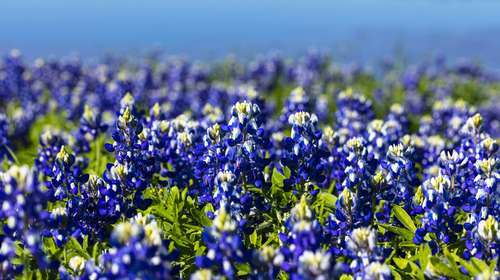
You’ll find Austin’s stunning bluebonnets blooming at must-visit spots like the Lady Bird Johnson Wildflower Center and McKinney Falls State Park. For scenic drives packed with wildflower views, try Highway 360 or Texas Hill Country’s Willow City Loop.
Families will love Balcones District Park’s vast fields of bluebonnets. Capture picture-perfect memories by visiting at dawn or dusk and consider how drought conditions can affect bloom timing. Uncover more key tips and locations surrounding these lovely blooms.
Top Spots for Bluebonnet Sightings in Austin
Austin’s bluebonnets are a springtime spectacle you won’t want to miss, with several top spots offering stunning views.
One of the best places to experience this natural beauty is the Lady Bird Johnson Wildflower Center. Located in South Austin, it boasts over 900 native plant species, including vivid bluebonnets. Be sure to reserve your tickets in advance for a delightful visit.
McKinney Falls State Park is another must-see spot, with trails perfect for hiking and biking amidst the bluebonnet blooms.
Balcones District Park offers large fields of these iconic flowers, providing a picturesque backdrop for family photos.
Don’t forget to visit the intersection of Manor Road and Tilley Street in Mueller, where bluebonnets and other wildflowers await your admiration.
For those keen on exploring further, consider visiting Georgetown, which, while famous for red poppies, also features strong bluebonnet displays in spring.
Exploring Scenic Drives for Wildflower Views
If you’re looking to soak in the vibrant beauty of wildflowers this spring, exploring Austin’s scenic drives is a must.
Start your route on Highway 360, where bluebonnets line the shoulders and hillsides, offering stunning photo opportunities. For more breathtaking views, head to Highway 71, a popular route with open landscapes and wildflower patches.
Don’t miss the Marble Falls area, just under an hour away, where you can explore the Bluebonnet House and other scenic spots. Maps are available at the Marble Falls Visitor Center.
For a longer drive, the Willow City Loop near Fredericksburg presents a 13-mile stretch through private ranch land with panoramic views of bluebonnets and other Hill Country wildflowers.
And while you’re nearby, swing by the Lady Bird Johnson Wildflower Center to deepen your appreciation for Texas’s floral diversity.
Family-Friendly Locations for Bluebonnet Adventures
When planning your next family outing, consider visiting some of Austin’s best spots for bluebonnet adventures. During peak bloom, the Lady Bird Johnson Wildflower Center is a great starting point with its 284 acres of native plants and educational displays.
It’s a family-friendly destination where you and your loved ones can learn about and enjoy bluebonnets together.
- McKinney Falls State Park: Offers scenic trails and picnic areas surrounded by bluebonnet views.
- Balcones District Park: Features wide open flower fields and a playground, ideal for family strolls and spring portraits.
- Circle C Ranch Metropolitan Park: Boasts large patches of bluebonnets along well-maintained trails and sports facilities—perfect for multi-generational family fun.
Tips for Capturing Perfect Bluebonnet Photos
After exploring Austin’s family-friendly bluebonnet locations, it’s time to focus on capturing those vivid spring memories.
To get stunning bluebonnet photos, plan your shoot during early morning or late afternoon, when soft, golden light brings out the flowers’ natural hues.
Look for locations where bluebonnets contrast against interesting backdrops like stone fences, bridges, or scenic hillsides. This adds depth and storytelling to your images.
Try shooting from a low angle to emphasize the flowers’ height and create a dynamic perspective. Including a subject, such as a child or pet, adds scale and emotional warmth.
Don’t forget your macro lens or camera’s close-up mode to capture intricate details of petals, stems, and textures.
How Drought Conditions Impact Bluebonnet Blooms
Due to ongoing drought conditions in Central Texas, bluebonnet blooms may appear later and in fewer numbers this year.
The region is experiencing severe to extreme drought, and the lack of sufficient fall rainfall has significantly delayed the germination and blooming of Lupinus texensis, Texas’s state flower.
Here’s what you might notice:
- Sparse Sightings: Bluebonnets are less widespread, with fewer dense fields visible compared to wetter seasons.
- Delayed Blooms: Some bluebonnets may emerge as late as mid-to-late April, depending on rainfall.
- Hope for Recovery: If spring rains increase, late bloomers and other wildflowers may still put on a show.
This seasonal fluctuation underscores the importance of monitoring weather patterns and appreciating each year’s bloom on nature’s schedule.
Comments (0)
No comments yet. Be the first to share your thoughts.
Leave a comment