



Texas is a large state with busy cities, quiet rural roads, college towns, border communities, and miles of open land. When someone disappears here, the search can become difficult fast. A person may vanish from a neighborhood, a highway, a motel, a shopping center, or a familiar jogging route. In some cases, there are witnesses. In others, there are only scattered clues.
Missing-person cases leave families in a painful kind of waiting. They search for answers while trying to keep memories alive. Investigators may follow tips for years, only to find that some leads go nowhere. Communities may remember a case for decades, especially when the details never seem to add up.
The following Texas cases remain widely discussed because each one carries unanswered questions. This article does not try to solve them. Instead, it looks at what is publicly known, why the cases remain troubling, and how time can make the search for truth harder.
Rachel Cooke: A Morning Jog That Never Ended

Source: fbidallasdivision
Rachel Cooke disappeared on January 10, 2002, while visiting her parents in Georgetown, Texas. She was 19 years old and home from college during winter break. That morning, she left the house for a jog in the North Lake area.
She never returned.
Rachel’s disappearance shook the community because the situation felt so ordinary. A young woman went out for a run in a familiar area. Nothing about that morning seemed unusual at first. Then hours passed, and concern turned into fear.
Search efforts followed. Law enforcement, volunteers, and family members looked for signs of where she might have gone. Her case drew attention from local and national agencies. A reward was offered for information.
The questions have remained for years. Did someone see Rachel on the road that morning? Was a suspicious vehicle connected to the case? Did she encounter someone she knew, or was it a stranger? Investigators have received tips over time, but Rachel has not been found.
Her case is especially haunting because it began with a simple routine. That makes it easy for people to understand the fear behind it. A normal morning became a mystery that has lasted for decades.
Jason Landry: A Crash, Scattered Belongings, and No Clear Trail
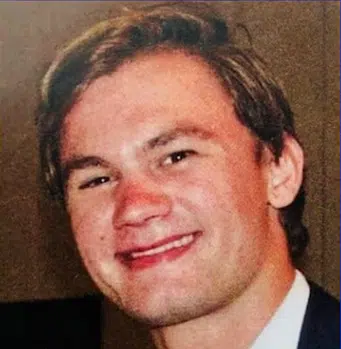
Jason Landry was a 21-year-old Texas State University student. In December 2020, he left San Marcos and headed toward his family’s home for winter break. He never arrived.
His car was later found crashed on a rural road near Luling, Texas. The scene raised immediate questions. Personal belongings were found in and around the vehicle, including clothes and school items. Yet Jason himself was nowhere nearby.
Rural roads can complicate an investigation. Darkness, rough terrain, weather, and limited witnesses can make it hard to reconstruct what happened. In Jason’s case, the crash scene gave investigators a starting point, but it did not provide the full story.
One of the biggest questions is what happened after the crash. Did Jason leave the area on foot? Was he injured or confused? Did someone else become involved? Search teams combed the area, but no discovery has brought the case to a close.
Jason’s family has kept attention on the case. Their search has continued through anniversaries, public appeals, and renewed efforts. The lack of a clear path after the crash remains one of the most difficult parts of the case.
The Fort Worth Missing Trio: A Holiday Shopping Trip With No Return
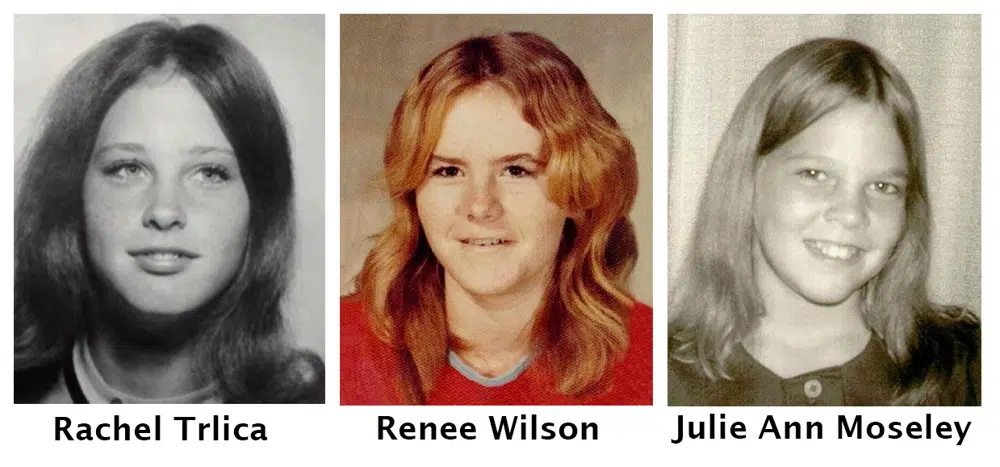
One of Texas’s most famous missing-person cases began on December 23, 1974. Mary Rachel Trlica, Lisa Renee Wilson, and Julie Ann Moseley went to the Seminary South Shopping Center in Fort Worth for Christmas shopping.
They never came home.
Mary Rachel was 17. Renee was 14. Julie was 9. Their disappearance shocked Fort Worth because three girls vanished in broad daylight during a busy holiday season. Their car was found in the parking lot, but the girls were gone.
The case became known as the Fort Worth Missing Trio. Over the years, it has produced many theories, but few solid answers. One of the most discussed pieces of the story involves a letter that arrived after the disappearance. Some family members questioned whether it was truly written by one of the missing girls.
Decades have passed, but the case remains open in public memory. It is difficult because the disappearance involved several people at once. If they were taken, how did it happen without more clear witnesses? If they left with someone voluntarily, who was that person? Why has no confirmed trace of them been found?
The case still stands as a painful reminder that even crowded places can hold secrets.
Caleb Diehl: A Teenager, a Truck, and a Disturbing Investigation
Caleb Diehl disappeared in 2015 from Nocona, Texas. He was 18 years old. Public reports say he was last seen after borrowing a pickup truck from his employer.
The case became even more disturbing when the investigation led to Ricky Dale Howard, a man later sentenced in federal court for sexually exploiting Caleb when Caleb was a minor. Howard was described as a person of interest in Caleb’s disappearance.
This case is difficult to discuss because it involves both a missing young man and confirmed criminal behavior connected to his past. Still, the key question remains unanswered: Where is Caleb?
The presence of a person of interest does not automatically explain a disappearance. Investigators still need evidence, timelines, and proof. Without Caleb being found, many questions remain open.
What happened after he was last seen? Was the borrowed truck important to the timeline? Did someone know more than they admitted? Could Caleb’s disappearance have been prevented if earlier warning signs had been uncovered?
Caleb’s case shows how missing-person investigations can reveal hidden abuse, complex relationships, and painful failures. It also shows that a criminal conviction in a related matter does not always give families the full truth they need.
Roxanne Paltauf: Last Seen at an Austin Motel
Roxanne Paltauf disappeared from Austin in July 2006. She was 18 years old. Public case summaries say she was last seen at a Budget Inn near Interstate 35 and Rundberg Lane.
She had reportedly been staying there with her boyfriend. According to public accounts, the two argued, and Roxanne left. She has not been seen since.
This case raises hard questions because of what Roxanne may have left behind and where she was last seen. A young woman leaving a motel without clear plans, reliable transportation, or contact afterward creates immediate concern.
Her family has continued to push for answers. Like many families in long-term missing-person cases, they have had to live with uncertainty while trying to keep the public interested.
The unanswered questions are direct. Did Roxanne truly walk away on her own? If she did, where did she go? Did someone encounter her after she left the motel? Were early leads missed? Did someone close to the situation know more than they shared?
Roxanne’s case also reflects a larger issue. When a young adult disappears after a personal conflict, early assumptions can shape the investigation. If a case is treated as a runaway or voluntary absence too quickly, valuable time can slip away.
Why These Cases Stay With People
Some missing-person cases fade from public attention. Others remain in the minds of families, investigators, and communities for years. The cases above have stayed visible because the circumstances feel incomplete.
Each case has a moment where the known story breaks off:
- Rachel Cooke leaves for a jog.
- Jason Landry’s car is found crashed, but he is gone.
- Three girls go Christmas shopping and disappear from Fort Worth.
- Caleb Diehl vanishes in a case later tied to disturbing criminal conduct.
- Roxanne Paltauf is last seen near an Austin motel and never contacts her family again.
These are not full endings. They are gaps. Families are left trying to fill those gaps with searches, records, interviews, and memories.
The Role of Time in Missing-Person Cases
Time can help and hurt a case.
Years later, people may feel safer sharing information. New technology can also change what investigators can do with evidence. DNA testing, digital records, mapping tools, and public databases have helped solve cases that once seemed impossible.
At the same time, time creates problems. Memories fade. Witnesses move away or die. Physical evidence may disappear. Places change. Roads expand. Buildings close. Motel names change. Shopping centers get renamed or rebuilt.
That is why public attention still matters. A person who saw something years ago may not understand its importance until a case resurfaces. A small detail can become useful when placed beside other evidence.
Why Responsible Coverage Matters
Missing-person stories often attract rumors. That can harm investigations and families. It is easy for online discussions to turn real people into characters in a mystery. These cases involve parents, siblings, friends, classmates, and communities who continue to live with the pain.
Responsible coverage should focus on verified information. It should avoid accusing people without evidence. It should respect the missing person as a human being, not as a puzzle.
Good coverage can still be interesting. In fact, careful reporting often makes a case clearer. It shows what is known, what is uncertain, and why the unanswered questions matter.
What the Public Can Do
Most people will never work on a cold case directly. Still, the public can help in useful ways.
People can share official missing-person posters. They can report tips to law enforcement instead of posting accusations online. They can support search organizations that work with families. They can pay attention when police renew interest in an older case.
The most important step is simple: take missing-person reports seriously. A person does not have to be famous for their disappearance to matter. Every missing person has a life, a history, and people waiting for answers.
The Search for Answers Continues
Texas has many missing-person cases, and each one carries its own facts. Some involve clear signs of danger. Others are confusing from the beginning. Some may still be solved through a tip, a discovery, or a fresh look at old evidence.
Rachel Cooke, Jason Landry, the Fort Worth Missing Trio, Caleb Diehl, and Roxanne Paltauf represent different kinds of unresolved stories. They happened in different places and different decades. Yet they share one painful truth: families are still waiting.
The questions remain.
Where did they go? Who knows what happened? What detail has not yet come to light?
Until those answers come, these cases remain part of Texas history, not because of mystery alone, but because real people are still missing from the lives they should have continued living.
Comments (0)
No comments yet. Be the first to share your thoughts.
Leave a comment