


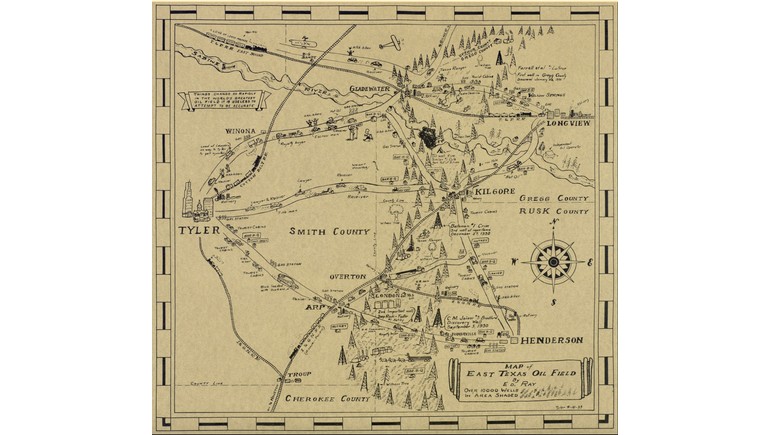
The 1933 Map of the East Texas Oil Field provides a fascinating look at one of the most important oil-producing regions in Texas history. Created by E.D. Ray on April 16, 1933, this illustrated map highlights the extensive oil drilling activity surrounding Kilgore and neighboring communities during the early years of the East Texas oil boom. It captures a period when the discovery of enormous petroleum reserves transformed the region's economy, landscape, and population.
The East Texas Oil Boom
The East Texas Oil Field was discovered in 1930, when Columbus Marion "Dad" Joiner's drilling operation struck oil near Kilgore. The discovery triggered one of the largest oil booms in American history, attracting thousands of workers, investors, and businesses to East Texas.
Within a few years, oil derricks covered large portions of the surrounding countryside. Previously quiet farming communities experienced rapid development as drilling companies established new wells and transportation facilities.
The 1933 map documents this remarkable transformation, showing the concentration of oil production during the industry's early expansion.
Oil Derricks and Railway Connections
One of the map's most distinctive features is its detailed illustration of thousands of oil derricks scattered throughout the East Texas Oil Field. These structures demonstrate the scale of drilling operations and the rapid development of the petroleum industry.
The map also identifies important railway connections that supported oil production and transportation. Railroads helped move equipment, supplies, and workers throughout the region, linking oil-producing communities with larger commercial centers.
Cities and towns such as Kilgore, Longview, Gladewater, Henderson, Overton, and Tyler appear on the map, providing geographic context for the expanding oil industry.
Kilgore and the Growth of East Texas
Kilgore became one of the communities most closely associated with the East Texas oil boom. The discovery of petroleum brought rapid population growth, new businesses, and major changes to the local economy.
The city became famous for its unusually dense concentration of oil derricks, particularly in an area known as the World's Richest Acre. Oil production reshaped Kilgore from a relatively small community into an important center of the petroleum industry.
Nearby towns also benefited from drilling activities, although the rapid expansion brought challenges involving housing, transportation, and the management of oil production.
Economic Importance of the Oil Field
The discovery of the East Texas Oil Field occurred during the Great Depression, when much of the United States was experiencing severe economic hardship. Petroleum production created employment opportunities and attracted investment to the region.
However, the sudden increase in oil production also contributed to falling petroleum prices and disputes over production limits. State authorities eventually introduced stricter regulations to control output and prevent waste.
The East Texas Oil Field became one of the largest and most productive oil fields in the United States, contributing significantly to the development of Texas as a major energy-producing state.
Historical Importance of the Map
The 1933 East Texas Oil Field Map is particularly valuable because it documents the region during the early stages of its petroleum boom. Unlike conventional road maps, its pictorial style emphasizes the enormous number of drilling structures and the industrial activity that dominated the landscape.
The original map is preserved in the Texas General Land Office's Map Collection, where it is identified as Map No. 93949.
Today, the map serves as an important historical reference for understanding the growth of the Texas petroleum industry. It illustrates how the discovery of oil transformed East Texas communities, influenced transportation networks, and helped shape the state's economic development during the 20th century.