


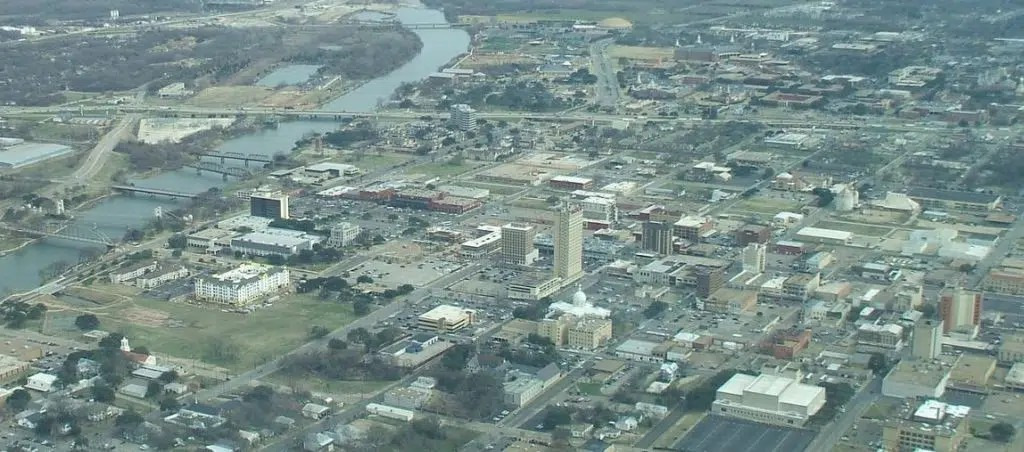
Waco, Texas, is a historic city in McLennan County, located along the Brazos River between Dallas and Austin. Known as the "Heart of Texas," Waco combines nineteenth-century landmarks, educational institutions, natural attractions, and a growing tourism industry. From its Native American heritage and historic suspension bridge to Baylor University and Magnolia Market, the city offers visitors an interesting blend of Texas history and modern attractions.
Key Takeaways
- Waco was established in 1849 on land previously occupied by the Waco people, a Native American group associated with the Wichita peoples.
- The city was officially incorporated on August 29, 1856, and serves as the county seat of McLennan County.
- The Waco Suspension Bridge opened in January 1870 and became an important crossing for cattle drives and regional commerce.
- Cotton production helped establish Waco as a major agricultural and commercial center during the nineteenth century.
- Baylor University relocated to Waco in 1886, strengthening the city's reputation for education.
- Waco is the birthplace of Dr Pepper, which was first served in 1885.
- Magnolia Market at the Silos has become a major tourism destination associated with Chip and Joanna Gaines.
- Waco's attractions include Cameron Park, Cameron Park Zoo, and Waco Mammoth National Monument.
A Short History of Waco
The area now known as Waco was originally occupied by Indigenous peoples, including the Waco, or Huaco, people associated with the Wichita tribes. Their settlement stood near the Brazos River, where the surrounding landscape provided access to water, fertile land, and natural resources.
European American settlement expanded during the 1840s, and surveyor George B. Erath laid out the town of Waco Village on March 1, 1849. Land agent Jacob De Cordova helped promote the settlement, while former Texas Ranger Shapley Prince Ross established a ferry across the Brazos River.
Waco became the county seat when McLennan County was organized in 1850. The growing community developed businesses, churches, and transportation services before incorporating on August 29, 1856. Its location along the Brazos River helped establish Waco as an important commercial settlement in Central Texas.
The Waco Suspension Bridge and Its Historical Importance
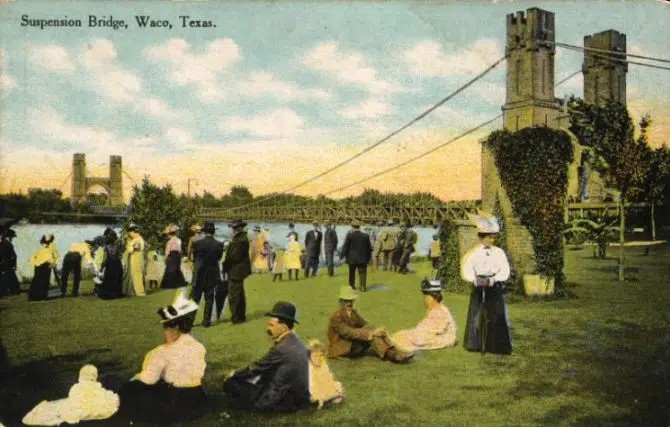
The Waco Suspension Bridge is one of the city's most recognizable historic landmarks. Construction began during the late 1860s, and the bridge officially opened on January 6, 1870. The structure provided a dependable crossing over the Brazos River, replacing earlier reliance on ferry transportation.
At approximately 475 feet long, the bridge was an impressive engineering achievement for its time. Its steel cables were manufactured by John A. Roebling and Son, the company later associated with the Brooklyn Bridge. The crossing helped connect regional transportation routes and supported Waco's commercial development.
The bridge became particularly important during the era of Texas cattle drives. Cowboys moving livestock northward used routes passing through Waco, contributing to the city's economic activity. Today, the restored suspension bridge serves pedestrians and remains a reminder of the city's nineteenth-century transportation history.
How Cotton Production Shaped Waco's Economy
Cotton production became one of Waco's most important industries during the nineteenth century. Fertile farmland along the Brazos River encouraged agricultural development, while improved transportation routes connected local producers with distant markets. Cotton farming and processing supported warehouses, merchants, transportation businesses, and other commercial activities.
By the late nineteenth century, Waco had developed into a major cotton trading center. In 1894, the city hosted its first Texas Cotton Palace exhibition, celebrating the agricultural industry and regional economic growth. The event featured displays, entertainment, and activities attracting visitors from surrounding communities.
The original Cotton Palace building was destroyed by fire in 1895, but the celebration returned in 1910 with a new facility. Although the historic exhibition eventually ended, cotton remained important to Waco's economy for many years. Manufacturing, education, and service industries later reduced the city's dependence on agriculture.
Waco's Industrial Growth and Military History
Waco's economy began diversifying during the twentieth century as manufacturing and transportation expanded. The city developed businesses involved in food production, machinery, textiles, and other industries. Its location along major transportation routes continued supporting trade and commercial activity throughout Central Texas.
World War II brought additional economic development when the Waco Army Air Field was established for military pilot training. The installation later became James Connally Air Force Base, contributing to local employment and aviation-related activities. Its military operations continued until the base closed in 1966.
The former military installation subsequently became associated with technical education. Texas State Technical College, established in 1965, developed programs designed to prepare students for technical and industrial careers. Today, manufacturing, healthcare, education, and professional services contribute to Waco's diversified economy.
Baylor University and Waco's Educational Institutions
Waco is home to several important educational institutions, including Baylor University, McLennan Community College, and Texas State Technical College. These schools provide academic programs, workforce training, and research opportunities while contributing to the city's economy and cultural development.
Baylor University was chartered by the Republic of Texas on February 1, 1845. Originally located in Independence, Texas, it relocated to Waco in 1886 after merging with Waco University. The university has since developed into a major private research institution with a prominent campus along the Brazos River.
McLennan Community College was established in 1965 and provides academic and career-oriented programs for the region. Texas State Technical College also began in 1965, focusing on technical education and industrial training. Together, these institutions support Waco's workforce development and attract students from throughout Texas.
Famous Products and Interesting Facts About Waco
Waco is recognized as the birthplace of Dr Pepper, one of America's oldest major soft drink brands. Pharmacist Charles Alderton developed the beverage in 1885 while working at Morrison's Old Corner Drug Store. The city's Dr Pepper Museum preserves exhibits exploring the drink's history and the development of the soft drink industry.
Another well-known Waco product is the Snickers candy bar. Mars established its confectionery manufacturing operation in the city in 1976, producing Snickers, Starburst, and other candies. The facility became an important regional employer and a significant part of the company's North American manufacturing network.
On January 16, 2020, Mars Wrigley unveiled a record-breaking Snickers bar at its Waco factory. Weighing more than two metric tons, the enormous candy bar earned recognition from Guinness World Records. The achievement demonstrated the scale of Waco's confectionery industry and attracted national attention.
Magnolia Market and Waco's Growing Tourism Industry
Waco experienced increased tourism interest following the popularity of Fixer Upper, the home renovation television series hosted by Chip and Joanna Gaines. The couple became widely recognized for renovating homes in Central Texas and promoting design ideas inspired by traditional and modern farmhouse styles.
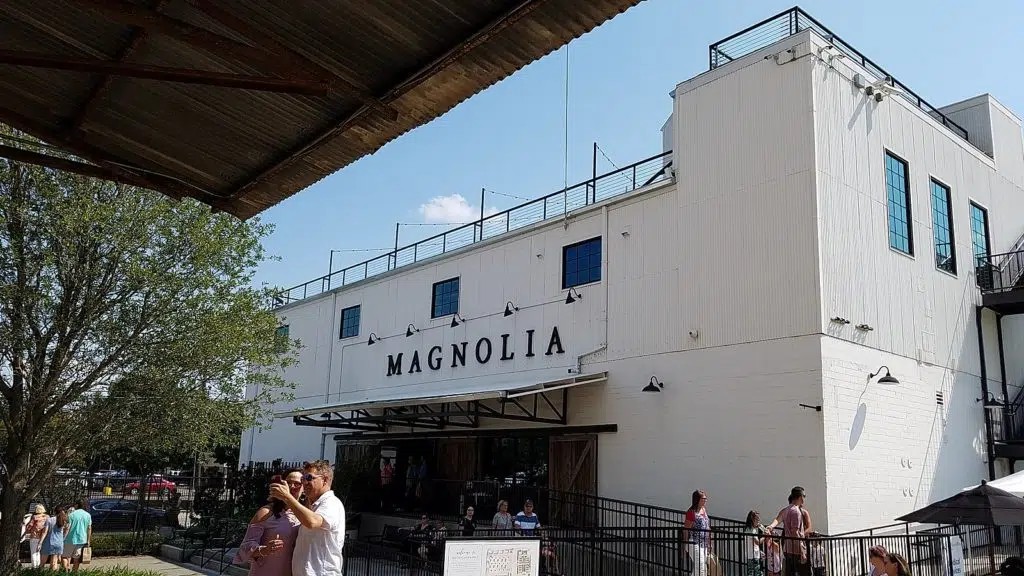
In 2015, the Gaines opened Magnolia Market at the Silos, transforming a former industrial property into a shopping and gathering destination. The complex features retail spaces, landscaped grounds, food options, and seasonal activities. Its distinctive silos have become recognizable landmarks in downtown Waco.
The development helped attract visitors interested in home design, shopping, and local dining. Magnolia subsequently expanded its hospitality and commercial activities in the city, contributing to Waco's growing tourism economy. Nearby businesses and attractions also benefit from increased interest in the downtown area.
Cameron Park, Cameron Park Zoo, and Waco Mammoth National Monument
Cameron Park is one of Waco's most popular outdoor destinations. Dedicated in 1910, the park covers approximately 400 acres along the Brazos and Bosque rivers. Visitors can explore wooded trails, scenic overlooks, playgrounds, picnic areas, and recreational spaces throughout the extensive parkland.
Within the park is Cameron Park Zoo, a 52-acre facility featuring naturalistic animal habitats. The zoo houses numerous species, including elephants, giraffes, big cats, and primates. Its educational exhibits and conservation programs make it a popular destination for families and visitors interested in wildlife.
Waco Mammoth National Monument offers another unusual experience. Established as a national monument in July 2015, the protected site preserves fossil remains discovered near the Bosque River in 1978. Excavations revealed at least 24 Columbian mammoths, allowing visitors to learn about prehistoric wildlife and the region's ancient environment.

Comments (0)
No comments yet. Be the first to share your thoughts.
Leave a comment