


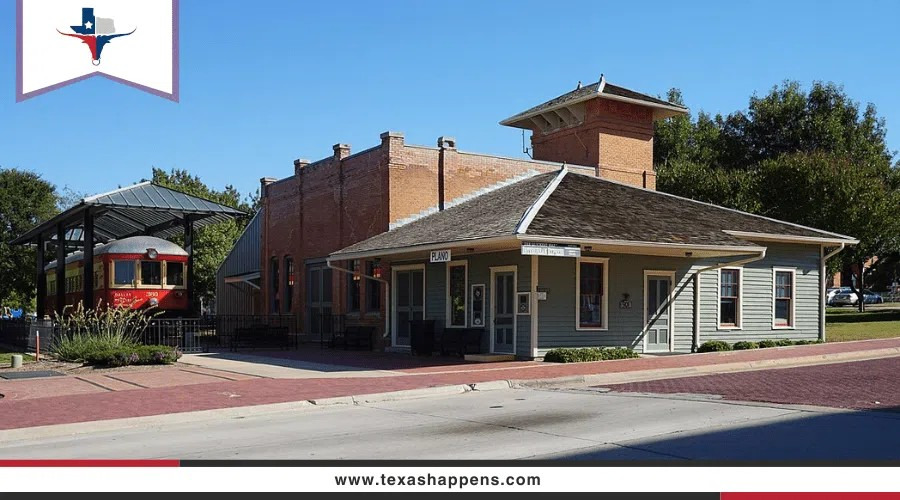
Michael Barera, Interurban Railway Museum October 2015 06, CC BY-SA 4.0
Although the Interurban Railway Museum focuses on educating the public about the Texas Electric Railway, its mission extends beyond mere historical instruction. You’re invited to explore the museum’s broader goals of community engagement and heritage awareness, echoing the rich cultural identity and history that Texas embodies, including its Texas Cowboys and Their Legacy.
The museum aims to create a dynamic learning environment where you can connect with history in meaningful ways. By collaborating with organizations like the Plano Conservancy for Historic Preservation, the museum guarantees that the stories of the past are not only told but also experienced by the community.
The museum’s partnership with entities such as the Plano City Council and the Plano Independent School District underscores its commitment to fostering heritage awareness. These collaborations improve the museum’s educational initiatives, making them both factual and enjoyable.
Historical Background
Established in 2001 by former members of the Plano Heritage Commission, the museum plays an essential role in preserving the railway significance that once connected Texas cities from Denison to Waco. The Texas Electric Railway, operational from 1908 to 1949, was a lifeline for passengers and freight, facilitating commerce and travel across the region.
This system also contributed to the economic development surge in Texas during the late 19th and early 20th centuries, reflecting the wider economic growth in Texas during that time.
You can imagine the interurban impact as these electric trains zipped through the landscape, offering a modern alternative to slower, traditional railways. This connectivity transformed urban development and economic growth in Texas, making the railway an integral part of the state’s history. However, the rise of automobiles marked its decline, culminating in the last run on December 31, 1948, and the eventual abandonment in 1949.
Museum Exhibits
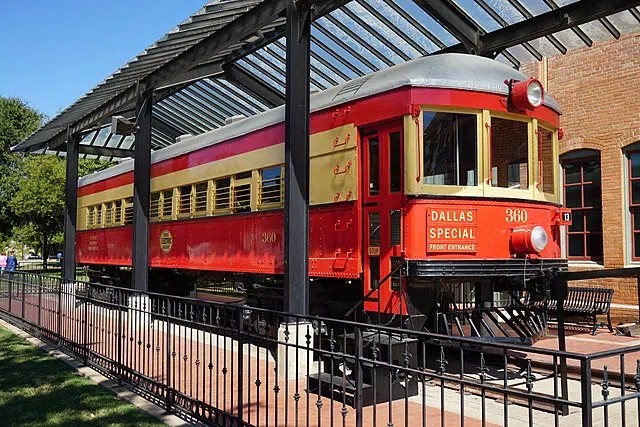
Michael Barera, Interurban Railway Museum October 2015 14 (Texas Electric Railway Car 360), CC BY-SA 4.0
You’ll find interactive exhibits designed to engage both kids and adults. Children can enjoy hands-on activities that teach them about trains and railways, with the highlight being an enthralling model train display. Watch as miniature locomotives traverse tracks, bringing the magic of rail travel to life.
Explore the beautifully restored railway car, once repurposed as a storage shed but now a proud piece of interurban history. Step inside and imagine the travels of passengers from a century ago. Limited original passenger seats are on display, offering a unique glimpse into early 20th-century travel experiences. Feel the echoes of the past as you sit where travelers once did.
The museum’s collection of historical artifacts adds depth to your visit. You’ll see segregation signs and vintage advertisements illustrating the cultural context of the railway period. Guides in period motorman uniforms lead tours, making the experience even more engaging.
Educational Programs
After exploring the engaging exhibits, the Interurban Railway Museum invites you to plunge into your understanding through its varied educational programs. These programs are tailored for different audiences, emphasizing the transformative history of the Texas Electric Railway and its impact on local communities.
Guided tours offer a unique twist, featuring a tour guide dressed in a period motorman uniform, which adds a layer of authenticity and historical context. These tours encourage active participation and let you ask questions, creating a lively exchange of ideas about Plano’s development and the railway’s role.
Haggard Park Attractions
Situated next to the Interurban Railway Museum, Haggard Park offers a delightful escape for families seeking both fun and education. This charming park is perfect for a day of family activities, combining playful adventures with a touch of local history. Haggard Park features two distinct playgrounds tailored to different age brackets, ensuring playground safety for all children.
Separated by a steep embankment, the toddler area remains a secure space, allowing younger children to investigate without the hustle and bustle of older kids. The park’s thoughtful design prioritizes the safety of your little ones while providing an engaging environment.
Visitor Details
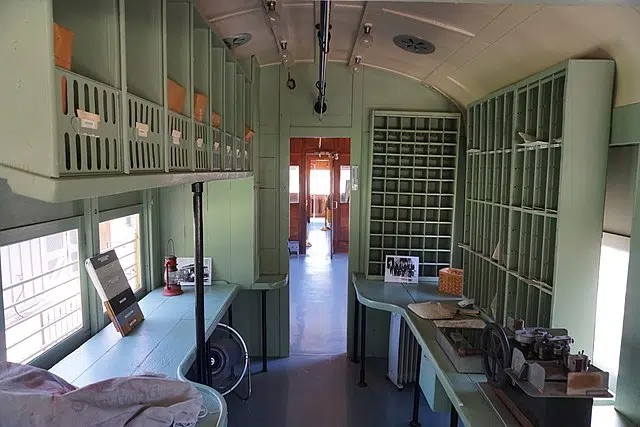 Michael Barera, Interurban Railway Museum October 2015 13 (Texas Electric Railway Car 360), CC BY-SA 4.0
Investigating the Interurban Railway Museum offers an engaging and educational experience for visitors of all stages. Situated at 901 E 15th Street in Plano, Texas, the museum welcomes you into a family-friendly environment perfect for educational outings. With operating hours from Monday to Friday, 10 a.m. to 2 p.m., and Saturday from 1 p.m. to 5 p.m., there’s plenty of time to plunge into the rich rail history of the area.
Your visit can be improved by scheduling a guided tour; simply call 972-941-2117. This personalized approach guarantees a tailored educational experience, allowing you to investigate the museum’s features in depth. One of the highlights is the interactive displays, including hands-on activities and an enthralling model train display.
After absorbing the history, the adjacent Haggard Park offers a perfect spot to unwind and enjoy outdoor play areas. Combining both history and recreation, your visit to the Interurban Railway Museum guarantees a well-rounded day out filled with investigation, learning, and fun for the entire family.
Early Plano Development
In the early days of Plano, the town was a burgeoning community with a population estimated between 1,200 and 1,500 residents. This self-sufficient community included local businesses like drugstores and hardware stores, all situated along Mechanic Street, now known as 15th Street.
With minimal housing and limited transportation options, residents primarily relied on horse and buggy, bicycles, and walking to get around. However, as Plano continued its community growth, the demand for public transport became more pressing. Early automobiles were rare and expensive, emphasizing the need for better transportation solutions.
In 1908, the establishment of the interurban railway marked a crucial moment in transportation evolution. This railway connected Plano to larger cities, making travel and freight movement more accessible, ultimately enhancing Plano’s economic viability and growth in the early 20th century.
Railway Transition and Preservation
The interurban railway’s establishment in 1908 was a significant moment for Plano, marking a new period in its transportation narrative. As part of the Texas Electric Railway, it connected you to major cities like Dallas and Fort Worth. This railway evolution was important, providing a reliable mode of transportation and fostering economic growth.
However, with the rise of automobiles in the early 20th century, the demand for interurban rail services began to wane. By 1949, the Texas Electric Railway ceased operations, reflecting a shift in transportation preferences.
Wrapping Up
Today, the Interurban Railway Museum stands as a symbol of these preservation efforts. Housed in the restored station, it offers you a glimpse into Texas’s rail history, celebrating the legacy of the railway evolution through engaging exhibits and programs.

Comments (0)
No comments yet. Be the first to share your thoughts.
Leave a comment