


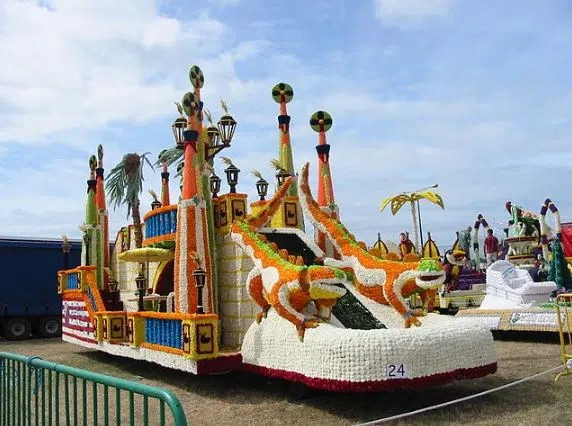
The Battle of Flowers Parade is one of San Antonio's oldest and most celebrated traditions. First held in 1891, the colorful procession honors the heroes of the Texas Revolution and marks the beginning of what eventually became Fiesta San Antonio. Featuring elaborate floral floats, marching bands, and festive performances, the parade continues to attract thousands of visitors each spring.
Key Takeaways
- The first Battle of Flowers Parade was held in April 1891 to commemorate the Battle of the Alamo and the Texas victory at San Jacinto.
- Ellen Maury Slayden and other prominent San Antonio women helped establish the original floral celebration.
- The parade became the founding event of Fiesta San Antonio, which eventually expanded into a major annual festival.
- The Battle of Flowers Association remains an all-women volunteer organization responsible for organizing the parade.
- Elaborate flower-covered floats, marching bands, and ceremonial traditions have become defining features of the event.
- The Fiesta Flambeau Parade began in 1948 as a separate nighttime celebration featuring illuminated floats.
- Fiesta San Antonio experienced interruptions during World War I, World War II, and the COVID-19 pandemic.
- The festival continues celebrating San Antonio's history, cultural diversity, and community traditions.
Origins and History of the Battle of Flowers
The Battle of Flowers began in April 1891 as a floral procession honoring those who fought during the Texas Revolution. Participants decorated horse-drawn carriages, bicycles, and other vehicles with flowers. The celebration took place around the Alamo, where participants playfully tossed flowers at one another.
Ellen Maury Slayden played a leading role in developing the event after encountering similar floral celebrations abroad. Other prominent San Antonio women supported her proposal, while businessman John S. Alexander also assisted with organizing the festivities. Their efforts established the foundation for the Battle of Flowers Association.
The inaugural parade was originally planned around San Jacinto Day, April 21, but historical records identify April 24, 1891, as the date it occurred following a postponement. Its success encouraged organizers to continue the celebration, gradually transforming a single floral procession into a lasting San Antonio tradition.
How the Battle of Flowers Became Fiesta San Antonio
The Battle of Flowers Parade initially focused on commemorating Texas's struggle for independence. Its success inspired additional celebrations, including dances, festivals, concerts, and public gatherings. By 1895, the festivities had expanded beyond the original procession into a larger springtime celebration.
Throughout the following decades, the festival underwent several name changes. Earlier names included Carnival, Spring Carnival, and Fiesta San Jacinto. The name Fiesta San Antonio became established in the twentieth century, reflecting the event's expanding emphasis on the city's history and cultural diversity.
Today, Fiesta San Antonio includes more than 100 official events featuring music, food, parades, exhibitions, and community celebrations. The Battle of Flowers remains its founding event and one of its most recognizable attractions. What began as a tribute to Texas history has evolved into a major celebration of San Antonio's heritage.
The Women Behind the Battle of Flowers Association
The Battle of Flowers Association traces its origins to the group of San Antonio women who organized the inaugural parade in 1891. Ellen Maury Slayden was among its leading founders, while Elizabeth Simpson Kampmann became the first chairman of the organizing committee.
The association developed into an organization managed and directed entirely by women volunteers. Members organize the annual parade, coordinate participants, and maintain its historical traditions. Their efforts have helped preserve one of the oldest civic celebrations in San Antonio for more than a century.
The Battle of Flowers Parade is recognized as the largest parade in the United States organized entirely by women volunteers. The association also supports educational activities that promote Texas history and cultural awareness. Its continued leadership reflects the important role women have played in San Antonio's civic life.
Floral Floats and Traditions of the Parade
Colorful floral floats are the most recognizable feature of the Battle of Flowers Parade. Early participants decorated carriages and bicycles with fresh flowers, creating a festive procession through San Antonio. Over time, these simple decorations evolved into elaborate floats featuring detailed designs and themed arrangements.
Modern parades include marching bands, equestrian units, decorated vehicles, and participants wearing elaborate costumes. Fiesta royalty frequently appear aboard decorated floats, waving to spectators gathered along the route. Each year's celebration introduces creative themes while maintaining the event's traditional floral identity.
One important ceremony involves honoring the defenders of the Alamo. Participants present floral tributes near the historic site, preserving the parade's original commemorative purpose. These traditions connect the celebration's colorful entertainment with its historical origins and the events of the Texas Revolution.
Fiesta Royalty and the Coronation Tradition
Royalty became an important part of Fiesta San Antonio as the celebration expanded during the 1890s. The selection of a Carnival Queen began in 1895, introducing elaborate ceremonies and formal public appearances. These traditions helped transform the festival into a larger social and cultural occasion.
Over time, Fiesta developed several royal traditions involving queens, princesses, kings, and other ceremonial representatives. Members of the Order of the Alamo participate in the Coronation of the Queen of the Order of the Alamo, an elaborate presentation featuring decorative gowns and detailed costume designs.
Fiesta royalty appear at parades, community gatherings, and charitable activities throughout the celebration. Their participation adds pageantry to the festivities while preserving customs developed over generations. These traditions remain recognizable features of San Antonio's annual spring festival.
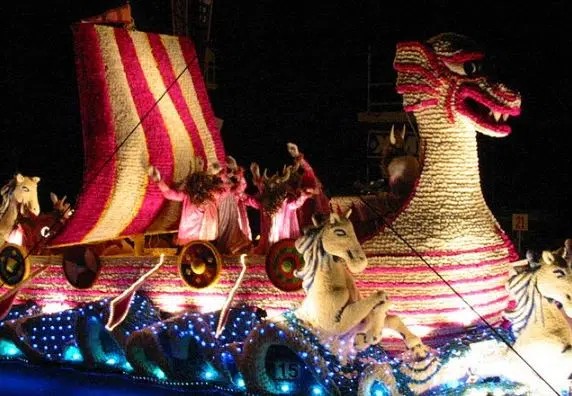
Fiesta Flambeau: San Antonio's Illuminated Night Parade
Fiesta Flambeau is a separate parade that became part of San Antonio's Fiesta celebrations in 1948. Civil engineer Reynolds Andricks proposed the event after being inspired by illuminated parades associated with Mardi Gras in New Orleans. The idea introduced a nighttime spectacle to the city's growing festival.
The name Flambeau comes from a French word associated with torches. During the parade's early years, participants carried flaming torches and flares to illuminate the procession. These traditional lighting methods gradually gave way to elaborate electrical decorations and modern illuminated floats.
Today, Fiesta Flambeau is recognized as one of the largest illuminated nighttime parades in the United States. Marching bands, dancers, decorated vehicles, and performers contribute to its festive atmosphere. Unlike the Battle of Flowers Parade, Fiesta Flambeau is organized by the Fiesta Flambeau Parade Association.
How the Battle of Flowers Survived Historical Challenges
The Battle of Flowers tradition has continued for more than a century, although major historical events occasionally interrupted the celebrations. Fiesta was canceled in 1918 during World War I and from 1942 through 1945 during World War II. These interruptions reflected the national circumstances affecting public gatherings.
The COVID-19 pandemic created another significant disruption. Fiesta San Antonio was canceled in 2020, while the traditional Battle of Flowers Parade also did not take place in 2021. The wider festival returned in a modified form that year, with organizers adapting activities to public health conditions.
Despite these interruptions, the Battle of Flowers Association maintained its commitment to preserving the parade's historical purpose. Volunteers continued planning future celebrations while supporting community traditions. The event's ability to return after difficult periods demonstrates its enduring importance to San Antonio's cultural identity.

Comments (0)
No comments yet. Be the first to share your thoughts.
Leave a comment