


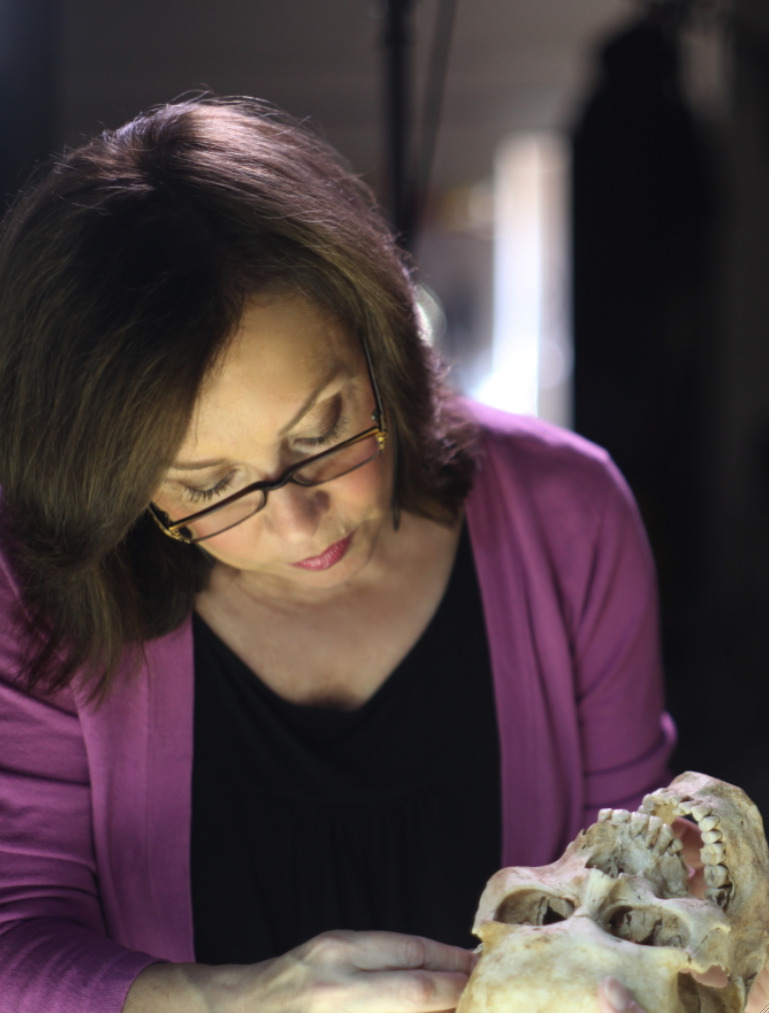
Karen T. Taylor, based in Austin, is a renowned forensic artist who excels in bringing clarity to mysteries through her expertise in forensic facial reconstruction and composite sketches. She’s dedicated over three decades to supporting law enforcement and solving cold cases. Her work combines traditional methods with modern technology to provide accurate representations, turning the nameless into recognized faces. There’s more to uncover about her remarkable journey and contributions to justice.
Early Life and Education
Karen T. Taylor, born on March 6, 1952, in Fort Worth, Texas, initiated her artistic path early on. You’d find her honing her craft at R. L. Paschal High School before advancing her education at the University of Texas School of Fine Arts.
Here, she sharpened her skills that would later define her career as a forensic artist. Seeking broader horizons, Karen T. Taylor traveled to London to study at the Chelsea School of Fine Art, where her artistic perspective expanded considerably.
She gained invaluable experience at Madame Tussauds Wax Museum, mastering realistic representations. These educational and practical experiences laid the foundation for her unique integration of art and forensic science, setting the stage for her future contributions.
Career as a Forensic Artist
Building on her rich educational background and international experiences, Karen T. became the primary full-time forensic artist for the Texas Department of Public Safety, a role she held for over 18 years.
Her expertise in forensic art shines through her work on composite sketches and Forensic Facial Reconstruction. As an author of “Forensic Art and Illustration,” she’s crafted a crucial resource that deepens understanding of facial anatomy.
Her influence extends beyond her book as she actively shares her knowledge through forensic art workshops. As a forensic art instructor, she empowers law enforcement and artists alike.
Here’s how she contributes to the field:
- Facial Reconstructions
- Composite Sketches
- Educational Textbook Author
- Forensic Art Workshops
Notable Achievements and Awards
Recognized for her groundbreaking work in forensic art, Karen T. Taylor has collected numerous accolades throughout her career.
As a forensic artist, she received a Director’s Citation in 1997 from the Texas Department of Public Safety, highlighting her exceptional service. In 1999, Karen T. Taylor was celebrated as one of the Texas Women of the Century for her significant contributions to the field.
Breaking new ground, she became the first woman awarded the prestigious Dondero Award by the International Association for Identification in 2002. Her advancements in skull-to-face reconstruction techniques have been crucial, earning her several IAI Awards.
These achievements underscore her influence and pioneering role in forensic art, cementing her legacy in the discipline.
Contributions to Forensic Anthropology
Diving into the domain of forensic anthropology, Karen T. Taylor’s role as the Texas Department of Public Safety’s initial full-time forensic artist showcases her significant contributions to the field.
Her expertise in facial reconstruction has been crucial for identification purposes. Here’s how her work stands out:
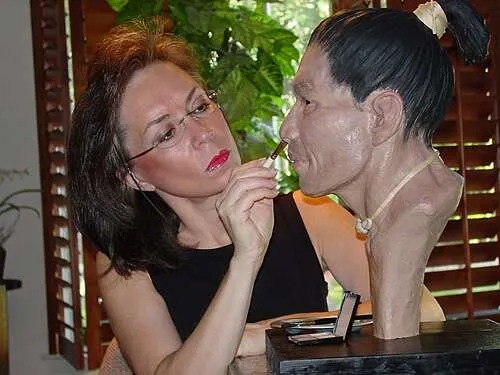
- Facial Reconstructions: Creating artwork from skulls, she’s reconstructed faces like the Bo person from southern China, based on an 800-year-old skull.
- Artistic Collaborations: Worked with bioarchaeologists on the Red Queen of Palenque, merging forensic art and archaeology.
- Educational Impact: Authored “Forensic Art and Illustration,” a key textbook in forensic anthropology, shaping methodologies.
- Public Awareness: Educated law enforcement agencies and the public about the importance of facial reconstructions for accurate victim identification.
Fine Art and Sculpture Projects
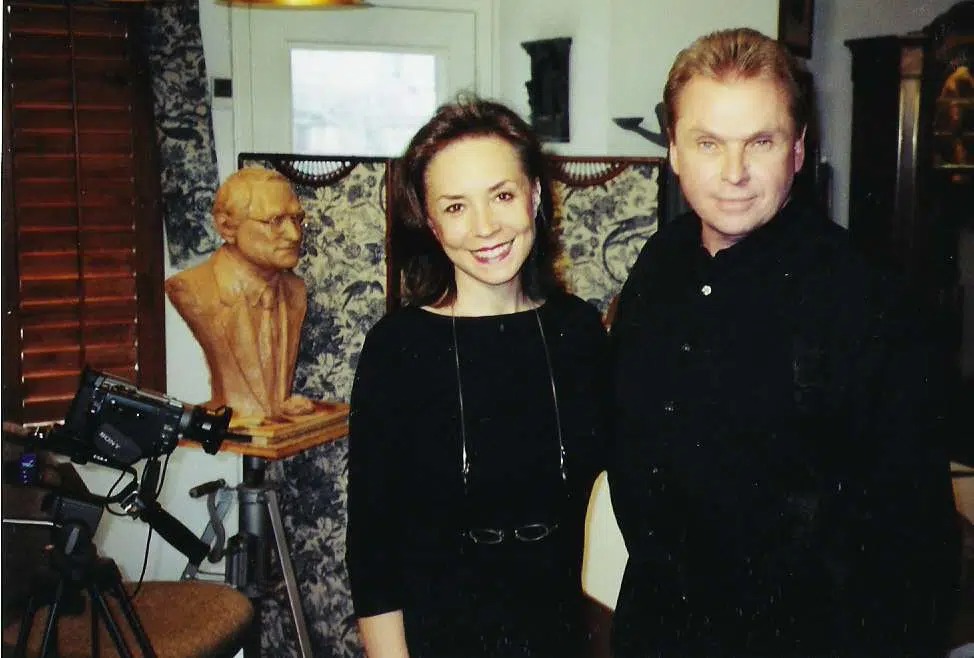
Karen T. Taylor has shifted from her role as a forensic artist to focusing on fine art and illustration. Her work includes creating bronze sculptures that pay homage to societal contributions, like the sculpture of forensic scientist George Taft at the Alaska State Troopers Museum.
As an artist affiliated with Texas State University, she excels in crafting facial reconstruction sculptures and fine art portraiture. Her commissioned pieces, such as life-size busts and bas relief sculptures, highlight her skill in personalized artistic representations.
Taylor’s art, including the portrait of Barbara Benton at the International Headquarters of the Order of the Eastern Star, enriches public understanding of forensic art. Her projects seamlessly blend forensic art techniques with broader artistic expressions.
Educational Workshops and Training
Shifting from her sculptures and fine art pieces, Karen T. offers engaging workshops at the Forensic Anthropology Center. As a forensic artist, she provides a unique blend of art and science through her facial reconstruction courses.
Here’s what you can expect:
- Workshop Options: Both Basic and Master-level courses are available. The latter requires prior experience and an extra skull model for home practice.
- Practical Exercises: Engage in hands-on activities, comparing your work to life photos, simulating real case scenarios.
- Schedule: Classes run from 8:30 a.m. to 4:30 p.m. daily, with details provided on the “Workshops” page.
- Tuition: Priced at $1050.00 per person, it covers in-class supplies, excluding travel and accommodation.
This training is ideal for honing your forensic skills.
Publications and Literary Contributions
In the domain of forensic art, few contributions stand as essential as Karen T. Taylor‘s publications. As a renowned forensic artist, her textbook “Forensic Art and Illustration” published in 2001, is a fundamental educational resource. It covers the history of forensic art, explores facial anatomy, and offers practical methodologies.
Her article, “Understanding Faces from the Inside Out,” featured in “American Artist Drawing” magazine, showcases her expertise in facial features. Taylor’s work isn’t just theoretical; she augments forensic science literature with actual case examples, bridging the gap between theory and practice.
Her contributions have notably improved the educational resources available, enhancing the quality of artistic composition and human sculptures for both students and professionals in the field.
Impact on Law Enforcement and Justice
While her artistic skills are undeniable, it’s Karen T. Taylor’s role as a forensic artist with the Texas Department of Public Safety that truly highlights her impact.
Her facial reconstruction techniques have transformed how law enforcement approaches identifying victims and suspects.
Here are four ways she’s influenced justice:
- Advancements in Techniques: Taylor’s work led to significant improvements in skull-to-face reconstruction, essential for solving crimes.
- Workshops: By conducting workshops, she’s trained countless law enforcement professionals, enhancing investigative effectiveness.
- High-Profile Cases: Her reconstructions have been featured on platforms like “America’s Most Wanted,” rallying public support.
- Commitment to Justice: Taylor’s dedication is evident in cases like Raquel Williams, where her skills brought closure to grieving families.
Future Endeavors and Ongoing Projects
Karen T. Taylor’s future endeavors as a forensic artist are both ambitious and impactful.
She’s expanding her forensic art workshops, offering both Basic and Master-level courses on facial reconstruction techniques. These workshops aim to equip aspiring forensic artists with the skills needed in the evolving field.
Actively collaborating with law enforcement, she creates composite images and age progressions to help solve cold cases.
Taylor is also working on a series of bronze sculptures that honor significant contributions to forensic science and the arts.
Her commitment to public education includes lectures and presentations that highlight the importance of forensic art in criminal justice.
Furthermore, she’s updating resources to reflect advancements in technology, ensuring her teachings remain at the forefront of the field.

Comments (0)
No comments yet. Be the first to share your thoughts.
Leave a comment