


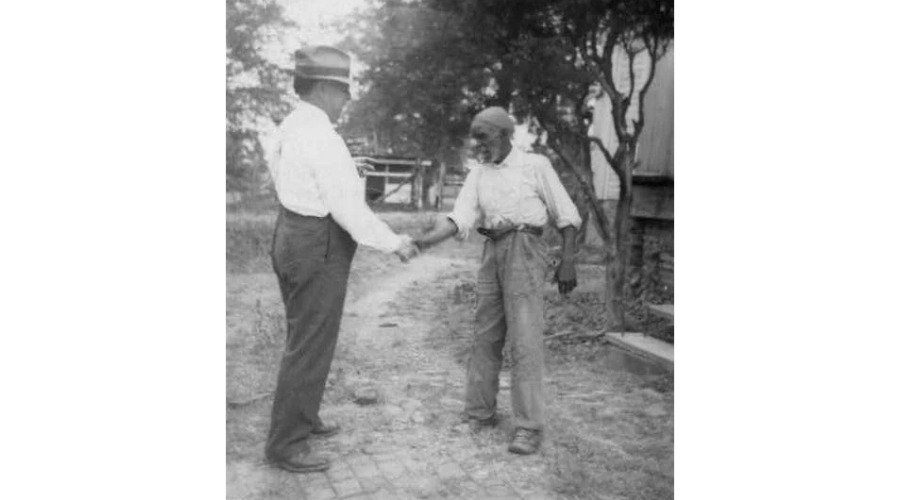
John Lomax captured the diverse sounds of Texas, earning acclaim as an Austin musicologist dedicated to preserving the state’s rich musical heritage. Growing up surrounded by cowboy songs and rural music, he befriended individuals like Nat Blythe, which fueled his passion for folk traditions.
He co-founded the Texas Folklore Society in 1909, collected over ten thousand field recordings, and worked with his son Alan to explore traditional songs. There’s more to his story that you won’t want to miss.
Early Life and Influences

Although John Lomax was born in Goodman, Mississippi, in 1867, his family moved to Texas when he was just two years old, immersing him in the rich tapestry of cowboy songs and rural music traditions.
Growing up in Bosque County, Texas, he befriended Nat Blythe, a former slave, who deepened his appreciation for folk songs and music. This friendship marked Lomax’s early commitment to cultural exchange, as he taught Blythe to read and write.
You can see how these experiences influenced his later work at the University of Texas, where he began collecting folk songs. His passion for cowboy music and folklore was further nurtured during his graduate studies, ultimately inspiring his son, Alan Lomax, to continue the family’s legacy of preserving American music.
Academic Pursuits and Discoveries
John Lomax’s academic journey took a decisive turn when he enrolled at the University of Texas at Austin in 1895, majoring in English literature and diving into the world of folk songs. Despite initial resistance from faculty, Lomax’s passion for folklore flourished.
His path continued at Harvard University in 1906, where mentors Barrett Wendell and George Lyman Kittredge ignited his interest in cowboy songs. A Sheldon Fellowship grant allowed him to study these songs, leading to his influential anthology “Cowboy Songs and Other Frontier Ballads” in 1910.
Alongside cowboy tunes, Lomax incorporated African American folklore into his work, recognizing its vital role in American music. His academic efforts helped lay the groundwork for the Texas Folklore Society, which he co-founded in 1909.
Establishing the Texas Folklore Society
In 1909, driven by a shared passion for preserving Texas’ rich folkloric heritage, John Lomax and Professor Leonidas Payne co-founded the Texas Folklore Society. This initiative sprang from a Texas State Teachers Association meeting, quickly gaining traction with 92 charter members by April 1910.
As the initial secretary, Lomax harnessed his national fame to secure funding, ensuring the society’s successful launch and focus on preserving Texas folklore.
- Promoted the study of Texas folklore through publications.
- Published the inaugural issue in 1910, marking a commitment to preservation.
- Foreshadowed Lomax’s later work with the Library of Congress on the Archive of American Folk Song.
- Documented and disseminated folklore, building a rich anthology.
Lomax’s efforts highlighted the importance of recordings in chronicling Texas’ unique cultural tapestry.
Contributions to the Archive of American Folk Song
Immersing himself in America’s musical heritage, John Lomax made monumental strides with his contributions to the Archive of American Folk Song at the Library of Congress.
You can appreciate how he enriched the repository of American folk music by collecting over ten thousand field recordings. His work celebrated the country’s diverse traditions, including cowboy ballads and songs from African American prisoners, highlighting its cultural heritage.
Appointed as Honorary Consultant and Curator in 1934, Lomax guaranteed the preservation of these invaluable sounds.
Collaborating with his son, Alan Lomax, he documented traditional songs from multiple regions, particularly the South. Their efforts turned the Archive into a vital resource for scholars and musicians, forever preserving the essence of American folklife for future generations.
Field Recording Expeditions
Initiating ambitious field recording trips in June 1933, John Lomax, alongside his son Alan, tirelessly captured the authentic sounds of American folk music.
They focused on African American songs from prison farms in Texas and Louisiana. Using a 315-pound phonograph disk recorder, they documented over ten thousand recordings for the Archive of American Folk Song.
Their work included recording the legendary Lead Belly. The 1939 Southern States Recording Trip alone yielded nearly 700 sound recordings, showcasing the rich cultural variety of the South.
Consider these achievements:
- Recorded over 10,000 songs for preservation.
- Highlighted the richness of American folk music across diverse cultures.
- Included significant figures like Lead Belly.
- Preserved unique traditions that might’ve been lost.
These efforts enriched America’s musical heritage.
Discovering and Promoting Lead Belly
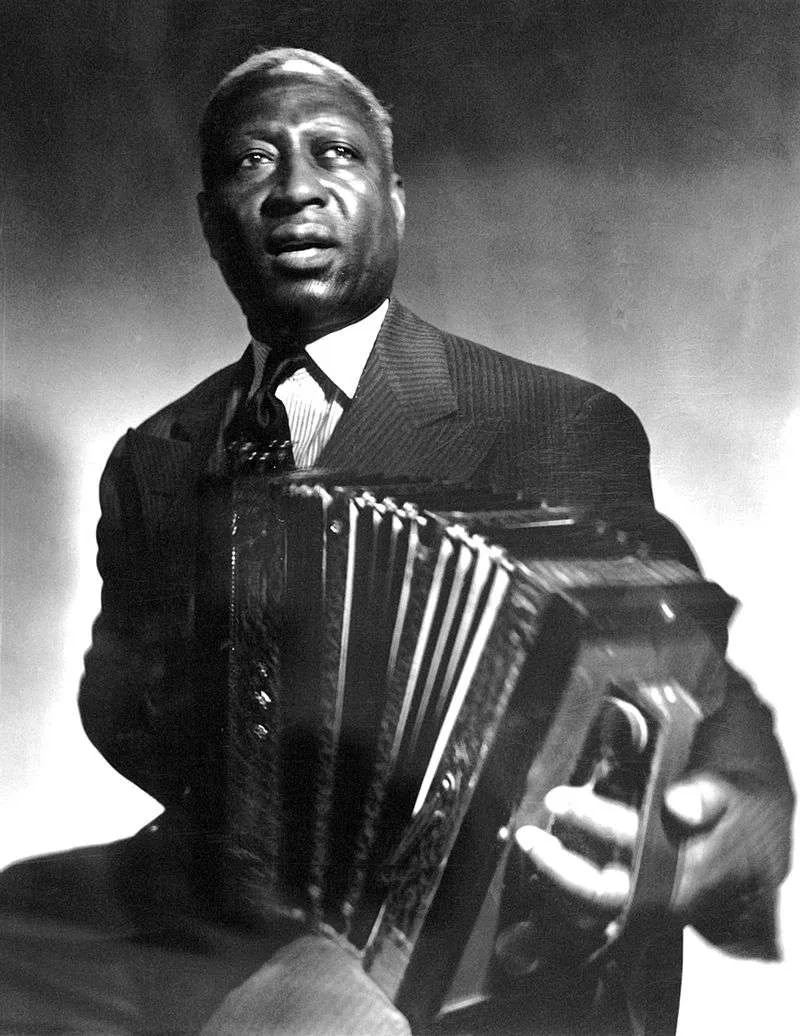
John Lomax’s journey into the heart of American folk music led him to uncover Lead Belly, an extraordinary blues musician whose talent was hidden behind the bars of a Texas prison.
Conducting field recordings on prison farms, Lomax found Lead Belly’s raw talent. In July 1934, Lead Belly requested a recording to present to the Governor for parole, showcasing not just his talent but also the significance of Lomax’s preservation efforts.
After Lead Belly’s release, Lomax became his manager, securing a recording contract. Though initial commercial success eluded them, their collaboration was crucial in preserving African American folk music.
Lomax’s work, as a dedicated musicologist, greatly influenced the folk music revival, ensuring that Lead Belly’s legacy endures.
Impact and Recognition in Folklore
As you explore the domain of American folklore, you’ll find John Lomax’s impact is both profound and enduring. He co-founded the Texas Folklore Society, quickly growing its membership and establishing a foundation for preserving Texas’s rich cultural tapestry.
His anthology, “Cowboy Songs and Other Frontier Ballads,” was instrumental in bringing cowboy songs to the forefront of American folk music. Lomax’s tenure as president of the American Folklore Society further solidified his influence in folklore studies.
His efforts included:
- Curating over ten thousand recordings for the Archive of American Folk Song.
- Highlighting African American folklore, ensuring marginalized voices were heard.
- Emphasizing cultural diversity within American folk music.
- Recognizing the contributions of Black cowboys.
Lomax’s work remains a cornerstone in understanding American cultural heritage.
Enduring Legacy and Influence on Music
Through his groundbreaking efforts, John Lomax left a lasting imprint on the world of music and culture. By collecting over ten thousand folk songs, including “Home on the Range,” he laid the foundation for American folk music study and musicology.
His creation of the Archive of American Folk Song at the Library of Congress was crucial in preserving this heritage. Lomax’s dedication to capturing songs from marginalized groups, like African American prisoners, emphasized cultural diversity in Texas and beyond.
His collaboration with his son, Alan Lomax, produced extensive field recordings that showcased American folk music’s evolution.
Today, the Lomax legacy endures as contemporary artists sample these recordings, continuously influencing music and keeping these traditions alive.

Comments (0)
No comments yet. Be the first to share your thoughts.
Leave a comment