


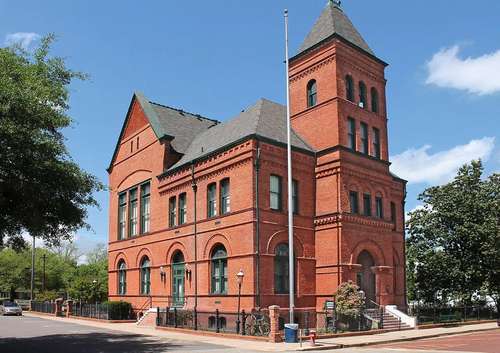
Renelibrary, PostOfficeJefferson1, CC BY-SA 4.0
Jefferson, Texas, feels like a place that somehow stepped outside the usual rush of time. Tucked away in the piney woods of East Texas, near the Louisiana border, it carries the look and spirit of an earlier age. Brick streets, historic homes, iron balconies, and old storefronts give the town an atmosphere that is hard to fake. Yet Jefferson is far more than a pretty old town with antique charm. Its history tells a bigger story about trade, transportation, ambition, disaster, reinvention, and survival.
In the nineteenth century, Jefferson was one of the most important towns in Texas. Today, it is much smaller and quieter than it was during its peak years. Even so, it still matters. It matters because it shows how geography can shape a town’s destiny. It matters because it reveals how quickly fortunes can rise and fall. Most of all, it matters because Jefferson never fully disappeared, even after the thing that made it prosperous was taken away.
That is what gives Jefferson such a strong identity. It was built by the river. It thrived because of the river. When river traffic faded, the town could have faded with it. Instead, Jefferson held on to its buildings, its stories, and its sense of place. It refused to be forgotten.
How Jefferson Became a River Port
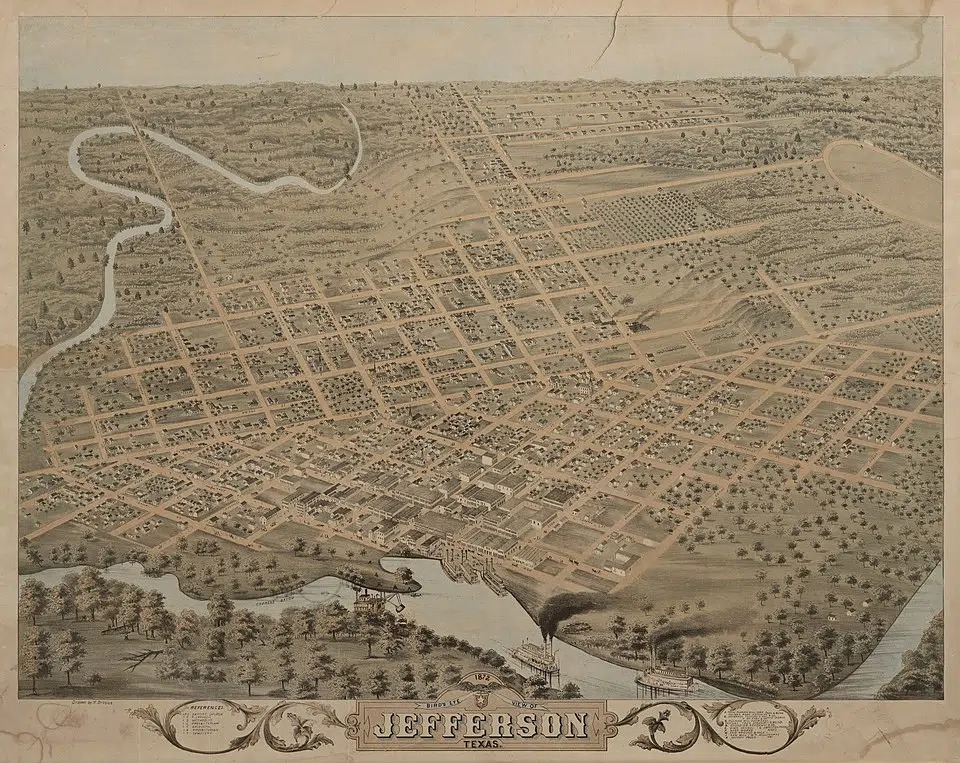
Jefferson’s early success came from its location on Big Cypress Bayou, a slow-moving waterway that connected East Texas to larger trade routes. In the days before railroads dominated the region, rivers and bayous were the highways of commerce. Steamboats could carry goods, people, news, and money far more efficiently than rough roads could.
For a time, nature gave Jefferson a huge advantage. A massive log jam known as the Great Raft clogged parts of the Red River system for many miles. While this sounds like a disaster, it actually helped create water conditions that made Jefferson reachable by steamboat. As a result, the town became a major inland port. Cotton, sugar, hides, grain, and other goods moved through Jefferson on their way to markets. In return, manufactured goods and luxury items arrived from New Orleans and beyond.
This trade turned Jefferson into a place of energy and wealth. Merchants opened businesses. Warehouses filled. Hotels, banks, and homes rose across the town. Travelers passed through. Investors took notice. By the mid-1800s, Jefferson had grown into one of the busiest commercial centers in Texas.
That rise was not an accident. It came from being in the right place at the right moment. Jefferson was well positioned to serve eastern Texas, and it benefited from water access at a time when water access could make or break a community.
The Golden Age of Jefferson
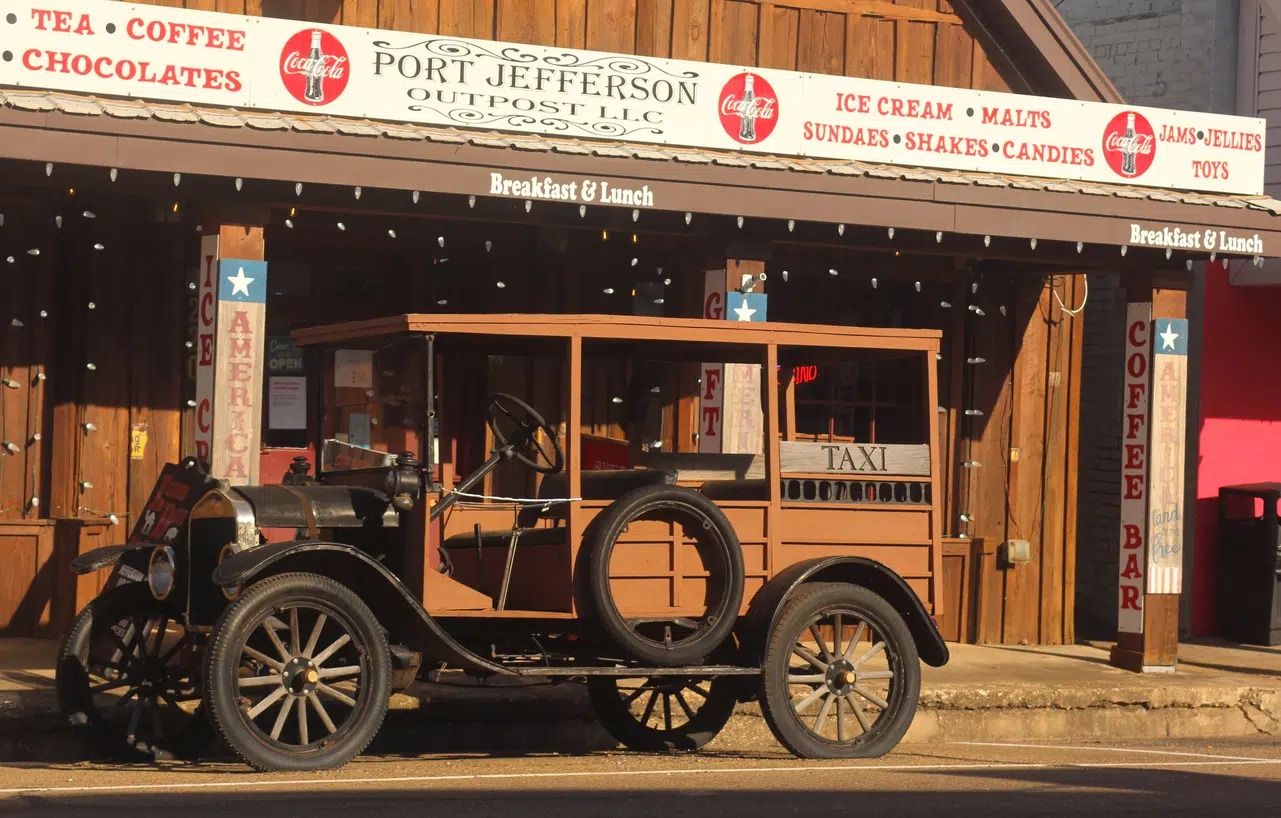
Jefferson’s boom years gave it a level of influence that can surprise modern visitors. This was not a backwater village. It was a lively port with business connections stretching across the South. The town became known for its commerce, culture, and importance in regional politics.
Wealth left its mark on the architecture. Prosperous families built large homes with decorative woodwork, tall windows, broad porches, and elegant interiors. Businesses constructed sturdy brick buildings that still stand today. Churches, inns, and public buildings added to the sense that Jefferson was a town with confidence in its future.
The social life of the town also grew. Jefferson became a place where ideas and fashions arrived quickly. Goods from distant cities came in by boat. Visitors brought stories and trends with them. Newspapers circulated. Conversation flourished in hotels, stores, and parlors. For a while, Jefferson had the feel of a gateway, a place linked to the wider world through trade and travel.
The town’s importance also reflected the economy of the South before the Civil War. Cotton was central to that economy, and Jefferson helped move cotton from East Texas plantations toward national and international markets. This economic system brought wealth to some, but it was also tied to slavery and deep inequality. Any honest account of Jefferson’s rise has to include that reality. Like many prosperous Southern towns of the time, its success cannot be separated from the labor and suffering of enslaved people.
That harder truth sits beside the town’s beauty and ambition. Jefferson’s story is fascinating, but it is not simple.
Civil War, Change, and Uncertainty
The Civil War disrupted trade, politics, and everyday life across Texas, and Jefferson was no exception. The conflict strained commerce and changed the region’s future. During and after the war, the town faced uncertainty, even though it remained important for a time.
In the Reconstruction years, Jefferson continued to function as a trade center, but the world around it was changing fast. Transportation networks were shifting. Railroads were expanding. Economic patterns were adjusting. Towns that once depended on waterways began facing strong competition from places connected by rail.
Jefferson still had momentum, and for a while it held on. The buildings were there. The merchants were there. The reputation was there. But the same natural conditions that had lifted Jefferson could not be counted on forever.
Then came the change that altered the town’s fate.
The Natural Shift That Changed Everything
Jefferson’s prosperity depended heavily on navigable water. Once that advantage disappeared, the town’s role in the regional economy shrank. The removal of the Great Raft and other changes in the river system lowered water levels and affected navigation. Steamboats could no longer reach Jefferson as they once had.
That one shift changed everything.
A town built around river trade suddenly found itself cut off from the system that had made it thrive. It was a harsh lesson in how dependent some communities are on geography. Jefferson did not suddenly vanish overnight, but the decline was real. Trade slowed. Business weakened. Other towns with stronger railroad connections pulled ahead.
This is one of the most interesting parts of Jefferson’s history. Many American towns were damaged by war, poor leadership, or economic collapse. Jefferson suffered from something different. It was overtaken by environmental change and new transportation patterns. The world moved in another direction, and Jefferson was left behind.
Yet even then, the town did not disappear.
Why Jefferson Survived When Others Did Not
Across the United States, many once-important towns faded so completely that little remained beyond a cemetery, a marker, or a few scattered ruins. Jefferson avoided that fate. Its survival came from a mix of stubbornness, circumstance, and historic luck.
One reason is that the town had already built so much during its prosperous years. Homes, commercial blocks, and civic buildings had substance and quality. Even after growth slowed, those structures remained. Jefferson still looked like a place with a story worth keeping.
Another reason is that the town was never entirely abandoned. People stayed. Businesses adapted. Families remained rooted there. Life went on, even if it was quieter than before. That continuity matters. A town can survive hard times when enough people decide it is still home.
Jefferson also benefited from something that later generations would recognize as valuable: authenticity. Because it did not experience the same scale of modern redevelopment as larger cities, much of its historic character survived. Over time, that became one of its greatest strengths.
In a strange way, decline helped preserve Jefferson. What had once seemed like economic misfortune later made the town appealing to visitors, preservationists, and history lovers. The streets and buildings that might have been torn down in a booming city were still there.
Architecture That Keeps the Past Visible
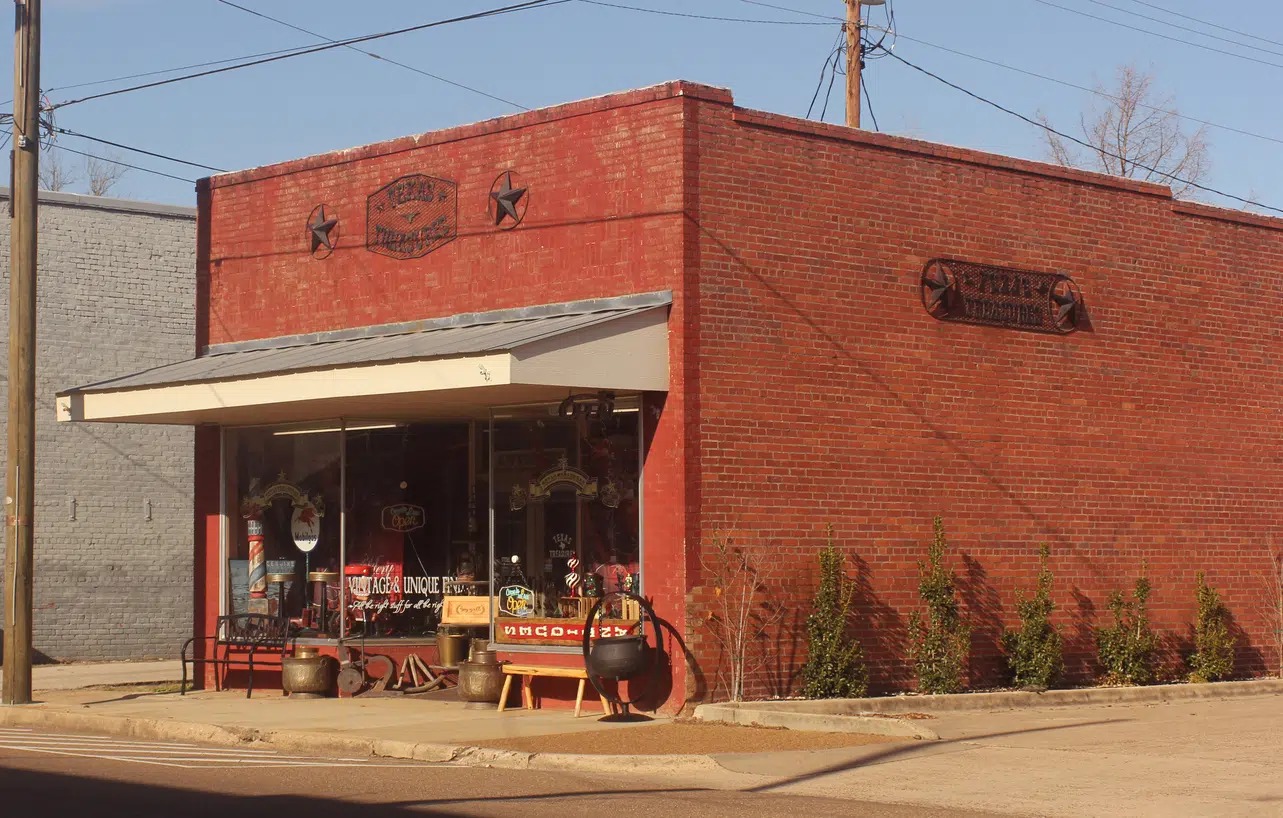
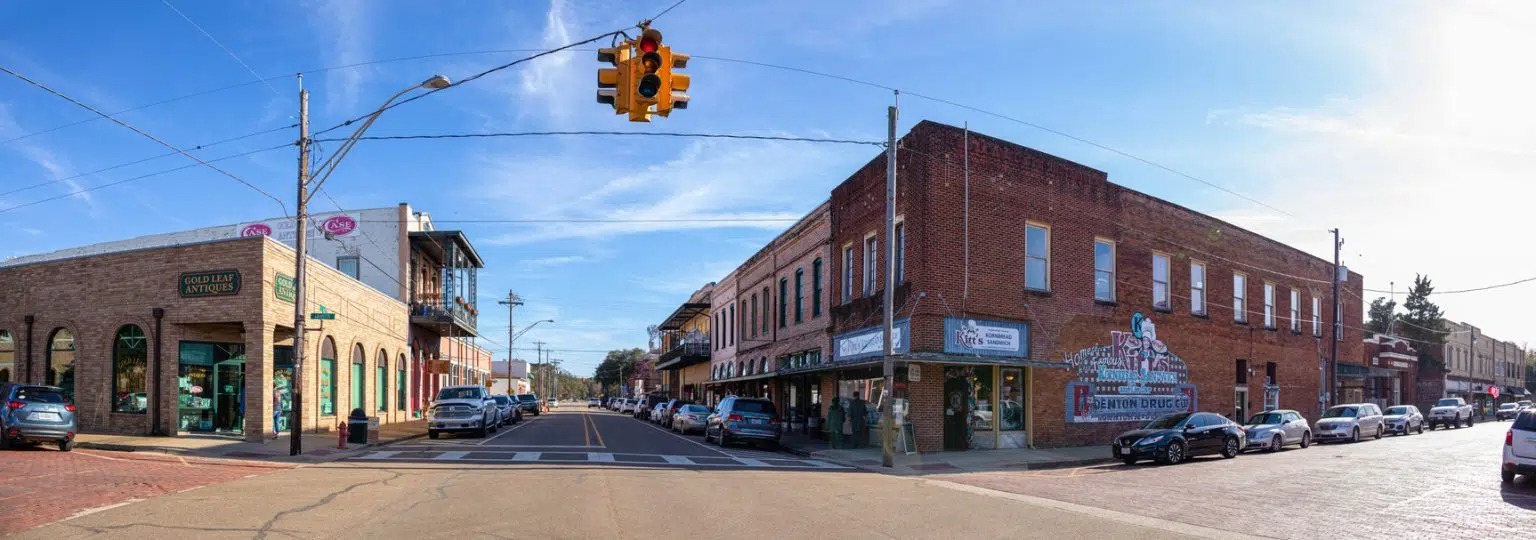
Walk through Jefferson today, and the town’s physical history is impossible to miss. Historic homes line the streets with a level of detail that reflects the wealth of the nineteenth century. Many buildings downtown still suggest the old commercial life of the river era. Their brick facades, tall windows, and period details help visitors imagine what Jefferson once was.
Architecture matters because it gives history a visible form. It turns dates and names into something you can stand in front of. In Jefferson, the built environment still tells the story of ambition, prosperity, and change. The town does not need to rely on memory alone. It can point to the evidence.
This is one reason Jefferson has remained such a strong destination for heritage tourism. People are not only reading about the past there. They are walking through it. They are seeing how houses were designed, how businesses were arranged, and how a river town presented itself when it expected to keep growing.
That visual connection makes the town easier to understand. It also makes it easier to remember.
Jefferson and the Business of Memory
Over time, Jefferson learned how to turn its history into part of its modern identity. Instead of trying to erase the past, the town leaned into it. Historic preservation, museums, tours, inns, festivals, and local storytelling all helped make Jefferson known again.
This does not mean the town became a museum frozen in place. People still live there, work there, and build ordinary lives there. Still, history became one of Jefferson’s biggest assets. Visitors come for ghost stories, old mansions, river lore, antiques, and the sense that the town offers a different rhythm from the modern world.
That appeal is powerful. In a fast-moving society, places like Jefferson stand out because they feel grounded. They remind visitors that not every community has to be shiny, new, or expanding at full speed to have value. Sometimes a town matters because it has endured.
Jefferson’s reputation for hauntings and legends has also added to its public image. Ghost tours and spooky tales are part of the town’s tourist appeal. Some visitors arrive for the history and stay for the mystery. Others come for the mystery and end up learning the history. Either way, the storytelling works because the setting feels believable. Jefferson looks like a town where stories would linger.
What Jefferson Teaches About Texas History
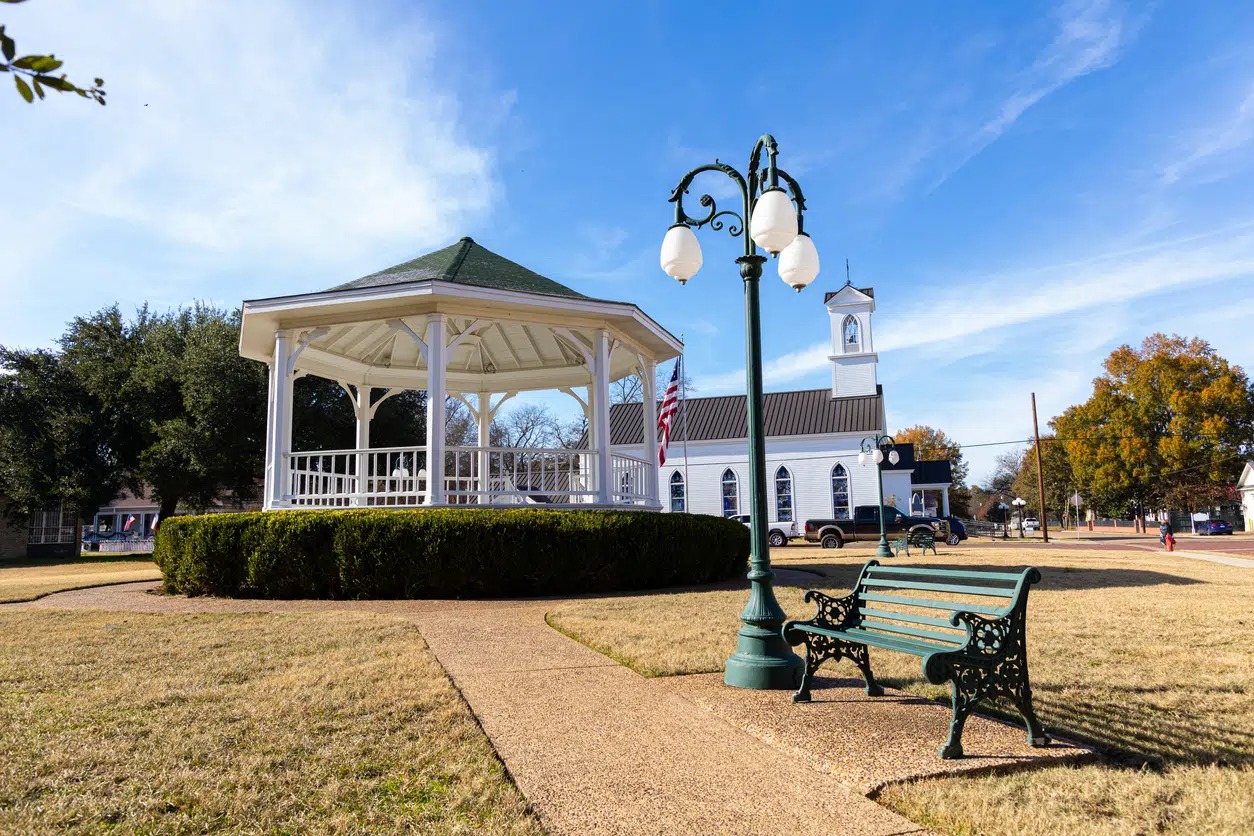
Jefferson’s story helps explain a side of Texas history that often gets less attention than cattle drives, oil booms, or frontier battles. East Texas had its own economic world, shaped by forests, waterways, agriculture, and ties to the wider South. Jefferson was one of the clearest examples of that world in action.
The town also shows that Texas history is not only about constant expansion. It is also about adaptation. Some communities rose quickly and then had to figure out what came next. Jefferson did exactly that. It lost the advantage that made it powerful, but it found another way to stay relevant.
There is also a lesson here about transportation. It is easy to forget how much roads, rivers, railroads, and shipping routes determine which places prosper. Jefferson reminds us that a town can be central in one era and peripheral in the next, simply because the map of movement changes.
Then there is the lesson about preservation. Historic places do not survive on their own. People have to care enough to protect them. Jefferson exists as a meaningful historic town today because generations chose not to let it collapse into neglect or be stripped of its character.
The Jefferson of Today
Modern Jefferson is not the booming port it once was, and it does not pretend to be. That honesty is part of its appeal. It welcomes visitors with its history out in the open. The town’s size, pace, and preserved character give it a sense of intimacy that larger places cannot offer.
Tourism now plays a major role in Jefferson’s identity. Travelers come to explore historic houses, browse antique shops, take carriage rides, enjoy river outings, and experience a part of Texas that feels distinct from the major cities. The local economy has shifted, but the town’s past remains at the center of what draws people in.
Jefferson also appeals to those who want a deeper connection to local and regional history. It offers a chance to see how commerce once worked in inland Texas, how communities developed before highways took over, and how architecture can preserve memory long after an economic boom ends.
This combination of beauty, history, and endurance is what keeps Jefferson relevant. It is not surviving on nostalgia alone. It is offering something real: a layered story written into the town itself.
The River Town That Stayed
Jefferson, Texas, could have become a footnote. It could have been one more former boomtown remembered only by historians and old maps. Instead, it endured. The river trade that built it disappeared, but the town kept enough of itself intact to carry its story forward.
That is why Jefferson stands out. It is a place shaped by nature, lifted by commerce, tested by change, and preserved by memory. Its old buildings still hold the outline of its grander days. Its streets still suggest the life of a once-busy port. Its continued existence proves that decline does not always mean erasure.
Jefferson refused to be forgotten because it never fully gave up its identity. It kept the marks of its past. It held on to its architecture, its legends, and its sense of purpose. In doing so, it became something more lasting than a successful river town. It became a reminder that some places can outlive the very reasons they were founded.
That makes Jefferson more than a historic destination. It makes it a lesson in endurance.

Comments (0)
No comments yet. Be the first to share your thoughts.
Leave a comment