


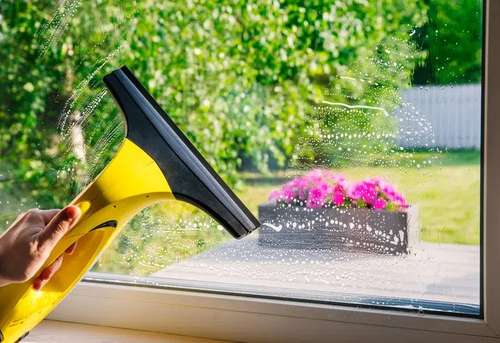
High-pollen seasons in Texas can be a challenge for anyone trying to keep their windows clear. Pollen rains down from trees, grasses, and weeds, sticking to glass and frames and leaving yellow or greenish dust where you least want it. If you live in cities like Austin, Dallas, Houston, or San Antonio, you’ve likely dealt with this problem every spring and fall. Understanding how pollen behaves and what practical steps you can take makes it easier to keep windows clean and enjoy brighter views inside your home.
This article breaks down simple, effective approaches for managing pollen on windows, with tips that work whether you’re tackling a single window or cleaning the whole house.
What Causes Pollen Buildup
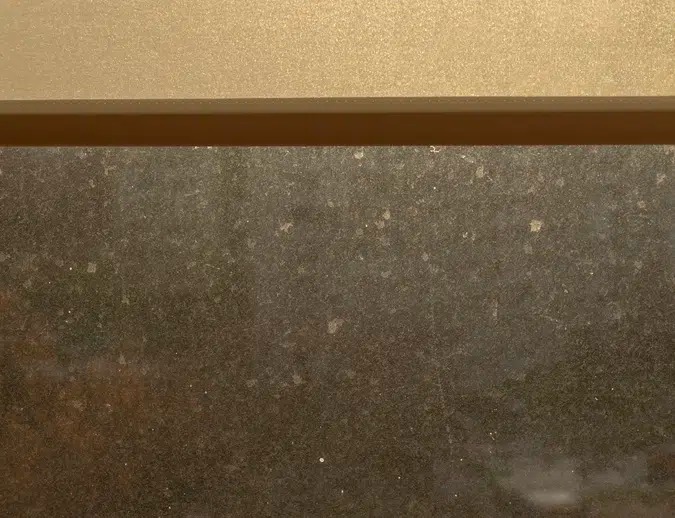
Pollen comes from plants releasing grains into the air to fertilize other plants. In Texas, a mix of oak, cedar, ragweed, and grasses can produce large amounts of pollen at different times of the year. Cedar pollen typically peaks in winter and early spring in central Texas, while grass and weed pollen rise in late spring and fall. Wind carries pollen everywhere, and it easily lands on outdoor surfaces.
Windows are particularly vulnerable because pollen sticks to glass and frames. Moisture, dew, and humidity help pollen grains adhere, so early mornings often show the worst buildup.
Knowing when pollen levels are high helps you plan your cleaning routine. Local weather or gardening sites often list daily pollen forecasts. You can use this information to choose the best days for cleaning.
Preparing for Window Cleaning
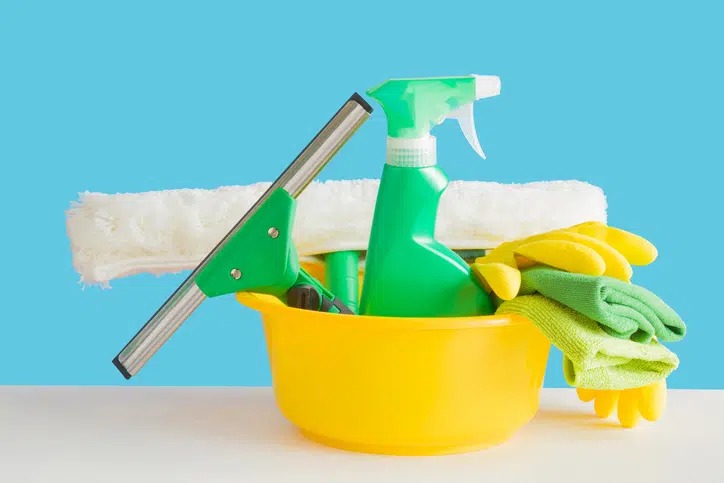
Before you begin actual cleaning, gather the right tools and solutions. Having everything ready makes the job quicker and reduces frustration.
Tools You’ll Need
- Soft microfiber cloths: These trap pollen rather than just pushing it around.
- A soft-bristle brush or small hand broom: Helps sweep pollen off screens and frames.
- A squeegee: Makes it easier to remove soap and water without streaks.
- Bucket or spray bottles: For mixing and applying cleaning solutions.
- Mild dish soap: Works well for removing stubborn pollen residue.
- Garden hose with spray nozzle: Useful for rinsing exterior windows.
- Old towels or drop cloths: To protect floors and patios from drips.
Choose cleaning tools that are gentle. Pollen can scratch glass if you scrub with rough materials or dirty cloth.
Step-by-Step Cleaning for Exterior Windows
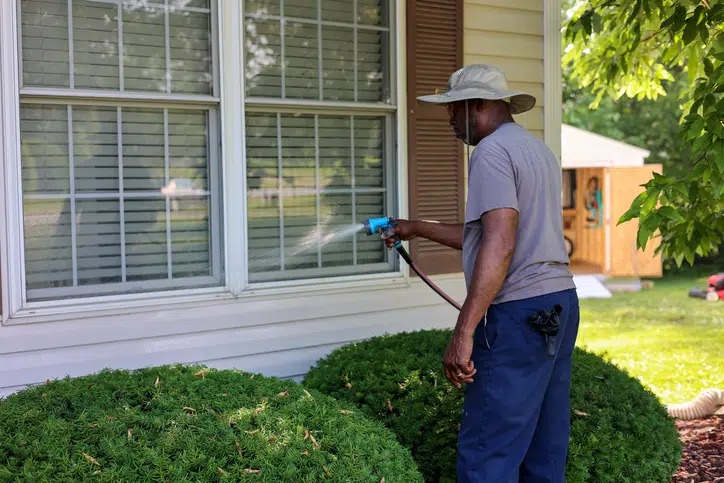
Exterior windows usually get the most pollen buildup. It’s best to start outside before moving indoors.
1. Dry Brush First
Start by sweeping pollen from the frame, tracks, and screens with a soft brush. This removes loose pollen and prevents smearing when you add liquid. Work from top to bottom so pollen falls down onto a drop cloth or ground instead of back onto cleaned areas.
2. Rinse With Water
Use a garden hose with moderate pressure to rinse the entire window surface. This step washes away large amounts of pollen. If your hose has a shutoff nozzle, set it to a gentle spray to avoid damaging screens or window seals.
3. Apply a Cleaning Solution
Mix a few drops of mild dish soap in a bucket of warm water or use a ready-made window cleaning solution. Spray or apply the soapy water generously over the glass.
Let it sit for a minute or two. Pollen can be sticky, and letting the soap work helps loosen residue.
4. Squeegee the Glass
Starting at the top corner, pull the squeegee in straight lines down the window. After each stroke, wipe the blade with a clean cloth. This method reduces streaks and leaves glass clear.
5. Final Rinse and Dry
Rinse again with plain water to remove soap residue. Use a dry, clean microfiber cloth to wipe edges and any remaining water spots.
How to Clean Interior Windows
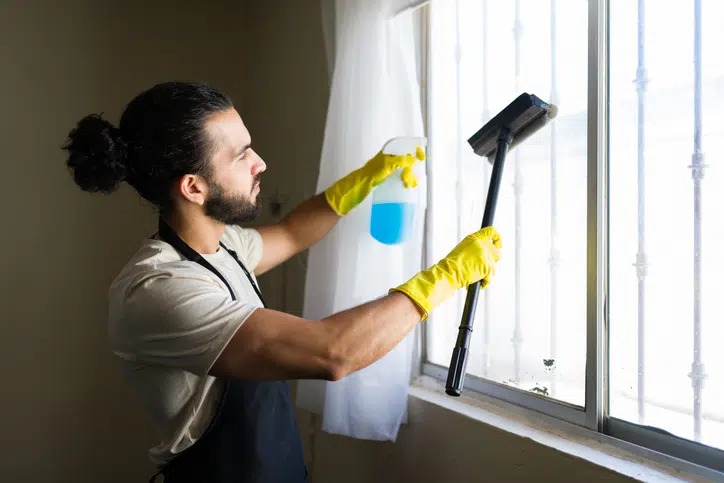
Interior windows usually collect less pollen than exteriors, but they can still get dusty and smudged, especially if you open windows frequently during high-pollen days.
1. Dust First
Use a dry microfiber cloth to remove dust and fine particles. A quick dusting before applying liquid keeps the cleaning solution from turning dirt into streaky sludge.
2. Spray and Wipe
Lightly mist the glass with a cleaning solution. Wipe in circular motions with a microfiber cloth. For very light pollen dust, plain water works well.
3. Spot Clean Frames
Don’t forget the frames and tracks. Use a damp cloth to wipe corners where dirt gathers. For narrow tracks, a cotton swab works well.
Screens and Tracks: Often Overlooked Areas
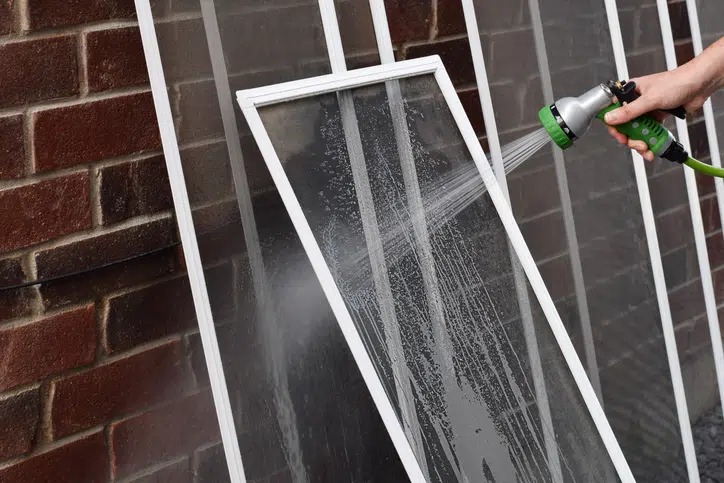
Windows have more than just glass. Screens and tracks collect a lot of pollen and can reintroduce dust to your windows if not cleaned.
Screens
Take screens out if possible and wash them with soapy water. Rinse with a hose and let them dry completely before reinstalling. If you can’t remove them, spray them with water and scrub gently with a brush.
Tracks
Tracks trap pollen and debris. Use a dry brush to loosen particles, then wipe with a damp cloth. A small vacuum with a crevice tool helps pull trapped dust out.
Frequency of Cleaning
During high-pollen periods, cleaning every one to two weeks keeps buildup manageable. If pollen counts are extremely high, a weekly routine might be necessary. Waiting too long lets pollen cake onto the surface, making it harder to remove.
Pollen Prevention Tips

Keeping windows clean becomes much easier when you focus on limiting how much pollen reaches them in the first place. A few preventative habits can significantly cut down on buildup and reduce how often you need to clean.
Close Windows During Peak Pollen Times
Pollen levels tend to be highest early in the morning and again in the late afternoon, especially on dry and windy days. Keeping windows closed during these hours helps prevent pollen from settling on glass, frames, and interior surfaces. If you like fresh air, mid-day or after rainfall is usually a better option.
Use Window Screens With Fine Mesh
Standard screens stop insects but allow a lot of pollen through. Fine-mesh screens are designed to block smaller particles while still letting air circulate. They will not stop pollen entirely, but they noticeably reduce the amount that reaches your windows and the inside of your home.
Clean Surrounding Outdoor Areas
Patios, porches, sidewalks, and outdoor furniture collect pollen quickly. When wind or foot traffic disturbs these areas, pollen becomes airborne again and settles on nearby windows. Sweeping or rinsing these surfaces regularly helps limit how much pollen ends up on your glass.
Install Doormats and Shoe Trays
Shoes are one of the most common ways pollen enters the home. A sturdy doormat outside and a washable mat or tray just inside the door can capture pollen before it spreads. Encouraging family members and guests to wipe their shoes or remove them indoors also helps keep pollen contained.
Change HVAC Filters Often
Your HVAC system pulls outdoor air inside, along with pollen. During high-pollen seasons, filters can clog faster than usual. Checking them every 30 days and replacing them as needed improves airflow and reduces the amount of pollen circulating through your home. Cleaner air means less pollen settling on windows, furniture, and other surfaces.
Taking these steps does not eliminate pollen completely, but they greatly reduce buildup. When combined with regular window cleaning, these prevention habits help keep your windows clearer and your home more comfortable throughout pollen season.
Best Cleaning Solutions for Pollen
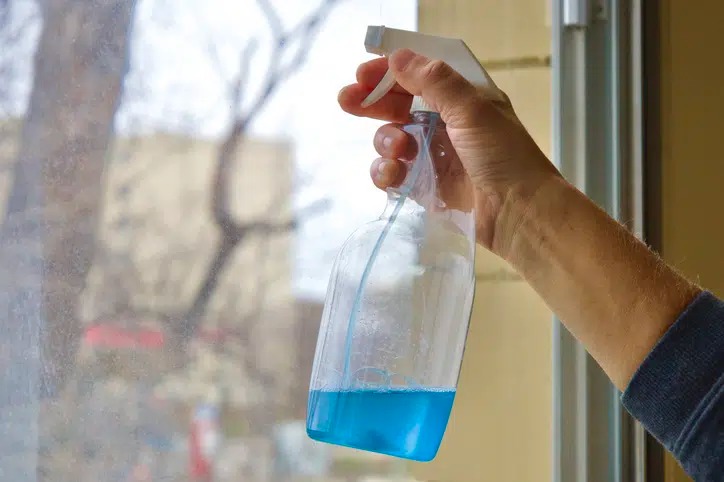
You do not need strong or harsh chemicals to remove pollen from windows. In fact, gentle cleaning solutions are often more effective because they lift pollen without damaging glass, frames, or seals. Using the right products also helps prevent streaks and residue.
DIY Mild Soap Solution
A simple mix of warm water and a few drops of dish soap is one of the most reliable options. Dish soap breaks down the natural oils found in pollen, making it easier to rinse away. This solution works well for both indoor and outdoor windows and is safe for most frame materials. Rinse thoroughly to avoid soap film.
Vinegar and Water
Equal parts distilled white vinegar and water create an effective solution for light pollen buildup and routine maintenance. Vinegar helps loosen pollen particles and dries quickly, which reduces streaking. This option works best on glass surfaces only. Avoid using vinegar on wood frames, natural stone, or older finishes, as the acidity can cause damage over time.
Commercial Window Cleaners
Store-bought window cleaners designed for glass are convenient and effective, especially for quick touch-ups. Look for ammonia-free formulas, which are safer for homes with pets, children, or people with respiratory sensitivities. These cleaners also tend to leave fewer streaks and are less harsh on window seals.
Avoid Abrasive Cleaners
Stay away from scouring powders, rough scrub pads, and stiff brushes. Pollen grains can act like fine sand, and abrasive tools can scratch glass or wear down protective coatings. Soft cloths, sponges, and rubber squeegees are much safer choices and still get the job done.
Choosing gentle cleaning solutions protects your windows while keeping pollen under control. With regular use, these methods help maintain clear glass and reduce the effort needed during peak pollen seasons.
In addition to managing pollen on windows, many Texas homeowners deal with dust, allergens, and outdoor residue year-round. For a broader look at seasonal home cleaning strategies that tackle these issues throughout the house, there are useful guides available that walk through smart routines and practical tips for keeping your living space cleaner and healthier all year.
Explore a detailed home cleaning guide here: Texas Home Cleaning Care — Tackling Dust, Allergens, and Outdoor Residue Year-Round.
Handling Tough Pollen Stains
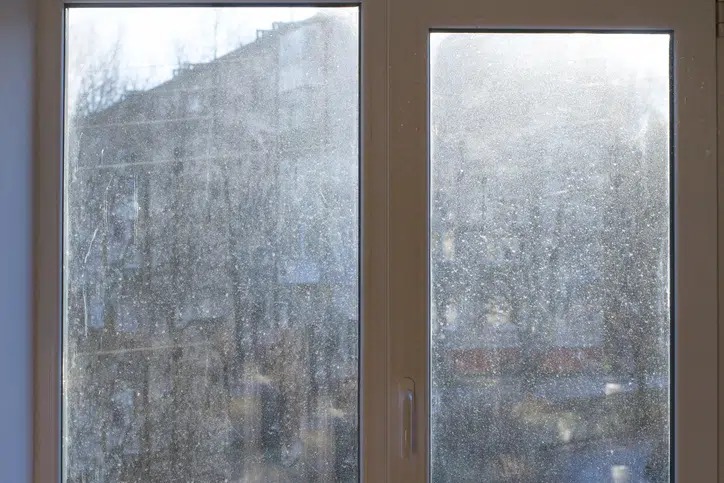
Sometimes pollen leaves behind stubborn yellow or greenish stains, especially when it sits on glass for several days in hot Texas weather. These stains can look worse than regular dust and often require a little extra attention to remove completely.
Re-Soak and Agitate
When pollen does not come off easily, apply your soapy water solution again and allow it to sit for a few minutes. This soaking time helps soften dried pollen and loosen the residue from the glass surface. Use a soft microfiber cloth or sponge and gently rub in small circular motions. Avoid pressing too hard, as gentle movement works better than force.
Use a Rubber Squeegee
A clean rubber squeegee can be more effective than cloth alone for lifting stubborn pollen residue. After loosening the stain with soap and water, pull the squeegee slowly across the glass. Wipe the blade after each pass to prevent spreading pollen back onto the window.
Repeat If Necessary
Some stains may not disappear on the first try, especially during peak pollen season. It is normal to repeat the process two or three times to fully clear the glass. Take your time and allow cleaning solutions to do the work rather than resorting to harsh scrubbing, which can damage the window surface.
With patience and the right technique, even tough pollen stains can be removed safely. Regular cleaning prevents these stains from building up and makes future cleanings quicker and easier.
Professional Window Cleaning

For homes with large windows, second-story glass, or hard-to-reach areas, professional window cleaning can be a practical option. Trained technicians have the proper equipment, such as extension poles, water-fed brushes, and purified water systems, that allow them to clean high windows safely and thoroughly without leaving residue.
Professional services are especially helpful when pollen has been allowed to build up over an extended period. Dried pollen can be more difficult to remove and may require specialized tools or techniques to fully clear the glass. A professional cleaning can restore clarity quickly and provide a fresh starting point for ongoing maintenance.
Hiring professionals can also be useful before hosting guests, selling your home, or preparing for seasonal events when you want windows to look their best. While it may not be necessary for routine upkeep, occasional professional cleaning can save time, reduce physical strain, and ensure consistent results, especially during heavy pollen seasons in Texas.
Seasonal Cleaning Schedule
Here’s a simple schedule you can follow during high-pollen months:
Early Spring:
- Check pollen forecasts.
- Begin weekly exterior rinses.
- Deep clean screens and tracks.
Late Spring to Summer:
- Clean exterior windows every 1–2 weeks.
- Dust interior windows weekly.
- Replace HVAC filters every 30 days.
Fall:
- Maintain weekly cleaning if ragweed and weeds are active.
- Add a thorough wipe of frames and tracks every 2 weeks.
Winter (Mild Pollen):
- Light maintenance as needed.
- Deep clean before spring rush.
Adjust this schedule based on pollen counts and weather. Windy, dry days spread more pollen, while rain can temporarily reduce airborne particles.
Indoor Air Quality and Allergies
Keeping windows clean isn’t just about appearance. Pollen can trigger allergies and affect indoor air quality. Regular vacuuming, dusting, and using air purifiers help reduce pollen levels inside. Clean windows help sunlight enter more fully, reducing mold risks and making your home feel fresher.
Final Thoughts
High-pollen seasons in Texas can make window cleaning feel like a repeating chore, but a consistent approach reduces time and effort. Start with dry brushing, rinse with water, use gentle cleaning solutions, and keep up a routine that matches how quickly pollen returns.
You don’t need special equipment. With simple tools and a little planning, windows can stay clearer through peak pollen periods. The goal is a cleaning process that fits your schedule and keeps windows bright without extra work.
Keeping pollen at bay makes your home feel cleaner and improves your view of Texas skies. Whether it’s cedar in early spring or ragweed in the fall, these steps help you manage pollen and maintain windows with less stress.
Comments (0)
No comments yet. Be the first to share your thoughts.
Leave a comment