


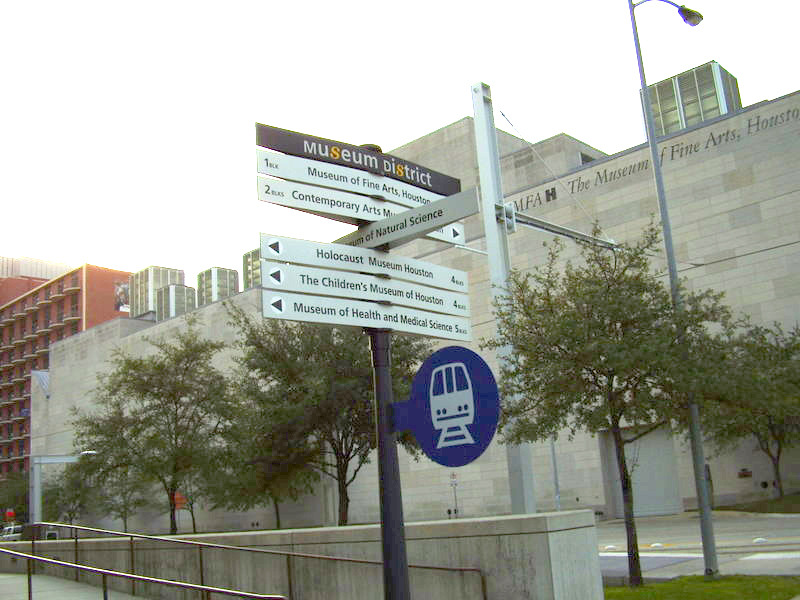
Houston’s Museum District emerged in the 1970s with the Museum of Fine Arts, Houston (MFAH) as its anchor, eventually growing to 19 diverse venues within a 1.5-mile radius. In 1997, the district formalized as a 501(c)(3) organization, gaining official Cultural District status from Texas in 2010.
You’ll find architectural marvels by renowned designers like Renzo Piano and Rafael Moneo, all connected by improved transportation systems. The district now generates over $350M annually and attracts 8M+ visitors. Discover how this transformation reshaped Houston’s cultural identity.
The Birth of Houston’s Cultural Epicenter
Five decades ago, what we now know as the Houston Museum District began taking shape as a concentrated hub of artistic and educational institutions.
The 1970s marked the emergence of this cultural hub, with the Museum of Fine Arts, Houston serving as its anchor within a compact 1.5-mile radius. As you explore the district today, you’ll find it’s hard to imagine Houston without this array of art, science, and history museums.
The district has grown into one of the largest collections of museums and cultural institutions in the country, with 19 venues ranging from contemporary art to natural science.
19 Museums Within a 1.5-Mile Radius: A Remarkable Concentration
Few cultural districts worldwide can rival the extraordinary concentration found in Houston’s Museum District. Within just 1.5 miles, you’ll discover 19 distinct museums and cultural institutions, creating one of America’s most compact cultural centers.
You can explore contemporary exhibitions at the Museum of Fine Arts in the morning, then walk to the Houston Museum of Natural Science for afternoon discovery. The Children’s Museum Houston offers interactive learning experiences, while the Holocaust Museum Houston provides profound historical perspective just steps away.
The Menil Collection and other specialized institutions add to this remarkable diversity, all within easy walking distance. This proximity isn’t just convenient—it creates a vibrant ecosystem where cultural organizations collaborate and elevate each other’s offerings. You’ll experience the district’s unique energy as multiple world-class institutions connect seamlessly in this concentrated landscape.
The district layout was thoughtfully designed to encourage visitors to move easily between museums, fostering a comprehensive cultural experience that spans art, science, and history.
From Individual Institutions to a Cohesive District
The transformation of Houston’s cultural landscape began long before the official establishment of the Museum District in 1997. Prior to this milestone, cultural institutions operated independently without a cohesive identity or coordinated outreach.
When the Houston Museum District formed as a 501(c)(3) non-profit, it unified these separate entities under one recognizable brand. This collaboration strengthened in 2010 when the Texas Commission on the Arts officially designated the area as a Cultural District with defined boundaries.
Today, you’ll find 19 museums, arts, and cultural organizations within a 1.5-mile radius—one of the country’s most remarkable concentrations. Their cooperative efforts have not only enriched Houston’s cultural life but also contributed significantly to the city’s economy and vibrancy.
The Museum District Association’s Vision and Impact
Founded as a nonprofit collective, the Museum District Association serves as the backbone of Houston’s cultural growth, strategically uniting 19 diverse institutions within a compact 1.5-mile radius. This unified structure amplifies each member’s presence while promoting shared interests and raising visibility for the district’s cultural assets.
You’ll benefit from this vision during signature events like DiverseWorks’ “Luck of the Draw” fundraiser. Their advocacy helped secure the district’s official Cultural District designation from the Texas Commission on the Arts in 2010, reinforcing one of the country’s most robust cultural zones.
The association’s ongoing work enhances Houston’s creative vitality, boosts tourism, improves quality of life, and solidifies the district as a premier cultural hub.
Architectural Marvels: The Buildings That House Houston’s Treasures
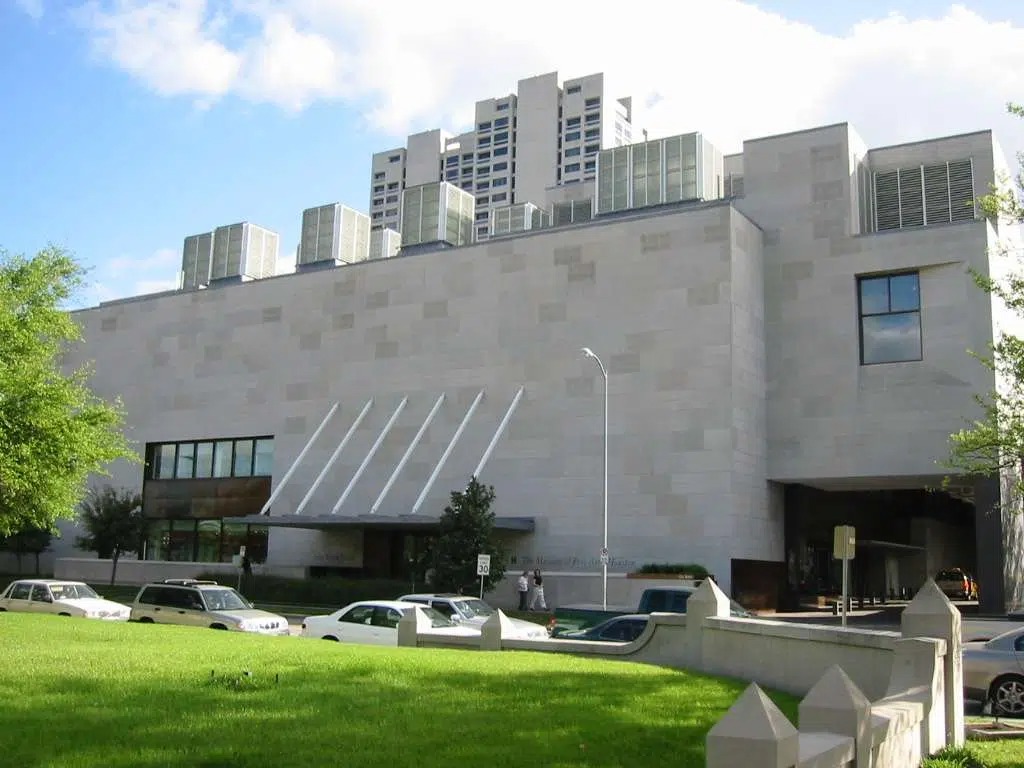
Judson Dunn from Houston, USA, Housmfa, CC BY-SA 2.0
Walking through the Houston Museum District, you’ll see that the art isn’t limited to gallery walls—the buildings themselves are architectural masterpieces. The Audrey Jones Beck Building at the Museum of Fine Arts showcases Rafael Moneo’s iconic design, while the Menil Collection’s tranquil minimalism reflects Renzo Piano’s brilliance.
The Contemporary Arts Museum Houston features a modernist design by Gunnar Birkerts, setting the tone for thought-provoking exhibitions. Nearby, the Asia Society Texas Center exemplifies Yoshio Taniguchi’s refined, sustainable style.
Don’t miss the Health Museum’s bold glass cube façade by Arquitectonica, which punctuates the area’s skyline. These buildings are not merely venues—they are works of art themselves.
Hermann Park and Green Spaces: The District’s Natural Canvas
Nestled between cultural institutions, Hermann Park is a lush 445-acre green space where art and nature converge. As you walk through the McGovern Centennial Gardens, you’ll encounter themed gardens, tranquil fountains, and a sculptural promenade that turns the park into a living art gallery.
Green spaces throughout the district aren’t just decorative—they’re essential to its identity. Outdoor sculptures and colorful murals extend the cultural experience beyond walls, enriching your journey between institutions.
Even Rice University’s campus contributes with its beautiful architecture and manicured grounds. This integration of public art with greenery transforms the district into more than a museum zone—it’s a holistic cultural destination.
Accessibility and Public Transportation Developments
The journey toward making Houston’s Museum District more accessible began in 2004 with the debut of the METRORail light rail, linking the district to downtown and the Texas Medical Center. Exploring the area without a car has never been easier.
BCycle stations and designated bike lanes make cycling a practical choice, while improved sidewalks and safer crossings support pedestrian movement. Visitors can also enjoy free parking on select days or use discounted garages nearby.
For added convenience, hop aboard the circulating shuttles or trolleys that connect key points throughout the district. These developments, paired with clear signage and mobility improvements, have made the Museum District more accessible to visitors of all backgrounds and abilities.
Economic Impact and Tourism Growth
While many districts struggle to quantify success, Houston’s Museum District has become a proven economic engine, generating over $350 million annually and drawing more than 8 million visitors each year.
Visitor numbers have grown by 30% in the last decade, with nearly half arriving from outside the Houston metro area.
The district’s institutions support over 4,000 full-time equivalent jobs and generate more than $52 million in combined state and local tax revenue.
Perhaps most impressive is the district’s influence on local business—hotel stays, restaurant traffic, and tourism-related spending have all increased as more people come to experience this rare concentration of cultural attractions. Houston’s Museum District has firmly cemented itself as a world-class destination.
Cultural Diversity Through Art, Science, and History
From ancient artifacts to cutting-edge installations, Houston’s Museum District offers unparalleled cultural variety within its compact footprint. Whether you’re drawn to the Museum of Fine Arts’ 70,000-piece collection spanning 6,000 years, or intrigued by the Menil Collection’s Surrealist works, there’s something for every interest.
The Contemporary Arts Museum Houston pushes boundaries with experimental exhibits that define the city’s creative future. Beyond visual art, the district also hosts interactive science experiences and powerful narratives such as those in the Holocaust Museum.
This district is far more than a group of institutions—it’s where art, science, and history converge to celebrate Houston’s global identity and multicultural spirit.

Comments (0)
No comments yet. Be the first to share your thoughts.
Leave a comment